




Anglo Indian Lap Desk
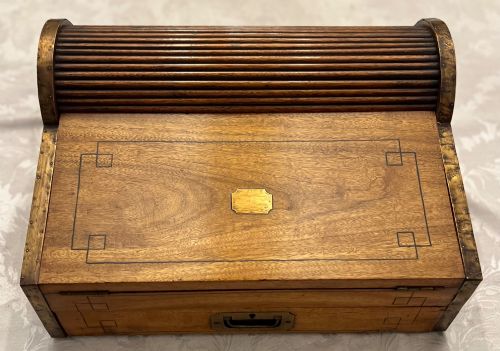
These robust anglo indian lap desk pieces combine travel utility with intricate craftsmanship, prized for exotic timbers and brass mounts.
Anglo Indian Lap Desk
An anglo indian lap desk serves as a portable writing surface and storage box, constructed during the nineteenth century in colonial regions such as Ceylon and Vizagapatam. Buyers encounter various forms on this page, including writing slopes, writing boxes, and correspondence boxes.
The objects stem from Victorian colonial contexts, reflecting the travel needs of administrators and merchants who required secure storage for papers while on the move. Most examples date from the nineteenth century, including specific years like 1880 and 1900.
Makers utilised regional timbers and decorative techniques suited to both durability and display, resulting in solid constructions intended for rigorous transport. The surviving pieces demonstrate distinct stylistic traits associated with Anglo-Indian and Victorian colonial workshops.
How they were made
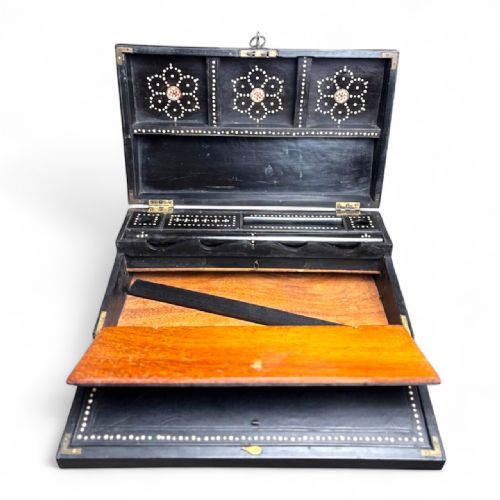
Construction relies heavily on dense exotic hardwoods, prominently ebony, teak, camphor wood, and sandalwood, chosen for their resilience in tropical climates. Artisans paired these dark timbers with contrasting inlay materials such as ivory, bone, antler, and amboyna.
Exterior surfaces frequently feature substantial brass mounts, corner brackets, and campaign handles designed to protect the edges during transit. Internal compartments often incorporate secret drawers and fitted sections lined with leather.
Anglo Indian Lap Desk Retail Price Guide 2026
Typical asking prices for anglo indian lap desk among the pieces listed under this phrase on Sellingantiques today, from the lower quarter to the upper quarter. They describe what is for sale here now, not the wider market.
What varies in quality
Quality rests in the precision of the decorative inlay and the complexity of internal fittings, such as sadeli mosaic work or detailed ivory and bone banding. Solid timber construction commands higher regard than veneered alternatives, particularly when executed in dense ebony.
The integration of functional campaign hardware, including flush brass mounts and secure locking mechanisms, distinguishes utilitarian items from high-status presentation pieces.
The Anglo Indian Lap Desk Glossary
- Writing slope
- A portable box with a slanted writing surface that opens to reveal internal storage compartments for stationery.
- Campaign box
- A sturdy portable chest or desk fitted with brass mounts and recessed handles designed for military or travel use.
- Sadeli mosaic
- A micro-mosaic craft technique utilising intricate geometric patterns formed from horn, bone, ivory, and metal, commonly seen on nineteenth-century boxes.
- Vizagapatam
- A coastal Indian centre renowned for luxury boxes decorated with elaborate ivory and sandalwood ornamentation.
- Camphor wood
- A fragrant timber utilised in colonial furniture and box making for its natural insect-repellent properties.
Anglo Indian Lap Desk: Frequently Asked Questions
What is an anglo indian lap desk?
An anglo indian lap desk is a portable nineteenth-century writing box created in colonial regions using local timbers and decorative techniques.
These pieces combine practical travel storage with intricate craftsmanship, featuring hinged writing slopes and internal compartments.
How were these boxes used?
Travellers and officials utilised them as portable writing surfaces and secure containers for correspondence and documents.
The fitted interiors accommodated inkwells, pens, and paper while enduring the rigours of colonial journeys.
What timbers are most common?
Ebony, teak, and camphor wood appear frequently across the nineteenth-century listings.
Artisans often paired these dense woods with contrasting inlay materials like ivory, bone, and brass.
How do I identify a campaign box?
Campaign boxes feature robust brass corner mounts, flush handles, and sturdy locks designed to protect the box during transport.
These functional additions allowed colonial officers and merchants to move their paperwork safely.