
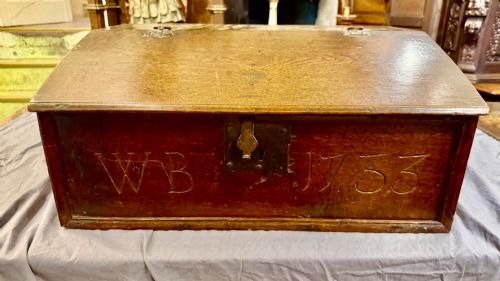
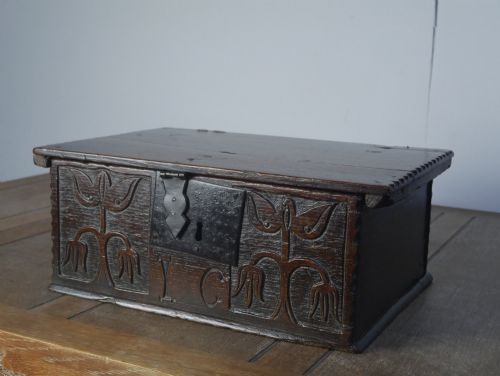
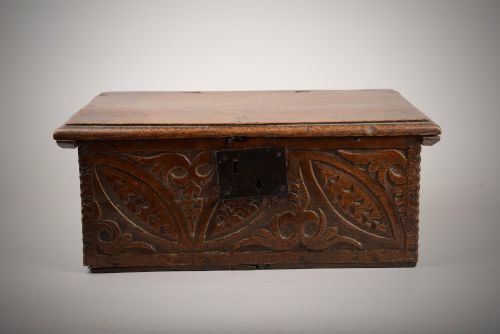
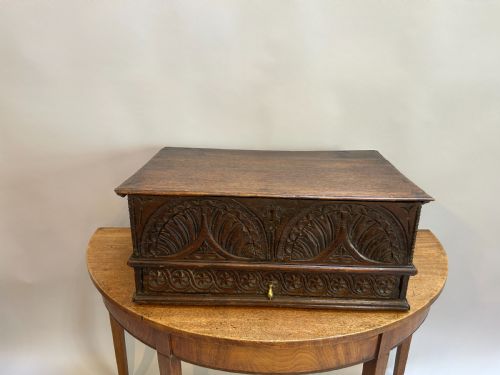
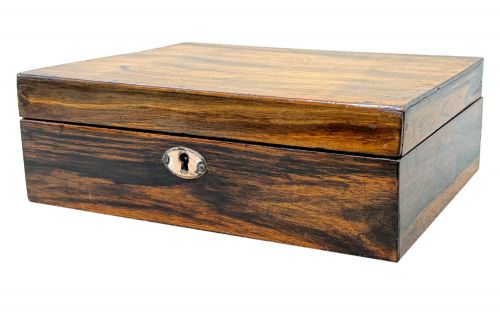
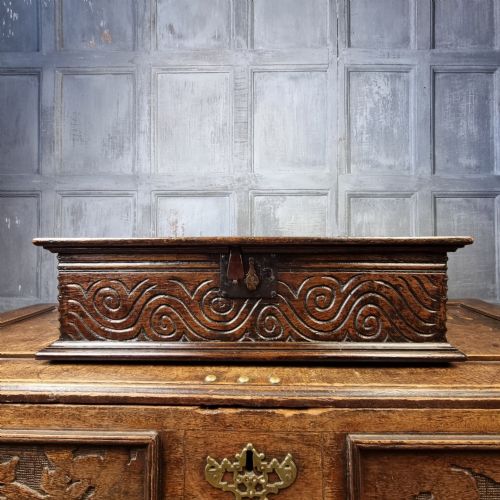


Carved Wooden Document Box
A carved wooden document box stores paper securely while adding texture to a room, drawing on centuries of careful timber construction.
Carved Wooden Document Box
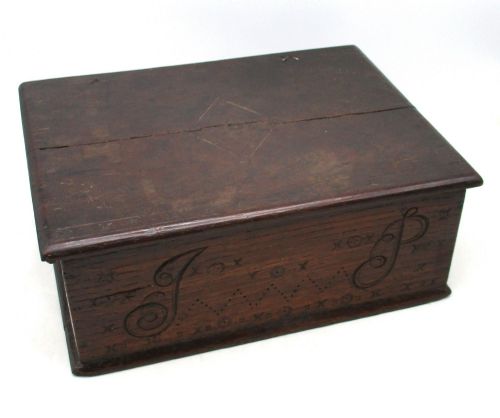
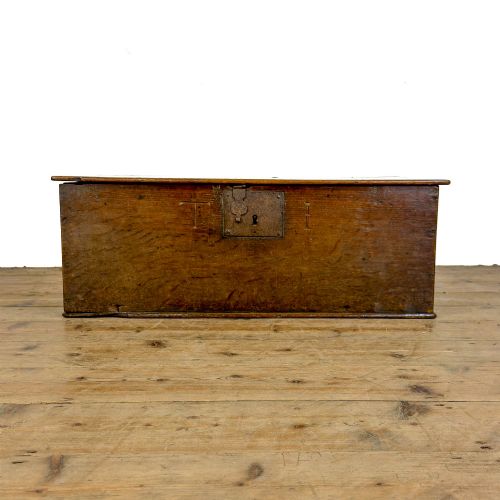
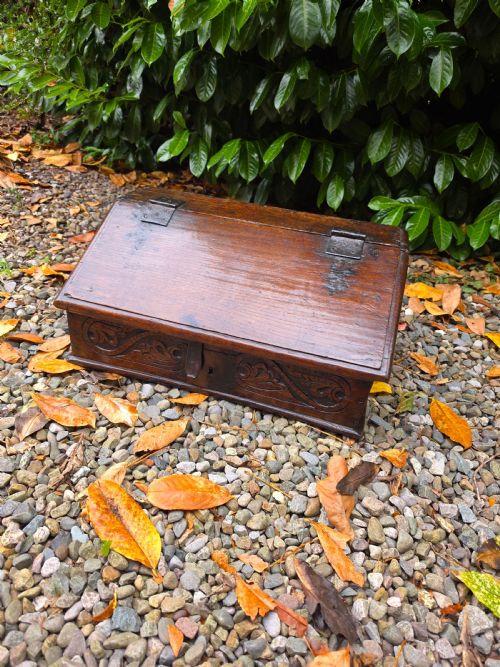
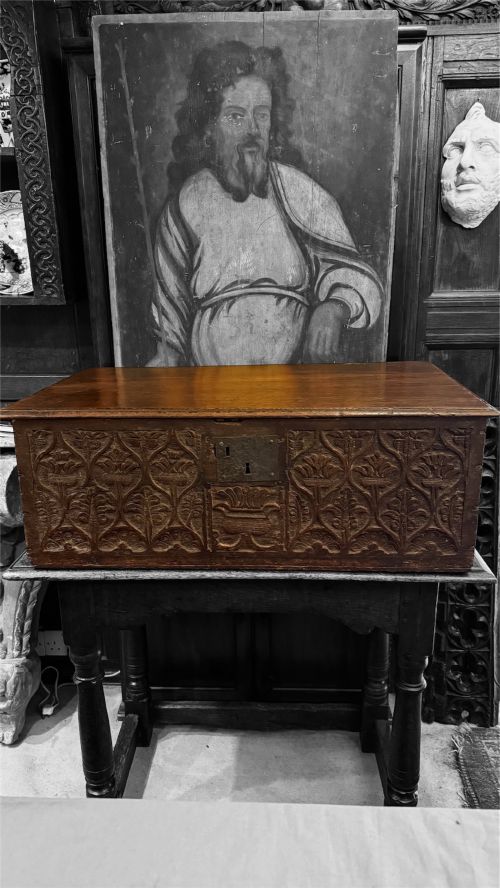
A carved wooden document box takes several functional forms across the centuries, appearing as a bible box, a deed box, a desk box, or a stationery box designed to hold correspondence and important papers. These items range from compact table boxes to slanted writing slopes and larger filing cabinets.
The pieces on this page span multiple eras, with seventeenth-century and eighteenth-century examples appearing frequently alongside Victorian and later designs. British oak dominates the earlier centuries, while later nineteenth-century and early twentieth-century pieces incorporate exotic woods and varied regional origins including Anglo-Indian and French workshops.
Materials and Techniques
Makers constructed these receptacles primarily from native timber such as oak, elm, and mahogany, though later Victorian pieces utilise dense exotic materials like coromandel, ebony, and burr walnut. Woodworkers employed sturdy joining techniques suited to daily handling and secure storage.
Decoration relied on hand carving, often featuring geometric patterns, demi-lune front panels, or gothic motifs. Certain pieces incorporate bone, mother-of-pearl, holly, and bog oak inlay to accent the primary wooden surfaces.
Carved Wooden Document Box Retail Price Guide 2026
Typical asking prices for carved wooden document box among the pieces listed under this phrase on Sellingantiques today, from the lower quarter to the upper quarter. They describe what is for sale here now, not the wider market.
Listings feature oak, mahogany, coromandel, ebony, and olive wood across centuries ranging from the seventeenth to the twentieth.
Standards of Execution
Quality in a carved wooden document box rests upon the crispness of the hand carving and the selection of the timber. Dense grain and well-figured burr walnut or substantial oak signal superior material choice by the maker.
Internal arrangement further distinguishes the execution, where fitted compartments, internal drawers, and functional swing-out cases or sloping fronts demonstrate higher levels of craftsmanship and utility.
The Carved Wooden Document Box Glossary
- Bible box
- A small lidded chest traditionally used to store a family bible or important manuscripts. These often feature sloping lids that double as reading or writing surfaces.
- Writing slope
- A box with an angled lid that opens to reveal a slanted writing surface and internal compartments for ink and paper. Victorian examples often include leather inserts.
- Deed box
- A heavy storage chest designed for legal documents and land indentures. They frequently include robust iron hardware and secure locks.
- Tunbridge ware
- Small wooden decorative boxes decorated with intricate mosaic patterns made from tiny wood blocks of various natural colours. This technique created pictorial or geometric designs on the lid.
- Anglo-Indian
- Describing items manufactured in the Indian subcontinent during the colonial period, typically utilising dense timbers like ebony carved with elaborate foliage.
Carved Wooden Document Box: Frequently Asked Questions
What was a document box used for?
These receptacles served as secure portable storage for valuable papers, legal deeds, and personal correspondence before filing cabinets became common. People kept important household records locked inside to protect them from damp and loss.
In ecclesiastical or domestic settings, variations such as bible boxes held sacred texts or writing materials on tabletops. Their robust construction allowed owners to transport private documents safely between locations.
How do I date an oak document box?
Dating relies heavily on construction methods, hinge types, and the style of the hand carving. Seventeenth-century examples often display pegged frame-and-panel construction with simple geometric or linear motifs.
Later eighteenth and nineteenth-century boxes show shifts in proportions, dovetail joints, and different locking mechanisms. Contemporary inscriptions, dates, or initials carved into the wood also provide direct chronological clues.
Are these boxes suitable for daily use?
Most antique document boxes accommodate modern letters, stationery, and small personal items quite well. Their solid timber builds and functional lids remain practical for desktop organisation.
Care should be taken with delicate internal linings or intricate exterior inlays on nineteenth-century pieces. Placing them away from direct heat sources helps preserve the historic wood and joints.