




Ebony Writing Slope
An ebony writing slope is a portable desk folded into a compact timber box, prized for its dense dark grain and brass-bound corners.
Ebony Writing Slope
When you search for an ebony writing slope, you encounter portable desks designed for correspondence during the nineteenth century, including Victorian and Regency periods. The forms range from solid timber boxes to mahogany carcasses faced with dark veneers.
You are most likely to meet nineteenth-century examples originating from Victorian workshops or colonial centres such as Ceylon and Anglo-Indian makers. These often feature specialised decorative work like reeded surfaces or inlaid ivory.
The inventory on this page includes related pieces such as writing boxes, correspondence boxes, and Davenport desks alongside traditional slopes. Each variation offers a hinged writing surface that folds flat for travel.
How they were made
Cabinet makers built these pieces using dense tropical hardwoods, applying solid ebony or fine veneers over secondary timbers like mahogany. The dark primary wood was frequently contrasted with lighter woods such as satinwood and amboyna.
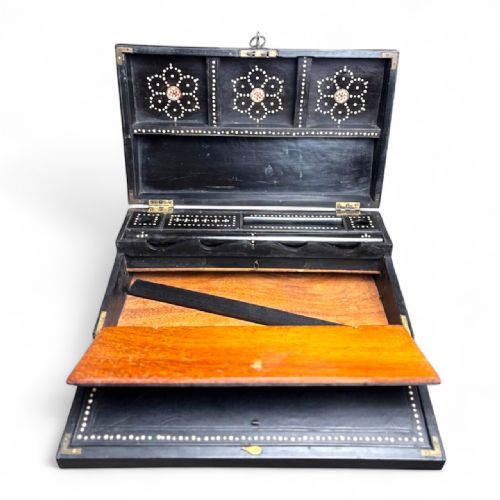
Interiors incorporated fitted compartments lined with leather for writing surfaces, alongside concealed drawers accessed through secret panels. Metal components, particularly brass stringing and corner brackets, reinforced the edges against travel wear.
Surface ornamentation relied on precision joinery techniques, including reeded decoration carved directly into the timber and intricate ivory inlay work. Mother-of-pearl and abalone shell were also set into the lids of select boxes for decorative contrast.
Ebony Writing Slope Retail Price Guide 2026
Typical asking prices for ebony writing slope among the pieces listed under this phrase on Sellingantiques today, from the lower quarter to the upper quarter. They describe what is for sale here now, not the wider market.
Many a Victorian letter was sealed in a hurry while the slope's secret compartment remained stubbornly wedged shut.
What varies in quality
The calibre of an ebony writing slope rests upon the selection of the timber and the precision of its contrasting inlays. Superior pieces display tightly grained ebony paired with meticulously fitted satinwood or amboyna interiors.
Execution of decorative details marks the division between standard production and exceptional work. Finely carved reeding, crisp brass stringing, and elaborate ivory or mother-of-pearl work indicate skilled workshop output rather than hurried manufacture.
Marsh & Tatham
The Ebony Writing Slope Glossary
- Ebony
- A dense, heavy dark hardwood prized for its deep colour and smooth finish when polished. It forms the primary exterior material for colonial and Victorian writing boxes.
- Reeded decoration
- Parallel rounded mouldings carved directly into the surface of the timber. This technique adds tactile texture to the exterior of nineteenth-century boxes.
- Campaign writing slope
- A portable desk designed for military officers or travellers, typically fitted with flush brass handles and corner brackets to withstand transit. These pieces fold securely to protect writing instruments inside.
- Davenport desk
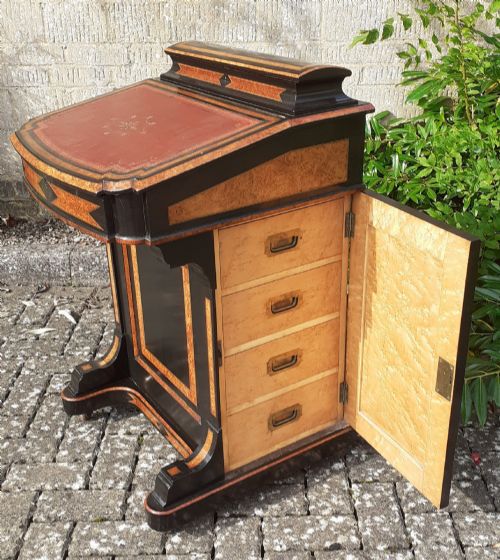
- A compact small desk featuring a sloping writing surface hinged above a pedestal of drawers. Examples from the nineteenth century often combine ebony with contrasting amboyna veneers.
Ebony Writing Slope: Frequently Asked Questions
What is an ebony writing slope?
An ebony writing slope is a portable desk made from dense dark timber designed to fold shut for travel. It contains a slanted surface for writing and internal compartments for ink and paper.
These pieces were widely used in the nineteenth century by travellers and home writers alike. Their compact forms made them practical for domestic use or colonial transport.
How do I date a writing slope?
Dating relies on observing construction methods, materials, and internal fittings. Pieces from the Regency period often display brass inlay, while Victorian examples frequently incorporate fitted leather writing surfaces.
Regional characteristics also help determine age and origin. Ceylonese and Anglo-Indian boxes from the nineteenth century often feature distinct reeded decoration and ivory inlay.
How were these boxes used?
Owners used these slopes to write letters while seated at a table or travelling. Opening the hinged lid revealed a sloped leather writing pad and slots for holding stationery.
Secret compartments and small drawers inside held stamps, inkwells, and sealing wax. The secure latch and lock kept private correspondence protected during transit.