




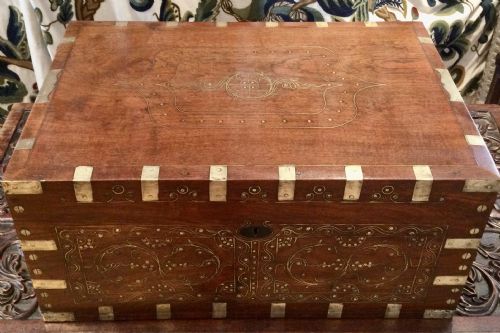


Anglo Indian Inlaid Box
An anglo indian inlaid box brings together dense native hardwoods and meticulous geometric decoration from the colonial period.
Anglo Indian Inlaid Box
An anglo indian inlaid box encompasses a broad category of decorative containers, writing slopes, and collector chests produced during the nineteenth and early twentieth centuries. These objects reflect the stylistic exchange between British domestic requirements and Indian craftsmanship, utilising indigenous timbers and intricate surface ornamentation.
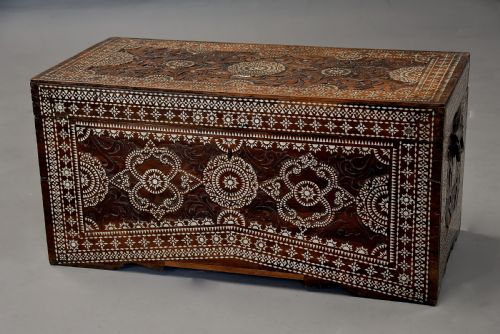
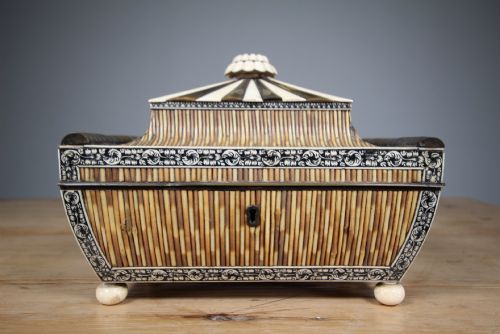
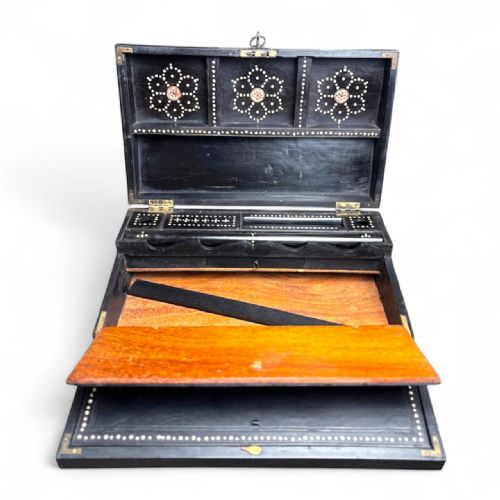
The versions most frequently encountered on this page include nineteenth century porcupine quill boxes, ebony writing slopes, and hardwood chests featuring intricate bone or ivory embellishment. Alongside these smaller caskets, larger items such as blanket boxes and campaign correspondence chests appear with brass banding and fitted interiors.
Origins span distinct regional workshops across the Indian subcontinent, including Ceylonese productions and Vizagapatam work. The forms range from simple stationery boxes to complex Sadeli mosaic caskets designed for the European export market.
How they were made
Craftsmen built the carcasses from dense tropical hardwoods such as ebony, sandalwood, satinwood, shisham, and padouk, often lining the interiors with fragrant timbers. These foundational woods provided a stable dark surface that contrasted sharply with pale decorative elements.
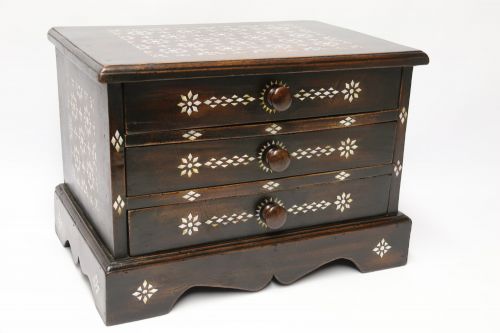
Surface decoration relied on meticulous inlay and veneering techniques, utilising bone, ivory, porcupine quill, horn, and mother of pearl. Artisans assembled microscopic geometric tessellations in Sadeli work or pressed thin plates into carved recesses, securing the motifs with brass pins and edge banding.
Current listings feature nineteenth-century pieces alongside items dated to the Regency era, nineteen hundred, and nineteen twenty.
What varies in quality
The degree of fineness in an anglo indian inlaid box depends largely on the density and precision of the geometric mosaic work or the intricacy of the carved bone and ivory motifs. Early examples demonstrate tighter tolerances in the tessellated patterns and more secure seating of individual quill or horn elements within the hardwood matrix.
Construction standards also vary between utilitarian campaign storage chests fitted with robust brass mounts and delicate sandalwood or satinwood dressing boxes meant for the drawing room. Superior pieces retain complete, original interior fittings, functional compartments, and tightly joined mitres across the hardwood carcase.
The Anglo Indian Inlaid Box Glossary
- Sadeli mosaic
- A specialised micro-mosaic technique native to western India involving minute geometric slivers of horn, bone, ivory, and metal assembled into complex repeating patterns. These assembled rods were sliced crosswise to create decorative bands for box surfaces.
- Vizagapatam work
- Luxury export items produced in the coastal city of Visakhapatnam, traditionally characterised by intricate engraved ivory and bone veneers applied over sandalwood or cedar carcases. These pieces often incorporated elaborate compartments and carved paw feet.
- Writing slope
- A portable desk featuring a hinged, sloping lid that opens to reveal a fitted interior for inkwells, pens, and correspondence papers. When closed, the box presents a flat or slightly domed top bound in brass or embellished with geometric inlay.
- Campaign box
- A sturdy portable chest designed for military officers or colonial administrators travelling through the British Empire. These pieces typically feature recessed brass carrying handles, reinforced corners, and robust locking mechanisms.
- Porcupine quill
- A natural material harvested from crested porcupines and utilised in nineteenth century Ceylonese box construction. The quills were sorted, arranged in contrasting bands, and framed by ebony or satinwood borders.
Anglo Indian Inlaid Box: Frequently Asked Questions
What are anglo indian inlaid boxes?
These objects are decorative containers and writing boxes made by Indian artisans for British and European patrons during the nineteenth and early twentieth centuries. They combine traditional Indian decorative techniques with European furniture forms.
Materials range from dense ebony and sandalwood to porcupine quill, bone, and ivory, resulting in highly textured surfaces designed for letter writing, sewing, or jewellery storage.
How were these boxes used?
Owners used them primarily for correspondence, storing writing implements, paper, and important documents inside fitted compartments and secret drawers. Smaller caskets served as jewellery boxes or decorative trinket holders on dressing tables.
Larger trunk forms and blanket boxes provided secure storage for textiles and personal belongings during transit across the British Empire.
How do I date an anglo indian box?
Dating relies on stylistic markers, timber choices, and construction methods associated with periods like the Regency, Victorian era, and early twentieth century. Mid-nineteenth century pieces often feature extensive ivory inlay and porcupine quill work from Ceylon.
Later examples from around nineteen hundred tend to utilise simpler brass mounts and heavier hardwood construction with minimal bone embellishment.
How do I care for inlaid wood?
Keep the boxes away from direct sunlight and sudden temperature shifts to prevent the natural hardwoods and delicate bone or ivory inlays from drying out and shrinking. Stable indoor humidity protects the microscopic joints of Sadeli mosaic work.
Clean surfaces gently with a dry, soft cloth, avoiding commercial polishes or excessive moisture that might loosen older adhesives or stain pale veneers.