




Antique Indian Writing Box
An antique indian writing box brings portable colonial craftsmanship into the modern study with rich hardwoods and intricate inlay.
Antique Indian Writing Box
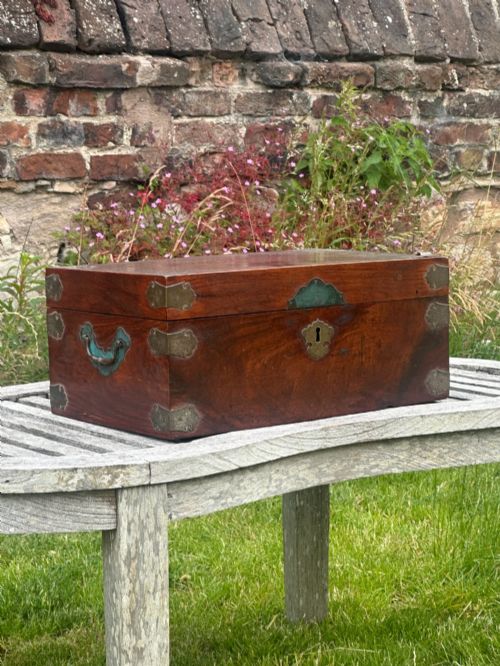
An antique indian writing box comprises portable desks, correspondence chests and stationery boxes produced during the nineteenth century and the Victorian era. These pieces generally reflect Anglo-Indian, Victorian Colonial or Indo-Persian styles designed for administrators and travellers. The most common examples met on this page are solid ebony or teak writing slopes mounted in brass.
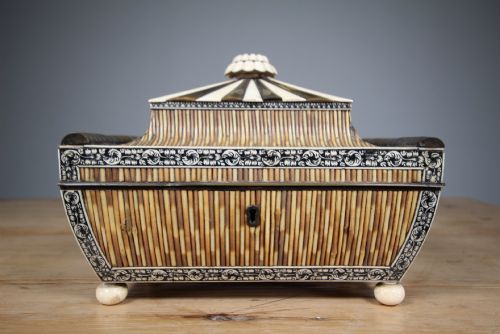
Makers utilised dense tropical timbers such as padouk, coromandel, camphor wood and sandalwood alongside indigenous materials like porcupine quill, bone and ivory. Objects range from sarcophagus-shaped quill boxes to campaign storage chests fitted with brass banding. The forms serve both utilitarian correspondence needs and decorative display.
How they were made
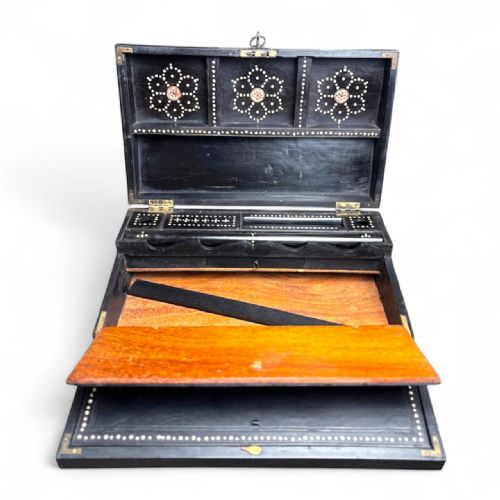
Cabinetmakers constructed the carcasses from heavy tropical woods like ebony, teak and padouk, often mounting the corners and edges with brass strapwork and corner pieces for durability during travel. Surfaces frequently received detailed carving or contrasting inlay work utilising bone, ivory, antler and porcupine quill arranged in geometric patterns.
Interiors incorporate fitted compartments for inkwells, pens and paper, sometimes utilising intricate Sadeli mosaic micro-mosaics or lacquered papier-mache for pen cases. Joinery techniques ensured stability across fluctuating climates, combining traditional box construction with reinforced campaign hardware.
Listings feature nineteen-century pieces spanning the Regency, Victorian, and 1800 to 1900 periods, constructed in ebony, teak, padouk, and papier-mache.
What varies in quality
Quality rests primarily in the density and choice of timber, with solid ebony and figured coromandel sitting above standard softwood cores veneered in lesser woods. The intricacy and preservation of decorative elements - such as fine bone inlay, porcupine quill alignment and Sadeli mosaic work - distinguish standard production from superior craftsmanship.
The precision of the brass campaign mounts, flush hinges and working internal compartments also marks the distinction between utilitarian transit boxes and high-status commissioned pieces.
The Antique Indian Writing Box Glossary
- Campaign box
- A piece of portable furniture designed for military or administrative travel, typically fitted with recessed brass handles and corner brackets. These boxes break down or fold for ease of transport.
- Sadeli mosaic
- A complex micro-mosaic craft originating in western India, utilising tiny geometric slivers of horn, bone, metal and wood to create repeating patterns. It frequently decorates the interior wells and borders of nineteenth-century boxes.
- Porcupine quill
- The sharp defensive spines of the porcupine utilised as a decorative veneer on nineteenth-century Ceylonese boxes. Artisans arranged the quills in contrasting geometric bands, often framed in ebony.
- Writing slope
- A portable slant-topped box that opens to reveal a slanted leather or velvet-lined surface for writing, alongside storage wells for ink and stationery.
- Padouk
- A heavy tropical hardwood valued for its deep reddish-brown colour and durability, commonly utilised in Anglo-Indian cabinetmaking.
Antique Indian Writing Box: Frequently Asked Questions
How were these boxes used?
These boxes served as portable writing desks and storage chests for administrators, merchants and military officers travelling through the British Empire. They contained folded paper, inkwells, nibs and personal correspondence safely locked away during transit.
At home, they functioned as stationary desk accessories on tables or cabinets. The internal compartments kept writing implements organised before the era of mass-produced stationery.
What is a campaign box?
A campaign box is built specifically for mobility, featuring reinforced brass corners, strapwork and recessed carrying handles to prevent damage during frequent transport. The construction prioritises structural resilience against humidity and rough handling.
These pieces often include multiple secret drawers and locking mechanisms to secure valuables and documents on the move.
How do I identify Anglo-Indian pieces?
Anglo-Indian pieces combine British furniture forms with indigenous South Asian materials, carving techniques and decorative motifs. Look for dense tropical timbers like ebony, padouk and teak paired with intricate bone, ivory or porcupine quill inlay.
Regional variations include Ceylonese quillwork boxes and Vizagapatam boxes featuring complex engraved bone ornamentation.
How should I care for ebony and teak?
Keep these boxes away from direct sunlight and sudden temperature changes to prevent the dense tropical hardwoods from splitting or warping. Maintain stable indoor humidity levels.
Dust the carved surfaces and delicate inlay gently with a dry, soft cloth, avoiding harsh chemical polishes that can damage historic lacquered or inlaid finishes.