
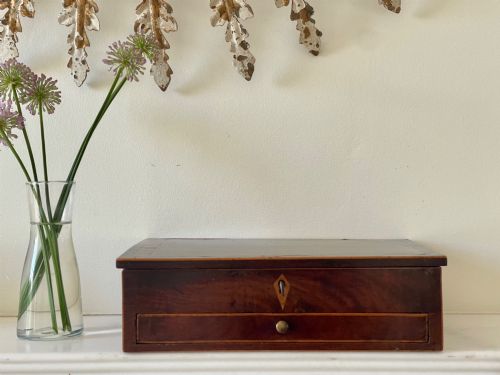
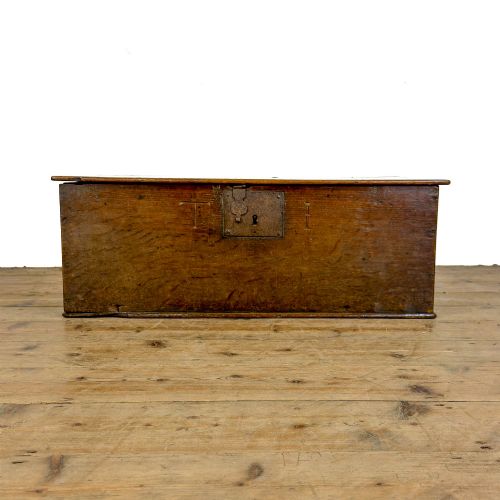
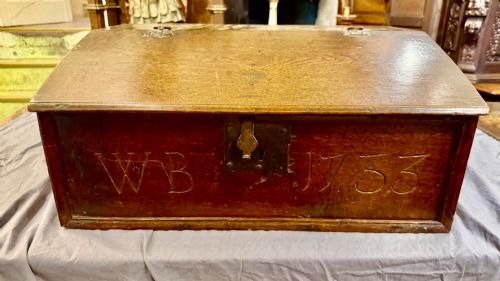
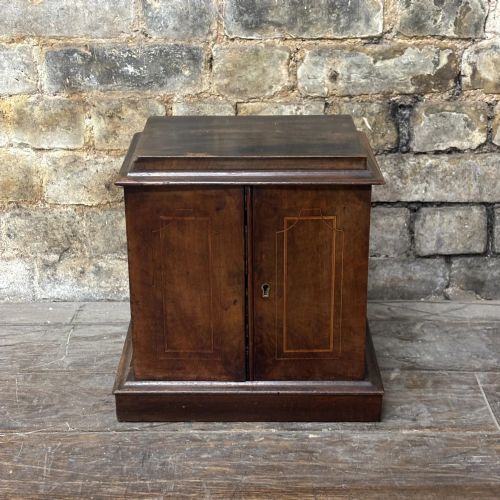
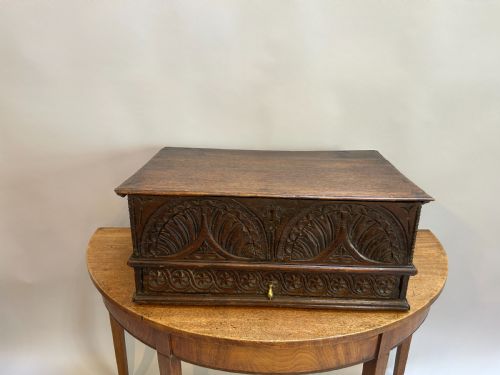
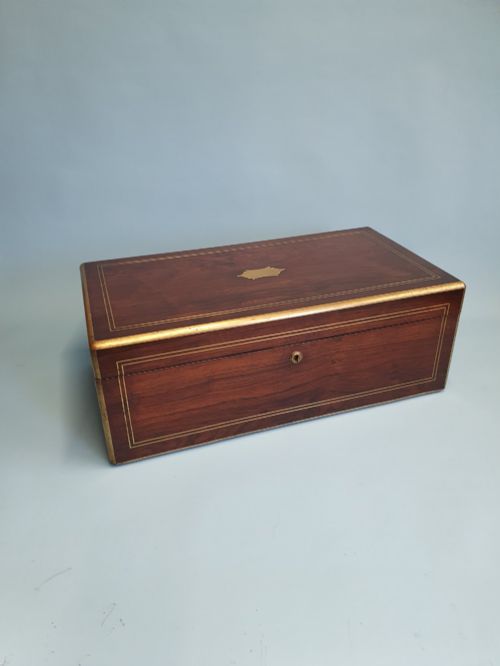


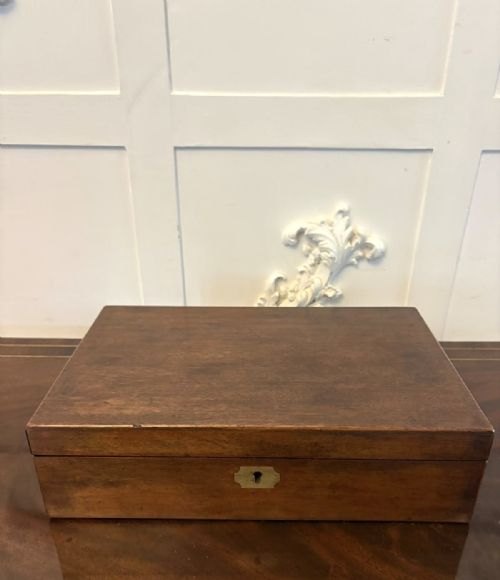


Georgian Writing Box
A georgian writing box brings the tactile weight of 18th-century correspondence directly to a modern desk through solid timbers and clever internal compartments.
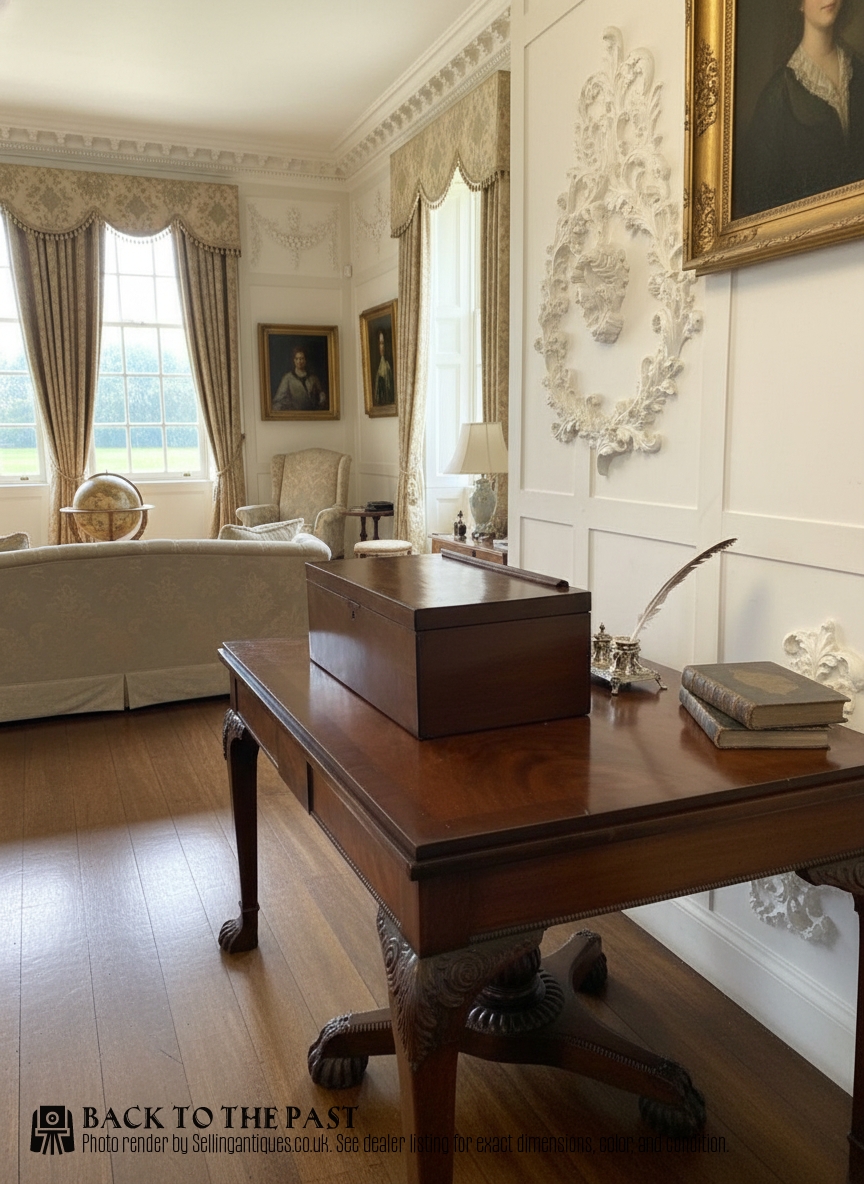
Georgian Writing Box
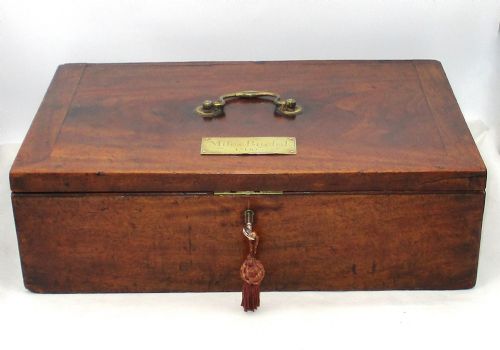
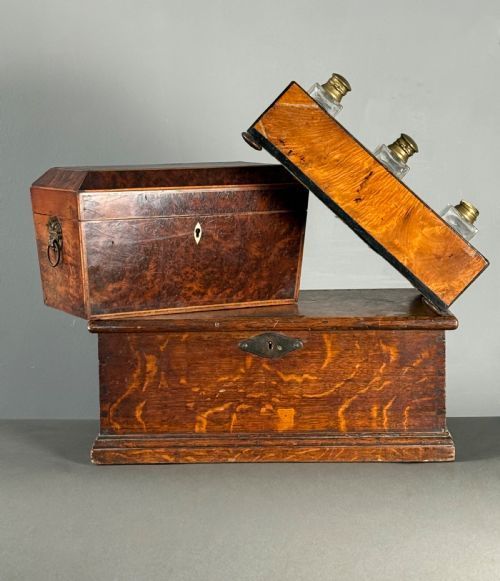
A georgian writing box is a portable desk designed for the desk or travelling officer, most frequently taking the form of a slope that folds open to reveal a baize-lined writing surface. The pieces catalogued here span periods from the 17th century through to the Regency and Victorian eras, alongside related forms like document boxes, Bible boxes and lap desks.
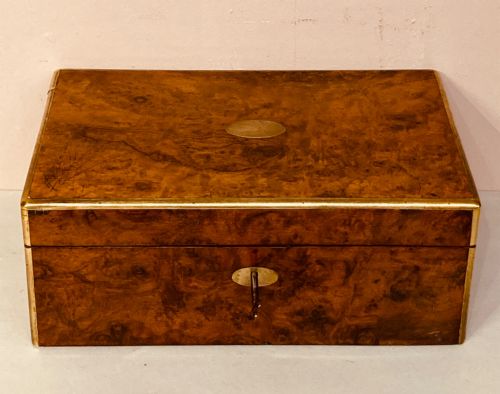
Mahogany and rosewood dominate the survivors, often reinforced with brass corners and carrying handles for military transport, while earlier examples appear in solid oak. Buyers will encounter both plain timber grains and highly figured veneers, sometimes enriched with satinwood, ebony or mother-of-pearl inlay.
The internal architecture is what defines these objects, housing inkwells, pen trays, secret drawers and concealed compartments designed to secure personal papers. Whether configured as a slope, a stationery cabinet or a portable bureau, each item serves as a complete desk contained within a single timber case.
Materials and construction
Cabinetmakers utilised dense hardwoods such as mahogany, walnut and rosewood to construct the outer carcasses, frequently applying decorative veneers like burr walnut, burr yew or flame mahogany to the primary surfaces. These timbers were selected for their stability and resistance to splitting during travel.
Brass featured heavily in the construction as structural reinforcement, appearing as inset corner mounts, side handles and escutcheons designed to withstand rough handling on campaign. Inside, secondary woods like pine or oak lined the hidden drawers and dividers.
Joinery relied on tight dovetail construction at the corners of the boxes, ensuring structural integrity over centuries of opening and closing. Complex internal mechanisms, such as pop-up writing surfaces and spring-loaded secret drawers, showcased advanced carpentry and ingenuity.
Georgian Writing Box Retail Price Guide 2026
Typical asking prices for georgian writing box among the pieces listed under this phrase on Sellingantiques today, from the lower quarter to the upper quarter. They describe what is for sale here now, not the wider market.
The listings show box forms spanning oak Bible chests from the 17th century to rosewood campaign slopes from the Regency era.
Assessing craftsmanship and execution
The choice of veneer sets the baseline for visual appeal, with tightly figured flame mahogany or symmetrical burr yew indicating a more expensive initial commission than plain timber. The precision of inlaid details, such as boxwood and ebony stringing or shell motifs, separates standard utilitarian boxes from elite cabinetwork.
Hardware execution dictates the perceived grade of the piece, where flush-fitting brasses and hand-engraved escutcheons denote superior workshop standards. Lesser examples rely on plain, surface-mounted brass without precision sinkings into the wood.
Internal complexity dictates the tier of the object, with integrated secret drawers, brass-hinged inkwell lids and bespoke stationery dividers reflecting a higher investment of time by the maker. Simpler document boxes lack these folding writing surfaces and internal tiers entirely.
The Georgian Writing Box Glossary
- Writing slope
- A portable desk box featuring a hinged lid that opens at an angle to form a slanted writing surface. These often contain internal partitions for paper and nibs.
- Campaign style
- Furniture constructed for military transport, characterised by brass binding, recessed carrying handles and sectional designs. This ensures durability during travel.
- Secret compartment
- A hidden drawer or sliding panel concealed behind false bottoms or removable partitions within the box. These spaces were intended for valuables and private letters.
- Pounce pot
- A small shaker container used to sprinkle powdered resin or cuttlefish bone onto freshly written ink to speed up drying and prevent smudging. They frequently sit alongside inkwells in fitted desk sets.
- Tambour
- A sliding door constructed from narrow vertical strips of wood glued to a canvas backing, allowing it to curve around a track. It conceals stationery compartments in sophisticated desk boxes.
Georgian Writing Box: Frequently Asked Questions
What is a georgian writing box?
A georgian writing box is a portable wooden case designed to hold stationery, ink, and paper while providing a firm, angled surface for writing letters. These boxes were essential tools for travellers, officers, and households before the era of fitted stationary desks.
Most examples open by folding down the top panel to reveal a leather or baize-lined writing plane, flanked by compartments for inkwells and pens. Inside, makers built secret drawers and hidden compartments to secure correspondence and valuables.
How do campaign boxes differ?
Campaign boxes were specifically built for military officers on active service, featuring robust construction and protective brass corners. These additions prevented the wood from splitting during rough transport across difficult terrain.
They also incorporate recessed brass drop-handles on the sides to ensure the exterior remained smooth and snag-free. Standard domestic boxes lacked these heavy-duty brass reinforcements and military fittings.
What went inside the secret drawers?
Secret drawers and concealed compartments held private letters, currency, family documents, and small personal valuables. Because these boxes travelled with their owners, security was paramount.
Makers hid these compartments behind false partitions, sliding panels, or beneath removable pen trays. Accessing them often required a specific sequence of steps known only to the owner.
How are different wood types identified?
Identifying woods involves looking at the grain patterns, colour, and weight of the timber used in the outer carcass. Mahogany appears reddish-brown with a straight or ribbon grain, while rosewood displays dark brown and purple streaks.
Burr yew and flame mahogany exhibit swirling, highly decorative patterns derived from tree growths or specific cuts of veneer. Oak and elm tend to appear in earlier, utilitarian boxes with prominent growth rings.