



Carved Mahogany Cellarette
A carved mahogany cellarette is a heavy, timber-built container for cooling wine at the table, prized for deep grain and classical form.
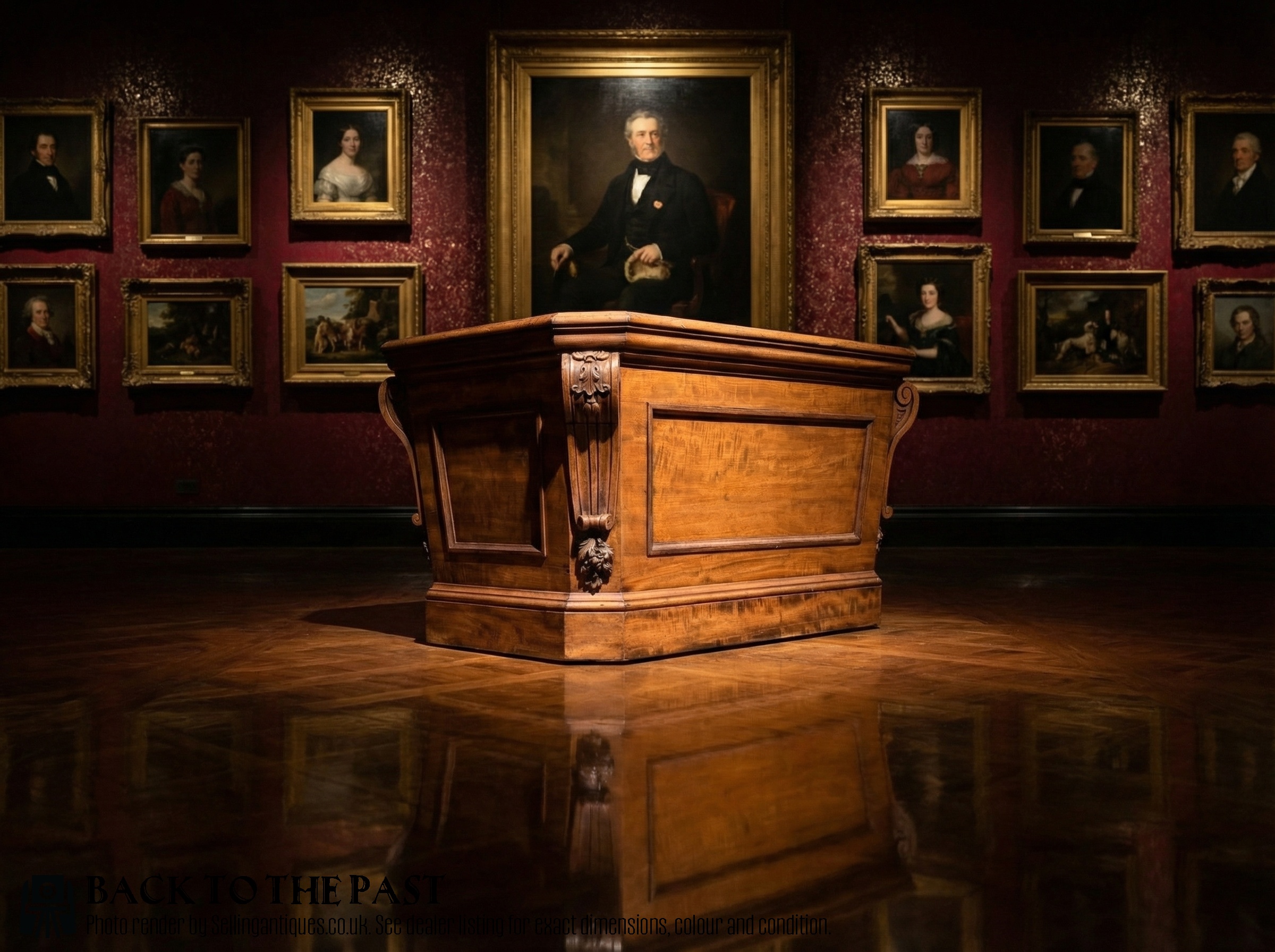
Carved Mahogany Cellarette
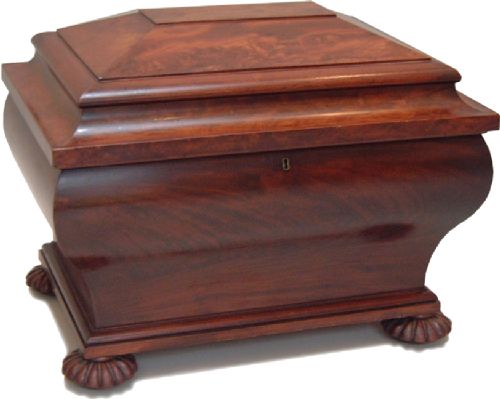
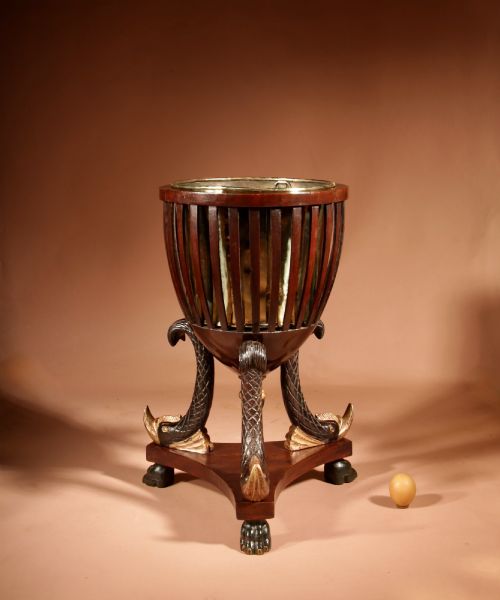
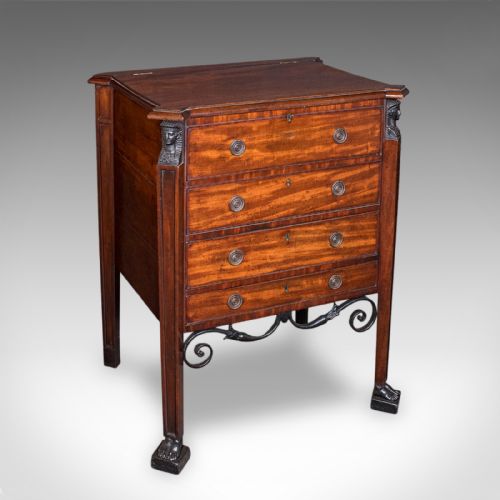
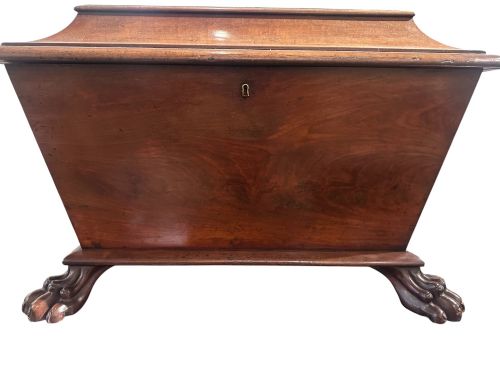
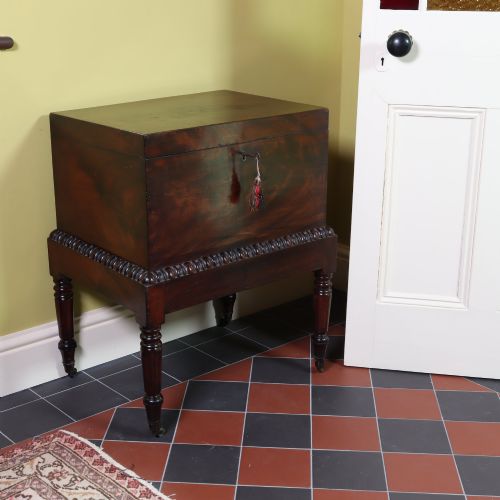
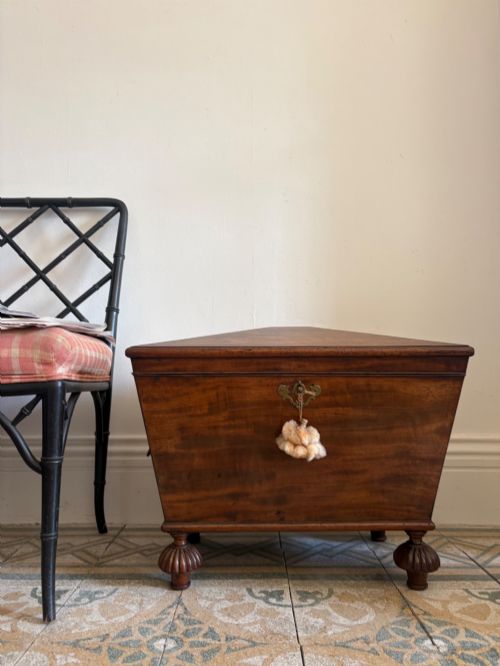
When you search for a carved mahogany cellarette, you are looking at substantial timber receptacles built to chill wine and spirits for the dining room. The examples found here span the Georgian, Regency and Victorian eras, crossing into Edwardian periods with pieces styled in earlier tastes. Forms range from sarcophagus shapes on paw feet to oval, fluted, and pedestal designs.
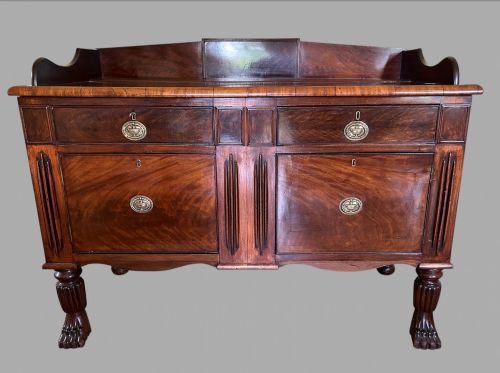
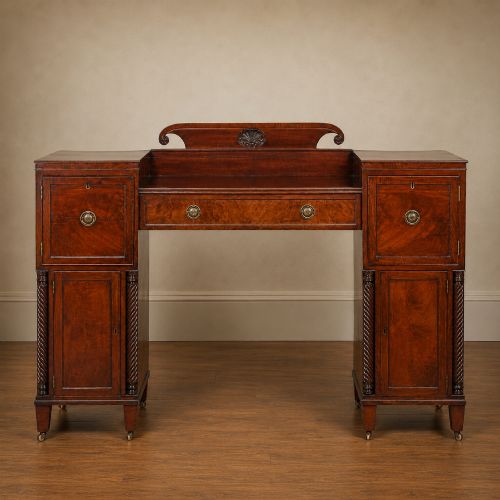
You will most commonly meet sarcophagus forms from the Regency and Georgian periods. These substantial containers often sit low on the floor, resting on carved feet or plinths. Sideboards and buffets also appear in the selection, alongside occasional wine coolers sharing the same timber vocabulary.

Materials and Construction
The primary material is mahogany, frequently selected for rich flame grain, figuration, or ebonised accents. Workshops deployed solid timber alongside flame mahogany veneer to achieve deep surface movement across broad panels.
Internal linings utilise metal elements such as lead or zinc to hold ice and water safely without rotting the surrounding wood. Brass mounts, handles, and binding bands add structural security and decorative contrast to the dark timber.
Carved Mahogany Cellarette Retail Price Guide 2026
Typical asking prices for carved mahogany cellarette among the pieces listed under this phrase on Sellingantiques today, from the lower quarter to the upper quarter. They describe what is for sale here now, not the wider market.
Listings span the eighteenth to the early twentieth century, showing a strong concentration of Regency and Georgian sarcophagus forms.
Distinctions in Quality
Quality rests in the depth of the mahogany figuration and the crispness of the carved details. Pieces displaying spirited carving, such as paw feet or classical foliage, stand apart from plain panelled boxes.
The survival of original internal metal linings and fitted dividers elevates a piece significantly. Furthermore, robust joinery and substantial timber thickness dictate the longevity and presence of the container.
Thomas Hope·Gillows·Freemans of Norwich·T. Feetham·Maples & Co·Robert Strahan & Co
The Carved Mahogany Cellarette Glossary
- Cellarette
- A lockable container used for holding and cooling bottles of wine near the dining table. They evolved from simpler buckets into elaborate pieces of architectural furniture.
- Sarcophagus
- A monumental coffin-like shape with a steep lid and heavy plinth base, very popular for Regency wine coolers. This classical silhouette mimics ancient stone tombs.
- Flame mahogany
- Timber cut from the fork of the mahogany tree to produce a flickering, flame-like grain pattern. Cabinet makers reserved this highly figured veneer for prominent exterior surfaces.
- Lead liner
- A heavy sheet-metal interior inserted to hold ice and water for chilling wine bottles. The presence of the original liner is an important feature for collectors.
Carved Mahogany Cellarette: Frequently Asked Questions
What was a cellarette used for?
These containers held wine bottles and ice near the dining table during formal meals. Servants would draw bottles from the lined interior as needed.
Because dining rooms lacked built-in refrigeration, these heavy timber boxes kept beverages cool close to where guests sat.
How do I identify a Regency cellarette?
Regency examples frequently adopt the sarcophagus shape with heavy carved paw feet and classical mounts. Look for architectural details like reeding and bold mahogany grain.
They often date from the early nineteenth century and reflect classical revival tastes popular during the period.
Where should I place a cellarette at home?
A large cellarette works well as a freestanding focal point in a dining room or hallway. Their substantial proportions suit corners or spaces beside sideboards.
Inside, the deep compartments make them useful for storing bottles or modern items out of sight.
Are original metal liners common?
Original lead or zinc interiors survive in some pieces but are absent in others due to centuries of wear and moisture. Their presence adds authenticity to the piece.
Even without the lining, the timber exterior remains a striking item of period furniture.