
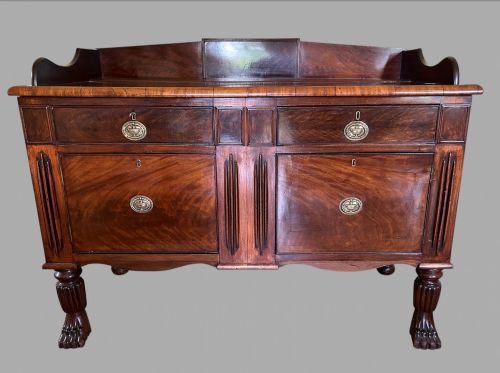


William IV Cellarette
A William IV cellarette is a heavy, architectural drinking cabinet built to keep wine cool near the dining table.

William IV Cellarette
When you search for a William IV cellarette, you are looking at substantial nineteenth-century drinking furniture designed to hold bottles securely in the dining room. The examples on this page belong predominantly to the nineteenth century, with Georgian and Regency roots, appearing as freestanding wine coolers, sarcophagus forms, and occasional sideboards.
The most common version you will meet here is the mahogany sarcophagus cellarette, shaped with curved sides and heavy architectural proportions. These pieces sit low to the floor, often resting on carved feet or plinths, designed to blend with the formal dining interiors of the period.
Alongside dedicated coolers, the selection includes related dining furniture such as serving buffets, teapoys, and spirits tables. These variations share the heavy timbers and formal styling characteristic of the era, though the primary focus remains on dedicated bottle storage.
Materials and construction
Cabinetmakers relied heavily on mahogany, often selecting flame mahogany veneers to create striking figure patterns across the large curved surfaces of sarcophagus bodies. Burr maple also appears in specific interior or auxiliary pieces, offering a lighter contrast to the dark primary timber.
Metal fittings, brass components, and occasional marquetry provide structural support and decorative contrast. These materials are joined with traditional cabinetmaking techniques to handle the immense weight of stored glass bottles and liquid.
William IV Cellarette Retail Price Guide 2026
Typical asking prices for william iv cellarette among the pieces listed under this phrase on Sellingantiques today, from the lower quarter to the upper quarter. They describe what is for sale here now, not the wider market.
Mahogany is the dominant timber across these listings, appearing alongside flame mahogany veneer, burr maple, brass, and marquetry.
Assessing quality in a cellarette
The distinction between ordinary and exceptional pieces rests on the choice of timber and the ambition of the carving. Superior items display highly figured flame mahogany veneers that wrap seamlessly around complex serpentine contours.
Construction depth dictates the visual success of the piece, separating standard box forms from those featuring deeply moulded panels and confident architectural feet. The crispness of carved details, such as scrollwork or paw feet, marks the hand of a more skilled workshop.
The William IV Cellarette Glossary
- Cellarette
- A lockable container or cabinet designed specifically to hold bottles of wine and spirits near the dining table. They evolved from simpler buckets into architectural furniture during the Georgian and nineteenth-century periods.
- Sarcophagus
- A coffin-shaped box form with a domed or pitched lid, heavily favored for nineteenth-century wine coolers. This shape allowed cabinetmakers to showcase large expanses of figured veneer.
- Flame mahogany
- A distinct grain pattern derived from the branch junctions of the mahogany tree, resembling flickering flames. Cabinetmakers prized this veneer for the most prominent exterior surfaces.
- Teapoy
- A small stand or chest traditionally used to store tea caddies, sometimes associated with nineteenth-century interior furnishings. They share the heavy timber construction and decorative detailing of larger cellarettes.
- Serpentine
- A furniture outline characterised by a curving line that curves outward at the centre and inward at the ends. This contour requires precise woodworking to maintain structural integrity across thick mahogany.
William IV Cellarette: Frequently Asked Questions
What is a cellarette used for?
A cellarette functioned as a secure mobile cellar, keeping wine bottles close to the dining table during formal meals. Lined interiors helped maintain temperature and protected expensive vintages from household servants.
Today, these pieces serve as statement furniture in dining rooms or living spaces, repurposed for modern bottle storage or general display.
How do I identify a William IV piece?
William IV furniture displays heavy, masculine proportions influenced by classical antiquity and early nineteenth-century taste. Look for robust mahogany timbers, bold scroll carvings, and architectural feet.
These pieces sit temporally between late Regency and early Victorian design, avoiding the extreme ornamentation of later decades while retaining solid presence.
Where did these go in a room?
Cellarettes stood directly on the floor, usually positioned beneath sideboards or against the walls of formal dining rooms. Their substantial weight kept them firmly in place near the dining action.
Modern interiors accommodate them similarly as freestanding focal points, often utilised to anchor large dining spaces or grand hallways.
Are liners original?
Many period cellarettes retained internal metal liners and dividers designed to hold ice and individual bottles securely. These functional components varied widely depending on the original commission.
Surviving interiors show significant variation, ranging from divided wooden frames to zinc or lead linings meant to handle moisture.