
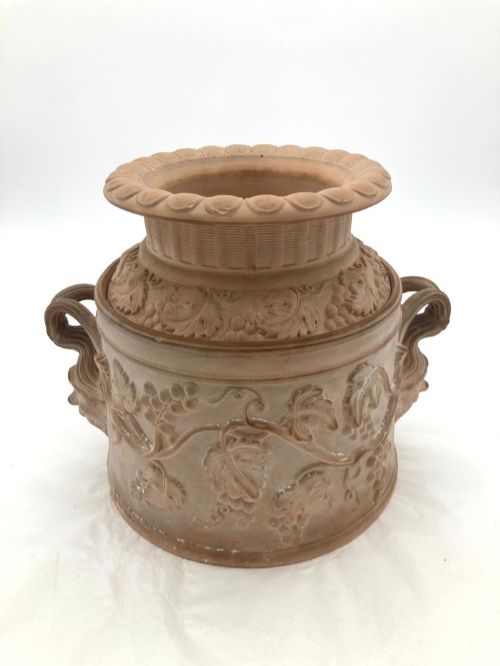


William IV Wine Cooler
A William IV wine cooler anchors a grand dining room with solid mahogany or gleaming plate, designed to keep vintage bottles chilled in style.

William IV Wine Cooler
A william iv wine cooler brings formal nineteenth century dining furniture into the domestic interior, serving as both a practical vessel and an architectural statement. These pieces bridge the Regency era and the early Victorian period, carrying forward classical proportions with robust execution.
The most common form on this page is the sarcophagus shaped mahogany cellarette, often resting on carved paw feet or castors. Buyers also encounter serpentine fronted examples, neat chests of drawers adaptations, and pairs of old Sheffield plated vessels.
Davenport terracotta and silver plated metal variations occasionally appear, offering alternative textures to the dominant timber pieces. Most items date securely to the nineteenth century, reflecting the lavish entertaining habits of the period.
Materials and Construction
Cabinet makers utilised dense mahogany for the primary carcases, often selecting timber with rich grain patterns to showcase the substantial proportions of a william iv wine cooler. Carved elements, such as scrollwork and paw feet, required skilled hand shaping from solid stock rather than applied veneers.
Metal versions depended upon old Sheffield plating techniques, fusing silver onto a copper base to achieve a durable metallic lustre. Terracotta and earthenware pieces were fired with specific glazes to contain ice and liquid safely.
William IV Wine Cooler Retail Price Guide 2026
Typical asking prices for william iv wine cooler among the pieces listed under this phrase on Sellingantiques today, from the lower quarter to the upper quarter. They describe what is for sale here now, not the wider market.
The site's listings demonstrate a strong preference for mahogany timber across nineteenth century cellarettes and wine coolers.
Assessing Quality and Design
The distinction between standard domestic items and top tier commissions rests upon timber selection and sculptural ambition. Pieces featuring serpentine shaped fronts and intricate carved details demonstrate superior workshop standards compared to plain sarcophagus boxes.
Metal vessels vary according to the crispness of their chased decoration and the preservation of the underlying copper beneath the silver plate. The integration of functional elements, such as lead lined interiors and original brass castors, elevates the standing of individual examples.
The William IV Wine Cooler Glossary
- Cellarette
- A lockable container used for storing wine bottles near the dining table. They frequently double as wine coolers in nineteenth century inventories.
- Sarcophagus
- A monumental coffin shape with a domed lid, heavily favoured for nineteenth century wine coolers and large cellarettes. The form lent gravitas to formal dining spaces.
- Old Sheffield Plated
- A metallic composite made by fusing a thin sheet of silver to a thicker copper bar. This method preceded modern electroplating and leaves characteristic copper edges.
- Serpentine
- A curved line of furniture fronts featuring a convex centre flanked by concave ends. It demands advanced cabinet making skill to execute cleanly in solid mahogany.
William IV Wine Cooler: Frequently Asked Questions
How were these coolers used?
These pieces sat beneath the sideboard or beside the dining table, holding ice and water to lower the temperature of wine before serving. Servants retrieved bottles directly from the lined interior during long formal meals.
Today, they function as decorative side tables, plant stands, or inventive storage units in a modern living space.
What is a cellarette?
A cellarette is a specialised storage box designed specifically for holding wine bottles securely. They often include internal dividers to keep glass bottles separated.
In period terminology, the terms cellarette and wine cooler were frequently used interchangeably to describe these nineteenth century vessels.
How do I spot a Regency period piece?
Regency and William IV pieces share neoclassical influences, featuring clean architectural lines, bold mahogany grains, and carved animal paw feet. The proportions remain heavy and confident.
Look for traditional construction methods, such as hand cut dovetails and original metal linings, which confirm nineteenth century manufacture.
Can I use an antique cooler for actual ice?
Most surviving examples retain old lead or zinc linings, but modern condensation and melting ice can damage antique timber carcases. Collectors generally avoid filling them with water.
Instead, use them dry to display items or place a modern waterproof liner inside if you wish to use them functionally.