


Antique Silver Ice Urn
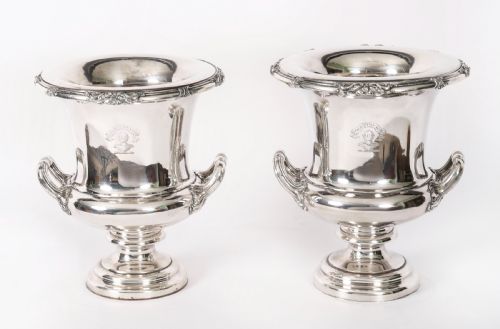
An antique silver ice urn provides the table with a stately centrepiece for chilling wine and champagne during dinner.
Antique Silver Ice Urn
When you search for an antique silver ice urn, you encounter vessels designed to keep bottles cold at the dining table, often listed under wine coolers, champagne buckets and ice pails. The selections span the eighteenth, nineteenth and twentieth centuries, taking forms from the Georgian and Regency periods through to Art Deco and mid-century designs.
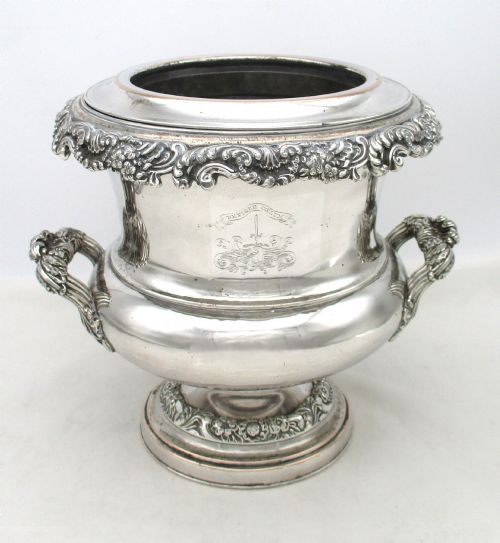
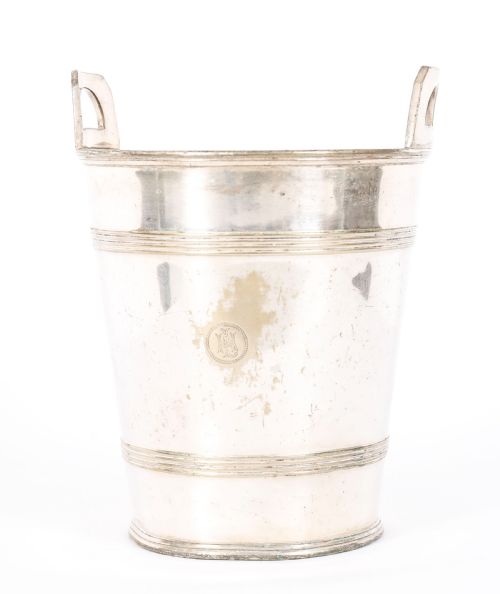
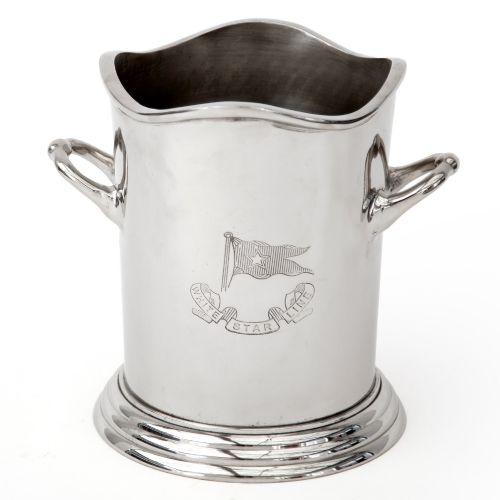
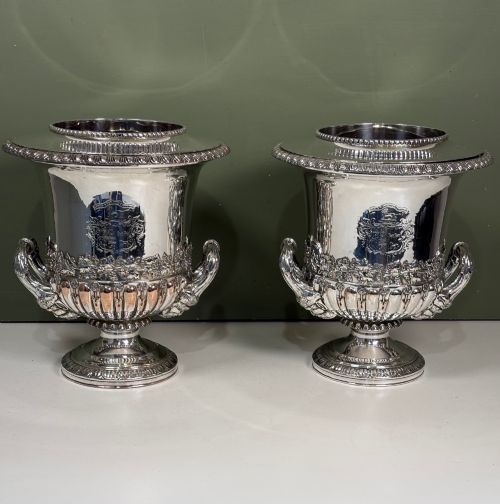
The most common form you meet on this page is the Old Sheffield plate or silver plated campana wine cooler, alongside twin-handled vessels and lidded pails. Pieces originate from makers and workshops in Sheffield, Birmingham and Italy, appearing individually or in matched pairs.
How they were made
Makers shaped these vessels from sterling silver, silver plate, Old Sheffield plate, copper and electroplated nickel silver, sometimes adding gilt interiors or details. Production techniques involved fusing silver to copper sheets in the Old Sheffield method, heavy silver plating over base metals, and casting handle mounts, heraldic crests and decorative motifs separately before attachment.
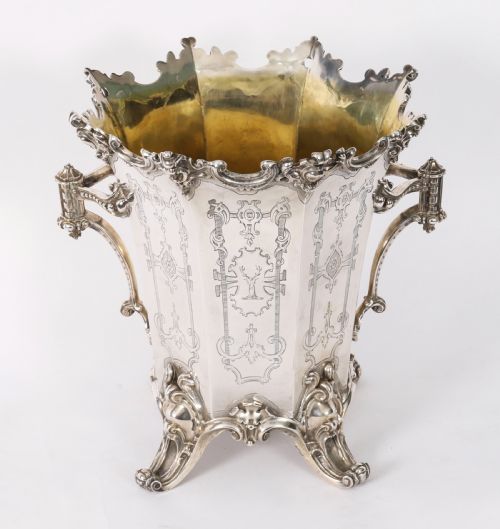
Design characteristics include campana urn shapes, heavy cast rims, applied crests, twin handles and lidded structures featuring cherubs and dolphins.
Listings feature Old Sheffield plate, sterling silver and electroplated nickel silver across Georgian, Regency and Victorian periods.
What varies in quality
The distinction between standard items and superior pieces rests on the crispness of cast decorative details such as foliate rims, handles and heraldic crests. Heavier gauge metalwork and the quality of the original plating or solid sterling construction mark the upper tier of the range.
The presence of crisp maker marks from established workshops like Matthew Boulton or Elkington adds authority, as does the survival of matching pairs rather than single vessels.
Hutton Sheffield·Elkington, Mason & Co·Matthew Boulton & Co·James Dixon & Sons
The Antique Silver Ice Urn Glossary
- Old Sheffield Plate
- A composite material made by fusing a thin sheet of silver to a thicker copper base. This technique was widely used in the eighteenth and nineteenth centuries before electroplating became common.
- Campana
- A bell-shaped vessel form popular during the Regency and Georgian periods. These urns typically feature a flared rim and a footed base.
- Electroplated Nickel Silver
- A base metal alloy of copper, nickel and zinc coated with a layer of silver using an electrical current. This method replaced Old Sheffield plate in many Victorian workshops.
- Gilt
- A thin layer of gold applied to the interior surface of silver or plated vessels. This protected the base metal from the acidic contents of wine.
Antique Silver Ice Urn: Frequently Asked Questions
How do I use an antique ice urn today?
These vessels suit their original purpose of chilling wine and champagne on the dining table or sideboard. Fill them with ice and water to hold bottles during meals.
Take care to dry the interior thoroughly after use to protect silver surfaces and any underlying base metals from moisture damage.
How do I clean silver plate safely?
Wash the vessel gently in warm water with a mild, non-abrasive liquid detergent and a soft cloth. Avoid harsh scrubbing brushes that can wear down thin plating.
Dry the metal immediately with a soft lint-free cloth to prevent water spots and tarnishing.
What is the difference between Old Sheffield plate and silver plate?
Old Sheffield plate involves fusing a layer of silver onto a copper core through heat and pressure, often revealing a thin copper line at cut edges. Standard silver plate uses an electrical process to bond silver over a base metal alloy.
Both materials appear frequently across nineteenth-century wine coolers and champagne buckets.
How can I tell a Regency wine cooler from a Victorian one?
Regency pieces often display classical neoclassical lines such as the campana urn shape with clean proportions and restrained cast mounts. Victorian designs frequently introduce heavier revivalist ornamentation like rococo scrolls and elaborate heraldic crests.
Maker marks and registration dates also help pinpoint the manufacturing era of individual pieces.