


Silver Ice Bucket Urn
A silver ice bucket urn brings classical proportion and glittering service to the table, marrying form with the serious business of chilling wine.
Silver Ice Bucket Urn
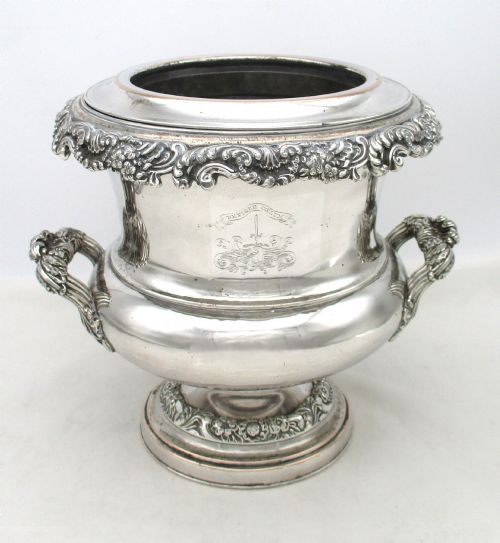
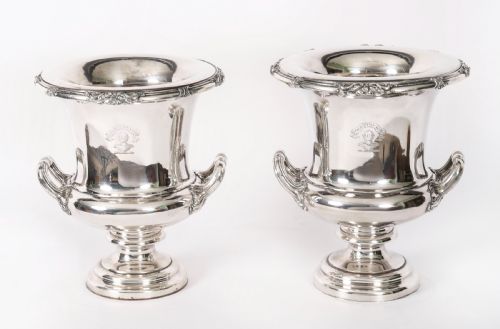
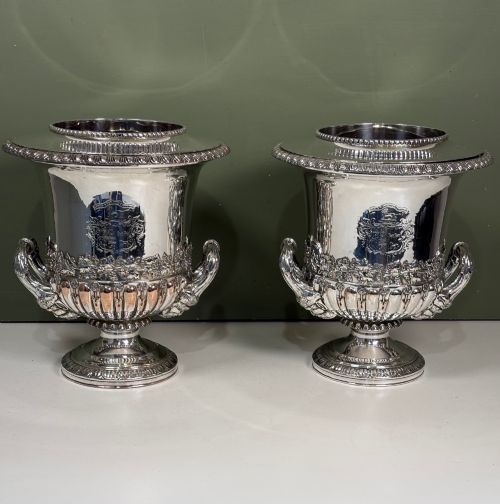
When you search for a silver ice bucket urn, you are looking at substantial vessels designed for chilling champagne, wine, and ice at the dining table. These pieces take the form of classical urns, campana shapes, and lidded pails intended to hold bottles and ice in style.
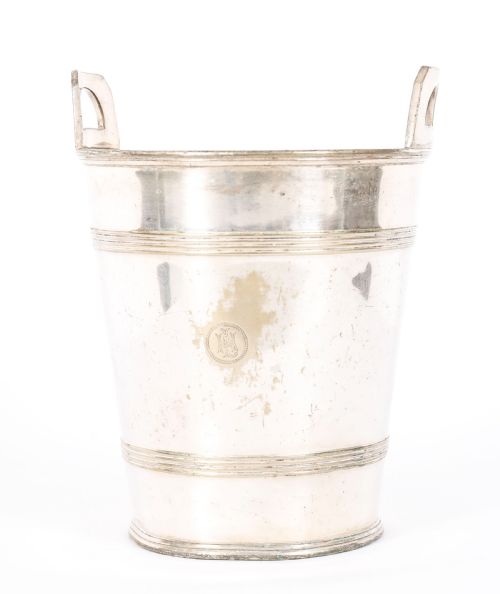
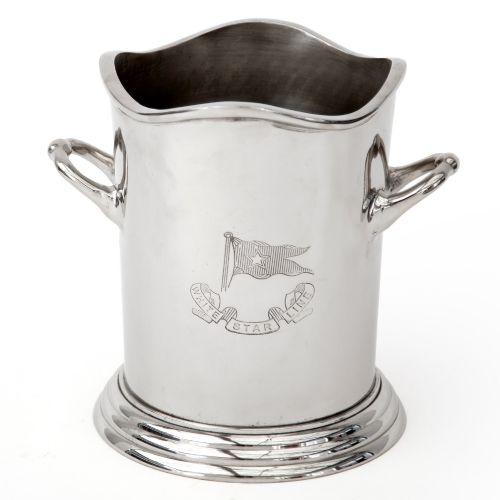
You are most likely to meet silver plate, old Sheffield plate, and electroplated nickel silver versions on this page, dating predominantly from the nineteenth century alongside Georgian, Regency, and Art Deco examples. The forms range from twin-handled coolers to ornate Italian lidded pails.
The selection includes matched pairs and individual showpieces carrying crests, armorials, and maker marks from renowned workshops. They function equally well as decorative centerpieces or practical wine coolers for modern entertaining.
How they were made
Many of the earliest examples utilise old Sheffield plate, a technique fusing a thin sheet of silver onto a copper base before shaping and soldering the vessel. This method leaves a characteristic copper seam visible on edges and undersides where the silver layer wraps around.
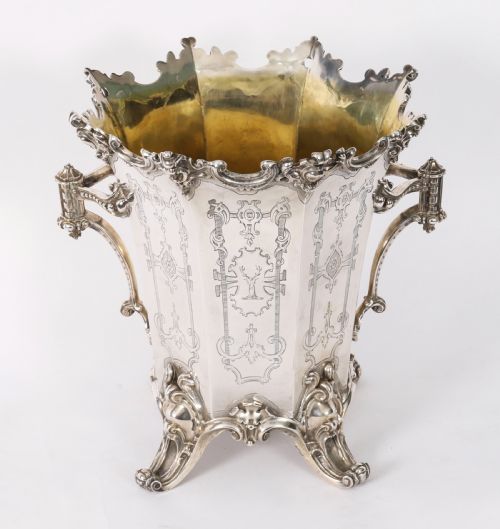
Later nineteenth-century pieces rely on silver plating over base metals or electroplated nickel silver, a process that allowed for crisper cast mounts, handles, and applied crests. Master silversmiths also hammered and cast solid sterling silver for elite commissions, incorporating gilt interiors to resist the corrosive effects of ice and salt.
Materials span sterling silver, old Sheffield plate, copper, silver plate, and electroplated nickel silver, occasionally accented with gilt interiors.
What varies in quality
The distinction between ordinary production and exceptional quality rests in the crispness of the cast mounts and the integrity of the plate. Superior vessels display deeply chased foliage, sharply rendered handles, and heavy gauge metals that retain their structural rigidity.
The presence of crisp maker marks, original armorial crests, and matching pairs elevates the desirability of a piece. Wear to the silver surface reveals the underlying copper base, and the extent of this telegraphs the history of use and polish.
Elkington, Mason & Co·Matthew Boulton & Co·James Dixon & Sons·John Grinsell & Henry Bourne
The Silver Ice Bucket Urn Glossary
- Old Sheffield plate
- A composite material made by fusing a sheet of silver to a copper ingot, common in late eighteenth and early nineteenth-century manufacture before electroplating replaced it. It often shows subtle hints of copper showing through on high points.
- Campana
- A bell-shaped vessel with a flared rim and footed base, heavily favored for Regency and Georgian wine coolers. This classical silhouette mimics ancient pottery and bronze urns.
- Electroplated nickel silver
- A base metal alloy of copper, nickel, and zinc coated with a layer of pure silver via an electrical current. This technique dominated production from the mid-nineteenth century onward.
- Gilt
- A thin layer of gold applied to the interior of a silver vessel to protect the metal from tarnishing and corrosion caused by wine and melting ice. It provides a rich, contrasting interior glow.
- Armorial
- A heraldic crest, shield, or coat of arms engraved or applied to the side of a silver piece, denoting the original aristocratic or institutional owner.
Silver Ice Bucket Urn: Frequently Asked Questions
How do I use a silver ice bucket urn today?
These vessels transition easily from historical display pieces to functional barware for chilling champagne and wine at dinner parties.
Fill the body with ice and water to cool bottles quickly, or use them unfiled as striking floral centerpieces on a sideboard.
What is the difference between old Sheffield plate and silver plate?
Old Sheffield plate is produced by mechanically fusing actual silver to a copper core prior to forming the vessel, rather than applying silver via an electrical bath.
This older method creates a warm, heavy weight and allows discerning collectors to spot thin copper lines where the silver skin meets an edge.
How do I date a silver ice bucket urn?
Dating relies on stylistic clues such as the classical campana shape of the Regency period versus the geometric lines of Art Deco pieces.
Maker marks, stamped registry numbers, and family crests provide further historical anchors when researching specific workshops and decades of manufacture.
Why do some interiors look gold?
A gold-coloured interior indicates gilding, where a thin layer of pure gold is applied to the silver surface.
Silversmiths used this technique to protect the underlying metal from the acidic corrosion of wine and melting ice.