



Pair Silver Wine Buckets
Pair silver wine buckets bring grandeur to any table, combining heavy metalwork with practical elegance for serious hosts.
Pair Silver Wine Buckets
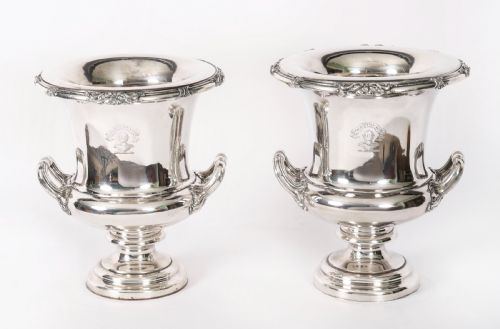
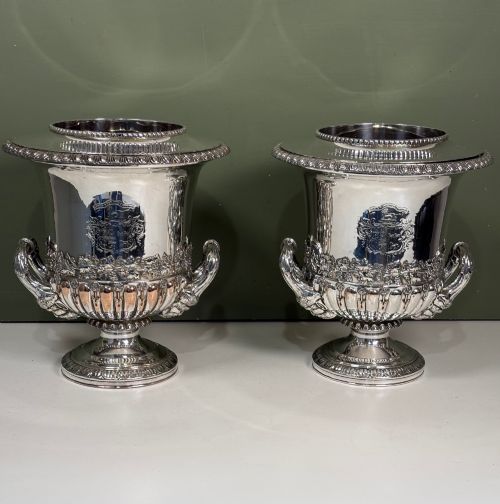
When you search for pair silver wine buckets, you are looking at dual vessels designed to chill bottles for the dining table, ranging from substantial George III Old Sheffield plate to sleek Art Deco floor-standing coolers. The versions you are most likely to meet on this page date from the nineteenth century and utilise silver plate, copper, or base metal rather than solid silver throughout.
The evidence shows forms spanning campana design, twin handles, and floor-standing champagne buckets from makers and designers working across the Georgian, Regency, Victorian, and Art Deco periods. These pieces often function equally well as vases, reflecting the adaptable nature of large metal vessels through changing centuries of domestic use.
How They Were Made
The earliest pieces in the evidence utilise Old Sheffield Plate, a technique fusing a thin sheet of silver to a thicker copper core, which creates a durable and distinctive material. Later nineteenth-century and twentieth-century examples rely on silver plating over base metal or copper, shaped into campana silhouettes or tall floor-standing cylinders.
Detailing on these coolers often incorporates Rococo Revival scrolling, cast handles, and clean geometric lines associated with later Art Deco design. The construction demands robust joining of handles and rims to support the heavy weight of ice and bottles.
Pair Silver Wine Buckets Retail Price Guide 2026
Typical asking prices for pair silver wine buckets among the pieces listed under this phrase on Sellingantiques today, from the lower quarter to the upper quarter. They describe what is for sale here now, not the wider market.
Some nineteenth-century hosts clearly enjoyed wine so much they needed floor-standing champagne buckets to keep the pace.
What Varies in Quality
Quality rests in the crispness of cast ornamentation, such as foliate rims and applied handles, which remain sharp on superior items and soft on lesser ones. The preservation of the underlying copper through the silver layer dictates the visual integrity of Old Sheffield plate.
Proportion and weight distinguish utilitarian vessels from distinguished ones, with heavier gauge metals and balanced campana silhouettes commanding greater presence. Maker attribution, such as work by recognised firms, elevates a pair beyond standard workshop production.
Luc Lanel for Christofle·Hawksworth Eyre and Co·Mappin and Webb
The Pair Silver Wine Buckets Glossary
- Old Sheffield Plate
- An early fusing technique where a thin layer of silver is fused to a copper base. This method produces a warm tone where the underlying copper occasionally telegraphs through edges and wear points.
- Campana
- A bell-shaped vessel design popular during the Regency and Georgian periods. These coolers feature a wide top tapering down to a slender stem and foot.
- Silver Plate
- A thin coating of silver applied over a base metal or copper body. This process allowed makers to achieve the look of solid silver at a more accessible scale.
- Rococo Revival
- A decorative style characterised by asymmetrical scrolls, shell motifs, and exuberant ornamentation. It appears frequently on nineteenth-century metalwork.
Pair Silver Wine Buckets: Frequently Asked Questions
Are these buckets made of solid silver?
Most examples recorded in the evidence are silver plated over copper or base metal, utilising techniques like Old Sheffield Plate rather than heavy solid sterling silver.
This construction method provided the durability and weight required for cooling wine without the prohibitive cost of solid precious metal.
Can I use them as flower vases?
Many of these vessels share forms with traditional vases and function successfully for large floral displays when not chilling wine.
The waterproof metal construction makes them practical centrepieces for dining tables or sideboards.
How do I date a pair of coolers?
Dating relies on stylistic clues, such as the classical campana silhouette of the Regency period or the geometric simplicity of Art Deco pieces from the 1930s and 1940s.
Materials also offer guidance, distinguishing early Old Sheffield Plate from later nineteenth-century and twentieth-century silverplate.
How should I clean silver plated coolers?
Gentle cleaning with a dedicated silver cloth preserves the remaining plate and prevents damage to the underlying copper or base metal.
Avoid aggressive dips or abrasive polishes that strip thin layers of historical plating from the surface.