



Antique Metal Wine Chiller
An antique metal wine chiller brings weight, shine and genuine history to the table when you serve a bottle.
Antique Metal Wine Chiller
An antique metal wine chiller is a functional vessel designed to keep bottles cool at the table, taking forms such as champagne buckets, ice buckets and lidded coolers. When you search for an antique metal wine chiller, you find utilitarian items that double as striking centrepieces for dining rooms.
The pieces on offer span the nineteenth and twentieth centuries, taking in periods like the Georgian era, the Victorian age, the Art Deco movement and mid-century design. You encounter French country and bistro styles alongside formal British silver plate, showing how different cultures approached the ritual of chilled wine.
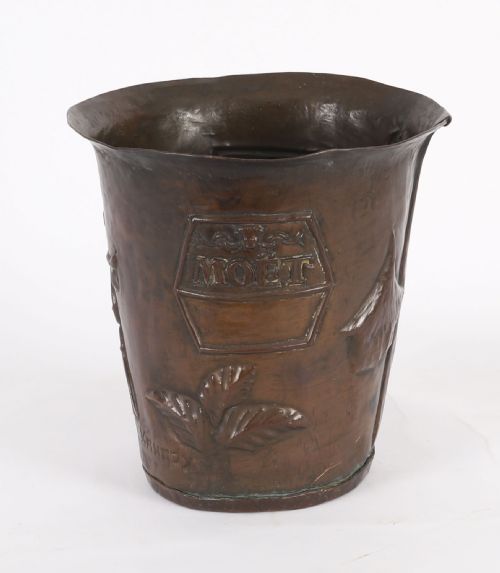
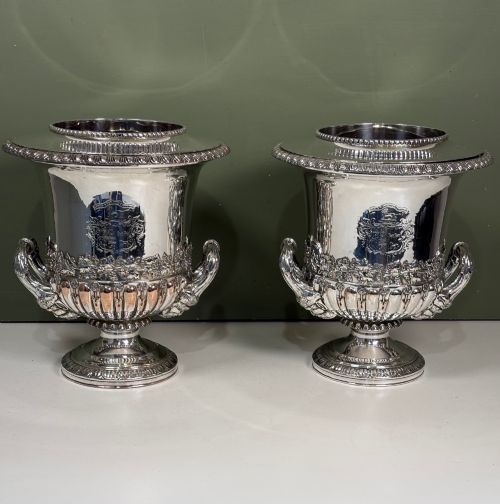
Vessels range from grand pairs of nineteenth-century wine coolers bearing coats of arms to sleek Art Deco chrome items from the 1930s and 1940s. Forms vary from simple flared buckets to heavily embossed bodies and lidded tinware variants.
How they were made
Metals form the core of these items, utilising silver plate, Old Sheffield plate, solid silver, copper, chrome, sheet iron and japanned tinware. Makers formed vessels by hammering, casting and spinning metals, sometimes layering silver over copper or iron bases to achieve a bright finish.
Decoration relied on skilled hand-work, including heavy embossing of floral or classical motifs and the application of japanned finishes to tinware. Makers also engraved armorial bearings and crests into Old Sheffield plate surfaces to denote noble ownership.
Specialised techniques defined specific workshops, such as the silver plating methods of Elkington and the stylish metalwork associated with Christofle and designer Luc Lanel. These approaches ensured durability alongside decorative appeal.
Pontypool japanned tinware coolers prove that eighteenth-century kitchens possessed a fine sense of glossy, dark fashion.
What varies in quality
The distinction between standard production and exceptional work lies in the weight of the metal and the crispness of the hand-finishing. Heavier gauge silver plate and solid copper bodies retain their structural integrity and polish far better over decades of use.
Design attribution elevates certain pieces, particularly when a known maker like Christofle or Elkington produced them, or when a specific designer such as Luc Lanel shaped the aesthetic. Quality also shows in the depth and clarity of hand-embossing and the precision of engraved crests.
Elkington·Christofle·Luc Lanel
The Antique Metal Wine Chiller Glossary
- Old Sheffield Plate
- A composite material made by fusing a thin sheet of silver to a thicker copper base, common in pieces from around eighteen hundred. This technique creates a distinctive edge where the underlying copper shows through wear.
- Japanned Tinware
- Sheet iron or tin coated with specialised varnishes and heated to create a durable, glossy dark finish often decorated in the Pontypool manner. This decorative surface mimics Asian lacquer work.
- Silver Plate
- A thin layer of silver applied to a base metal such as brass, copper or nickel silver to give the appearance of solid silver. It allows for ornate vessels at a lower cost than solid precious metal.
- Art Deco
- A design style from the 1920s and 1930s characterised by geometric shapes, streamlined forms and modern industrial metals like chrome. It replaced earlier floral and classical ornamentation with bold symmetry.
Antique Metal Wine Chiller: Frequently Asked Questions
Can I use these coolers for ice today?
Most of these metal vessels function just as well today for holding ice and chilling bottles as they did when first made. Their original purpose was temperature control at the dining table.
Ensure you empty and dry the interior after use to protect historical linings and prevent moisture damage to vulnerable base metals.
How do I date a metal wine chiller?
Look at the manufacturing style, the type of metal used and any maker marks stamped on the base. Art Deco pieces show geometric lines from the 1930s, while Old Sheffield plate points towards Georgian origins.
Maker stamps and registry marks provide the most reliable clues for pinning down an exact decade of production.
What is the difference between silver plate and Old Sheffield plate?
Old Sheffield plate involves fusing silver directly onto a copper base through an older mechanical process typical of the Georgian period. Standard silver plate usually uses a later electroplating method over nickel silver or brass.
Examining the edges often reveals the underlying copper core characteristic of genuine Old Sheffield pieces.