
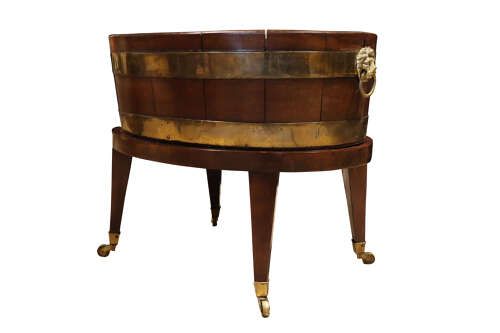


Regency Wine Cistern
A regency wine cistern is a substantial vessel designed for chilling bottles at table, bringing period presence and tactile materials into a room.
Regency Wine Cistern
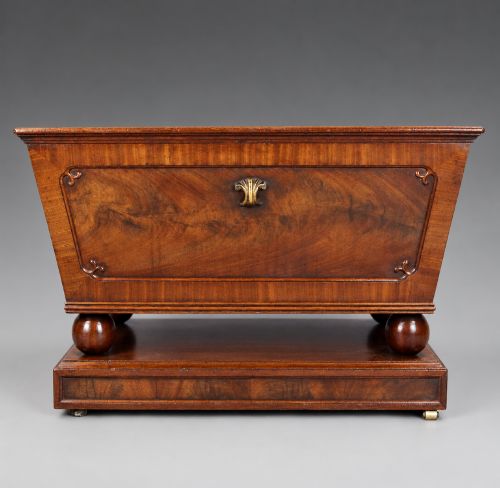
When searching for a regency wine cistern, you encounter vessels produced primarily during the Georgian, Regency, and William IV periods, alongside later revival pieces from the early twentieth century. These objects frequently double in description as wine coolers, cellarettes, or plant jardinières.
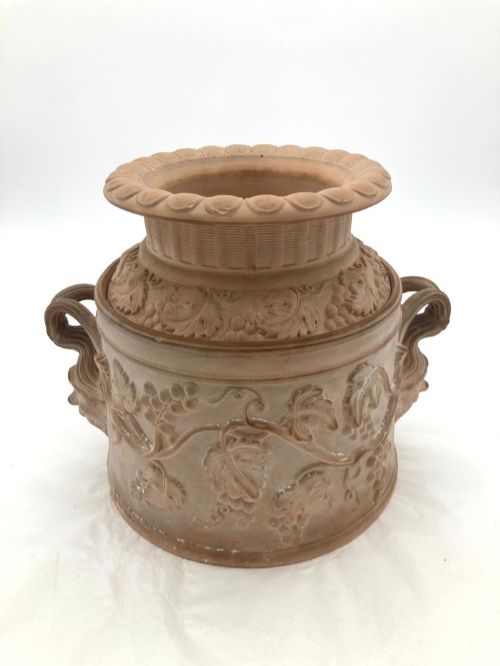
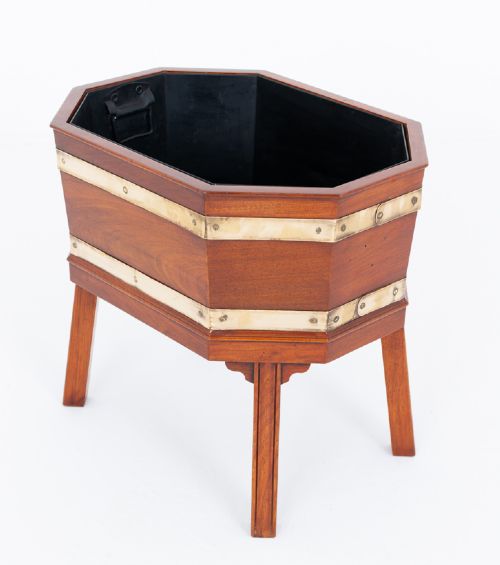
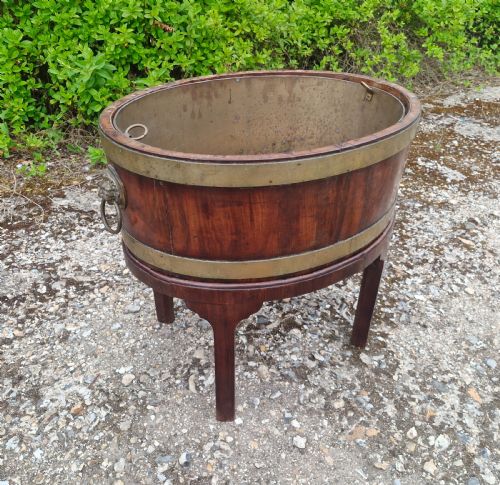
The form appears predominantly in mahogany, often coopered with substantial brass bands, alongside examples executed in Old Sheffield plate, silver plate, bronze, terracotta, stoneware, and japanned tin-ware. Oval and lidded configurations are common, ranging from floor-standing coopered buckets to neoclassical faux marble cisterns of grand scale.
Materials and construction
Cabinetmakers constructed wooden examples using dense timbers such as mahogany and padouk, frequently employing cooperage techniques with tight staves secured by heavy brass banding to hold ice and liquid. Metal variants utilise copper, zinc, brass, and plated metals like Old Sheffield plate, sometimes incorporating bronze mounts or japanned decoration on tin-ware.
Ceramic and stone versions demonstrate alternative moulding techniques, utilising terracotta, Adams stoneware, or faux marble compositions to achieve classical proportions and decorative neoclassical relief.
Some vessels wear a family coat of arms, standing ready to judge your dinner guests' lineage.
Distinguishing quality in these vessels
Quality rests in the integrity of the materials and the precision of the joinery or metalwork, where tight cooperage, heavy gauge brass bands, and well-cast bronze mounts indicate superior manufacture. The choice of timber grain, particularly figured flame mahogany or padouk, elevates the visual weight of wooden forms.
The refinement of classical detailing separates standard production from exceptional pieces, visible in crisp neoclassical ornament, heraldic engraving on metal surfaces, or the sophisticated execution of faux marble and japanned finishes.
Maples & Co
The Regency Wine Cistern Glossary
- Coopered
- Constructed from curved wooden staves bound together with metal hoops, much like a barrel. This method provided the structural strength required to hold heavy loads of ice and liquid.
- Old Sheffield Plate
- A composite material formed by fusing a thin sheet of silver to a thicker copper base. It is identifiable by the rich lustre of the silver combined with occasional glimpses of copper showing through at high points.
- Japanned
- Decorated using a European imitation of traditional East Asian lacquer techniques. Tin-ware treated in this manner displays glossy dark finishes overlaid with ornamental detailing.
- Padouk
- A dense tropical timber valued for its deep reddish-brown colour and stability. It appears in Anglo Indian furniture and vessels from the period.
- Cellarette
- A lockable container used for storing wine bottles near the dining table. The term often overlaps with wine cooler and cistern in historical inventories.
Regency Wine Cistern: Frequently Asked Questions
How do I tell a Regency piece from a later copy?
Distinguishing period manufacture involves examining the ageing of the materials, the construction methods, and the handling of decorative motifs. Authentic early examples show period-appropriate tool marks, timber shrinkage, and hand-beaten or cast metal components.
Later twentieth-century revivals often display standardised construction traits or surface treatments that lack the patination of genuine nineteenth-century pieces.
How can I use a wine cistern at home?
These vessels adapt readily to modern spaces beyond their original dining capacity. Many collectors utilise them as sophisticated umbrella stands in hallways or as floor-standing plant holders for large ferns.
Their robust construction and waterproof metal or wood linings make them practical for holding logs by a fireplace or acting as generous ice buckets for entertaining.
What metals are used in these cisterns?
Metal construction encompasses a variety of materials including brass, copper, bronze, and zinc linings designed to contain moisture. Plated surfaces such as Old Sheffield plate and silver plate provide a bright reflective finish.
Tin-ware treated with japanned decoration offers an alternative metallic medium featuring dark lacquered surfaces.