


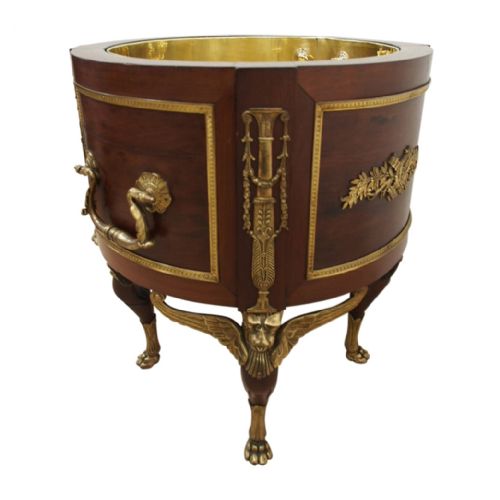


Neoclassical Wine Cooler
A neoclassical wine cooler brings formal proportion and ancient authority directly to the dining room through classical silhouettes and refined decorative motifs.
Neoclassical Wine Cooler
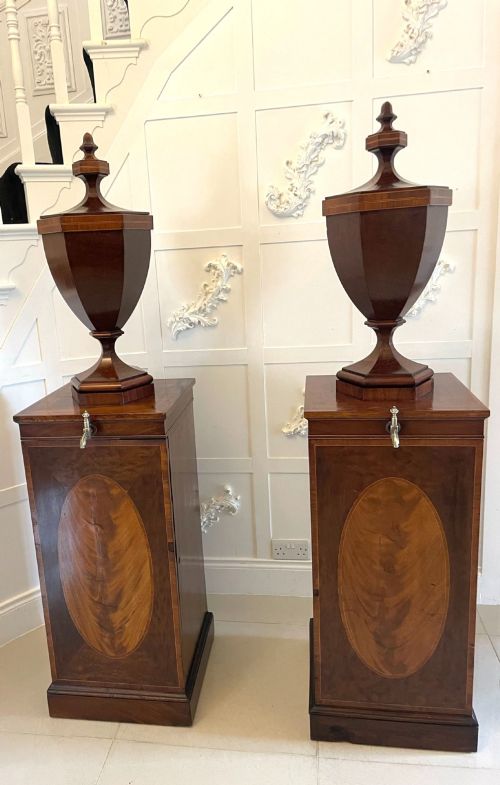
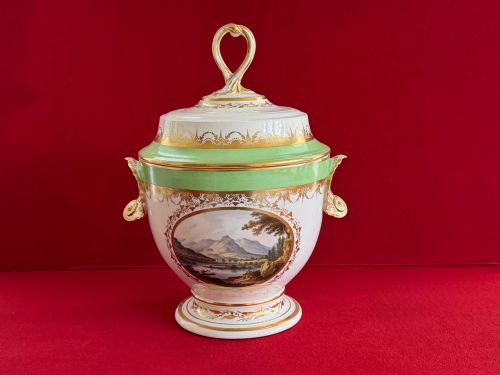
A neoclassical wine cooler serves to chill bottles at the table, taking the physical form of ancient urns, campana vases, pedestals, and jardiniere cisterns. These vessels draw on George III, Regency, and French Empire idioms to project architectural dignity and classical order.
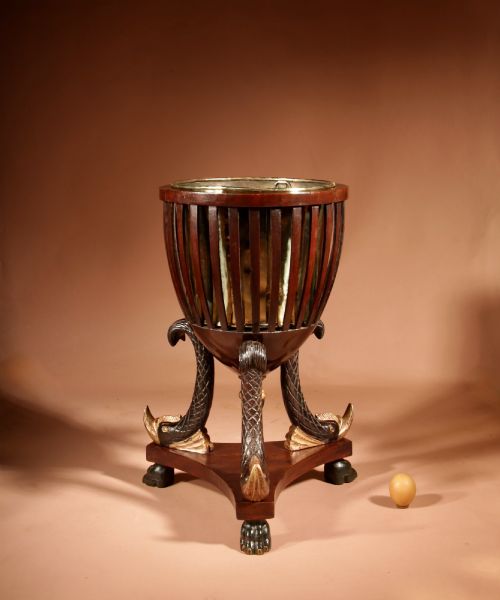
The most likely version to meet here is a mahogany, satinwood, or brass vessel from the nineteenth century, often displaying marquetry inlay, bronze mounts, or faux marble finishes. Many pieces blur the line between wine cisterns, cellarettes, and plant stands, reflecting the versatile interior use of classical forms.
Makers and designers channel ancient Greek and Roman archaeology, echoing the architectural drawings of the period. Whether standing on dedicated pedestals or sitting low as campana vases, these items anchor the room with sculptural presence.
How they were made
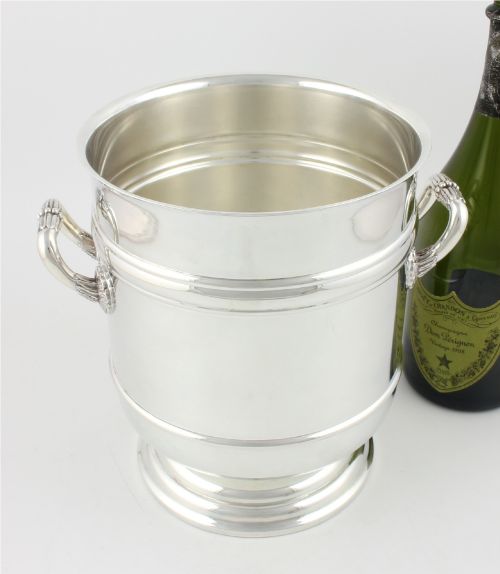
Cabinet makers utilised dense hardwoods like mahogany and figured elm, often pairing them with contrasting veneers such as satinwood and boxwood inlay to trace geometric and floral marquetry. Other examples rely on cast bronze, brass, or silver plate, shaped into campana profiles with applied ormolu mounts.
Stoneware, porcelain, and painted giltwood also appear, demonstrating a broad repertoire of materials across English and continental workshops. Joinery and casting techniques ensured these heavy vessels could hold wet ice and heavy glass bottles without structural failure.
Materials range from traditional mahogany and satinwood to cast bronze, brass, silver plate, stoneware, and painted porcelain.
What varies in quality
Quality rests on the architectural integrity of the design and the precision of its surface enrichment, whether that is finely cut boxwood inlay on satinwood or crisply chased ormolu mounts on mahogany. Pieces following specific design traditions or showing substantial scale possess greater sculptural ambition.
The choice of raw material dictates the visual weight, from solid figured hardwoods to heavy cast bronze and hand-painted porcelain. Superior examples maintain the strict symmetry and proportion demanded by the classical vocabulary without looking crowded or stiff.
George Robertson·Christofle·Adams
The Neoclassical Wine Cooler Glossary
- Campana-shaped
- Having the inverted bell form typical of classical garden vases and metal wine coolers. This silhouette derives directly from ancient Roman and Greek pottery.
- Cellaret
- A lockable container used for storing wine bottles near the dining table. They frequently double as wine coolers in eighteenth and nineteenth-century interiors.
- Ormolu
- Gilded bronze mounts applied to furniture and decorative objects. French Empire pieces often utilise these bright metallic ornaments to emphasise classical structure.
- Marquetry
- The art of applying small pieces of veneer to a structure to form decorative patterns. Satinwood and rosewood examples rely on this technique for their surface pattern.
- Jardiniere
- An ornamental pot or stand for holding plants or flowers. Many neoclassical wine cisterns served this dual purpose in period interiors.
Neoclassical Wine Cooler: Frequently Asked Questions
What is a neoclassical wine cooler?
A neoclassical wine cooler is a decorative vessel designed to chill wine at the table, taking its aesthetic cues from ancient Greek and Roman architecture.
These pieces typically manifest as urns, campana vases, or cellarettes, utilising materials like mahogany, bronze, and porcelain to project classical harmony.
How were these coolers used historically?
Historically, these vessels sat near the dining table filled with ice and water to keep wine and champagne bottles at the correct temperature for guests.
Over time, many of these same vessels transitioned into planters or decorative jardiniere stands within formal drawing rooms.
How do I tell Regency from Georgian pieces?
Georgian pieces often lean on solid mahogany with restrained boxwood stringing, following the balanced proportions of the eighteenth century. Regency examples frequently introduce bolder classical references, such as faux marble finishes, animal paw feet, or French Empire influences.
Examining the secondary woods and the specific geometry of the inlay helps clarify the stylistic shift between periods.
Can I still use an antique wine cooler?
Many of these vessels remain physically robust enough to hold ice and bottles during a modern dinner party, provided the interior lining is watertight.
Owners often choose to use them as dry display pieces, umbrella stands, or planters to protect older wood and metal finishes from moisture damage.