




Antique Wine Cooler Tub
An antique wine cooler tub holds bottles at the table or supports a large plant in the hall.
Antique Wine Cooler Tub
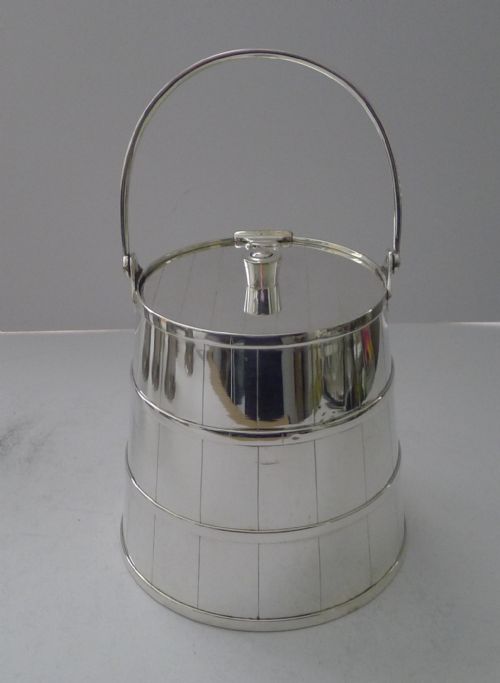
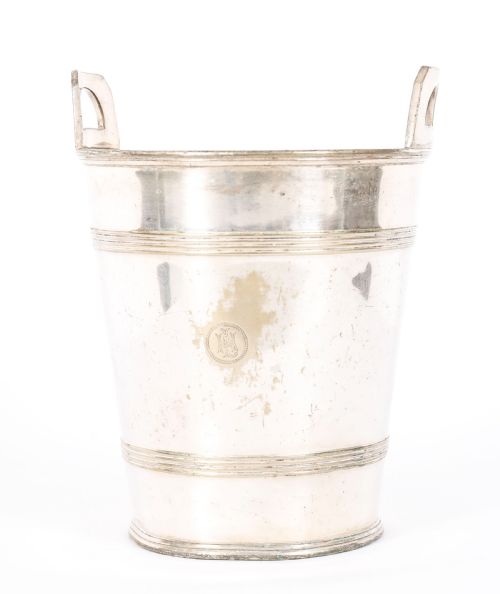
When you search for an antique wine cooler tub, you encounter vessels built to hold ice, water, and wine bottles during dining, or later adapted to serve as planters and jardinières. The examples on this page span the eighteenth, nineteenth, and early twentieth centuries, reflecting changing domestic habits from Georgian formal dining rooms to Edwardian conservatories.
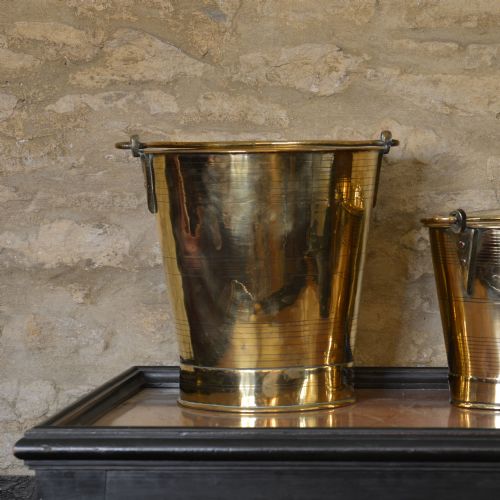
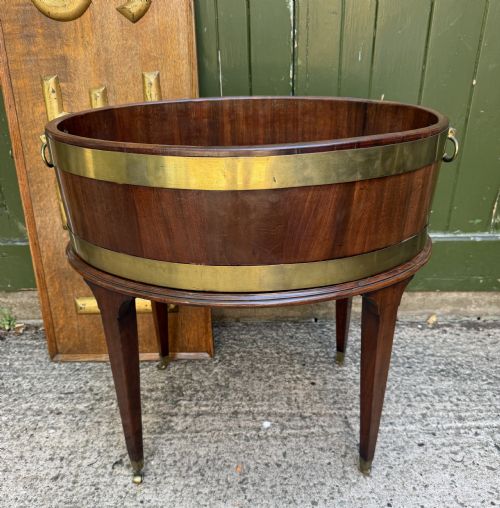
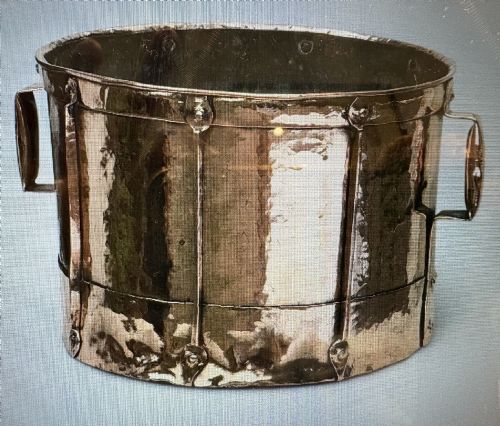
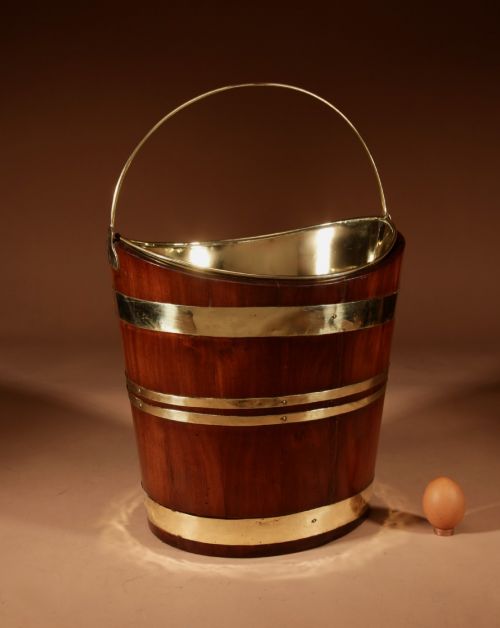
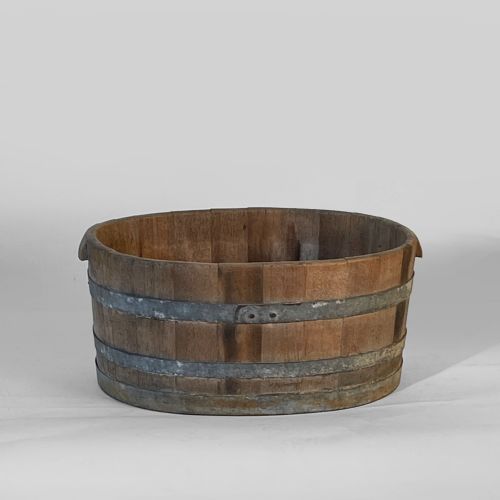
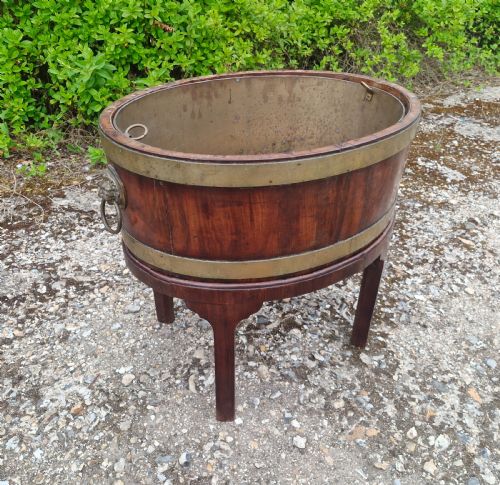
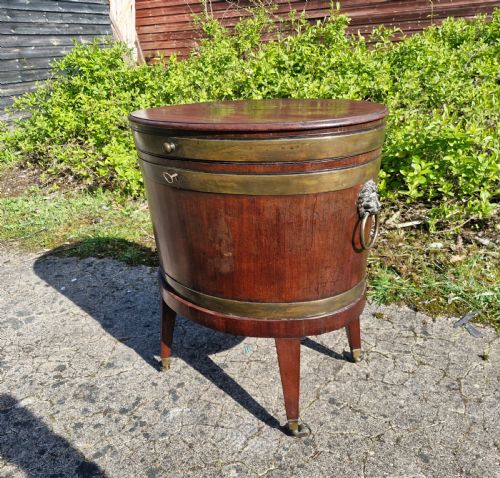
The most common forms you meet are coopered wooden buckets bound in metal bands, oval mahogany vessels often set upon low stands, and heavy metal vessels in brass, copper, and silver plate. Many items share dual purposes in their titles, appearing as wine coolers, cellarettes, peat buckets, and tea stoves.
Origins stretch across English, French, and Anglo-Indian workshops, moving from strict neoclassical proportion in the Georgian era towards decorative copper work in the Art Nouveau and Art Deco periods.
Materials and construction
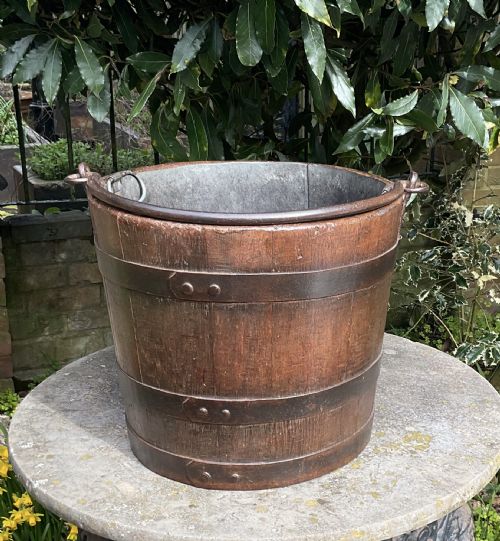
Makers built wooden vessels using traditional cooperage techniques, joining curved staves of mahogany, oak, walnut, or pine with tight joints. These wooden bodies received robust support from fitted brass bands, iron hoops, or brass drop handles.
Metal vessels relied on sheet brass, copper, and silver plate, sometimes shaped by hand with visible planishing marks or cast with classical ornament. Interior zinc or cut glass liners protected the timber and metal from prolonged exposure to melting ice and moisture.
Several vessels started life chilling wine in the eighteenth century before spending the twentieth century holding ferns.
Judging the standard
The standard rests on the precision of the cooper's joinery, the thickness and warmth of the timber selection, and the crispness of any cast brass mounts or lion-mask handles. Original stands, liners, and matching metal bands elevate a piece significantly above items that have lost their internal fittings or received replacement hardware.
Proportion and scale dictate the visual weight of the vessel, separating utilitarian containers from finely articulated pieces designed for prominent display in a formal interior.
Hutton Sheffield·Elkington·Christofle·Lister and Co
The Antique Wine Cooler Tub Glossary
- Coopered
- Made by a cooper using curved wooden staves bound together with metal hoops. This method ensures liquid containment in tubs and buckets.
- Cellarette
- A lockable container used to store bottles of wine securely in the dining room. They often sit on low stands or feet.
- Jardiniere
- An ornamental pot or stand designed to hold plants and flowers. Many wine coolers transitioned to this role over time.
- Ferrat
- A traditional French metal measure or container utilised for grain or liquids. They appear in copper and brass across the nineteenth century.
- Planishing
- The process of smoothing metal with a small hammer, leaving subtle faceted marks. This technique provides texture on copper and brass surfaces.
Antique Wine Cooler Tub: Frequently Asked Questions
What is an antique wine cooler tub?
An antique wine cooler tub is a vessel originally designed to chill wine bottles with ice water at the dining table. They were constructed from timbers like mahogany and oak, or formed from metals such as copper and silver plate.
Over decades, many of these containers found new utility as planters, jardinières, or decorative storage bins in hallways and reception rooms.
How were these tubs used originally?
Dining rooms during the Georgian and Victorian periods required vessels that could keep wine cold close to the table without constant trips to the kitchen. Servants filled the wooden or metal tubs with ice and water to hold multiple bottles.
Some smaller forms served as tea stoves or peat buckets, keeping fuel or water warm near the hearth.
How can I tell the period of a tub?
Dating relies on the combination of materials, joinery techniques, and decorative styles visible on the piece. Georgian and Regency pieces often feature precise mahogany construction with brass lion-mask handles and fine banding.
Later Victorian and Edwardian examples introduce heavier copper work, silver plating, and distinctive manufacturing stamps from known firms.