
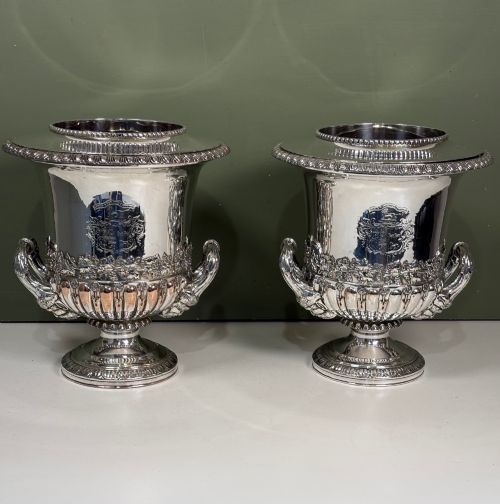


Engraved Champagne Cooler
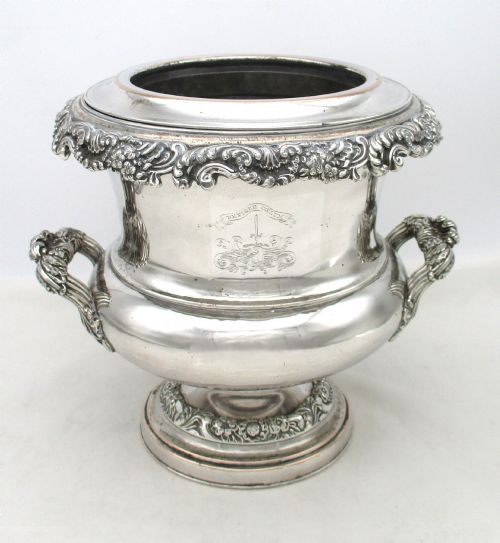
These engraved champagne cooler examples bring substance to a dining table, combining heavy metalwork with crisp armorial or crest engraving.
Engraved Champagne Cooler
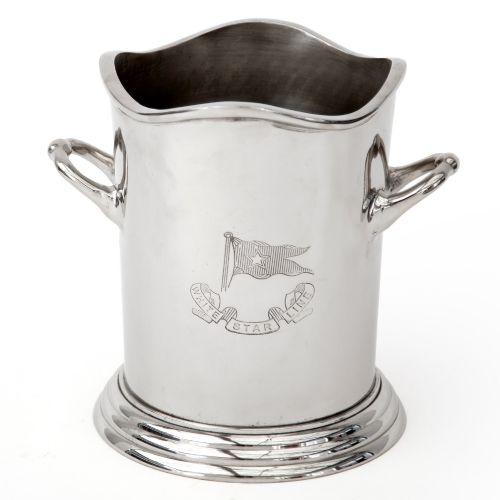
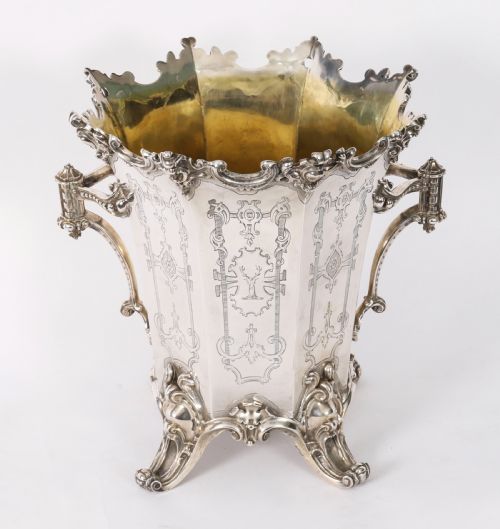
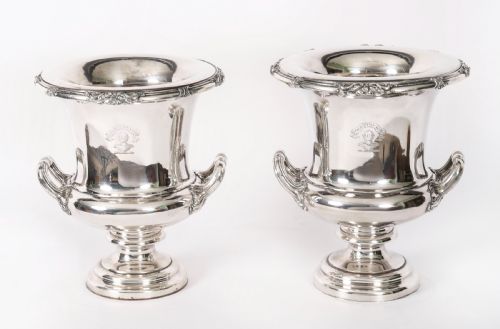
When you search for an engraved champagne cooler, you are looking at substantial vessels designed to chill wine or champagne at the table. The examples listed here span periods from the eighteenth century through to the 1930s, taking forms such as twin-handled wine coolers, champagne buckets, and bowls.
You are most likely to meet silver plated and Old Sheffield Plate pieces originating from the nineteenth century and the Georgian or Regency eras. Makers and workshops stamp their vessels, while crests, coats of arms, or inscriptions like the White Star Line and the First Lancashire Rifle appear across the metal bodies.
How they were made
The material evidence shows a reliance on Old Sheffield Plate, silver plate, and electroplated nickel silver, alongside copper, pewter, and gilt details. Old Sheffield Plate involves fusing a thin sheet of silver to a thicker copper base, a technique that creates a durable metal body.
Engraving requires cutting lines directly into the metal surface by hand to form crests, coats of arms, or commemorative text. Workshops then shape these metals into heavy-walled vessels with applied handles, rims, and footed bases.
A pewter champagne bowl listed here once served patrons in a bustling Paris restaurant before finding its way to the antique market.
What varies in quality
The standard of a cooler rests on the crispness of the hand engraving and the integrity of the base metal. Sharp, deep armorial crests cut cleanly into the metal indicate careful workshop execution, whereas worn or shallow markings suggest heavy past polishing.
Weight and balance distinguish the metalwork, alongside the survival of original applied handles and borders. Pieces retaining their original fused silver layers or clear maker marks hold greater presence than later plated alternatives.
Elkington, Mason and Co·Christofle·Matthew Boulton and Co
The Engraved Champagne Cooler Glossary
- Old Sheffield Plate
- An early method of fusing silver and copper together before rolling them into sheets for smithing. This technique leaves a subtle copper seam visible at exposed edges.
- Silver Plate
- A layer of silver applied over a base metal such as copper or nickel. This method offered the heavy appearance of solid silver at a lower cost.
- Crest
- A specific heraldic device engraved onto the metal surface to denote a family or military regiment. These marks often link a vessel to its original owner.
- Electroplated Nickel Silver
- A base alloy of copper, nickel, and zinc coated with silver using an electrical current. This process became widespread during the nineteenth century.
- Coat of Arms
- A complete heraldic design featuring a shield, crest, and motto. Engravers rendered these complex compositions onto the bodies of wine coolers.
Engraved Champagne Cooler: Frequently Asked Questions
How were these coolers used?
These vessels were filled with ice and water to chill wine and champagne bottles during formal dining. Servants placed them on side tables or directly on the dining table.
The substantial metal walls kept bottles cold throughout a meal. Twin handles allowed staff to carry the heavy vessels when filled with ice.
How do I clean an old cooler?
Wash the vessel gently using warm water and mild soap to remove dust and residue. Avoid harsh abrasive cloths that can wear down the surface.
Apply a silver polish specifically formulated for plated items only when necessary. Regular wiping with a soft cloth preserves the existing finish and engraved details.
Can I use these for champagne today?
These vessels function well as ice buckets for modern dining and entertaining. Their sturdy metal construction holds ice and bottles without issue.
Take care to dry the interior thoroughly after use to prevent moisture damage. Avoid leaving standing water inside the vessel for extended periods.
How do I tell Old Sheffield Plate apart?
Old Sheffield Plate reveals a thin line of reddish copper where the silver layer has worn away along edges or raised borders. This fusion technique differs from later electroplating.
The metal feels heavy and displays a warm tone distinct from modern silver plate. Makers working in this manner often omitted standard electroplate marks.