


Silver Bottle Cooler
These silver bottle cooler pieces keep wine chilled in style, uniting practical barware with striking period design.
Silver Bottle Cooler
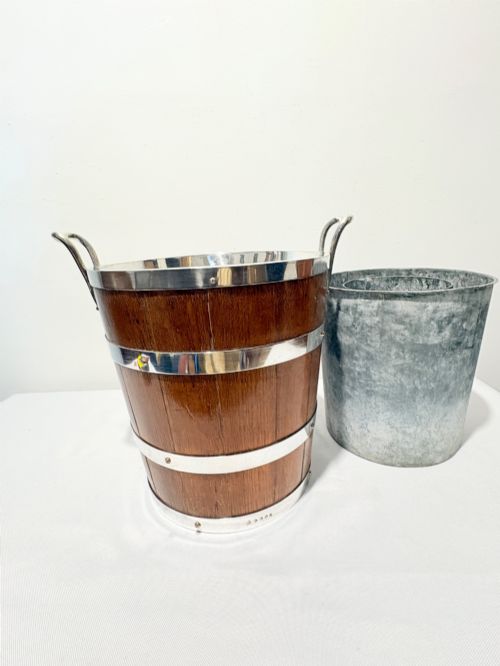
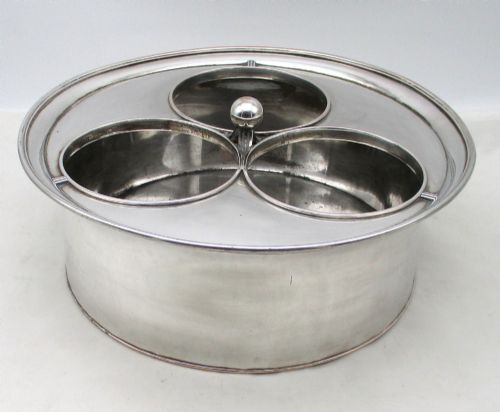
A silver bottle cooler serves as a practical vessel designed to keep wine or champagne chilled during dining and entertaining. These pieces appear in forms ranging from single champagne buckets to multiple bottle coasters and large planters.
The versions met most frequently on this page span the nineteenth and twentieth centuries, encompassing Georgian, Victorian, Edwardian, and Art Deco aesthetics. Makers from England, France, Germany, and Wales shaped these barware items from silver plate, copper, pewter, and oak.
Objects catalogued under this category function primarily as wine coolers, ice buckets, and champagne holders. Their origins stretch from domestic dining rooms to Parisian restaurants and specific British workshops.
Materials and construction
Makers utilised silver plate and Old Sheffield Plate alongside solid silver, copper, pewter, and oak to construct these vessels. Techniques involved heavy embossing, silver plating over base metals, and combining timber with metal components.
French and English workshops employed skilled smiths to shape champagne buckets and wine coolers with applied coats of arms, handles, and textured surfaces. The integration of pewter and copper demonstrates the variety of metalworking traditions applied to barware.
Materials recorded across the inventory include silver plate, Old Sheffield Plate, solid silver, copper, pewter, and oak.
What separates the finest examples
Quality rests upon the weight of the metal, the crispness of embossed decoration, and the integrity of applied crests or coats of arms. Substantial gauge silver plate and heavy pewter distinguish superior vessels from lighter commercial items.
The reputation of the maker, such as prominent Parisian houses or established British silversmiths, elevates certain pieces. Well-executed handles, secure mounts, and preserved plating define the upper range of these wine coolers.
Christofle·James Dixon And Sons·Ercuis·Luc Lanel
The Silver Bottle Cooler Glossary
- Old Sheffield Plate
- A composite material made by fusing a thin sheet of silver to a thicker copper base, common in eighteenth and nineteenth-century manufacturing. This technique produces distinct edge lines where the underlying copper shows.
- Silver Plate
- A layer of silver applied to a base metal such as copper or Britannia metal. This process allowed makers to achieve the appearance of solid silver at a lower production cost.
- Art Deco
- A design style popular during the nineteen-twenties and nineteen-thirties, characterised by geometric shapes and streamlined forms. Pieces from this era often display clean lines and minimal ornament.
- Champagne Bucket
- A deep vessel designed to hold ice and water alongside a bottle of sparkling wine. These items frequently feature sturdy side handles for transport between table and sideboard.
- Wine Coaster
- A small, flat-bottomed tray or basket used to hold a bottle and protect table surfaces from condensation. Some larger variants accommodate multiple bottles or function as planters.
Silver Bottle Cooler: Frequently Asked Questions
How do I clean a silver plated wine cooler?
Clean these items using a soft cloth and a mild silver polish formulated to protect plated surfaces. Avoid harsh abrasives that might wear away the silver layer over the base metal.
Wash the interior with warm soapy water and dry thoroughly to prevent water spotting. Regular gentle maintenance preserves the original finish.
Can I use an antique champagne bucket for daily dining?
These vessels remain fully functional for holding ice and chilled bottles during meals or gatherings. Their durable construction suits regular use in modern dining settings.
Take care to empty and dry the interior after each use to protect the metal surface. Placing a protective mat beneath the cooler helps prevent scratches on wooden tables.
How do I date an old silver bottle cooler?
Examine the style, construction marks, and any engraved coats of arms or maker stamps on the base. Art Deco pieces display geometric lines, while Victorian examples often feature heavy embossing.
Consulting historical maker registries helps link specific hallmarks or manufacturer names to particular decades. Materials like Old Sheffield Plate point towards the nineteenth century.
What is the difference between Old Sheffield Plate and silver plate?
Old Sheffield Plate involves fusing a thin layer of silver directly onto a copper ingot before rolling it into sheets. This traditional method creates a distinctive appearance with subtle copper bleed at the edges.
Standard silver plate uses an electroplating process developed later in the nineteenth century to deposit silver onto a base metal. This newer technique produced a more uniform silver coating.