
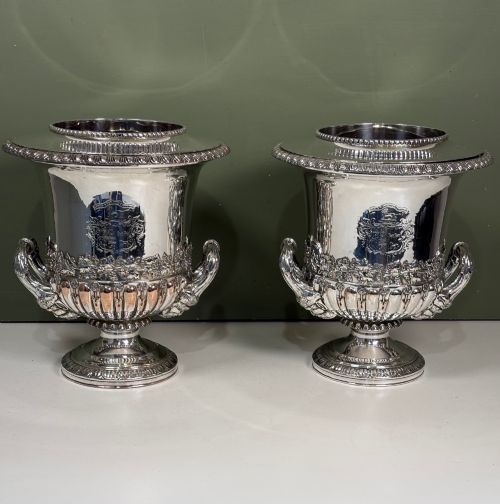


Engraved Silver Wine Bucket
An engraved silver wine bucket brings formal nineteenth-century ceremony to the dining table, offering deep cooling bowls paired with crisp armorial decoration.
Engraved Silver Wine Bucket
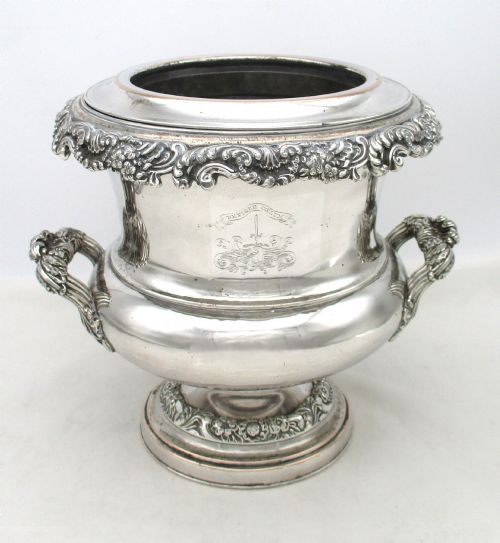
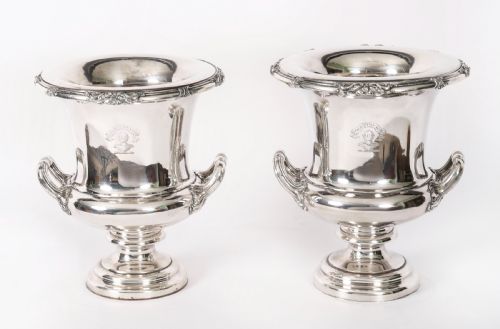
When you search for an engraved silver wine bucket, you are looking at substantial vessels designed to chill bottles for the table using ice or cold water. The examples you are most likely to meet on this page span the Georgian, Regency, and Victorian periods, often taking the form of twin-handled coolers or deep champagne buckets.
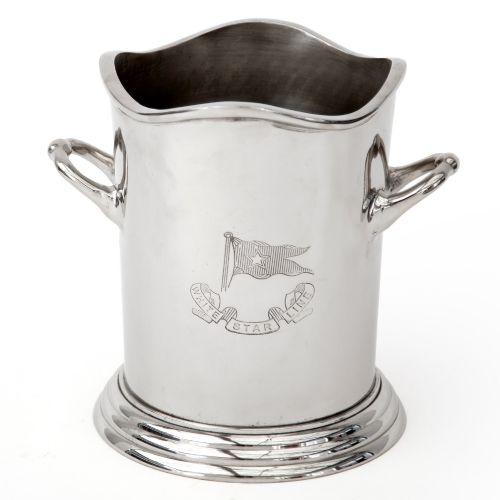
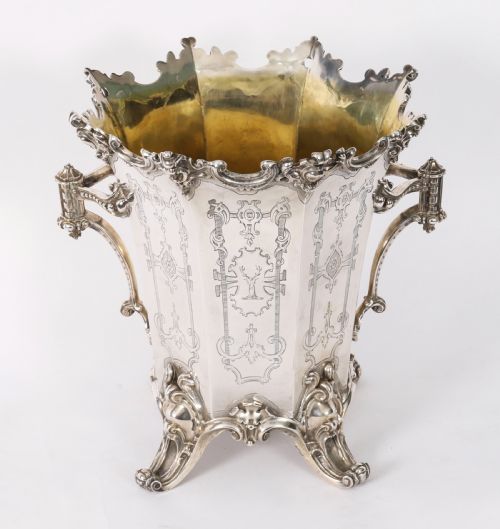
Many of these pieces display fine armorial work, family crests, or specific regimental inscriptions such as the First Lancashire Rifle. They move between formal dining rooms and maritime settings, including pieces linked to the White Star Line or French bistro service.
The materials range from early Old Sheffield plate and solid silver to electroplated nickel silver and copper. Forms vary from urn-shaped George III coolers to simpler twentieth-century champagne bowls.
How they were made
Makers formed these vessels using traditional silversmithing techniques, often fusing thin sheets of silver to copper bases in Old Sheffield plate or employing later electroplating methods. Workshops shaped the heavy metal bodies by hand or used early rolling mills before applying chased and engraved details.
Engraving was executed by hand using sharp gravers to cut crests, coats of arms, and foliate borders directly into the metal surface. Handles, rims, and bases were cast separately and soldered or pinned to the main body.
One unexpected bucket arrived straight from a bustling Paris restaurant service, complete with the honest dents of daily French dining.
What varies in quality
The crispness of the hand engraving and the depth of the chased relief work distinguish the finest workshop output from standard commercial production. Crisp armorial details and substantial gauge metal indicate superior manufacturing standards.
The survival of the original copper core beneath worn silver plating, known as bleeding, changes the visual character of older pieces. The weight of the vessel and the balance of applied handles also separate master-maker pieces from simpler utilitarian barware.
Elkington, Mason and Co·Christofle·Matthew Boulton and Co
The Engraved Silver Wine Bucket Glossary
- Old Sheffield plate
- A composite material made by fusing a thin sheet of silver to a thicker copper base. This technique was widely used before the invention of electroplating.
- Electroplated nickel silver
- A base metal alloy of copper, nickel, and zinc coated with a layer of pure silver through an electrolytic process. It became common in the mid-nineteenth century.
- Coat of arms
- A distinctive heraldic design displayed on a shield, frequently engraved onto silver wine buckets to denote family ownership or institutional patronage.
- Crest
- A smaller armorial device placed above the shield in heraldry, often found engraved alongside mottoes on antique silver vessels.
- Regency
- A British design period spanning the early nineteenth century, characterised by classical revival motifs, bold forms, and restrained ornament.
Engraved Silver Wine Bucket: Frequently Asked Questions
How do I clean an engraved silver wine bucket?
Use a soft cloth and a reputable silver cream designed to protect delicate plating. Avoid abrasive pads that can wear down the engraved details over time.
Wash the interior gently with warm soapy water and dry thoroughly after use to prevent moisture spotting on the metal.
Can I use these buckets for ice today?
These vessels were originally designed to chill wine and hold ice for the dining table. Modern use follows the same practical purpose.
Ensure ice is not left sitting against vulnerable plated surfaces for extended periods after the evening concludes.
How do I date an old silver bucket?
Examine the manufacturing technique, as Old Sheffield plate predates nineteenth-century electroplating methods. Maker marks and style periods also provide clear chronological markers.
Armorial crests and engraved inscriptions often reference specific historical regiments or family lineages that help narrow the date.