



Engraved Silver Wine Urns
These engraved silver wine urns and coolers bring substantial presence to a dining room, offering the heavy metals and detailed chasing collectors seek for period hospitality.
Engraved Silver Wine Urns
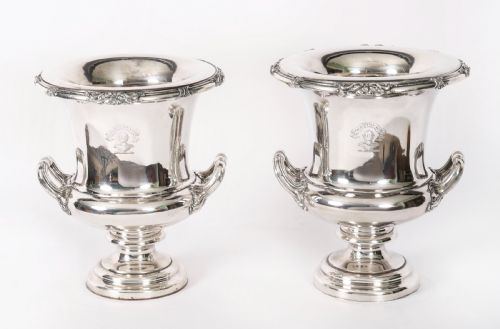
When you search for engraved silver wine urns, you encounter substantial vessels designed to chill or hold wine at the table, predominantly taking the form of wine coolers, champagne buckets, and ewers. These pieces emerge chiefly from the Georgian, Regency, and Victorian periods, carrying the weight and presence characteristic of formal nineteenth-century dining.
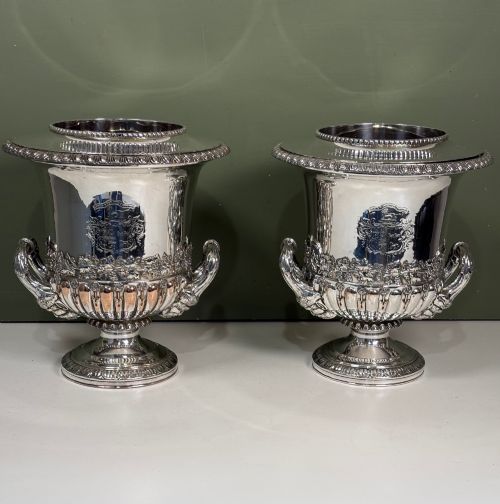
The versions most commonly met on this page span the late eighteenth century through to the early twentieth century, with Old Sheffield plate and silver plating appearing frequently alongside solid metal examples. Makers such as Matthew Boulton and Elkington, Mason & Co produced many of these twin-handled vessels, often incorporating crested engraving or armorial bearings.
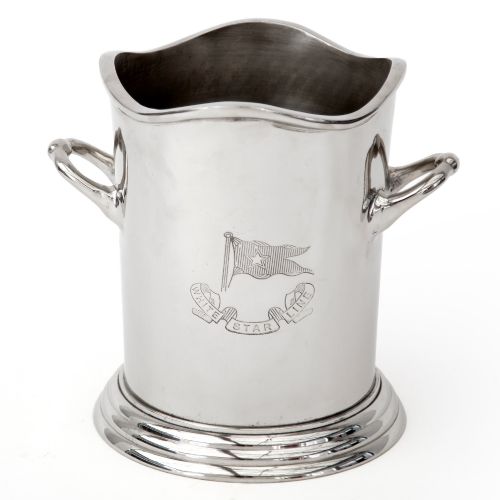
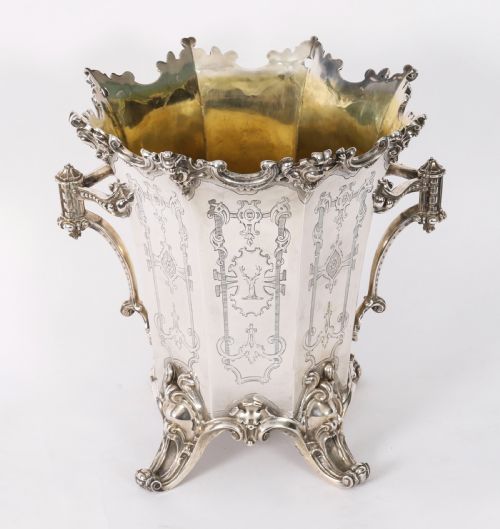
Forms range from classical urn-like proportions to twin-handled bucket shapes, sometimes displaying neoclassical lines or later Rococo Revival ornamentation. Maritime connections also surface in specific vessels, demonstrating how these cooling urns served functional roles across different sectors of society.
How they were made
The construction of these pieces relies heavily on Old Sheffield plate, silver plating, and solid metals such as copper and electroplated nickel silver. Old Sheffield plate involved fusing a thin layer of silver to a copper base, creating a durable material that allowed makers to apply crisp engraved decoration without compromising the underlying structure.
Silversmiths employed techniques like hand engraving, chasing, and mounting cast handles to build up the heavy, structured forms seen in George III and Regency pieces. Gilt interiors occasionally appear, providing a contrasting finish that protected the base metal from the corrosive effects of wine and ice.
Engraved Silver Wine Urns Retail Price Guide 2026
Typical asking prices for engraved silver wine urns among the pieces listed under this phrase on Sellingantiques today, from the lower quarter to the upper quarter. They describe what is for sale here now, not the wider market.
Listings feature items from the eighteenth and nineteenth centuries, spanning Georgian, Regency, and Victorian styles executed in silver plate, copper, and old Sheffield plate.
What varies in quality
The depth and clarity of the engraved crests or armorials separate the finer examples from standard production pieces, reflecting the skill of the hand that cut the metal. Crisp definition in cast handles, applied borders, and heraldic details indicates a higher standard of workshop output.
The preservation of the underlying metal base on plated items marks another distinction, as excessive polishing over generations can thin the silver layer to reveal the copper beneath. Substantial gauge metal and well-balanced proportions demonstrate the ambition of the original maker.
Elkington, Mason & Co·Matthew Boulton & Co
The Engraved Silver Wine Urns Glossary
- Old Sheffield plate
- An early form of plated metal produced by fusing silver and copper together under heat before rolling it into sheets. This technique results in a distinctive warm lustre and allows the base copper to show through subtly at high wear points on older pieces.
- Crest
- A heraldic device engraved onto the body of a wine cooler or ice bucket to denote the family ownership. These personal marks add documentary interest for collectors researching the provenance of individual vessels.
- Electroplated nickel silver
- A base metal alloy of copper, nickel, and zinc coated with a layer of pure silver through an electrolytic process. Introduced in the nineteenth century, this method largely superseded traditional plating techniques.
- Ewer
- A large pitcher with a wide spout and looped handle, historically used for pouring water or wine at the table. In this context, they share the decorative engraved vocabulary of contemporary wine coolers.
Engraved Silver Wine Urns: Frequently Asked Questions
What are engraved silver wine urns?
These pieces are large metallic vessels designed to hold ice and bottles at the dining table, combining practical cooling functions with decorative chasing and engraving. They range from eighteenth-century Old Sheffield plate coolers to later nineteenth-century electroplated versions.
Collectors prize them for their historical presence and the quality of their heraldic crests, which often record the original owning families.
How were these wine coolers used?
Historically, these vessels stood on the sideboard or floor beside the dining table, filled with ice and water to chill wine before serving. Ewers and pitchers also served to pour liquids or replenish glasses during formal meals.
Their heavy construction kept temperatures low over the course of long dining services in grand households.
How do I care for silver plated urns?
Maintenance requires gentle cleaning with non-abrasive silver foams and soft cloths to preserve the thin plated layers and delicate engravings. Avoid harsh dips that can strip the remaining silver from the copper or base metal underneath.
Storing them in dry environments helps prevent tarnishing and protects the integrity of any gilt interiors.
How do I tell Georgian periods apart?
Georgian and Regency pieces typically exhibit neoclassical restraint, featuring clean urn shapes, reeded handles, and subtle armorial engraving. Later Victorian examples often adopt heavier Rococo Revival ornamentation with bold cast scrollwork and floral motifs.
Examining the manufacturing marks, weight, and plating technique helps establish whether a piece belongs to the eighteenth or nineteenth century.