





Silver Wine Urns
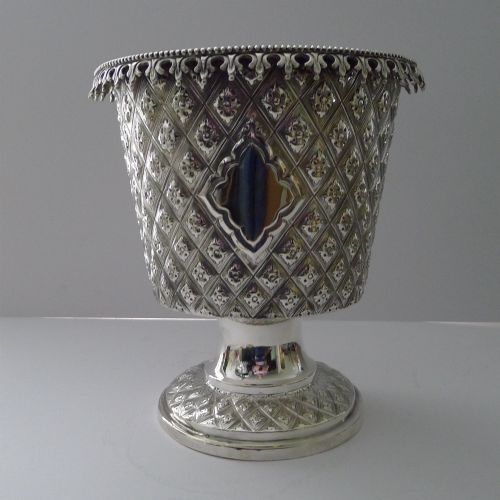
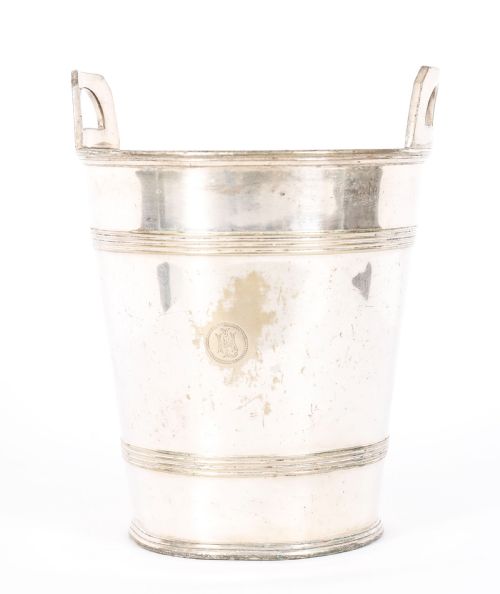
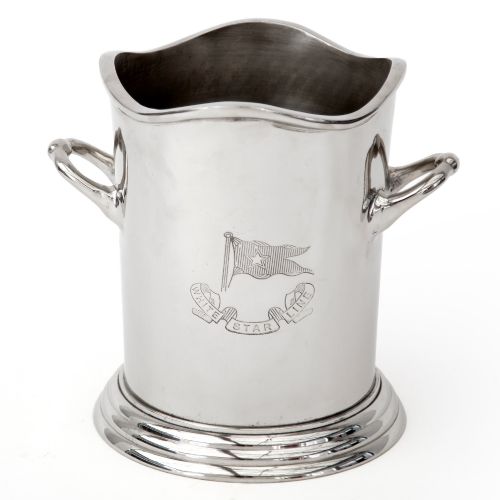
Silver wine urns are classic vessels designed for chilling bottles at table, combining practical service with sculptural weight.
Silver Wine Urns
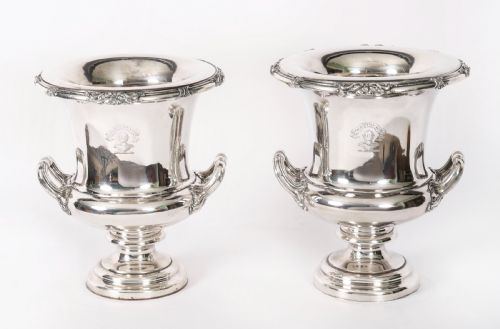
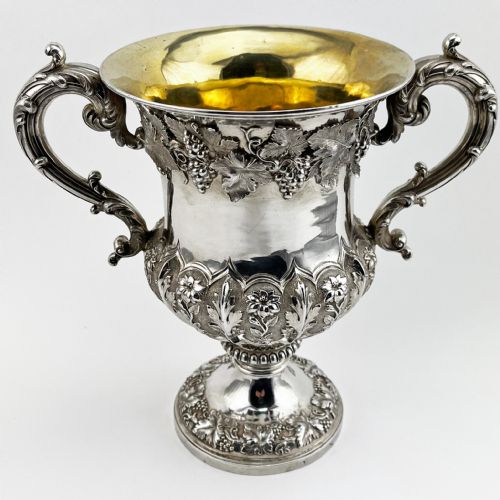
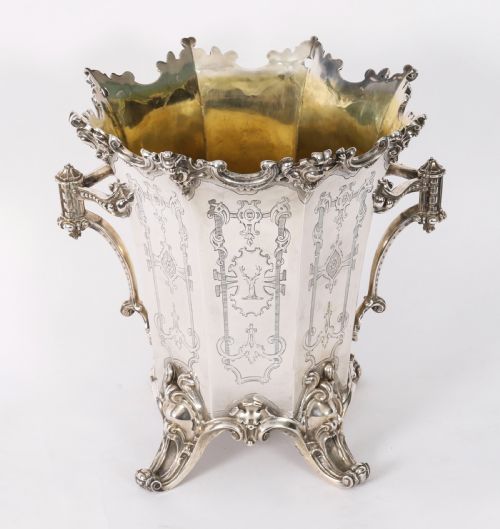
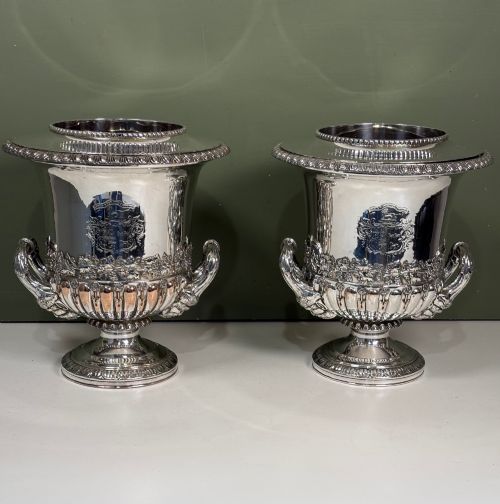
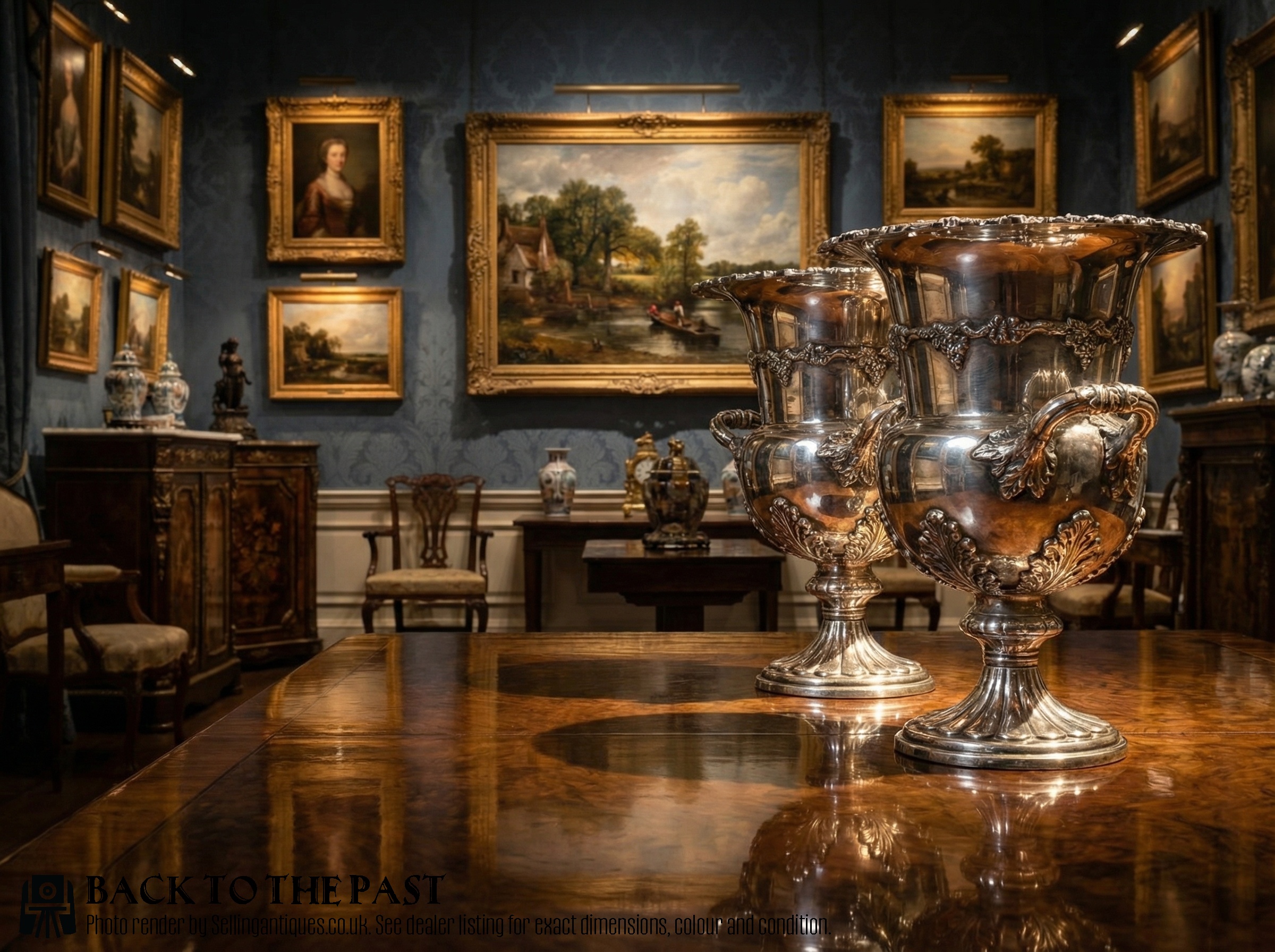
When buyers search for silver wine urns, they encounter impressive vessels spanning the Georgian, Regency, and Victorian periods, alongside later Art Deco iterations. The campana form dominates the selection, often appearing in matched pairs intended to sit symmetrically upon a dining sideboard.
Most examples found in trade are rendered in Old Sheffield Plate or later silver plate, though substantial sterling silver versions surface from time to time. Makers applied these forms to wine coolers, champagne buckets, and occasionally heavy ice pails.
The lineage stretches from late eighteenth century workshops through to mid twentieth century manufacturing, preserving classical proportions across multiple decades of domestic entertaining.
Materials and construction methods
The earlier pieces rely on Old Sheffield Plate, fusing a thin layer of sterling silver onto a copper base, which reveals subtle rosy highlights where the metal wears thin over generations. Makers also utilised electroplated nickel silver and standard sterling silver for later nineteenth and twentieth century production.
Silversmiths employed techniques such as casting handles and rims separately before soldering them to the main body, ensuring structural integrity for heavy vessels filled with ice and bottles.
Silver Wine Urns Retail Price Guide 2026
Typical asking prices for silver wine urns among the pieces listed under this phrase on Sellingantiques today, from the lower quarter to the upper quarter. They describe what is for sale here now, not the wider market.
Distinctions in craftsmanship
Quality rests primarily in the crispness of the chased or applied ornament, such as classical foliage, crests, and twin handles cast in high relief. Heavy gauge metal provides a substantial feel in the hand, avoiding the lightweight flex seen in mass produced iterations.
The survival of the original copper substrate beneath fused silver plating indicates superior early manufacturing, whereas later electroplated wares depend on the thickness of the deposited silver layer to determine longevity.
Hutton Sheffield·Elkington, Mason and Co·Matthew Boulton and Co·James Dixon and Sons
The Silver Wine Urns Glossary
- Campana
- A bell shaped vessel form with an inverted profile, widely utilised for classical wine coolers and urns during the Regency period.
- Old Sheffield Plate
- An early fusing technique where a sheet of silver is melted onto a copper ingot before being rolled into sheets for manufacture.
- Electroplated Nickel Silver
- A base metal alloy of copper, nickel, and zinc coated with a layer of pure silver via an electrical current.
- Ewer
- A large pitcher with a wide spout and flared base, occasionally grouped with wine coolers in period dining arrangements.
Silver Wine Urns: Frequently Asked Questions
How do I clean silver wine urns?
Wash the vessel gently using warm soapy water and a soft cloth to remove dust and residues without disturbing the aged patina.
Avoid harsh abrasive pastes, particularly on Old Sheffield Plate where vigorous rubbing can expose the underlying copper base.
Were these urns used for wine?
These vessels were filled with ice and water to chill bottles of wine or champagne directly at the dining table during formal meals.
Over time, many found alternative uses as decorative centrepieces, floral vases, or trophy cups.
How do I distinguish Old Sheffield Plate?
Look closely at the rims and high points where the thin layer of silver has worn down to reveal a warm reddish copper hue underneath.
Heavier weight and unplated soldered seams also help identify genuine fused plate from later nineteenth century electroplating.
Can I use these for modern dining?
These pieces remain fully functional for holding ice and cooling bottles during dinner parties, adding historical weight to contemporary gatherings.
Ensure moisture is dried thoroughly after use to protect the interior lining and prevent water spotting.