


Decorative Silver Urns
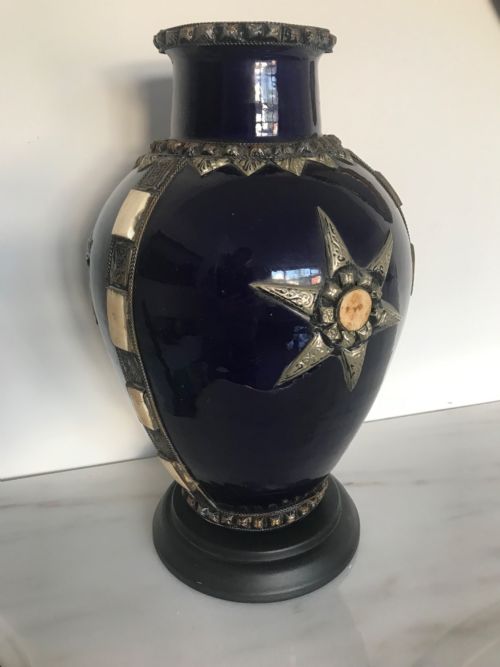
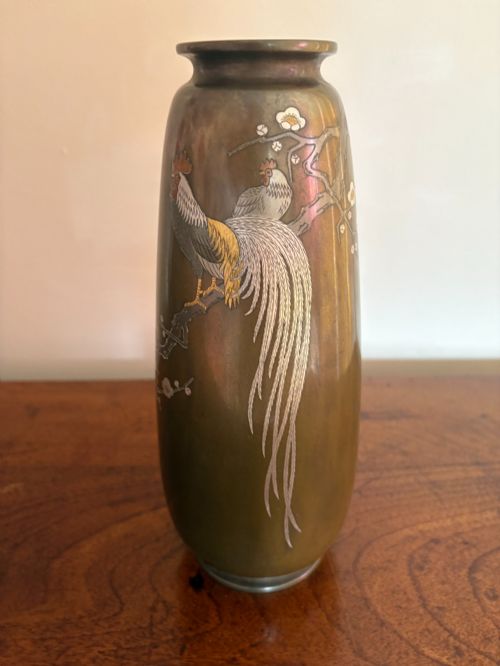
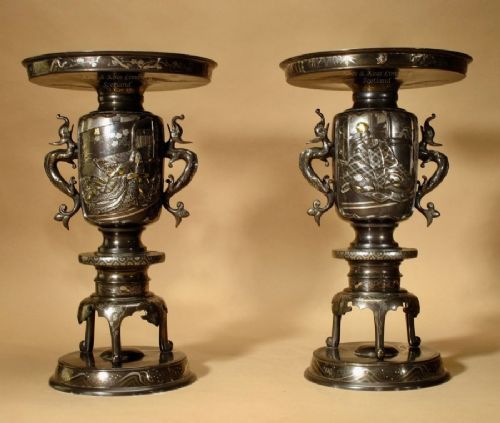
These decorative silver urns combine solid metals, plate, and mixed materials across periods from the nineteenth century to the art deco era.
Decorative Silver Urns
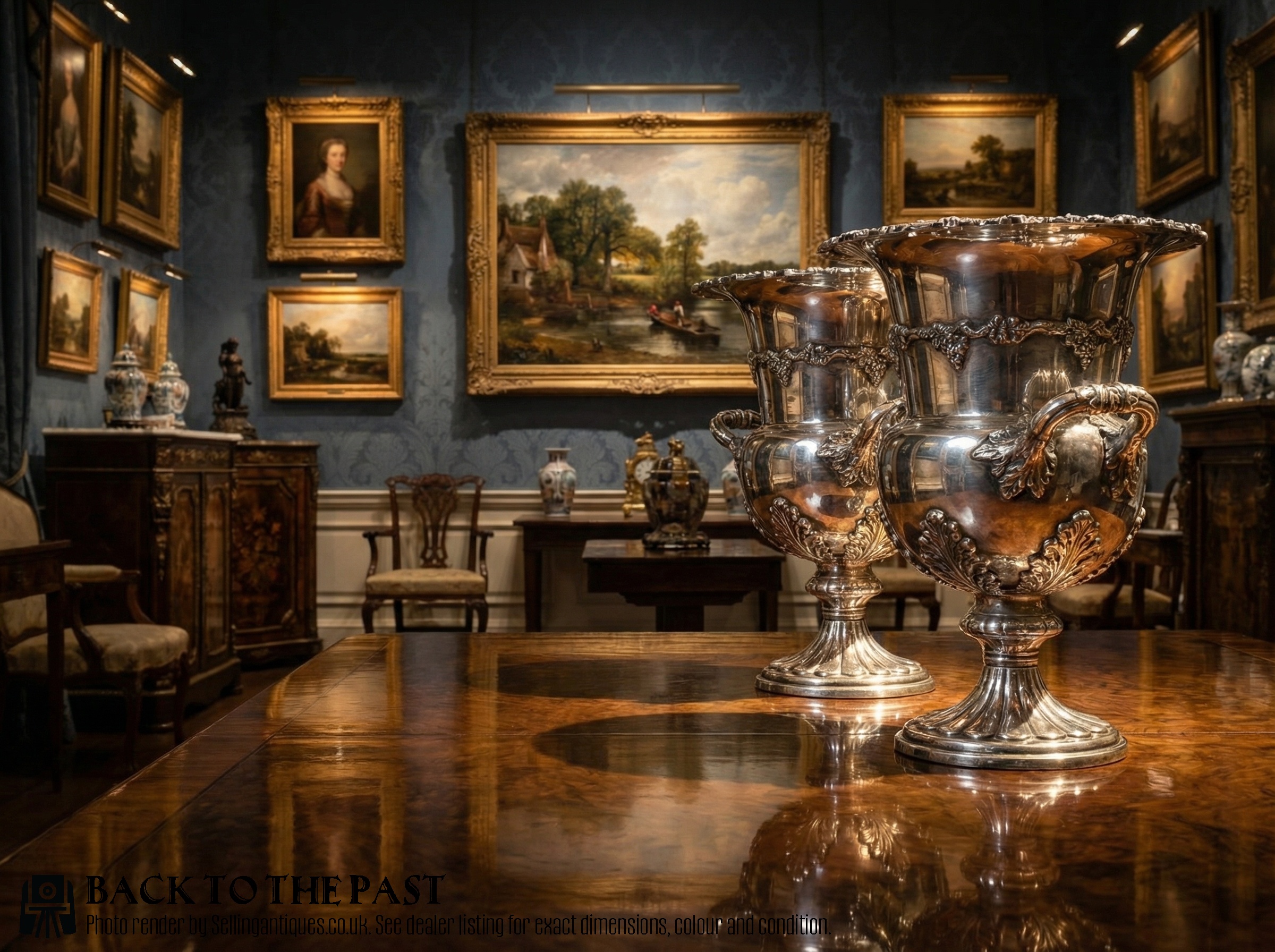
Decorative silver urns encompass monumental pedestal vessels, grand tour souvenirs, and lidded display pieces originating from nineteenth-century workshops. The phrase brings together solid silver, silver plate, and mixed media compositions that serve as focal points for mantelpieces and sideboards.
Buyers frequently encounter French grand tour pedestal urns in silvered bronze alongside pairs of nineteenth-century ormolu and silvered vessels. Other common variations include silver-plated wine coolers and faux urns designed for interior display.
The category extends beyond pure metalwork to incorporate related decorative forms such as tazzas, garnitures, and baluster vases mounted with silver elements. These pieces cross diverse stylistic boundaries from neoclassical formality to French empire and Victorian tastes.
How they were made
Makers utilised casting and smithing techniques to shape heavy bronze, brass, and silver alloys into classical vessel forms. Surface enrichment often involved intricate silver plating, ormolu gilding, or applied metal overlays.
Many examples combine metalwork with contrasting materials like marble, glazed terracotta, and iridescent glass. Silversmiths and bronze workers joined these elements using mechanical fixings, mounts, and cabochons.
The selection includes pieces associated with the Meiji period, Art Nouveau, Art Deco, and the Grand Tour.
What varies in quality
The crispness of the chased detail and the weight of the underlying metal define the grade of the piece. Finer examples display deeply defined foliage and figures rather than soft, mass-produced cast surfaces.
The integrity of the construction and the quality of the plating or patination separate standard production items from masterwork creations. Surface finishes that retain their original depth without excessive wear indicate superior preservation.
Goldsmiths and Silversmiths Co
The Decorative Silver Urns Glossary
- Grand Tour
- A nineteenth-century cultural journey across Europe that generated a demand for classical souvenir bronzes and urns. These pieces often replicated ancient architecture and sculpture on a domestic scale.
- Ormolu
- Gilt bronze created by applying a mercury and gold amalgam to a bronze base. This technique produced a rich, durable golden surface popular in French decorative arts.
- Baluster
- An architectural form shaped like a vase or column with a rounded lower portion tapering towards the top. This silhouette frequently defines the body of large decorative urns and vases.
- Tazza
- A shallow bowl or cup mounted on a stem and foot, often paired with urns as garniture. These items functioned primarily as display pieces for tables and sideboards.
- Garniture
- A set of three or more matching decorative objects designed to be displayed together on a mantelpiece. Typical sets include a central clock or urn flanked by matching vases or smaller urns.
Decorative Silver Urns: Frequently Asked Questions
How were decorative silver urns used?
These vessels served primarily as formal ornaments on mantelpieces, sideboards, and pier tables within nineteenth-century drawing rooms. Some metal versions functioned practically as wine coolers or tea caddies.
Larger pedestal examples acted as architectural accents to complete symmetrical room schemes. Their presence signalled wealth, classical education, and sophisticated taste.
Where should I place an urn at home?
Pairs of urns work effectively when balanced symmetrically on a mantelpiece, console table, or sideboard. Single monumental pieces command attention when positioned centrally on larger furniture surfaces.
Keep them away from direct heat sources and strong sunlight to preserve metal patination and applied finishes. Pairing them with matching garnitures creates a traditional, cohesive interior display.
How do I identify the period of an urn?
Examine the stylistic vocabulary, construction methods, and material combinations to determine age. Neoclassical and French empire pieces from the nineteenth century rely on strict classical proportions and cast bronze construction.
Later Victorian and Edwardian examples introduce eclectic styling, distinct silver hallmarks, or alternative manufacturing techniques. Comparing the mounting style and casting quality helps narrow down the decade of production.
What is the difference between solid silver and silver plate?
Solid silver objects consist entirely of precious metal throughout their structure and typically bear official assay hallmarks. These pieces carry intrinsic metal value alongside their artistic merit.
Silver-plated items feature a base metal core, such as copper or bronze, coated with a thin layer of silver. This technique allowed makers to produce large, decorative vessels at a lower cost than solid silver.