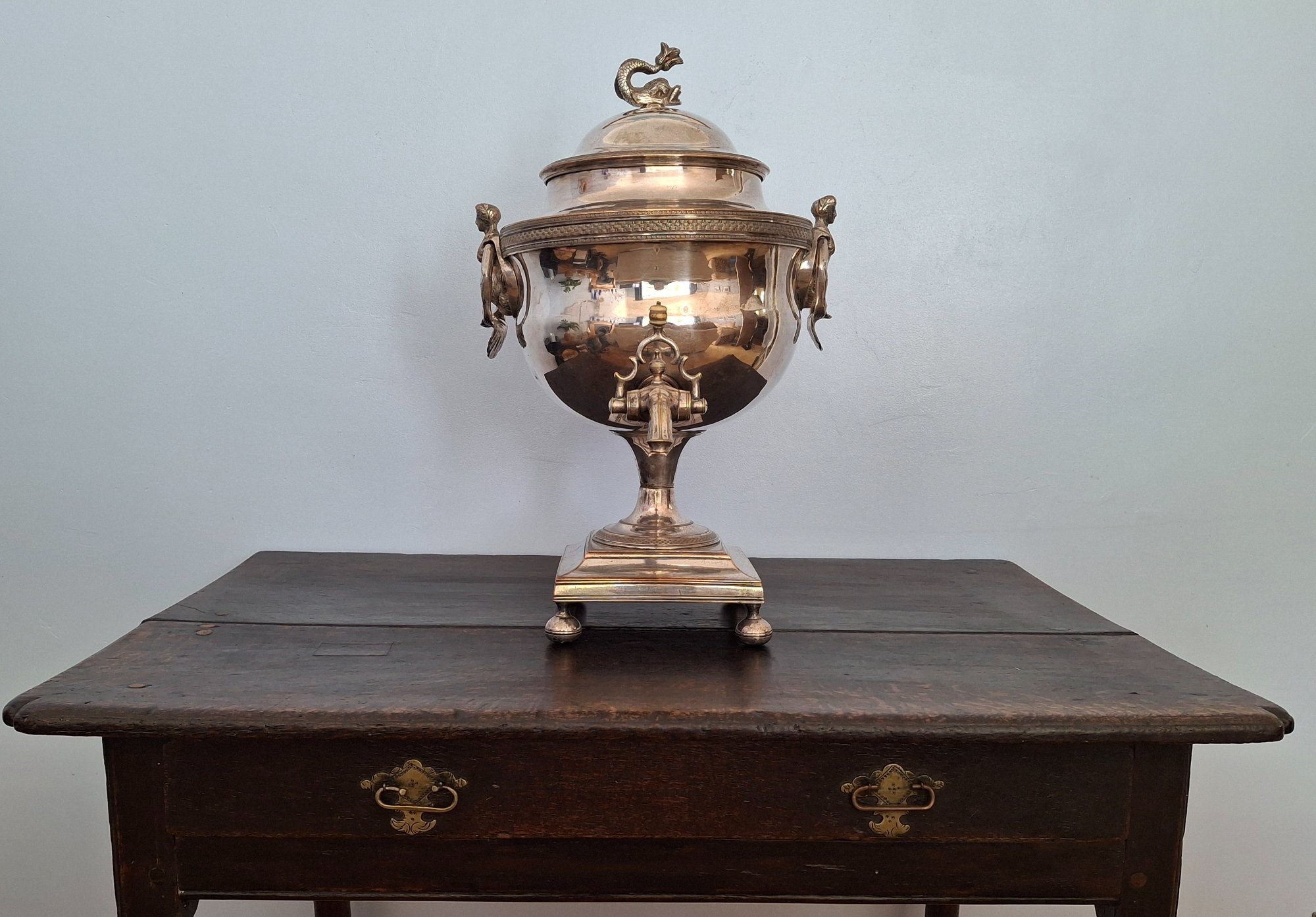
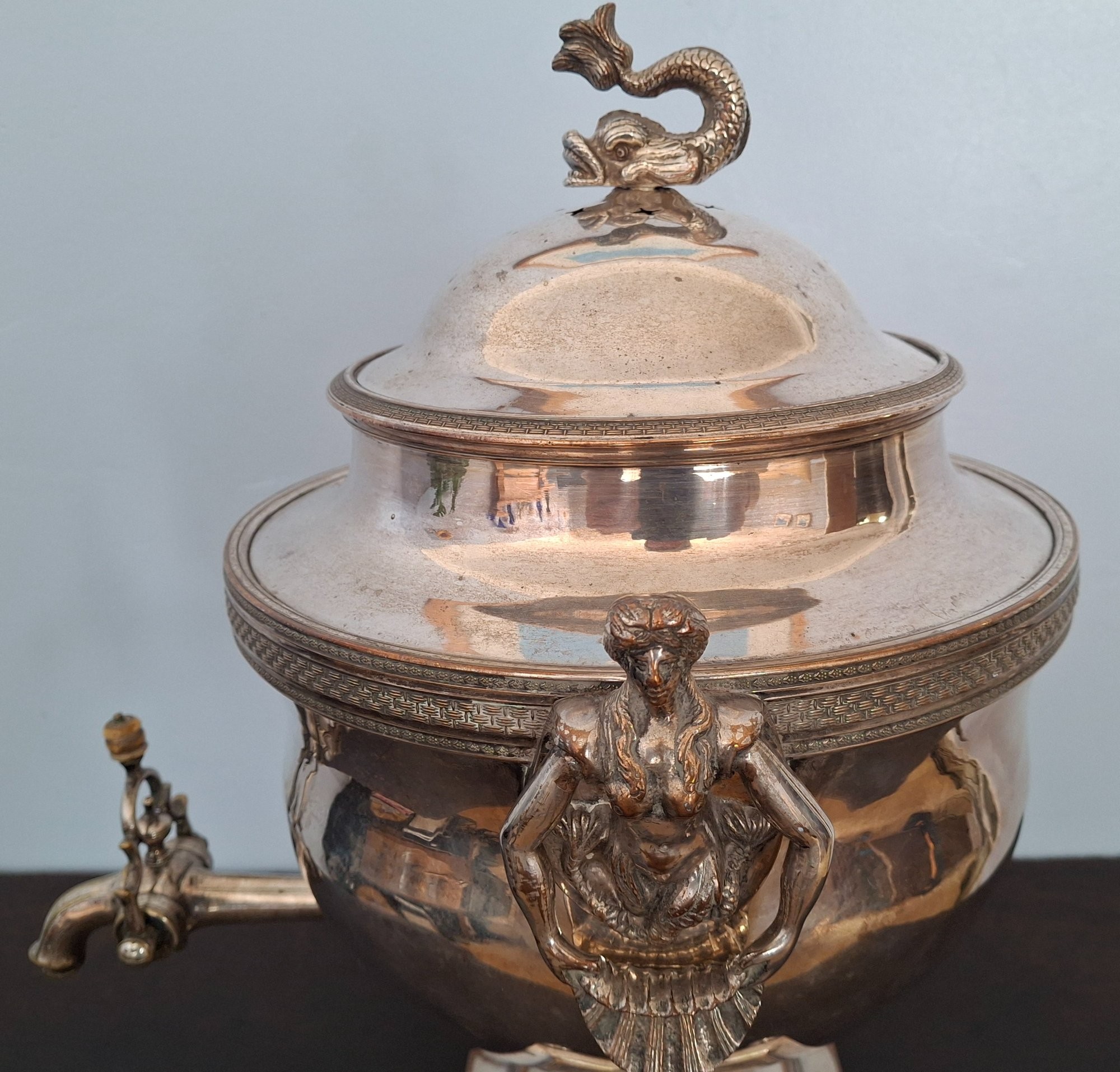
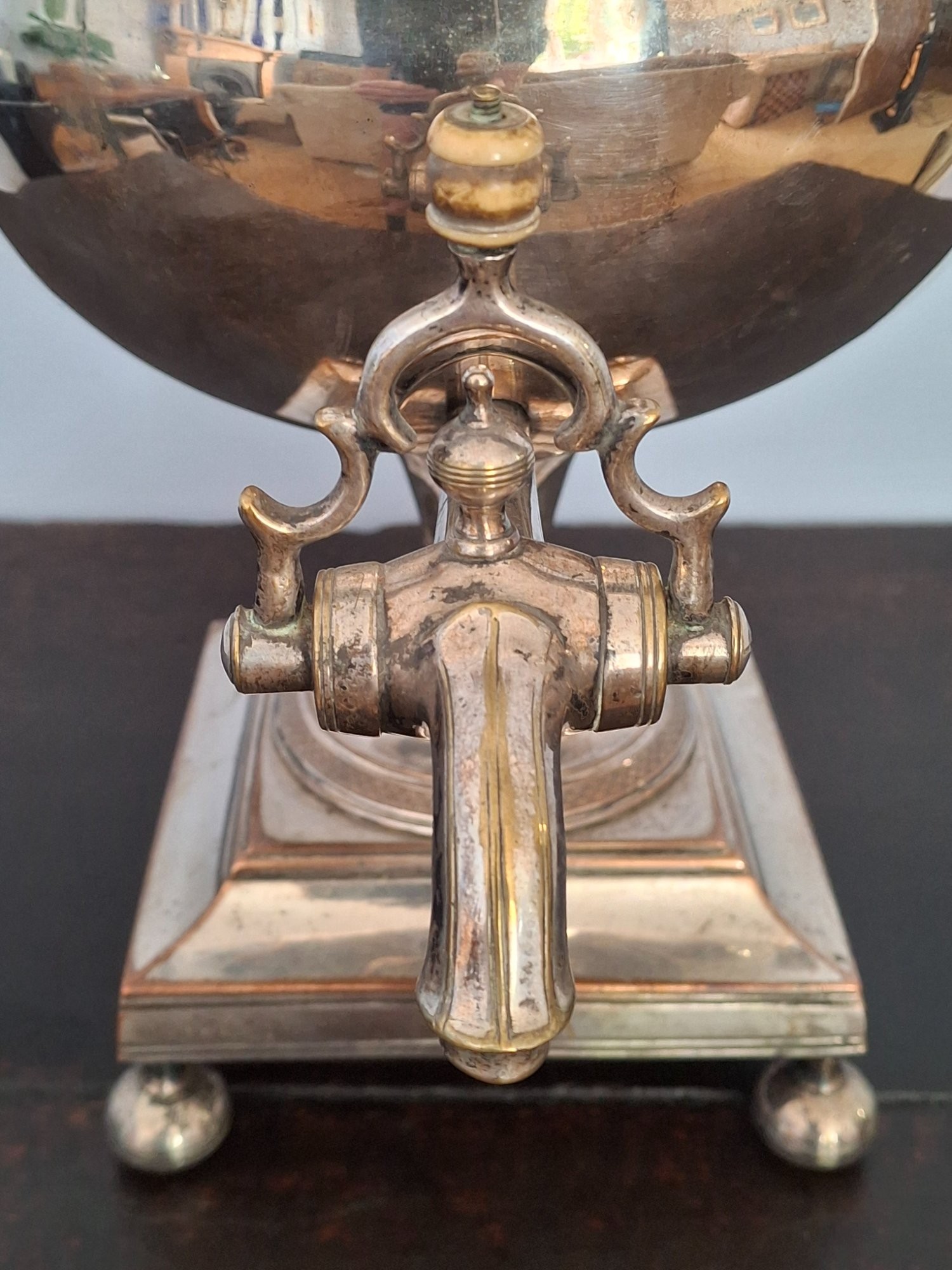
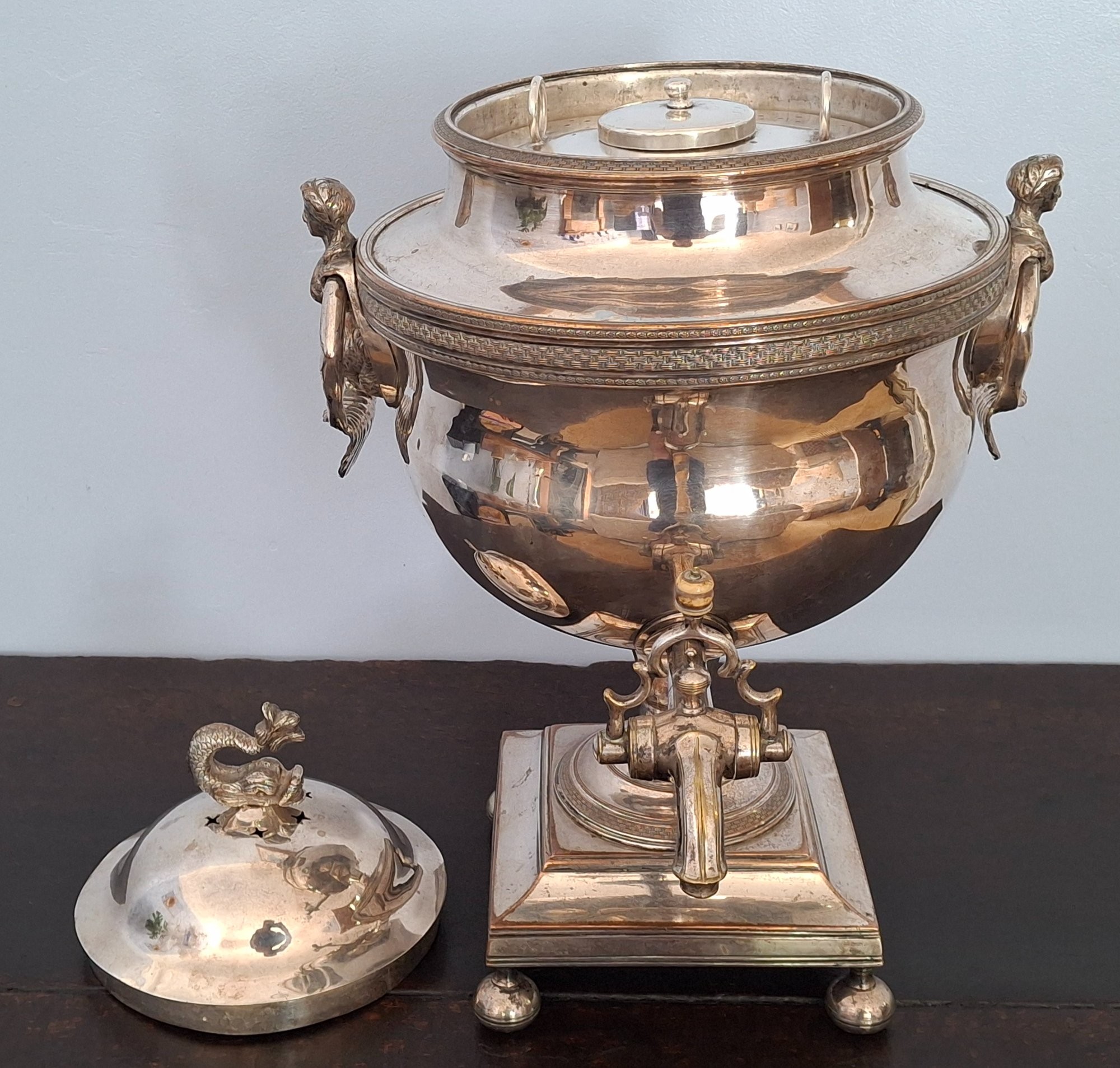
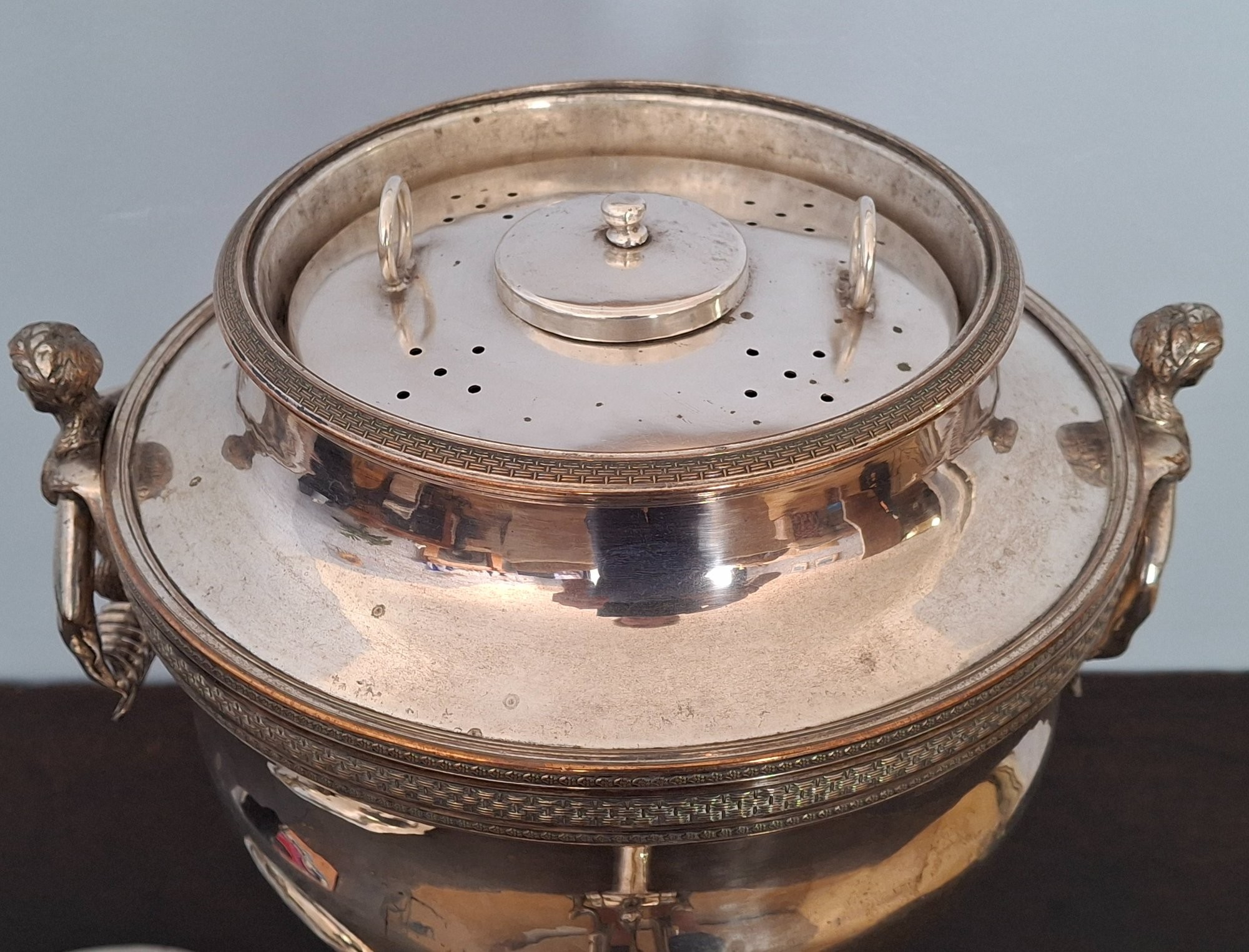
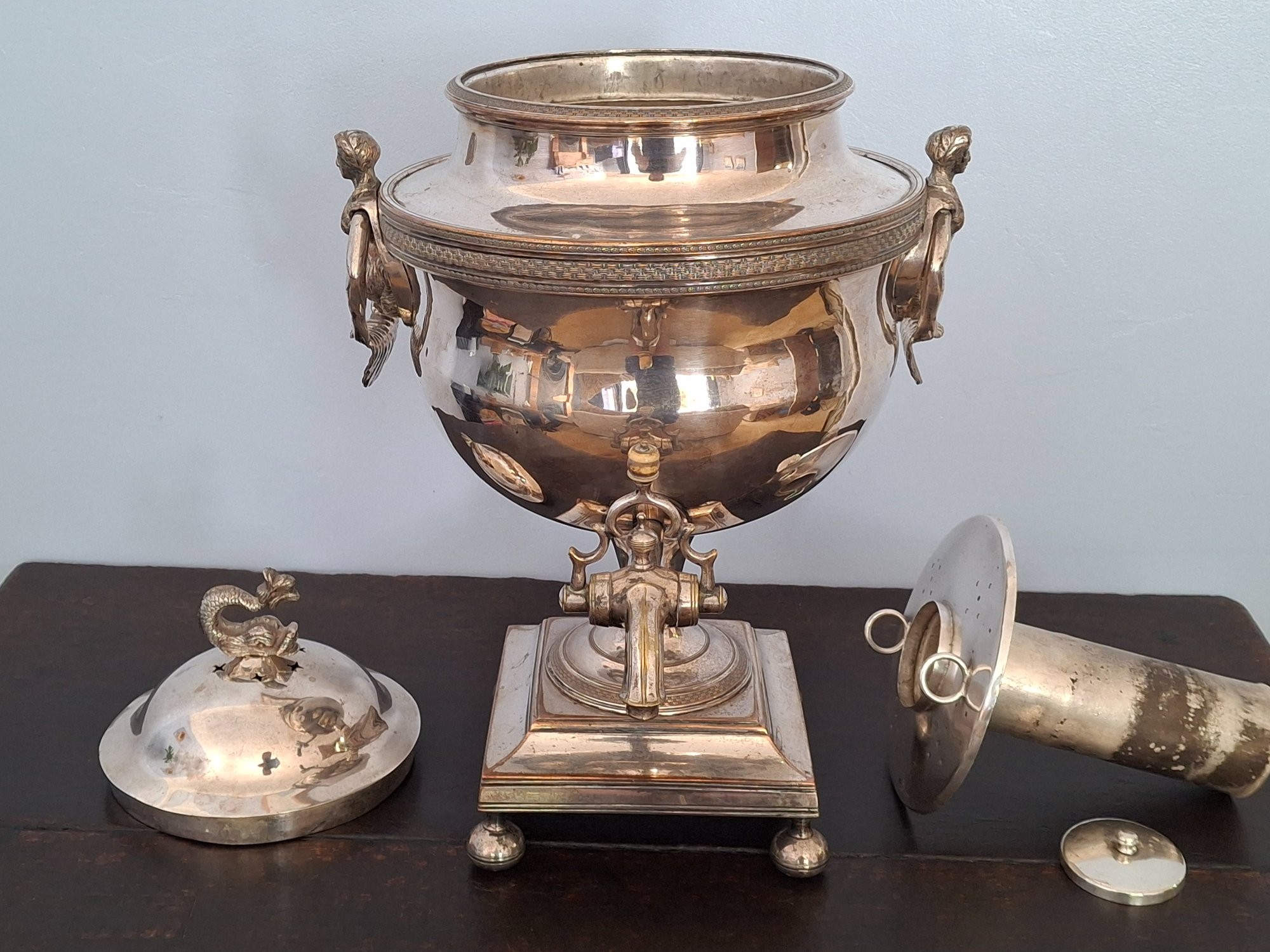
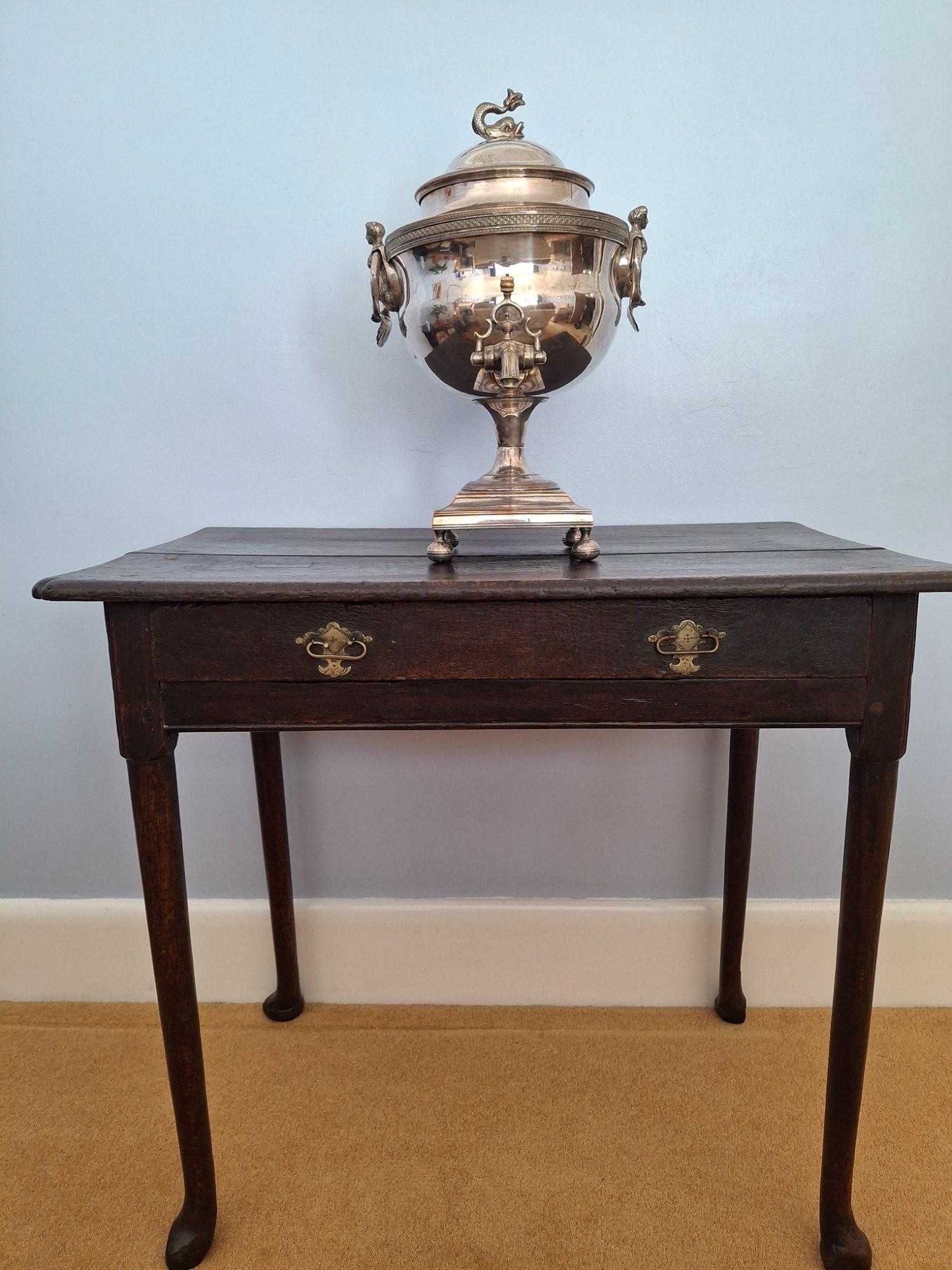
Dragoncharger Antiques has dated this Regency Silver Tea Urn to the 19th Century.
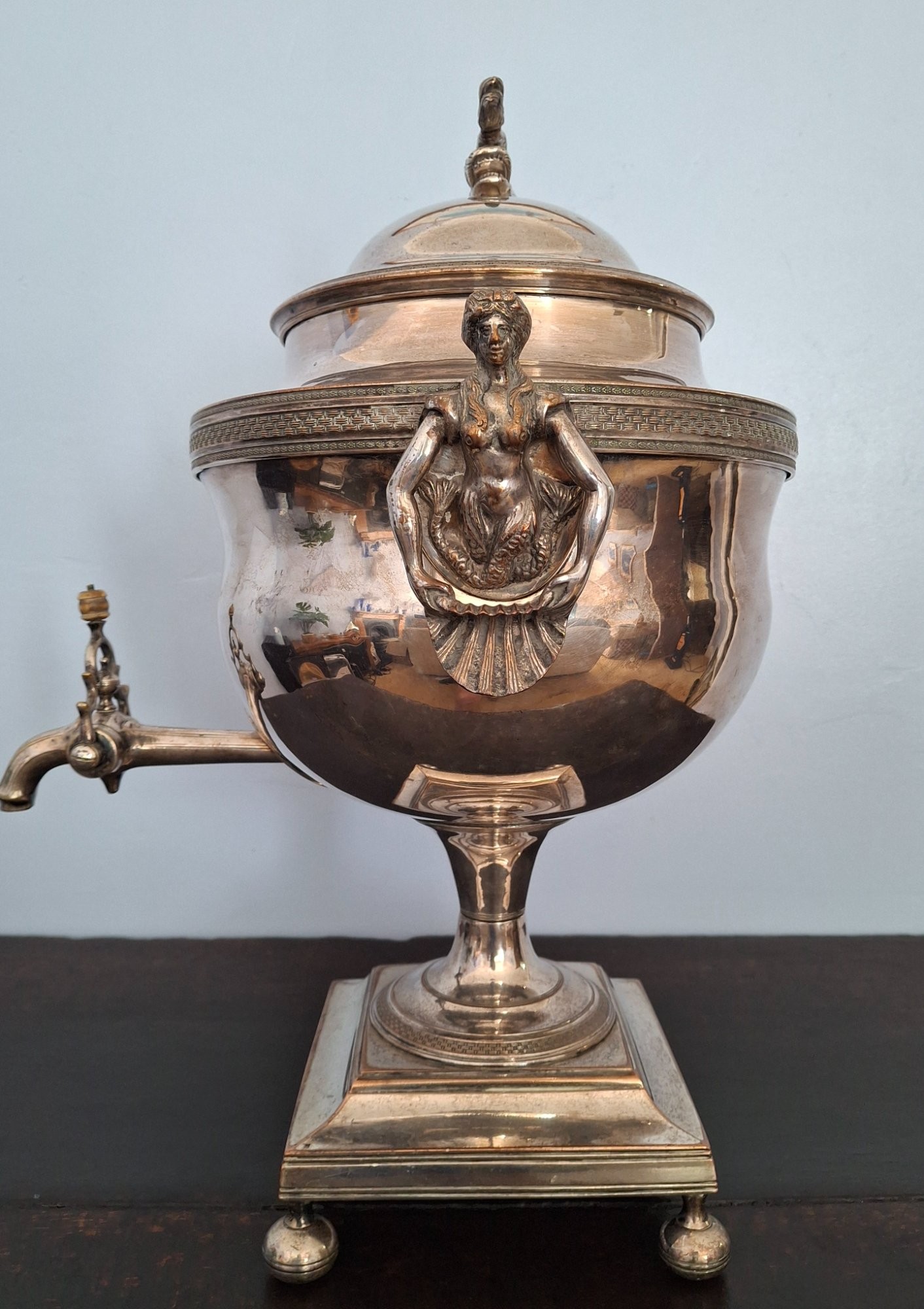
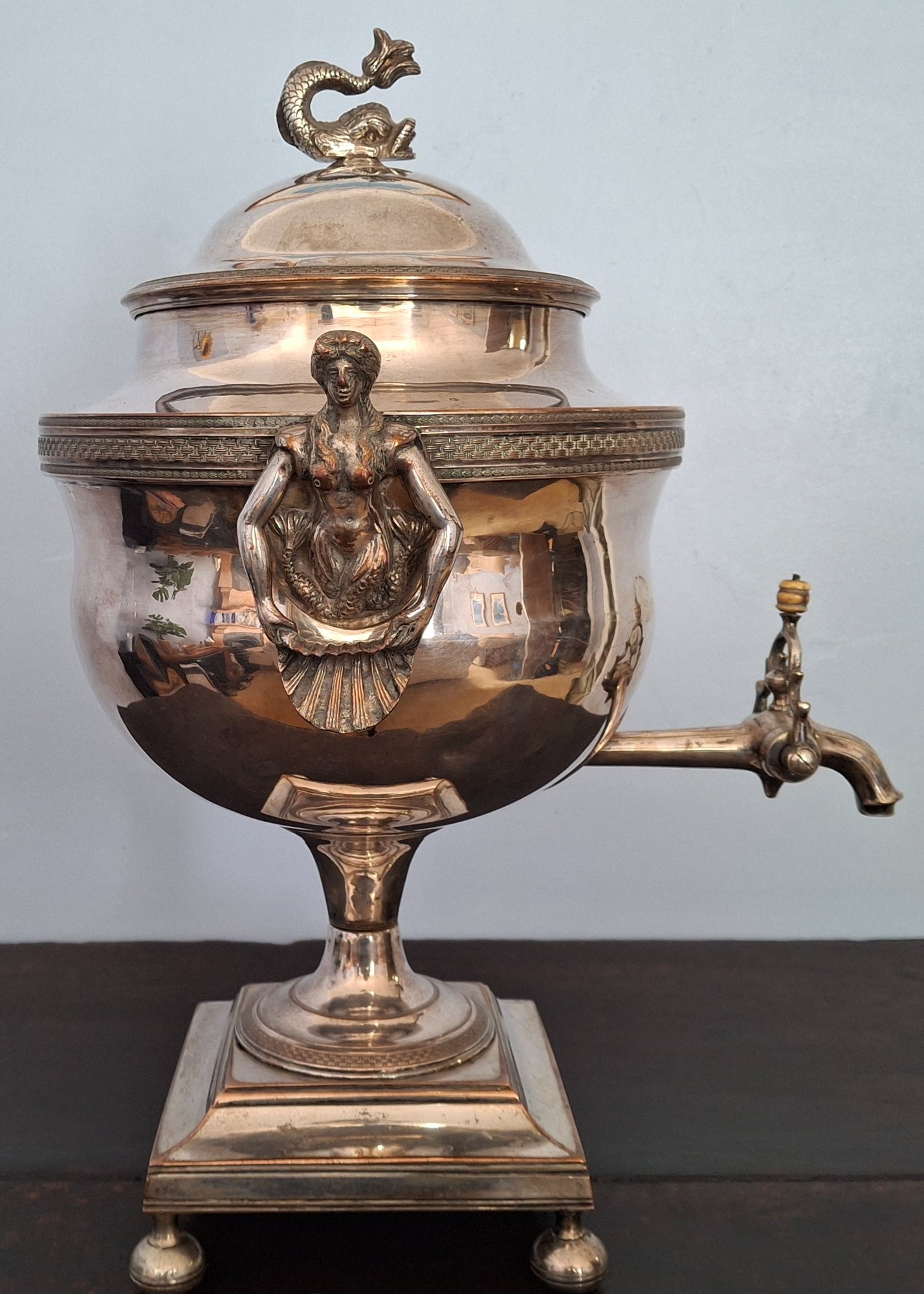
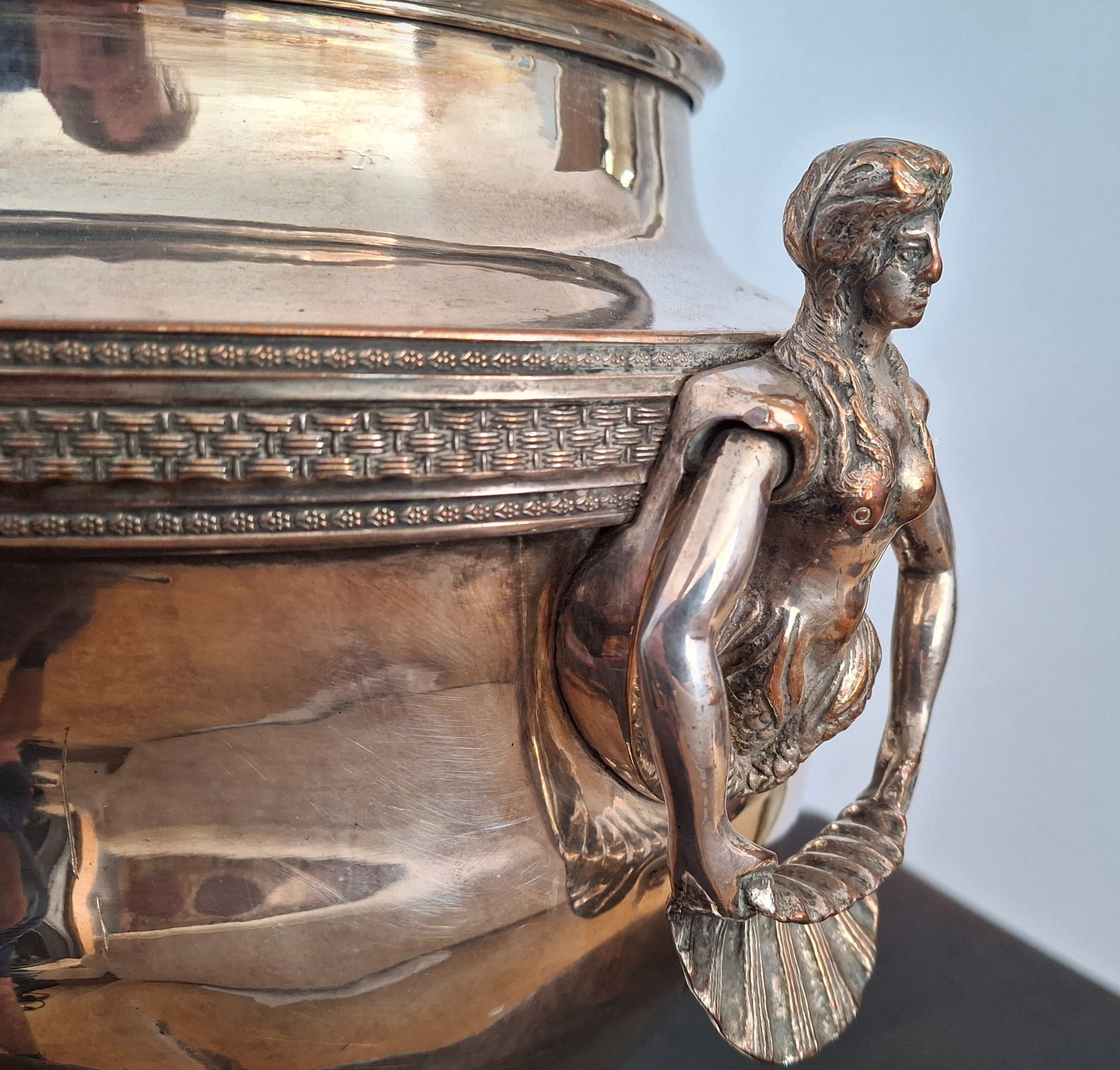
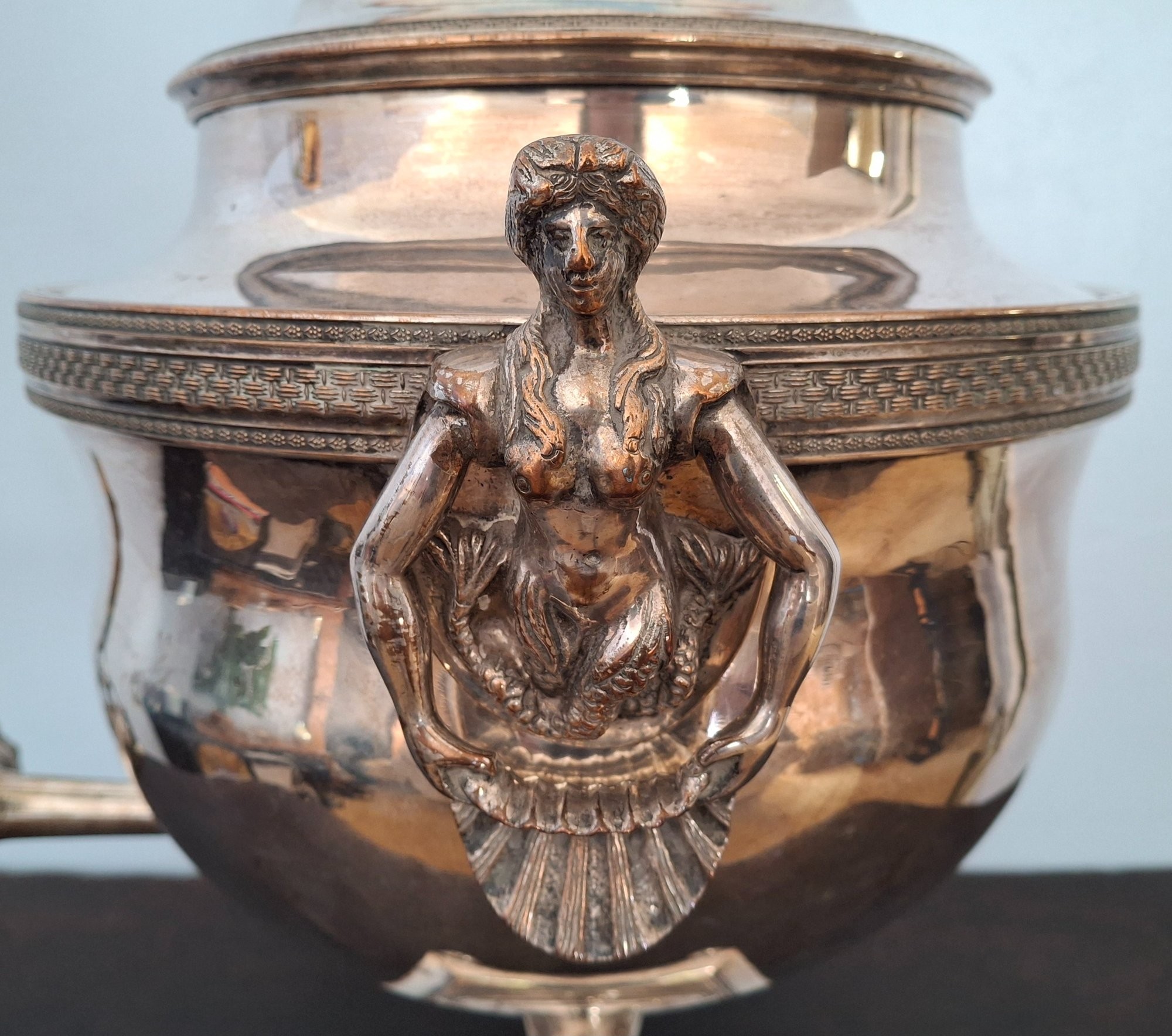
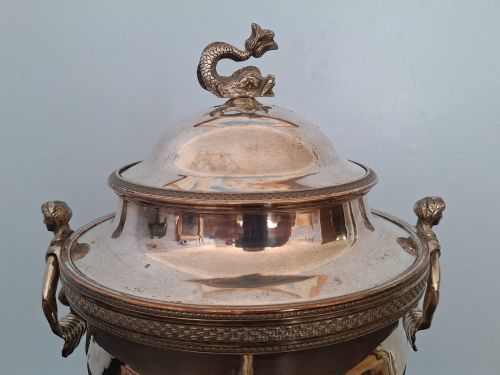
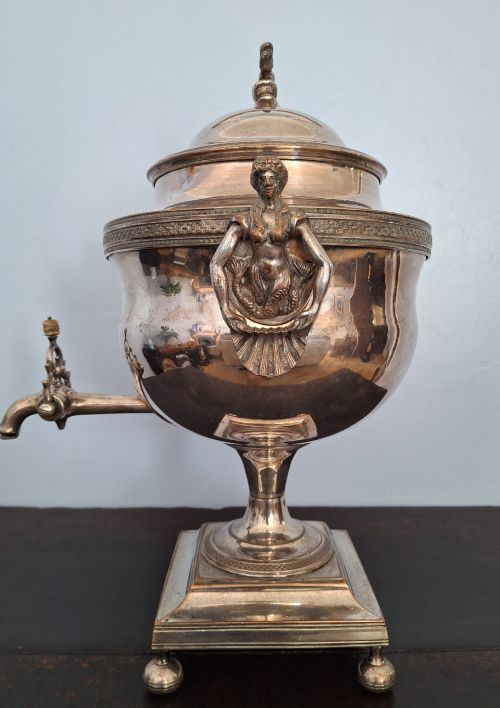
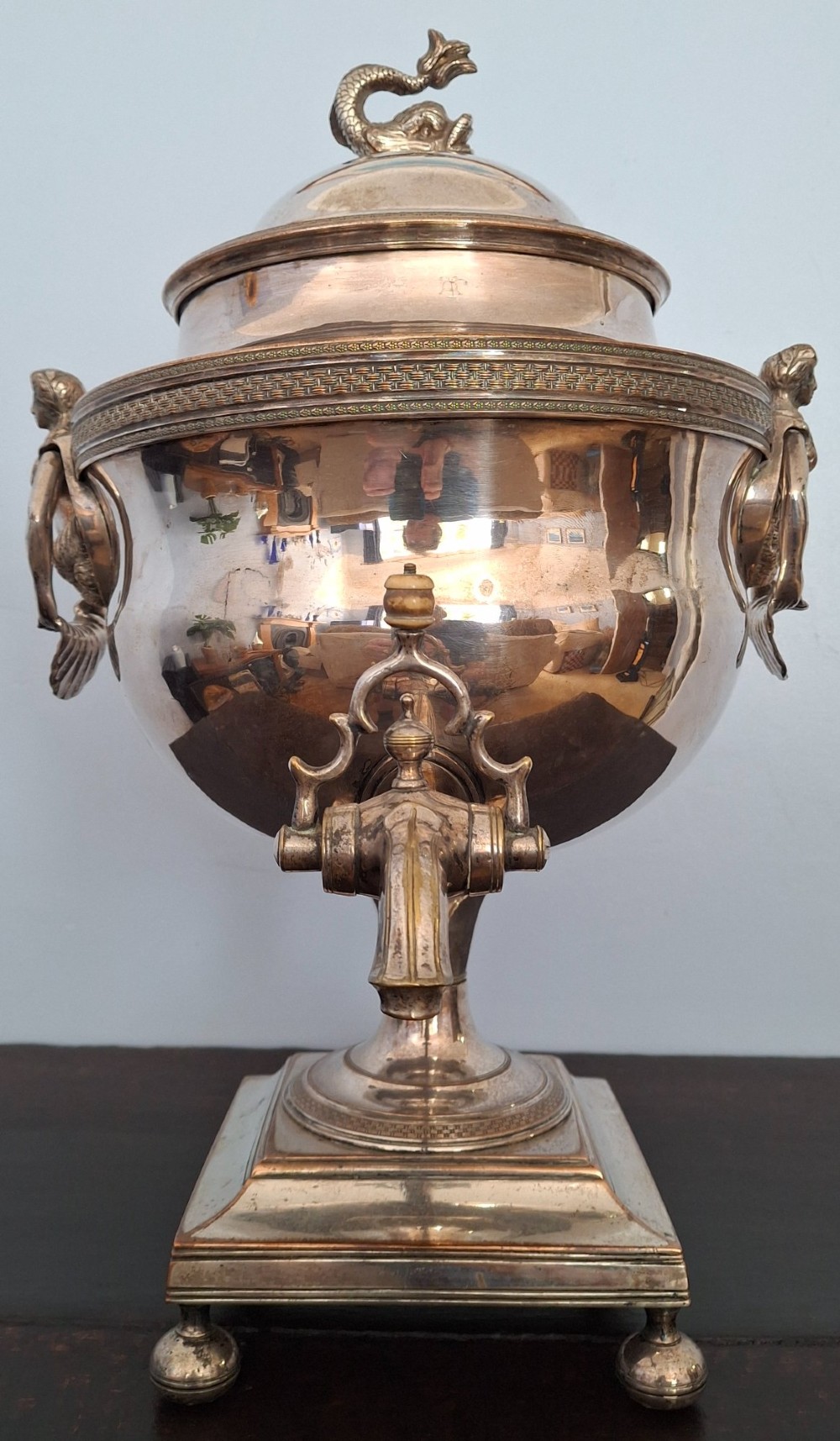
The cast side lifting handles are in the form of mermaids holding a clamshell.
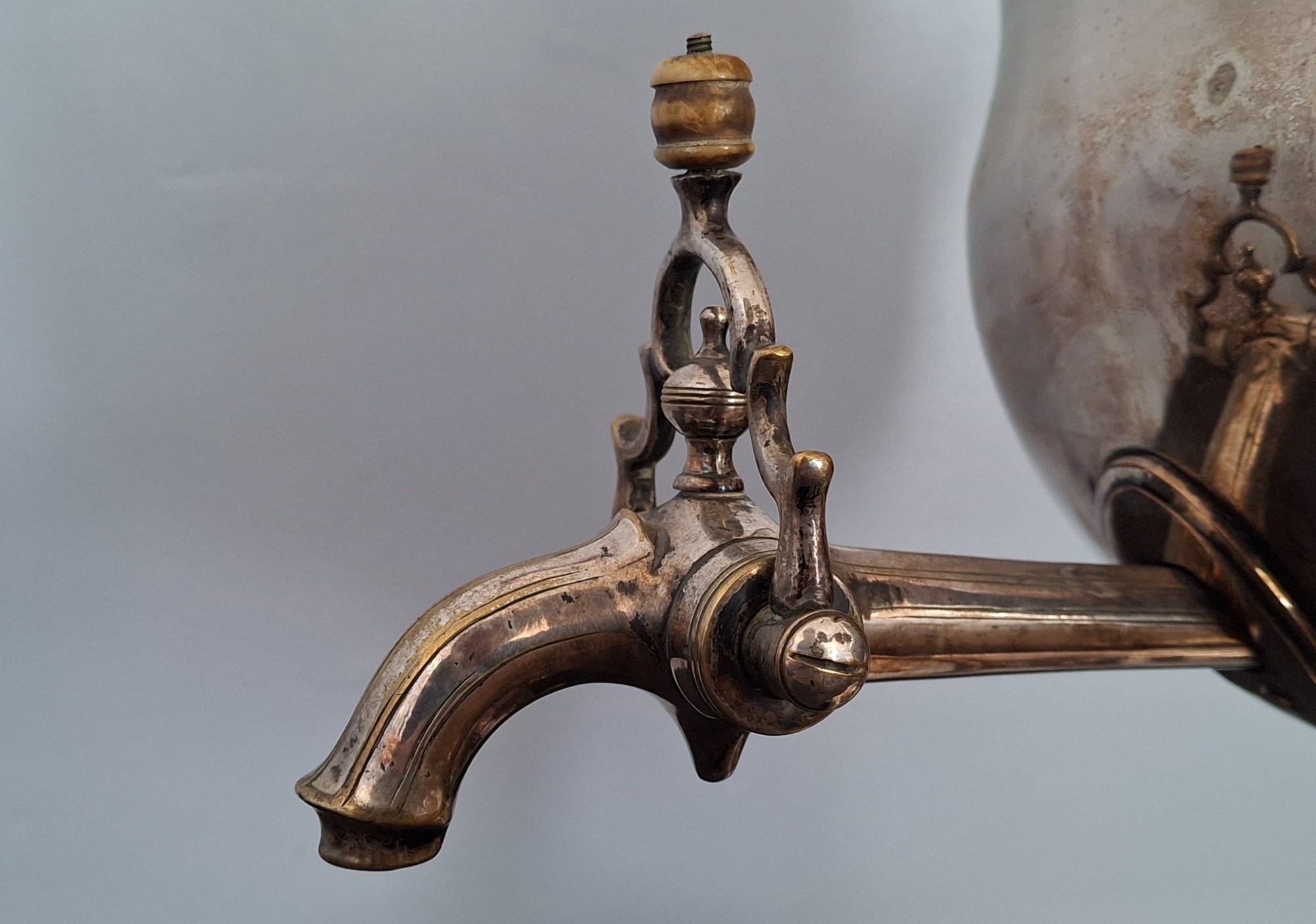
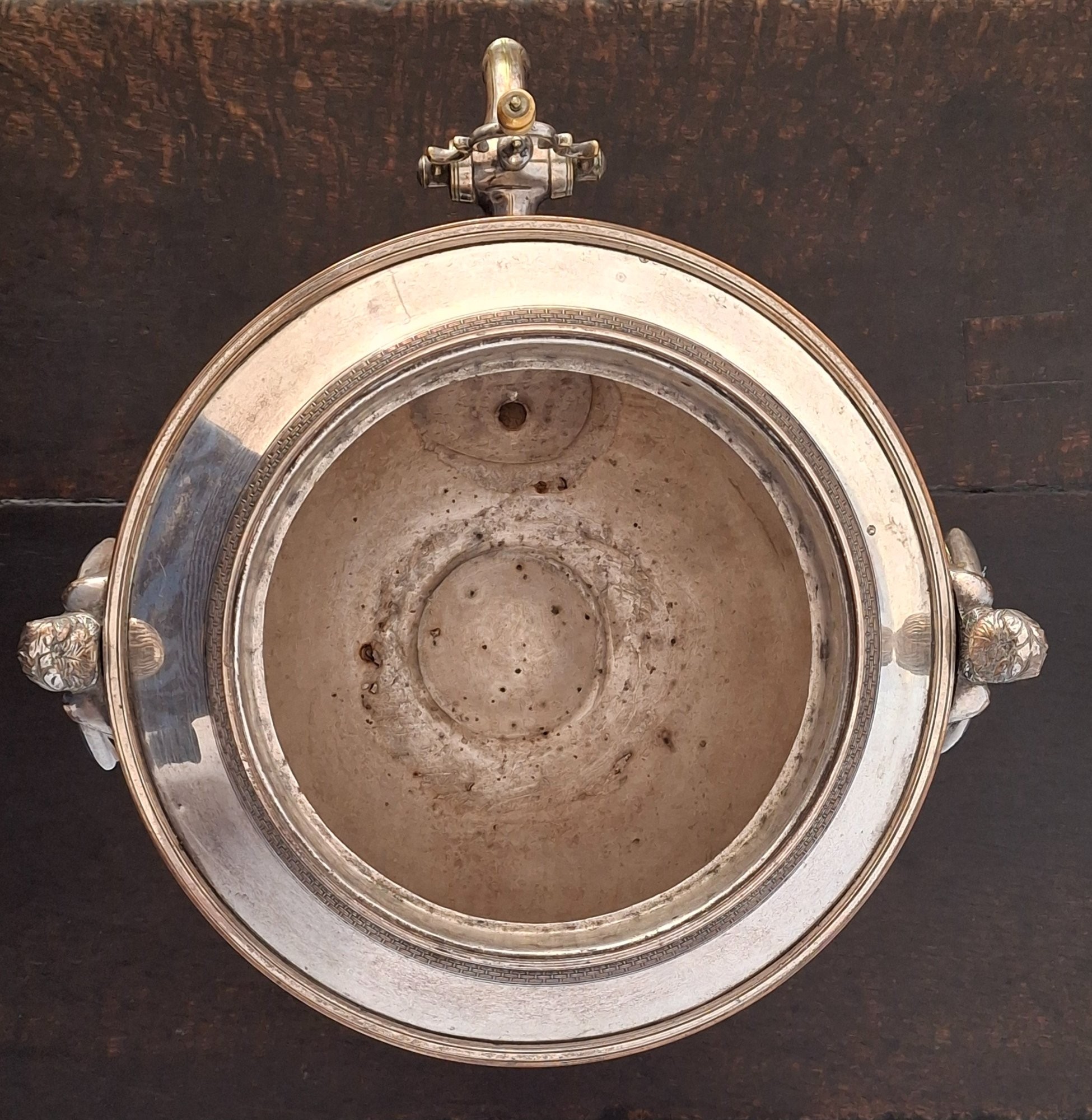
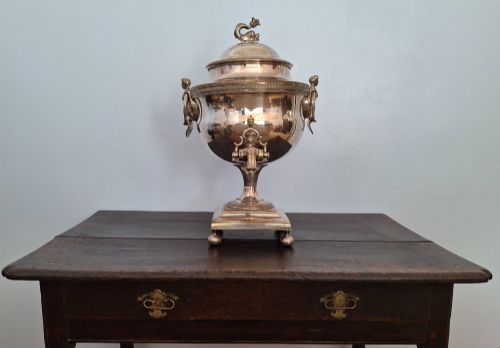
The urn shaped body is mounted on a slender neck on a square plinth with bun feet to each corner. The samovar has its original internal heating elements with the exception of the heating cylinder itself. This is a large and heavy Georgian period silver-plated hot water urn. Attributed to Thomas Hayter (no hallmarks present).
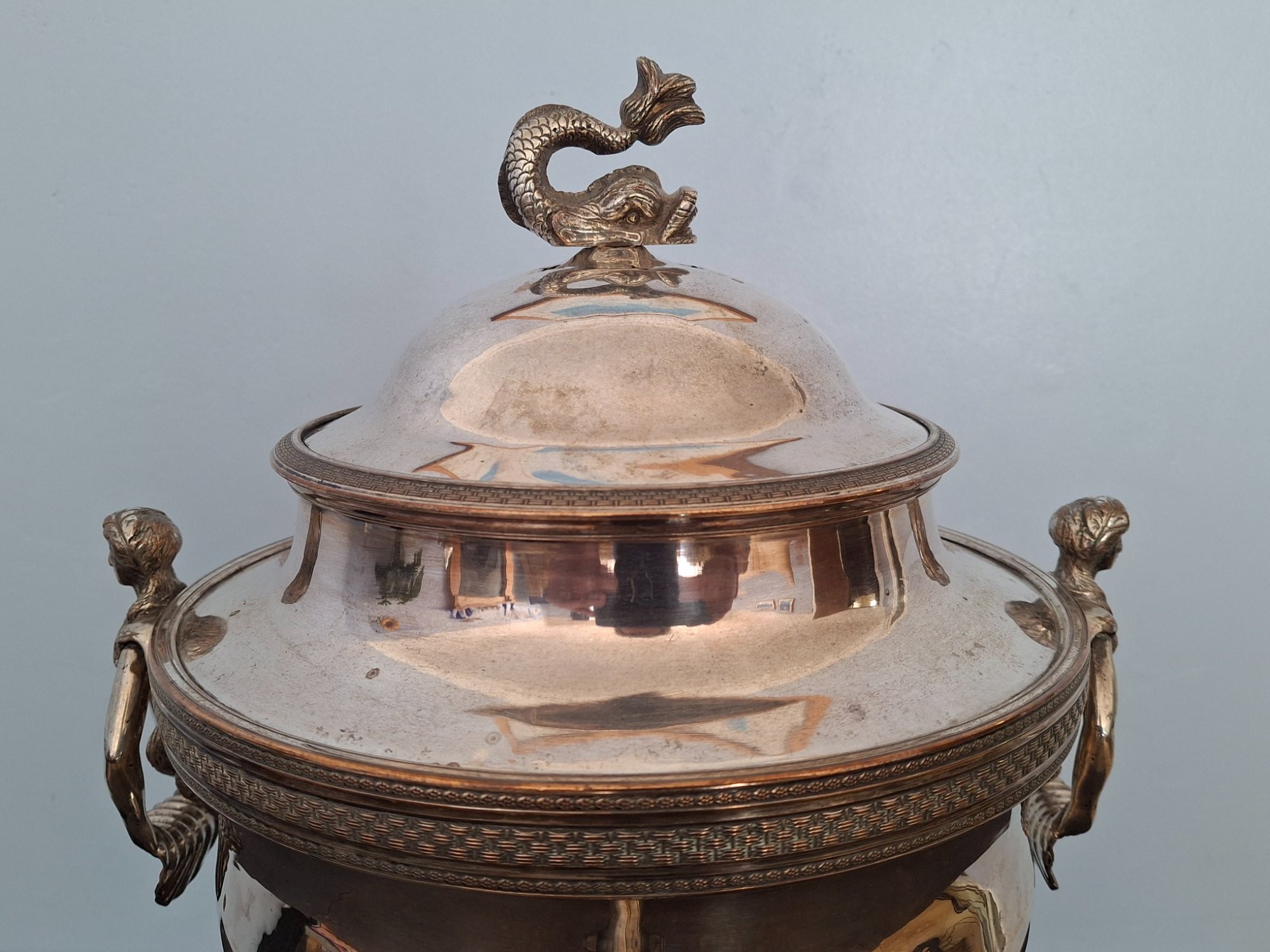
Condition: Lightly tarnished, and copper-bleeding / blush showing in the correct places (edges and handles). Superb rich copper blush to overall surface.
Dimensions: (approx)
Height = 47 cm
Width = 30 cm
Depth = 33 cm (including tap)
Typical of the late Georgian / Classical Revival aesthetic, these urns typically feature an elegant Neoclassical urn body, flat-chased engraving, maiden or lion-mask ring handles, and stand on a square plinth base supported by ball or bracket feet. Caryatid Swinging Arm Handles: In Neoclassical metalwork, caryatids (sculpted female figures serving as architectural supports) were adapted into ornate, hinged swinging-arm drop handles. They often appeared on high-end Sheffield plate or cast brass tea urns. The Shell & Dolphin Lid: The dolphin is a classic maritime motif heavily favoured during the British Regency and French Empire periods. It was frequently paired with stylized scallop shells, symbolising water and Venus/Aphrodite. The dolphin function on the lid typically serves as the finial (the knob or handle used to lift the hot lid).
Thomas Holland, an elite master silversmith and plate-worker based in London. He was highly sought after for creating heavy, regal, high-end tableware
commissions. Maker History & Partnership: The Partnership (1792–1805): Thomas Hayter was originally apprenticed to George Smith II. They entered a joint mark on 7 January 1792 as plate-workers, operating a workshop and retail premises at 4 Huggin Lane, Wood Street, London. Most large, highly ornate pieces like tea urns date to this collaborative period. Solo Work (1805–1814): Following the end of their partnership in 1805, Hayter registered his own solo mark ("TH" in an oval) and continued producing fine silverware, including lidded cups, teapots, and hollowware.
Dragoncharger Antiques has dated this Regency Silver Tea Urn to the 19th Century.
Specialising in early japanese cloisonne, edo enamel artisan period.
You can view the stock and full dealer information on the Dragoncharger Antiques Profile Page
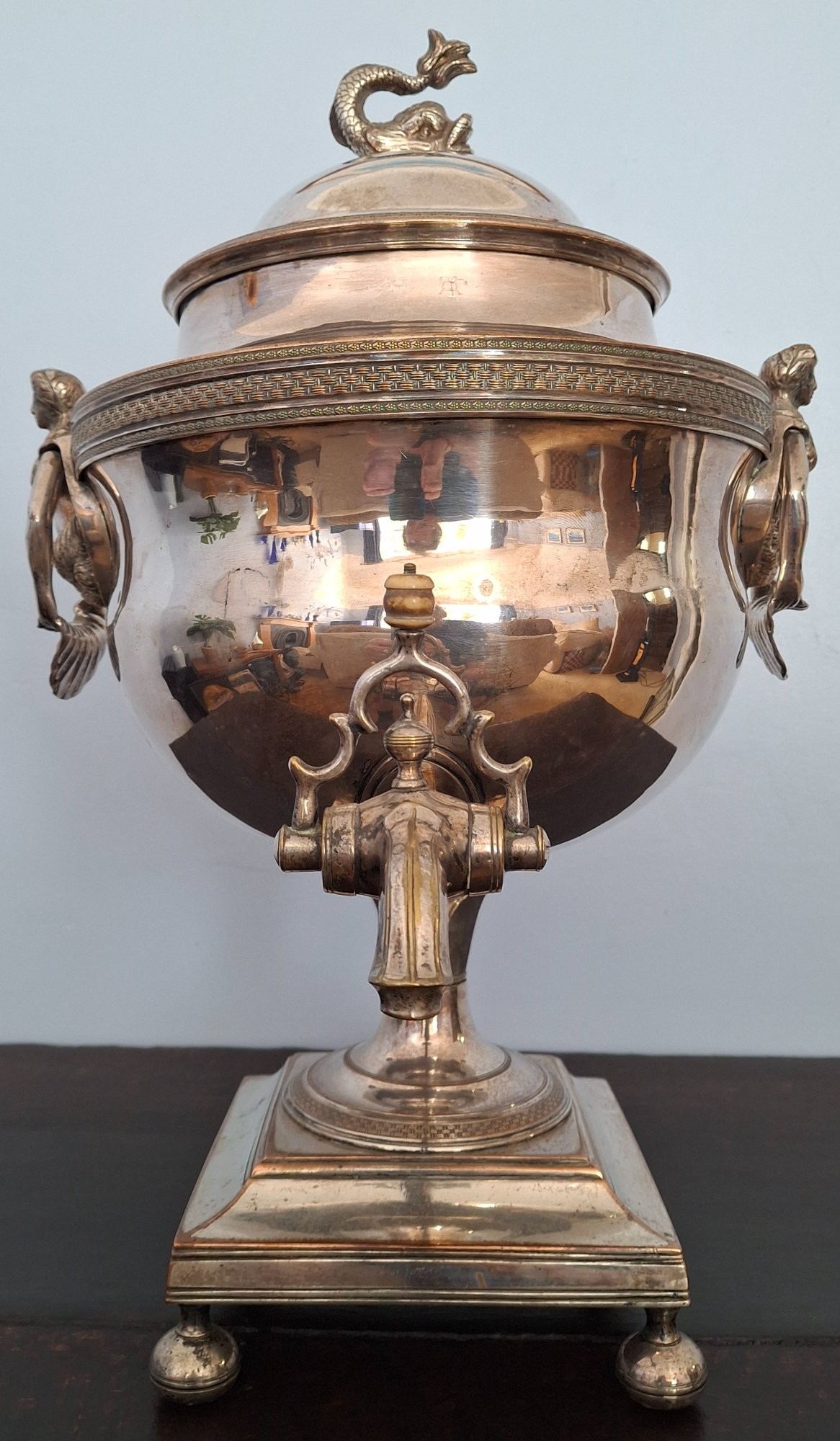
Quality Decorative Silver Plate Samovar / Tea Urn. Circa 1810.