
Antique Brass
Brass household and decorative metalware, made for the hearth, kitchen, door and windowsill, and now bought as much for the look of it as for the job it once did.
What Is Antique Brass?
Brass is copper alloyed with zinc, and the heading stretches to the wider copper-alloy family: nearly a fifth of titles also say copper, and some say bronze. It cast well, sheeted well, took a polish and stood up to damp better than iron, so it became the everyday metal for hearth, kitchen, dairy and door fittings.
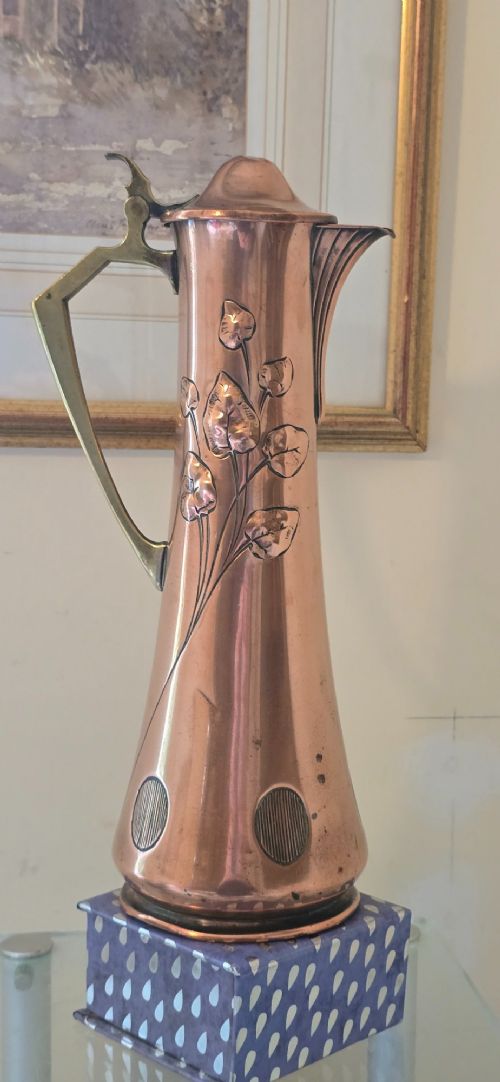
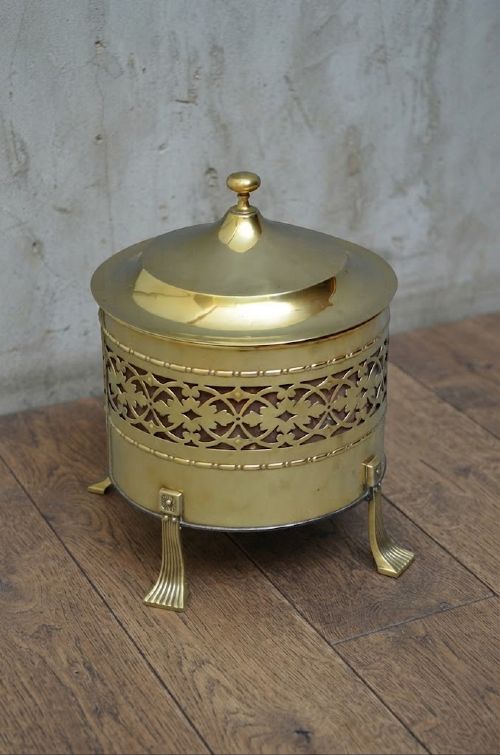
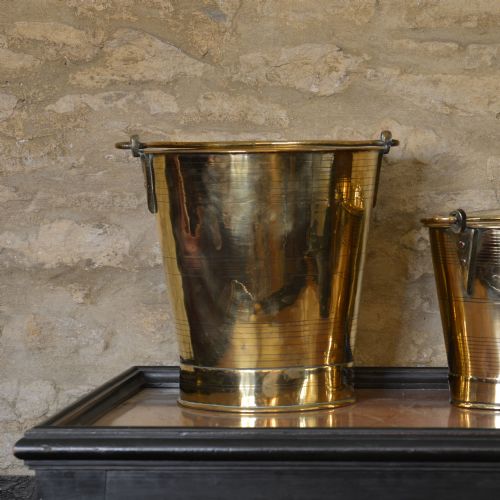
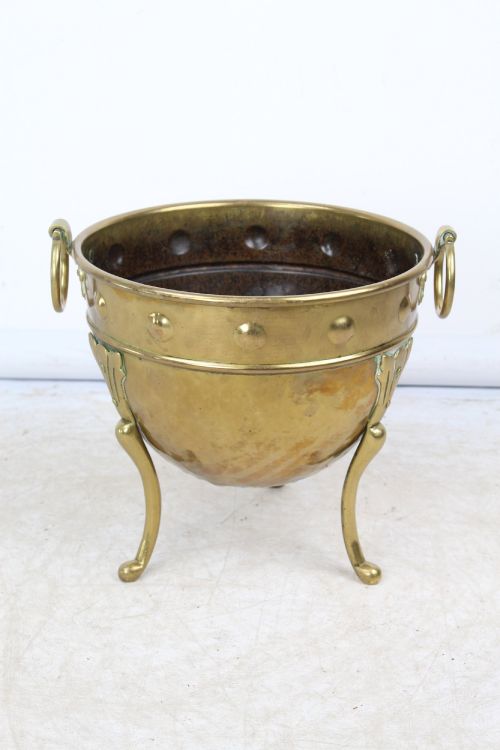
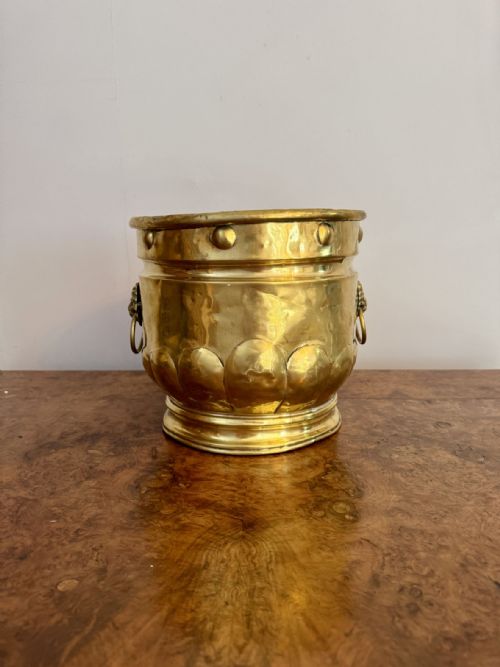
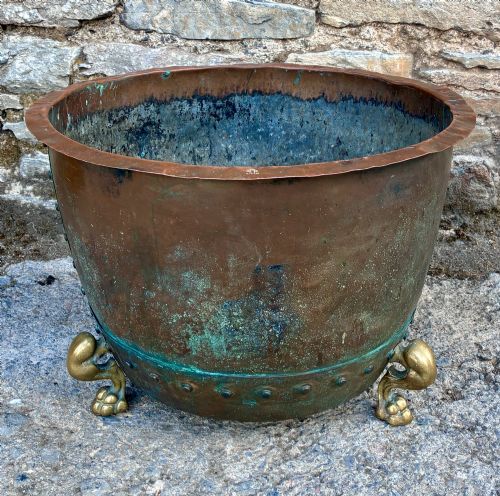
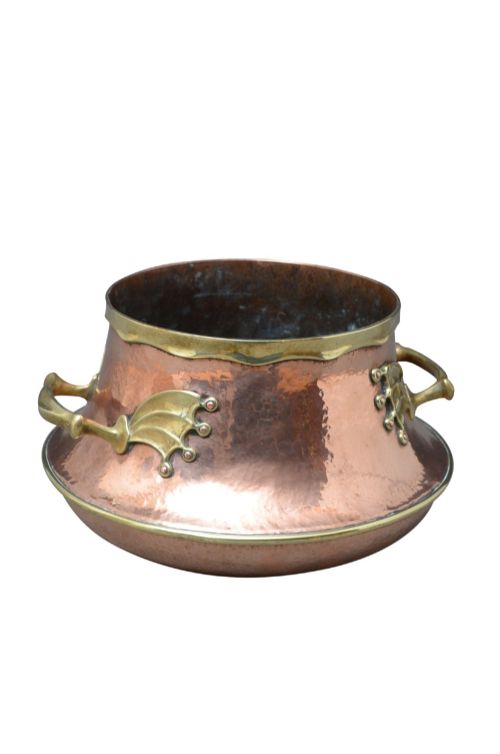
The bulk is British domestic brass of the 19th and early 20th centuries. Vessels for plants and fuel are the largest visible group: planters and jardinières, log bins, coal buckets and scuttles. Roughly one listing in five falls into that group, and the single item you're most likely to meet is a Victorian planter or jardinière, embossed or fitted with lion-mask ring handles.
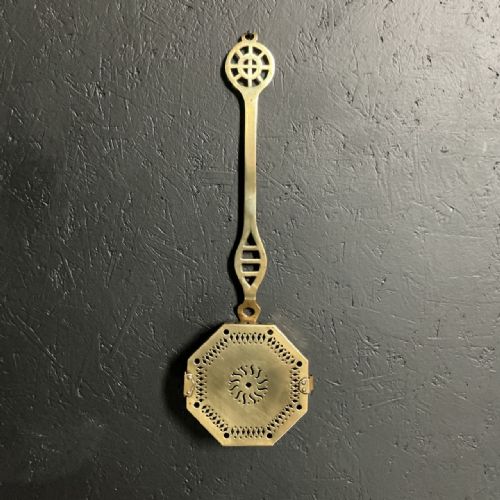
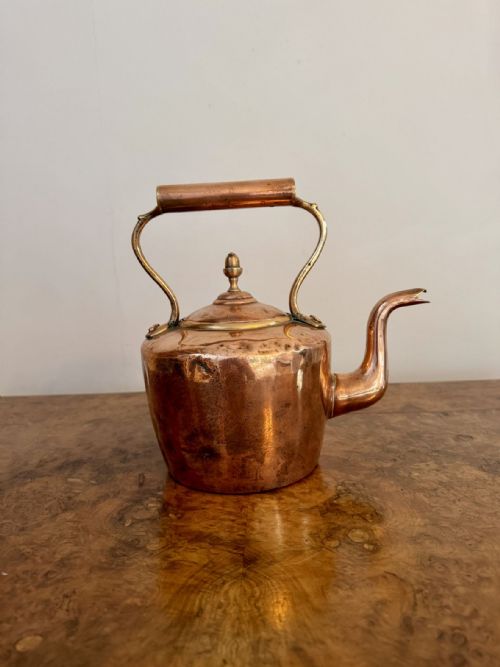
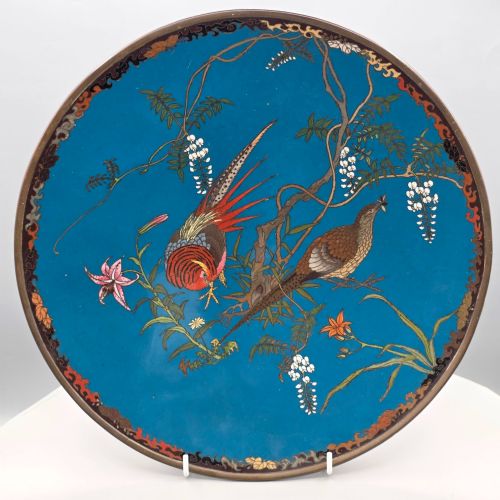
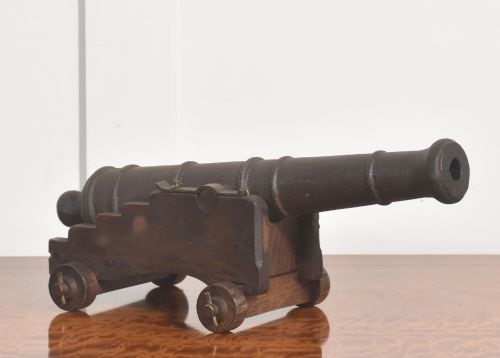
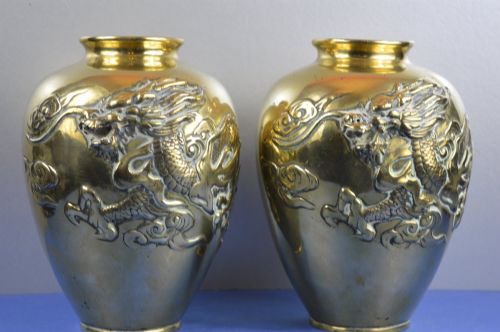
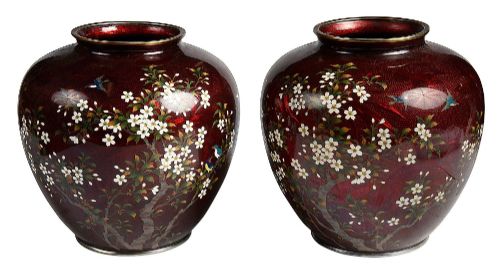
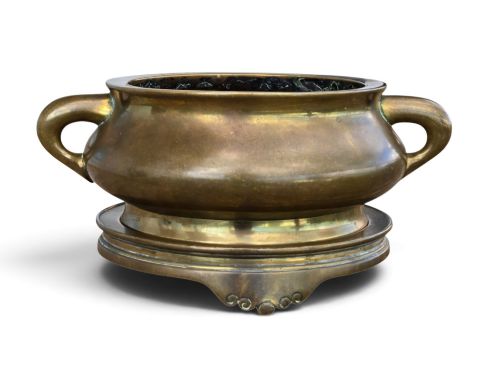
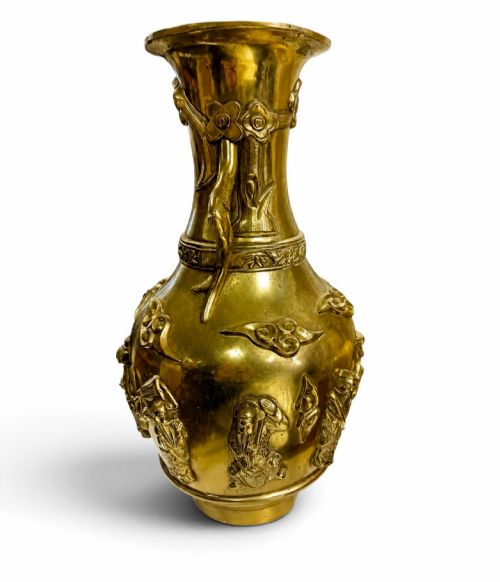
Behind it sit four steadier strands. Early kitchen, dairy and hearth metalware of the 17th to 19th centuries brings skimmers, salamanders, muffineers, kettles, pans, warming pans and chestnut roasters. Architectural and door furniture covers knobs, knockers, bell pulls, finger plates, stair rods and stick stands, several dealers listing long runs of it. Decorative figures, doorstops, inkwells, vesta cases, cannons and weights and scales run through the whole range. An imported strand of Chinese, Japanese, Indian, Dutch, French and Middle Eastern work adds censers, chargers, cloisonné and inlaid wares.
Dating is loose more often than not. Around 480 listings give a span rather than a year, with 19th Century and Victorian by far the commonest labels, and Victorian alone accounts for about a quarter of all titles. Georgian and 18th-century material is present but a minority, and a handful of pieces sit earlier still. Around 178 come to market a year on Sellingantiques, listed by 221 different dealers.

What Sets Them Apart
Size and decoration do most of the work in the domestic run. Large appears in about one title in seven, and the pieces at the top are the ones described as extra large or massive, or given a weight and a diameter. Cast, embossed, repoussé, pierced, chased and engraved surfaces sit above plain sheet, so a worked planter with lion masks and a plain bucket are not the same proposition.
Date separates the early English metalware from the general run. Seal-top spoons, salamanders, warming pans and alms dishes of the 17th and early 18th centuries are consistently placed above Victorian planters, and that strand is where the earliest dated stock comes from. Completeness matters alongside it: pair appears in around one title in ten, and sets of weights, fire irons, candlesticks, bells, tankards and measures hold together better than singles.
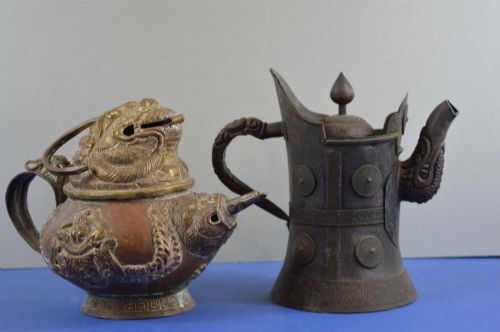
The imported wares behave differently. Cloisonné and enamel occur in a small number of titles but account for a disproportionate share of the upper end, along with inlaid Cairo Ware chargers and engraved Islamic brass. Signed Japanese cloisonné chargers run up to 50cm across, and the heaviest recorded pieces are Chinese and Indian bronzes rather than English hearth goods.
Retail Price Guide 2026
Typical UK retail prices for brass, calculated from the Sellingantiques database of over a million retail prices indexed since 2003. This retail price guide relies exclusively on Sellingantiques data; no external sources or auction records are used, so the figures do not describe the wider market.
Brass has been listed on Sellingantiques since 2008, and over 800 pieces have passed through since then.
The Antique Brass Glossary
- Jardinière
- An ornamental plant holder or pot cover, usually without drainage. The word turns up in over a hundred titles, used more or less interchangeably with planter.
- Log bin, coal bucket, coal scuttle
- Fireside vessels for fuel, the scuttle often helmet-shaped. The same objects are frequently offered as planters, so the two groups overlap on the page.
- Metalware
- Dealer shorthand in dozens of titles for early functional brass and iron domestic pieces, usually 17th to 19th century. Where you see it, expect kitchen, dairy or hearth rather than decorative.
- Repoussé, embossed
- Relief raised by hammering from the reverse. Common on planters and on chargers, and one of the things that lifts a piece above plain sheet.
- Muffineer
- A small shaker for flour, salt or spice. Appears repeatedly as 18th-century English pairs.
- Cloisonné
- Enamel held in wire cells on a metal body, mostly Japanese and Chinese in this category. Salamander, footman and censer sit nearby: a heated disc for browning food, a four-legged hearth stand, and an incense burner.
Frequently Asked Questions
What is the most common item in this category?
Planters and jardinières, followed closely by log bins, coal buckets and scuttles. Together they make up roughly a fifth of listings.
The typical example is Victorian, often embossed, and frequently fitted with lion-mask ring handles.
Are log bins and planters the same thing?
Often, yes. A fireside vessel made for fuel gets listed as a planter once someone puts a pot in it, and dealers use both words for the same shape.
The titles reflect that overlap rather than resolving it, so the two groups run into each other.
How old is most of the stock?
19th century and Victorian dominate, with Victorian alone the single most common word in the category by a wide margin.
Georgian and 18th-century pieces are a real but smaller presence. A few items reach back further, including a 16th-century Nuremberg alms dish and Islamic engraved wares, and the latest dated entry is a set of Imperial measures from 1950.
Why do copper and bronze appear under brass?
The heading covers the copper-alloy family as it comes to market. Copper turns up in almost a fifth of titles and bronze in a smaller share.
Copper kettles and pans sit alongside brass ones in the kitchen strand, and Chinese and Indian bronzes account for several of the heaviest pieces recorded.
Which pieces sit at the top of the range?
Japanese and Chinese cloisonné, including signed chargers up to 50cm across, plus inlaid Cairo Ware and engraved Islamic brass.
Within the English material, early metalware does best: 17th and early 18th-century spoons, salamanders, warming pans and alms dishes are placed above the general run of Victorian planters.
Do brass antiques carry maker's marks?
Brass isn't assayed, so there are no hallmarks, assay marks or date letters of the kind found on silver.
The titles in this category don't record maker names as a general pattern either. Where a name does appear, it stands alone rather than pointing to any one firm behind the bulk of the stock.