


Antique Tea Urns
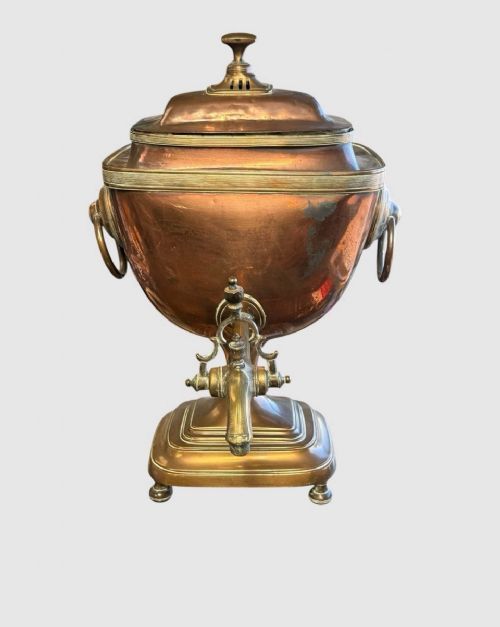
A lidded metal vessel with a tap at the base, made to stand at table and pour hot water or tea without carrying a kettle back and forth to the fire.
Antique Tea Urns
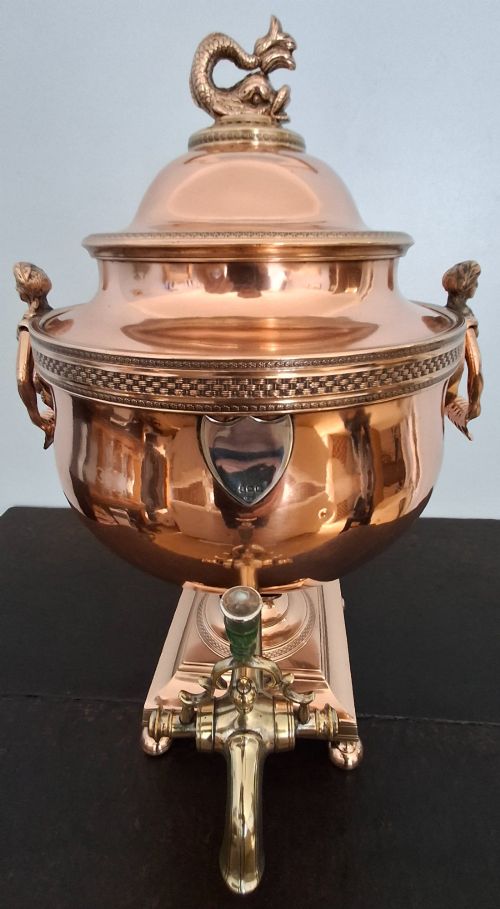
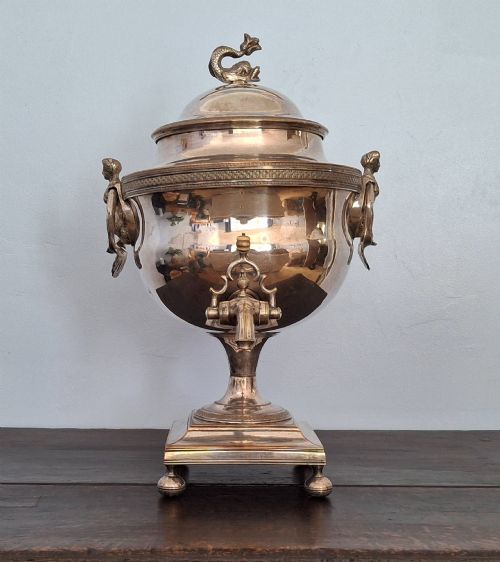
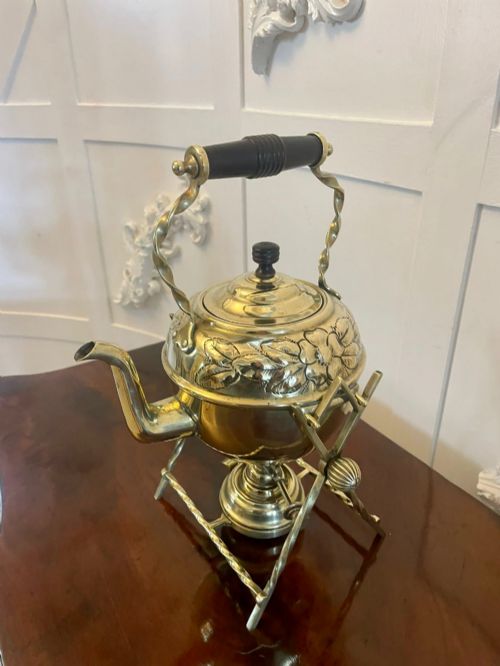
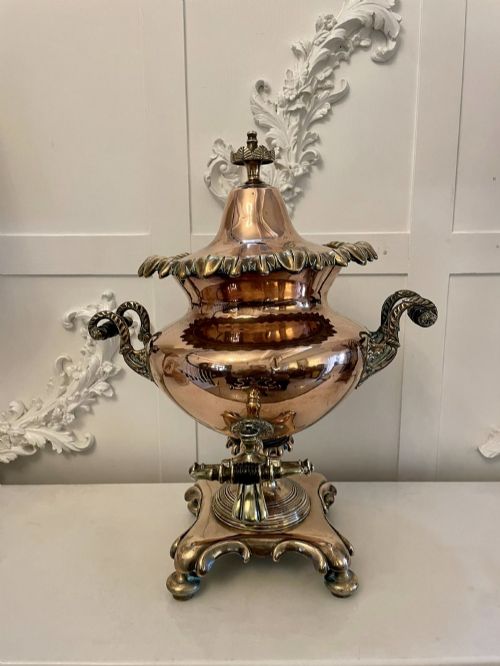
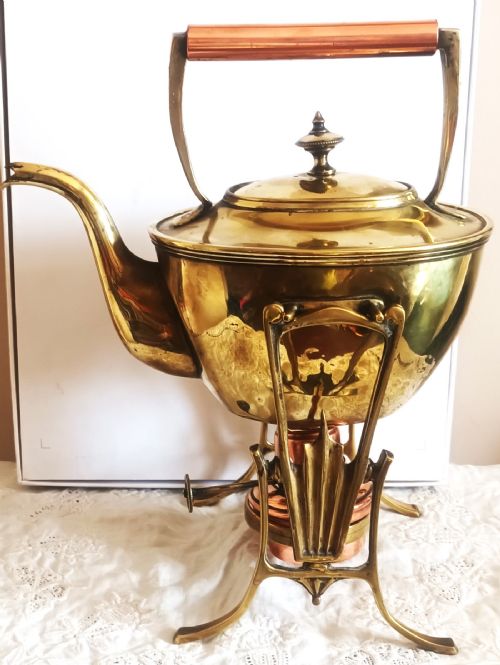
The tea urn arrived in the eighteenth century as tea drinking spread: a tall tapped vessel that held enough hot water for pot after pot. The spirit kettle did the same job in miniature, sitting on its own stand with a small burner beneath. Both turn up under this heading, along with the word samovar.
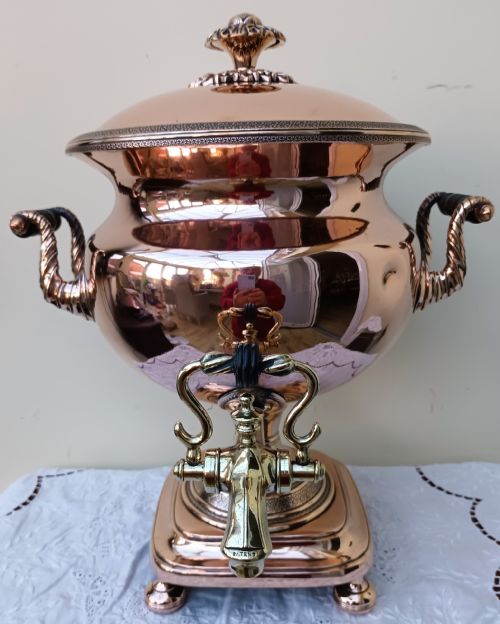
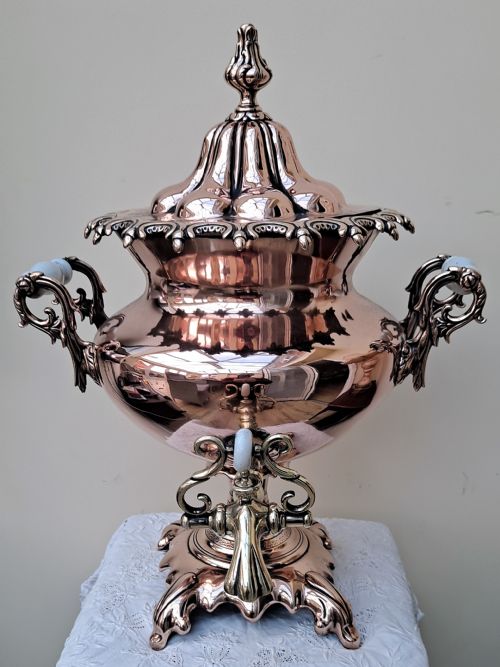
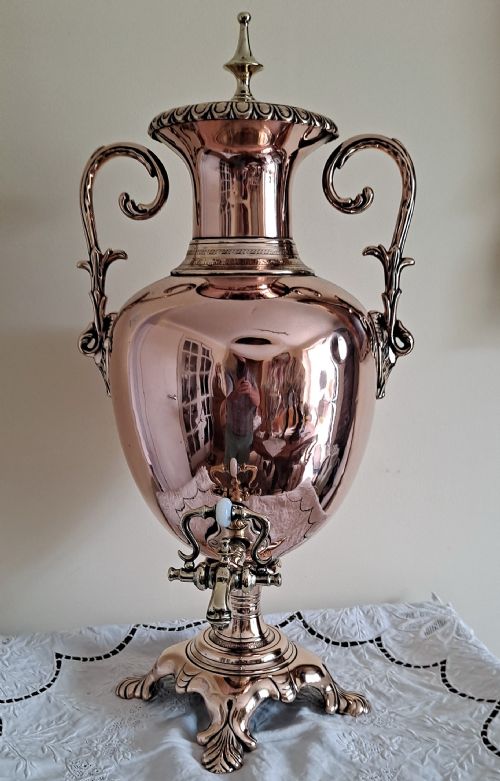
Copper dominates, in 41 of 55 titles, commonly with brass mounts and fittings. Victorian is the label attached to about half, English to a quarter. So the piece you will meet again and again is a Victorian copper urn with brass taps and handles, standing on feet or a stand.
Samovar is the word dealers reach for most, in 31 of the titles, but it is used interchangeably with tea urn and kettle rather than to mean anything different. The origins actually stated across the category are English or Dutch. Strictly a samovar is the eastern form with an internal heating tube; in the British trade the name spread to tapped urn shapes generally.
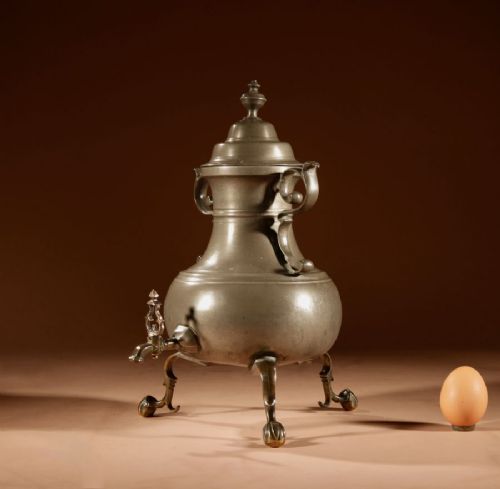
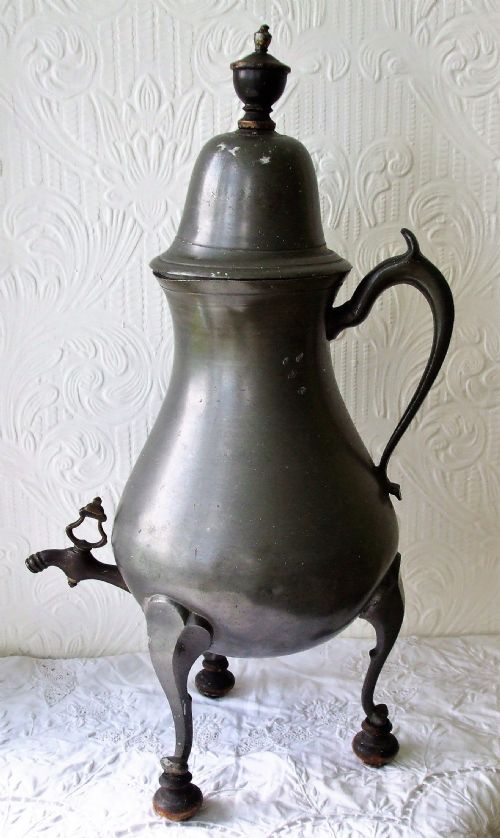
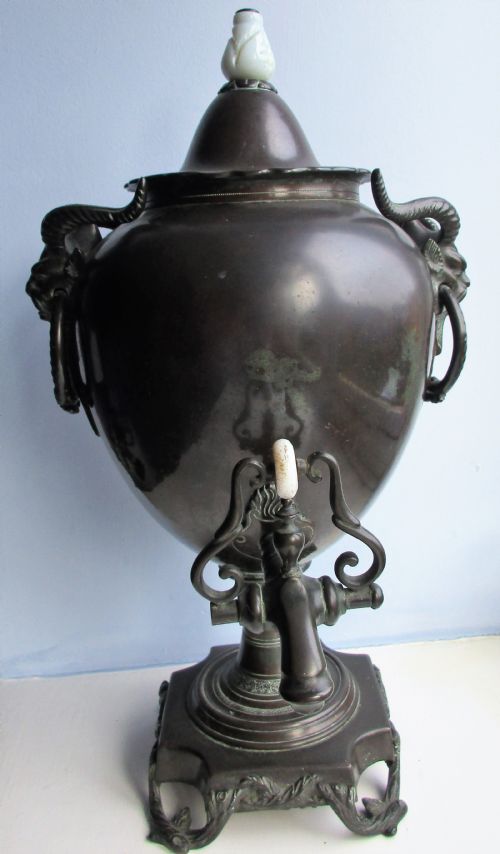
Away from copper the archive throws up small numbers of other things: two silver plated urns, two Dutch or English Georgian pewter coffee urns and a Dutch pewter and bronze kraantjeskan, and two japanned Pontypool ware urns. Dates run from 1800 to 1920, with one piece described as circa 1750, though only 28 listings carry a clean year at all.
What Sets Them Apart
Metal and finish separate the two ends more sharply than anything else. Plain undecorated Victorian copper sits at the bottom of the range. The japanned Pontypool ware urns, the pewter pieces and the Dutch pewter and bronze kraantjeskan are the highest-priced sampled titles, and that kraantjeskan is also the earliest thing in the category.
Size moves a piece within its own type. Titles carrying "large", including a large hanging copper water urn, cluster in the upper half, while a small samovar sits low. Completeness works the same way: dealers who flag original fittings, or write "complete", are flagging what pushes a copper urn up.
A named design idiom lifts a kettle above a plain equivalent. Adam period and Adams style appear on three titles, with Aesthetic Movement and arts and crafts on others, the latter on a pair of hanging kettles. Dealers' own quality wording runs the same way, clustering in the upper half of the range.
Antique Tea Urns Retail Price Guide 2026
Typical UK retail prices for tea urns, calculated from the Sellingantiques database of over a million retail prices indexed since 2003. This retail price guide relies exclusively on Sellingantiques data; no external sources or auction records are used, so the figures do not describe the wider market.
Samovar is Russian for self-boiler. Most of the urns called samovars in the archive are English or Dutch.

The Antique Tea Urns Glossary
- Tea urn
- A tall lidded vessel with a tap at the base for drawing off hot water or tea. Stands on feet or a separate stand.
- Samovar
- Strictly the eastern form with an internal heating tube. In these titles it is used interchangeably with tea urn and kettle.
- Spirit kettle
- A kettle on its own stand with a small spirit burner beneath, named in eight titles.
- Tap or spigot
- The valve at the base through which the contents are drawn. The feature that makes an urn an urn.
- Pontypool ware
- Japanned, meaning lacquered, tinplate or metalware. Two urns here carry the name and both sit near the top of the range.
- Kraantjeskan
- Dutch term for a tapped urn. One pewter and bronze example appears, dated circa 1750.
Antique Tea Urns: Frequently Asked Questions
Are these Russian samovars?
No. Samovar appears in more than half the titles, but the origins actually stated in this category are English or Dutch.
The word travelled into the British trade and was applied loosely to urn-shaped tapped vessels. Not one eastern European example is named in the listings.
What are they usually made of?
Copper, in 41 of the 55 titles, frequently with brass mounts, taps and handles.
Everything else turns up in ones and twos: pewter, bronze, bell metal, silver plate and japanned Pontypool ware. Sterling silver does not appear.
How old are antique tea urns?
The dated field runs from 1800 to 1920, with years clustering around 1800, 1880, 1860 and 1850. One Dutch pewter and bronze piece is described as circa 1750.
Only 28 of the 55 listings carry a clean year. The rest are filed under labels such as 19th Century, Victorian or Georgian, which dealers use in place of a date.
Is a spirit kettle the same as a tea urn?
They did the same job by different means. The urn was a large tapped vessel holding hot water for repeated pots; the spirit kettle sat on a stand with a small burner underneath.
Kettle appears in 16 titles and spirit kettle in eight, several of them reading "and stand" or "on a stand". Both are listed under this heading.
How often do they come up for sale?
Around seven pieces a year across the whole category on Sellingantiques, from seventeen different dealers over time.
They arrive in ones and twos rather than runs.
Which ones sit at the top of the range?
The japanned Pontypool ware pair, the pewter urns and the Dutch kraantjeskan are the highest-priced sampled titles. Plain undecorated Victorian copper sits at the bottom.
Within copper, large examples and those with original fittings sit higher than small or plain ones. The single 1920 piece, the latest dated, is among the least expensive.