




Antique Ormolu
Ormolu is gilded bronze, gilded to look like gold, worked into small decorative pieces for the table, the chimneypiece and the desk.
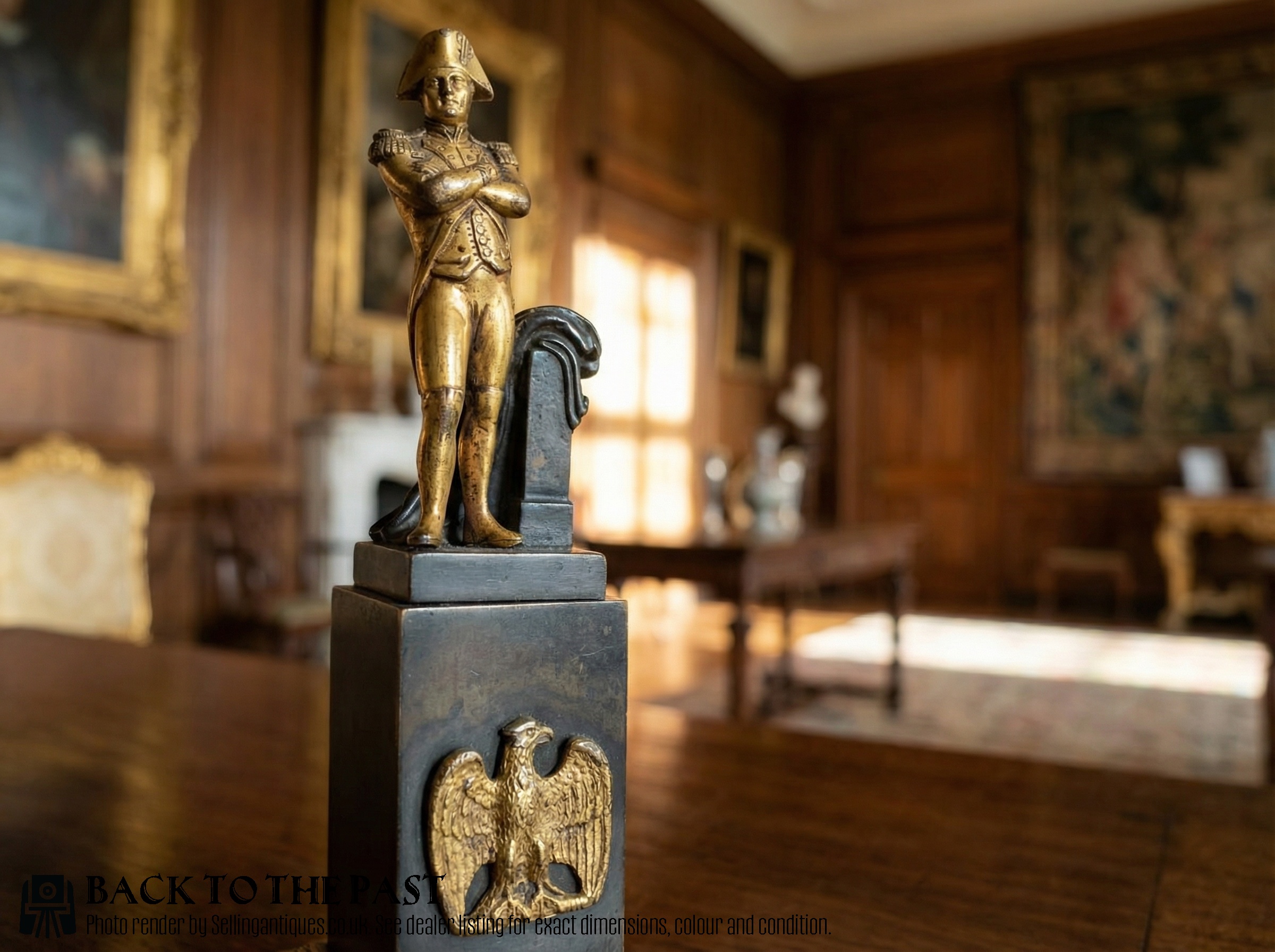
Antique Ormolu
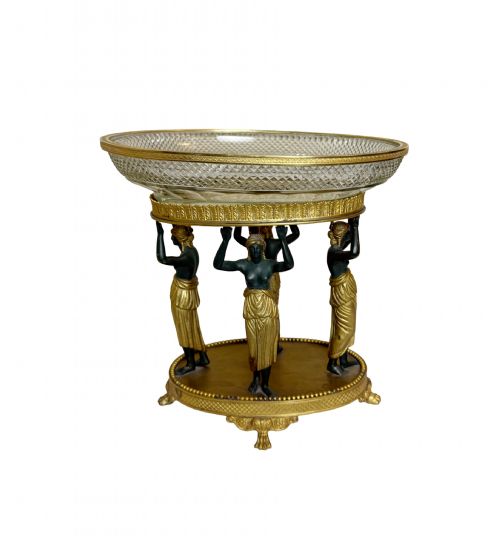
Ormolu isn't one object. It's a finish and a way of building: bronze or brass gilded all over, or a piece of marble, onyx, crystal or enamel carrying gilt-bronze mounts. A title using the word may be describing the whole thing or only the metal on it.
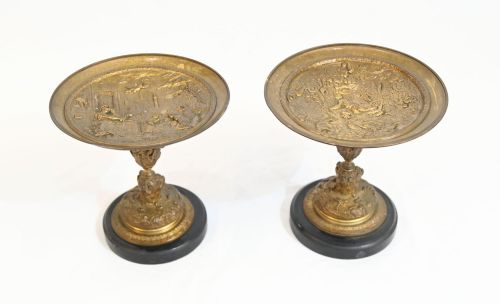
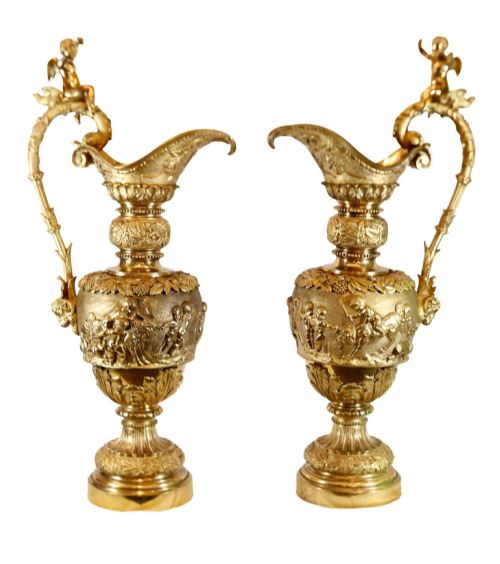
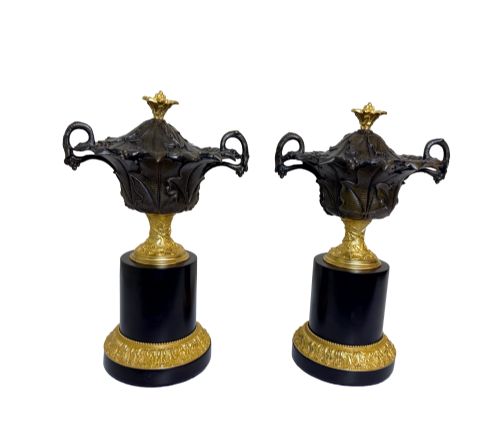
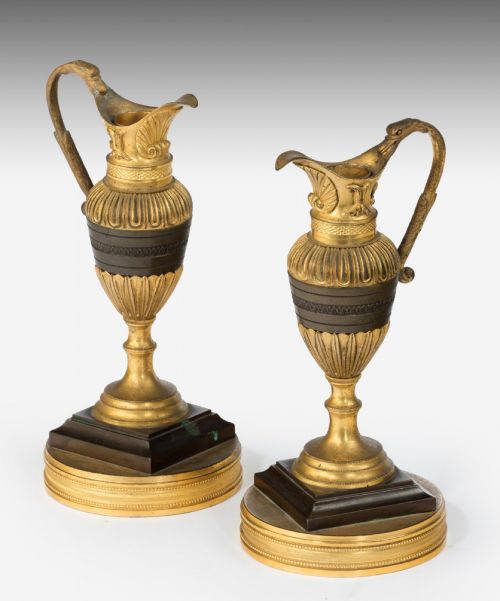
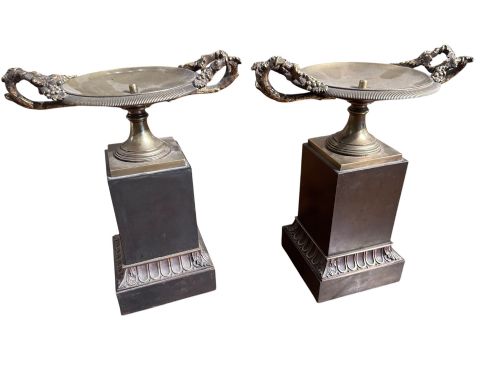
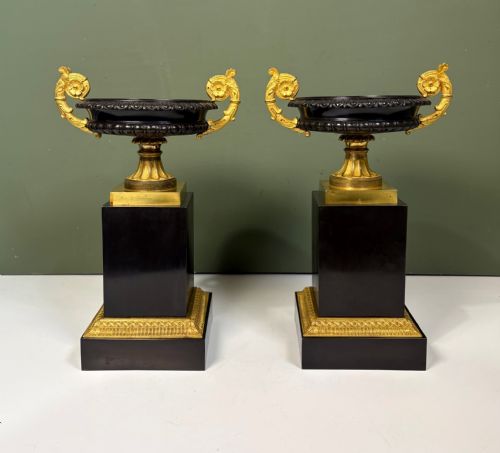
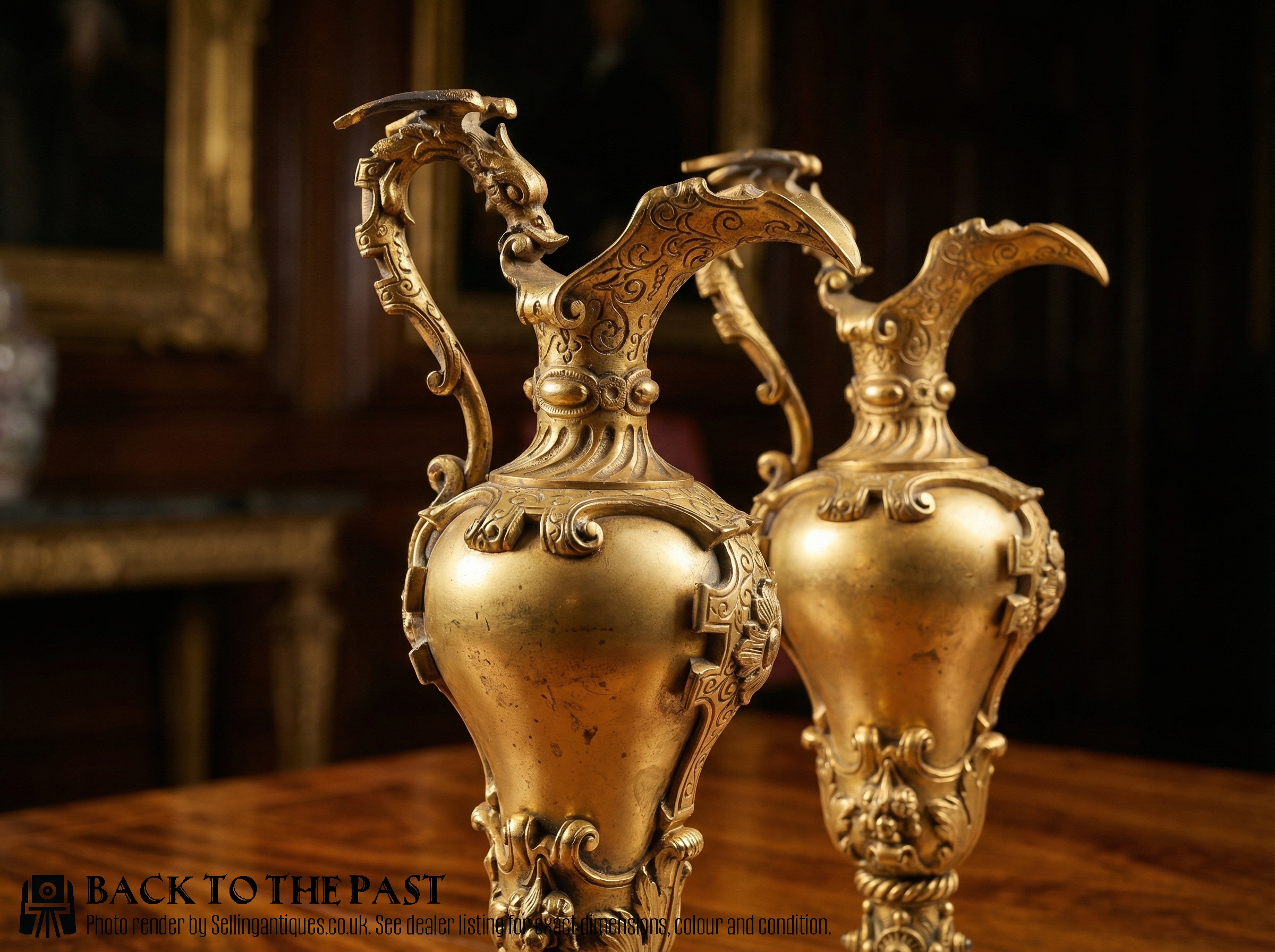
The form you'll meet most often on Sellingantiques is a pair of French 19th-century classical vessels. "Bronze" appears in 49 of the 71 titles, "French" in 37, "pair" in 35. Tazzas, urns, ewers, coupes and vases are the largest single group, commonly standing on marble or onyx bases.
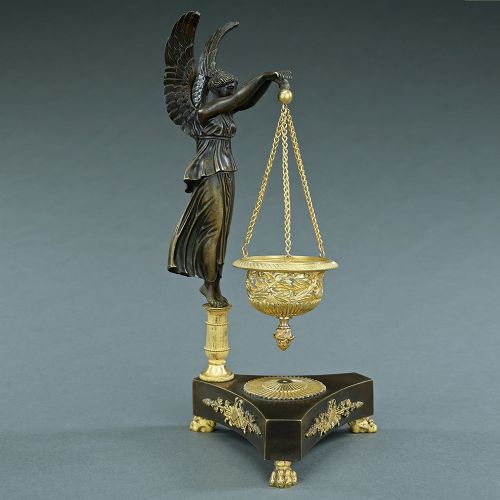
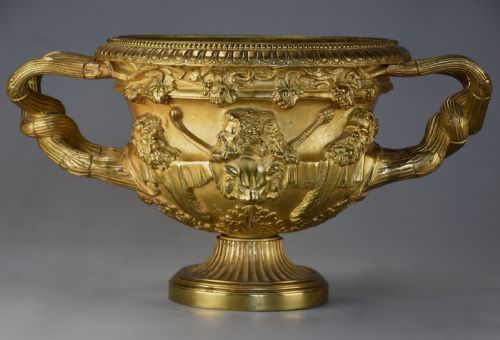
Around them sit four smaller strands. Grand Tour souvenirs run through about a fifth of the archive, with models of the Vendôme Column recurring more than any other object and a reduction of the Warwick Vase among them. Then Empire, Regency, Charles X and Restauration pieces; cassolettes and perfume burners; and figures, plaques, furniture mounts, chenets and tie-backs.
On dates, the field is blunt. Thirty-three listings commit to nothing more than "19th Century". Where a year is given it runs from 1800 to 1930, busiest in the 1880s, and only two entries fall outside the 19th century at all. Louis XVI or Empire in a title is describing a style, not a date.
Top And Bottom
Pairs do the heavy lifting. They account for nearly half the category and occupy most of the upper half of the range, while single furniture mounts and small figures sit at the bottom. A tazza on its own and the same tazza with its mate are different propositions.
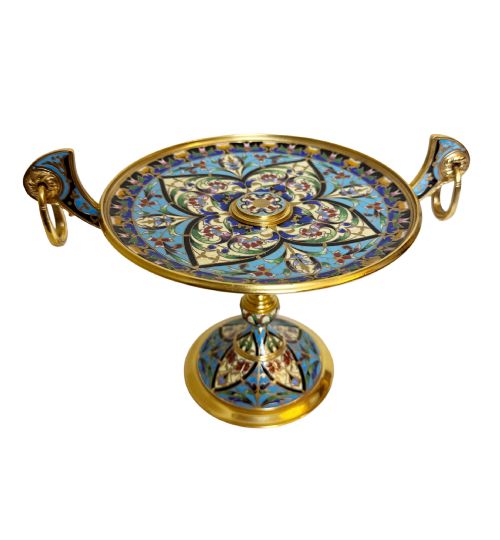
After that it's what the gilt bronze is combined with, and how much of it there is. Marble, onyx, giallo antico, cut crystal, Limoges enamel, champlevé and cloisonné all turn up on pieces in the upper half. "Large" appears in titles at the higher end too, on cassolettes, on a tazza, on a portrait plaque.
A named source lifts a piece as well. Titles that point to a specific model, the Warwick Vase, the Albani Vases, the Vendôme Column, sit in the middle and upper part of the range. So does any title recording how the metal was worked, though only a handful do: "cast and chased" on a set of lions, "silvered" on a pair of lidded urns.
Antique Ormolu Retail Price Guide 2026
Typical UK retail prices for ormolu, calculated from the Sellingantiques database of over a million retail prices indexed since 2003. This retail price guide relies exclusively on Sellingantiques data; no external sources or auction records are used, so the figures do not describe the wider market.
Models of the Vendôme Column recur more than any other object in the Sellingantiques ormolu archive, with seven separate listings of the same Grand Tour souvenir.
The Antique Ormolu Glossary
- Ormolu
- Gilded bronze or brass. In a title it may cover the whole piece or only its gilt mounts.
- Gilt bronze
- The same thing under another name, used interchangeably with ormolu in 17 of these titles.
- Tazza
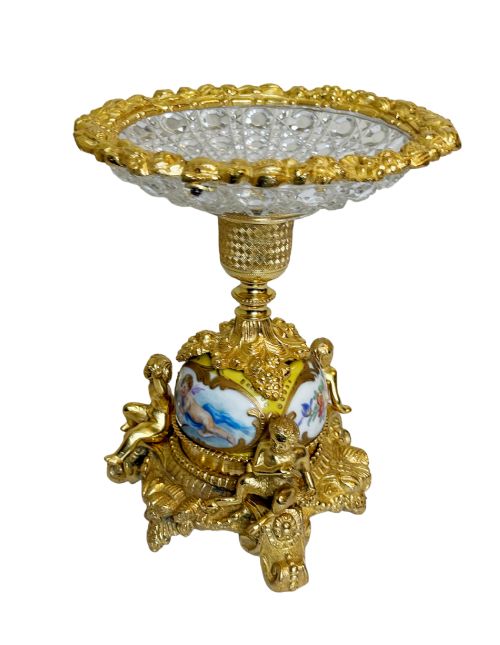
- A shallow bowl on a stemmed foot, one of the commonest forms in this category and often listed in pairs.
- Cassolette
- A covered vase for burning perfume, sometimes reversible so it works as a candlestick.
- Chenet
- A firedog or andiron for the hearth.
- After the antique
- A reduction or copy of a known classical model, the Warwick Vase being the example that turns up here.
Antique Ormolu: Frequently Asked Questions
Is ormolu the same as gilt bronze?
In practice, yes. The two terms are used interchangeably in these listings, with "gilt bronze" appearing in 17 of the 71 titles.
Ormolu is bronze or brass with a gold-coloured gilded surface, developed in France in the 18th century for mounts, clock cases and decorative wares where the look of gold was wanted on a cast body.
Why are so many pieces sold in pairs?
They were made that way. Classical vessels for the chimneypiece or table were conceived symmetrically, and "pair" appears in 35 of the 71 titles on Sellingantiques.
Pairs also sit in most of the upper half of the range. Single mounts and small figures are where the bottom of the range lives.
What does Grand Tour mean on an ormolu listing?
Souvenir bronzes of classical and Napoleonic monuments, bought by travellers. The phrase turns up in 14 of these titles.
The Vendôme Column is the model that recurs most, seven separate listings of essentially the same souvenir, spread across a wide band of the range. A reduction of the Warwick Vase appears too.
How old is most ormolu on the market?
Nineteenth century. Thirty-three listings say only "19th Century" and nothing more precise, and where a clean year is given it runs 1800 to 1930.
The 1880s are the busiest decade in the dated field, ahead of the 1870s. Just two entries in the whole archive fall outside the 19th century, one from the 1910s and one from the 1930s.
Does a Louis XVI title mean an 18th-century piece?
Not in this category. The dated field starts at 1800, so Louis XIV, Louis XVI and Empire in these titles are style names rather than dates.
Charles X and Restauration appear the same way, and Regency accounts for five dated entries.
What unusual things turn up in this category?
Alongside the vessels and burners there are one-offs. A Berlin iron plaque of Napoleon in an ormolu frame, a set of four gilded brass curtain tie-backs, a gilded bronze desk set of playing kittens, and a pair of Regency 'Au Bon Sauvage' abolitionist compotes.
Napoleon is the most recurrent subject after the classical vessel, appearing as a bronze figure, an iron plaque and a large early 19th-century portrait plaque.
Supply is thin and scattered: around eight pieces a year, listed by 35 different dealers.