
Antique Cast Iron
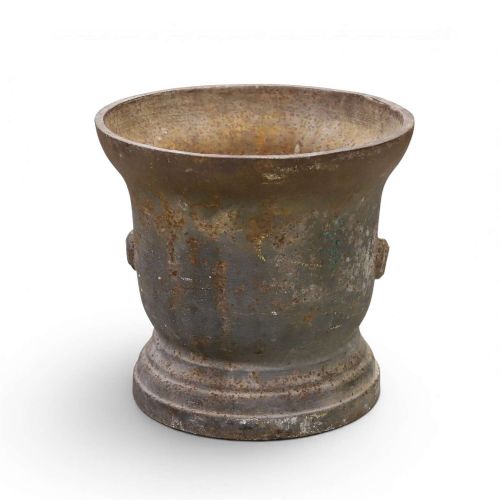
Iron poured into sand moulds and turned out by the pattern, used through the nineteenth century for garden urns, planters, figural animals and the fittings of a door or hall.
Antique Cast Iron
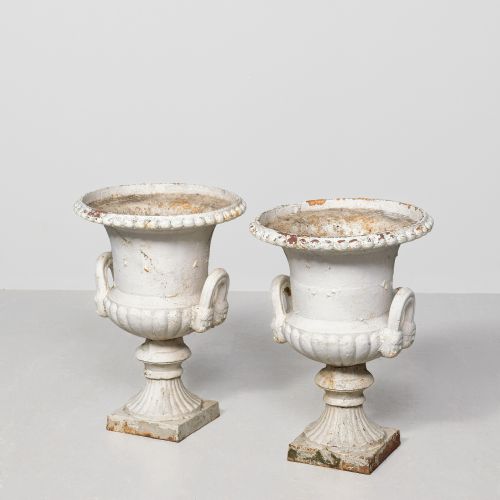
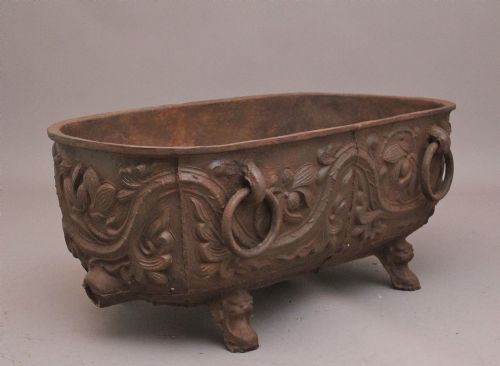
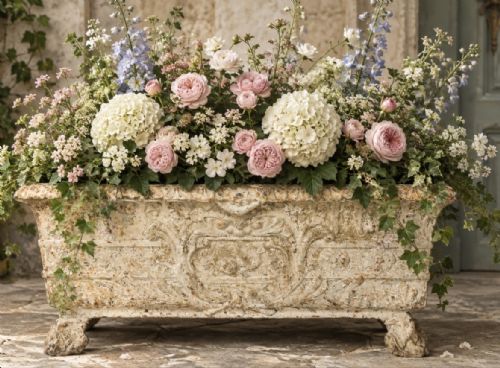
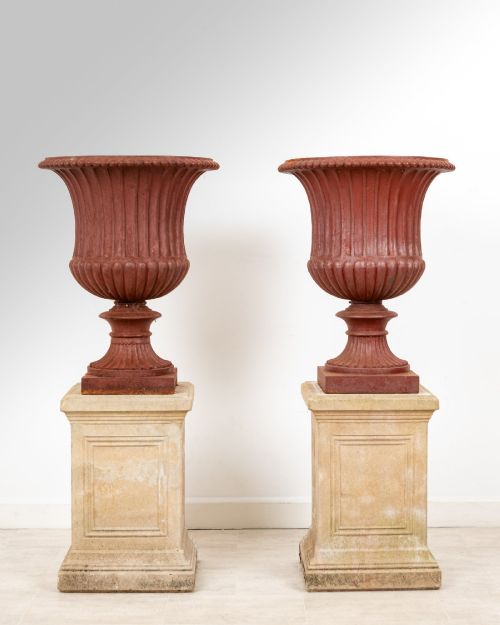
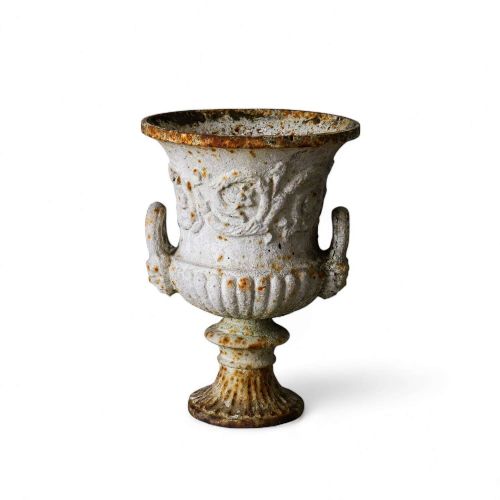
The heading covers architectural and ornamental metalware, and garden ware dominates it. Urns, vases and planters make up roughly half the category, and they arrive in pairs more often than singly: the word 'pair' sits in 136 of 373 titles. Campana and tazza shapes recur, frequently raised on plinths or stands.
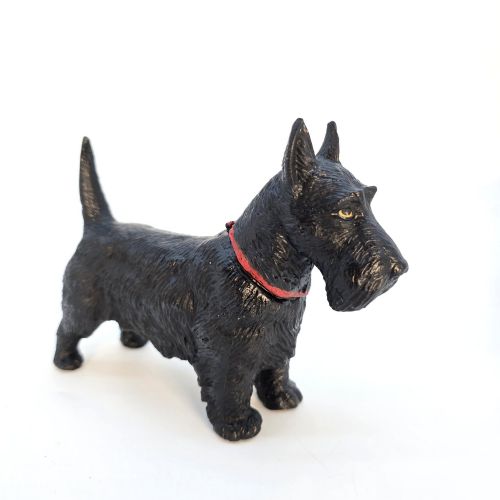
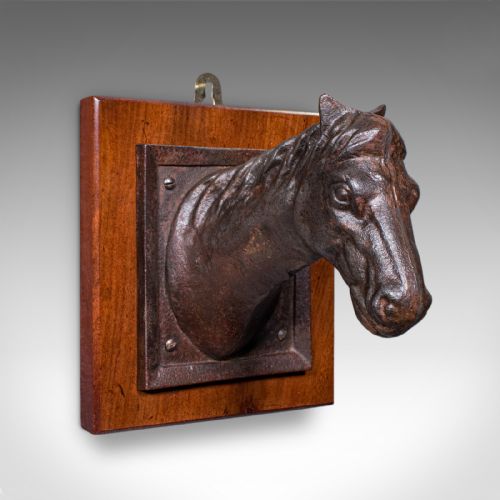
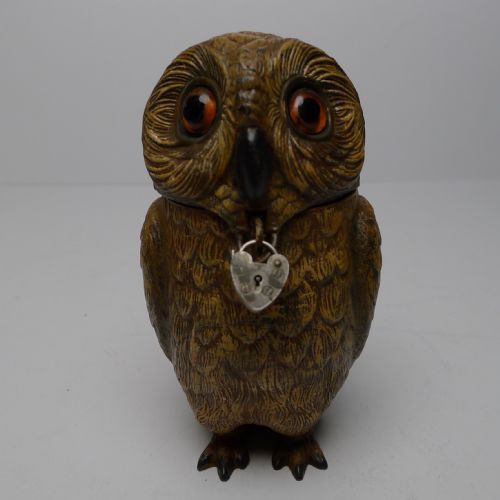
Behind the garden ware comes a long tail of figural castings. Lions are the signature animal, named in some 29 titles between the singular and the plural, in Medici, recumbent, winged and sejant forms. Sheep, horses, eagles, dragons, sphinxes, dogs, cats and cherubs all turn up, along with one-offs like a weathered hippopotamus and a butcher's window-display pig.
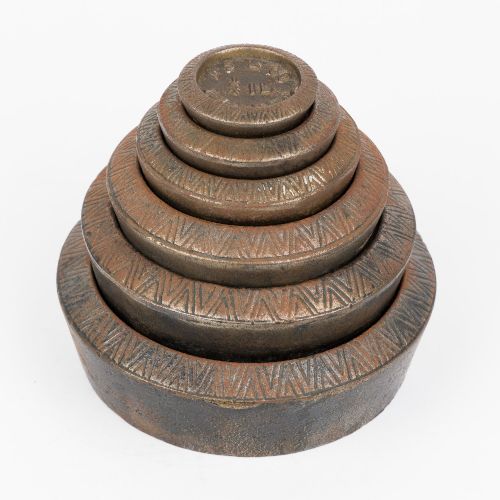
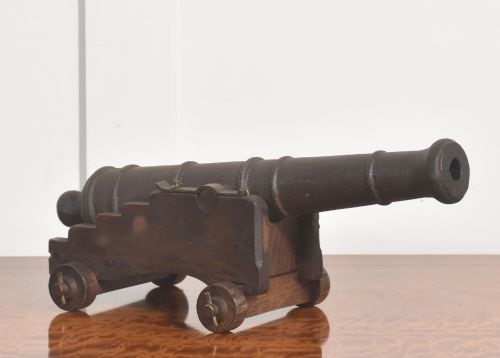
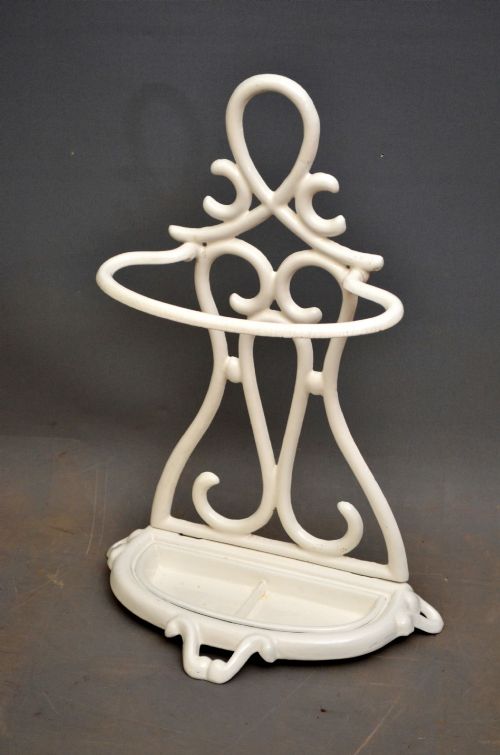
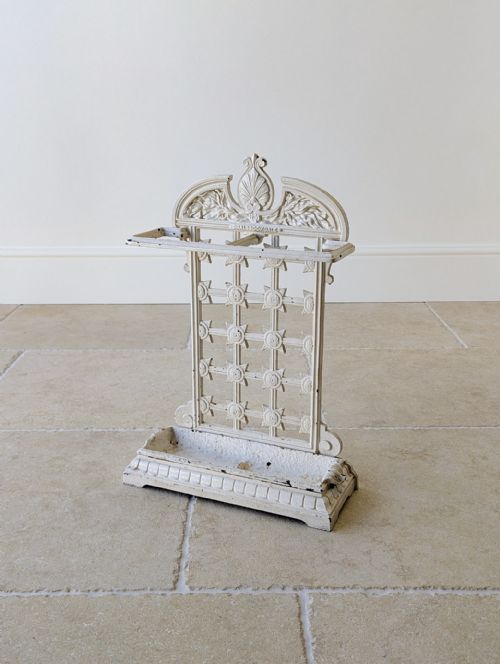
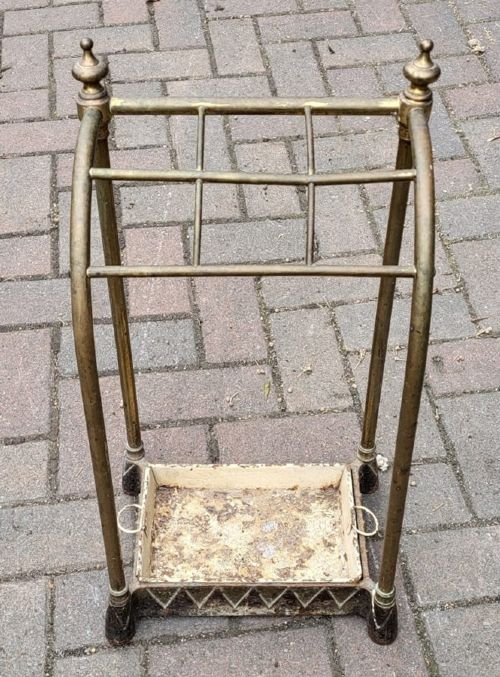
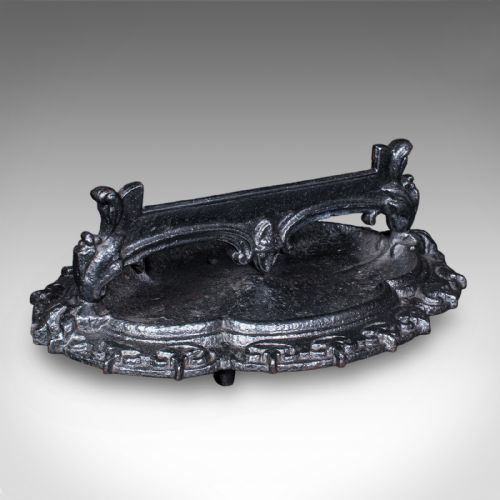
Then the working iron of a Victorian house: doorstops, door knockers, boot scrapers, coal hole covers, ceiling roses, finials, firebacks and armorial wall plaques. Hall, stick and umbrella stands are a small but steady presence, some of them figural. Model and signal cannons, cauldrons, skillets, mortars and book presses fill out the rest.
Dealer-entered dates run from 1800 to 1940, though the commonest entry is simply '19th Century', with 'Victorian' close behind, and both are spans rather than years. A few sampled pieces reach back to Georgian and Regency work, an eighteenth-century mortar and older lock keys. A minority of listings are related metalwork under the same heading, in brass, copper, bronze, spelter or steel, or iron from Japan, China, Russia and India.

Where The Range Splits
Number and scale do most of the work. A pair beats a single, and sets of three, four and five urns appear only near the top of the range. 'Large' is in 68 titles, and words like monumental, huge and life size are used almost entirely at the upper end. The bottom is small desk and door work: paperweights, nutcrackers, doorstops, lock keys.
Completeness comes next. Urns described as on their original plinths, on stands or on stone pedestals sit noticeably higher than bowls offered alone, and the words 'stand' and 'plinths' recur through the titles for that reason.
Surface matters, and a named foundry in the title matters. Original paint, cold painting, traces of polychrome, bronzed and patinated finishes and enamel are all singled out where they survive. Foundry names, whether cast into the piece or given as an attribution, cluster in the middle and upper part of the sampled range.
Antique Cast Iron Retail Price Guide 2026
Typical UK retail prices for cast iron, calculated from the Sellingantiques database of over a million retail prices indexed since 2003. This retail price guide relies exclusively on Sellingantiques data; no external sources or auction records are used, so the figures do not describe the wider market.
Cast iron has been listed on Sellingantiques since 2010, with over two hundred pieces through the archive since then.

The Antique Cast Iron Glossary
- Campana
- A bell-shaped or inverted-bell urn form, named in a dozen titles in this category.
- Tazza
- Wide shallow bowl raised on a stem, a shape that recurs among the urns.
- Plinth
- The separate base an urn stands on, sometimes original to it, sometimes a later stone pedestal.
- Jardiniere
- A planter, made to hold a plant, as opposed to an urn made purely as ornament.
- Fireback
- Cast panel set at the back of a hearth to throw heat forward into the room.
- Sejant
- Heraldic term for a seated animal, used of lions alongside recumbent, winged and Medici types.
Antique Cast Iron: Frequently Asked Questions
Why are cast iron urns sold in pairs?
Cast iron was made from a reusable pattern, so a foundry could turn out matching urns cheaply and gardens were laid out symmetrically to suit.
On Sellingantiques the pair is the default rather than the exception, with 136 of 373 titles carrying the word. Sets of three, four and five appear too, and they sit at the top of the range.
What period does most of this iron date from?
The dealer-entered dates span 1800 to 1940. The single commonest entry is '19th Century', with 'Victorian' behind it, and both describe a span rather than a year.
Decade entries cluster around the 1850s and the 1900s, with smaller groups in the 1860s, 1880s, 1890s, 1910s and 1920s. A handful of sampled pieces are Georgian, Regency or eighteenth century, and a few run into the 1930s and 1940s.
How large do the pieces get?
From desk paperweights and match strikers up to terrace vases described as monumental or life size. 'Large' appears in 68 titles.
Weights are stated only now and then. The heaviest named is a 140 lb dye maker's mortar and pestle, with a 14 kg Chinese iron bust and a 4.2 kg royal coat of arms behind it.
Are all listings in this category actually iron?
Most are, but a minority are related metalwork sold under the same heading: brass, copper, bronze, spelter and steel.
Brass appears in 16 titles and copper in 8, often as parts of a piece, such as a cannon barrel on an oak carriage.
Which animals show up most often?
Lions, by a distance. Around 29 titles name one, in Medici, recumbent, winged and sejant forms, and one pairs a lion with a unicorn.
Sheep, horses, eagles, dragons, sphinxes, stags, dogs and cats follow. Cherubs and angels appear among the figures too.
How often do these come up for sale?
Around 45 pieces a year come to market on Sellingantiques in this category.
127 different dealers have listed in it, which tells you most carry one or two rather than a standing stock.