


Antique Spelter
Spelter is decorative cast zinc alloy, finished to look like bronze, made into figures, animals, urns and lamps for the domestic market from the mid-19th century to the 1930s.
What Is Spelter?
Spelter is a zinc-based casting alloy, lighter and softer than bronze, taken up widely from the mid-19th century as a cheaper substitute for it. Nearly every piece is surface-finished to imitate bronze: bronzed, patinated, cold-painted or gilt. It suited large-scale commercial production of figures, clock garnitures, urns and lamps.
Figures dominate. Around half the titles on Sellingantiques use the words figure, figural, figurine or sculpture, and the single most recognisable thing in the category is a French Art Deco figure on a stone base. Art Deco appears in 60 of 156 titles, French in 36, and 62 listings are dated to the 1930s. Dancers, archers, swimmers, panthers, greyhounds and lionesses run through that group.
Behind the Deco strand sits a 19th-century one, roughly a quarter of the archive: bronzed classical, historical and genre figures, Napoleon and Beethoven, warriors and water carriers, plus busts. Pairs are a strong seam, from figurines and musicians to knights and urns, and there are a dozen groups cast or mounted as one.
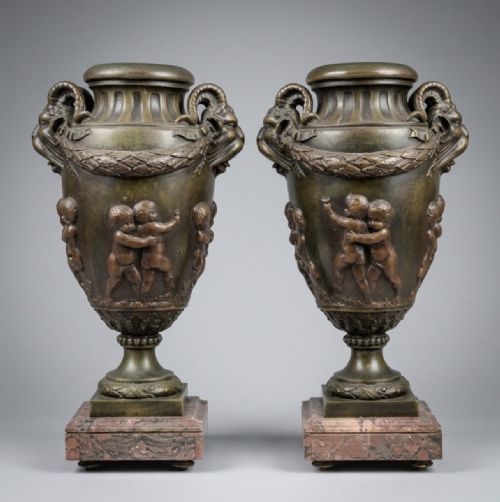
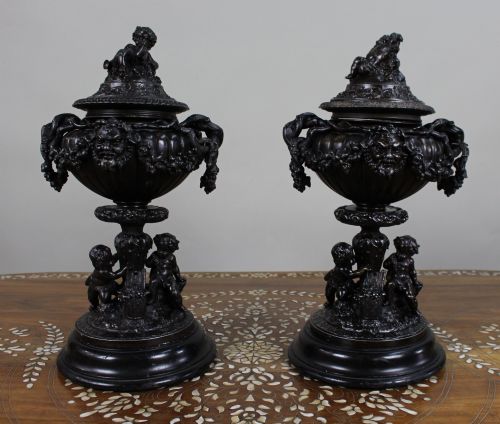
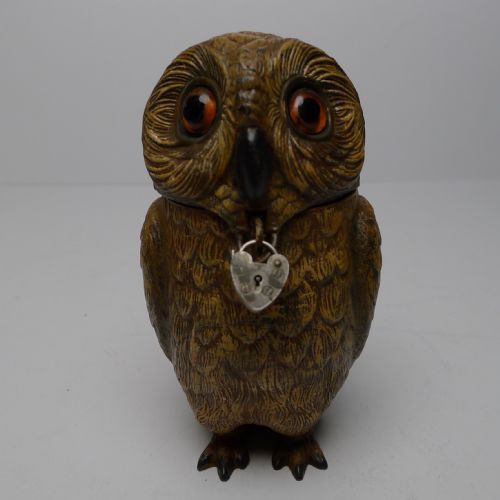
A smaller run of holloware and functional pieces sits alongside: campana urns, amphora vases, classical ewers, pilgrim flasks, table lamps, lighters, an inkstand, a match striker and a painted money box. Most pieces stand on a plinth of marble, onyx, alabaster, slate or wood. Dates in titles are frequently hedged as c1930 or late 19thc, so read a year as a dealer's estimate.
Where Value Sits
Scale does a lot of the work. The word large appears in 21 titles and clusters at the top of the range, and the biggest pairs of urns and classical figures sit at the very top. A pair or a group beats a single of the same subject, which is why dealers keep them together.
Surface separates the middle from the upper half. Cold-painted and patinated finishes turn up repeatedly among the higher-asked pieces, while plain bronzed, which appears in 17 titles, spreads lower. The base matters in the same way: marble, onyx and alabaster are named in titles and those figures sit well above ones with no base mentioned.
Then there is attribution. Titles that carry signed, after or attributed to sit above the plain spelter figure listings, even though the names themselves are surface marks and dealer opinion rather than documented commissions. No foundry or maker runs through the category as a whole.
Retail Price Guide 2026
Typical UK retail prices for spelter, calculated from the Sellingantiques database of over a million retail prices indexed since 2003. This retail price guide relies exclusively on Sellingantiques data; no external sources or auction records are used, so the figures do not describe the wider market.
Spelter has been listed on Sellingantiques since 2009.
The Antique Spelter Glossary
- Spelter
- A zinc-based casting alloy used for decorative sculpture, lighter and softer than bronze.
- Bronzed
- Surface finished to imitate bronze; the word appears in 17 titles.
- Cold painted
- Colour applied to the cast surface without firing, seen on Austrian hunting dogs and Deco figures.
- Plinth
- The base a figure stands on, in marble, onyx, alabaster, slate or wood.
- Group
- Two or more figures cast or mounted as one piece; twelve titles in the archive.
- Animalier
- Sculpture of animals treated as a subject in its own right; the term appears in one greyhound title.
Frequently Asked Questions
Is spelter the same as bronze?
No. Spelter is a zinc alloy, lighter and softer, used from the mid-19th century as an inexpensive substitute for bronze.
The finish is what causes the confusion. Almost every piece was bronzed, patinated or gilt so it would read as bronze across a room.
What subjects turn up most?
Figures, by a long way. Dancers and draped women, classical and historical characters, and animal studies account for around half the titles.
Animals are a world of their own: deer, seagulls, cranes, retrievers, greyhounds, borzois, alsatians, elephants, antelope, tigers, panthers, lions, a westie terrier, ducks and a racing pigeon.
How old is most antique spelter?
The dated field runs from 1860 to 1930, with 125 of 156 listings carrying a clean year.
It lumps heavily. The 1930s alone account for 62 listings, and a further 20 are given only as 19th Century, with six Victorian and two Edwardian.
The genuine spread across the 1880s, 1890s, 1900s, 1910s and 1920s is thinner, a handful each.
Why are so many pieces described as French?
French appears in 36 titles and Art Deco in 60, and the two overlap constantly.
The French Deco figure on a marble or onyx plinth is the single most recognisable form in the category, which is why the word carries through so many descriptions.
Are pairs worth more than singles?
Pairs and groups sit higher in the range than comparable singles, and pairs are a large seam of the archive, from figurines and musicians to knights and urns.
The largest pairs of urns and classical figures reach the very top.
What unusual spelter pieces have appeared?
Beyond figures and urns, the functional strand throws up table lamps, table lighters, an inkstand centred with a gun dog, and a match striker.
One-offs include a painted money box, a Sancho Panza table lamp and a pair of duck garden ornaments. Around sixteen pieces of spelter come to market on Sellingantiques in a year, listed by 59 different dealers.