


Antique Moulds
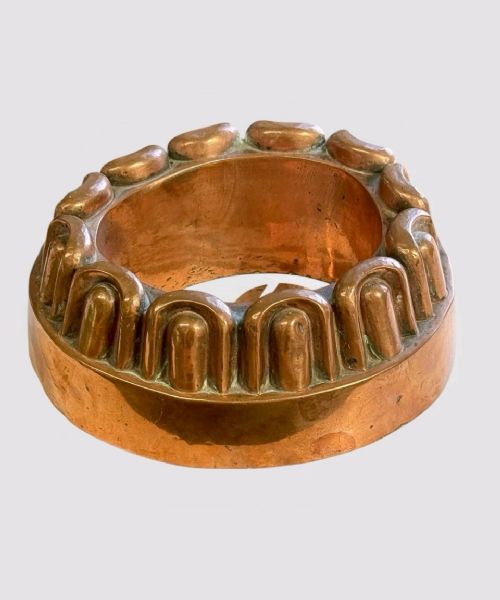
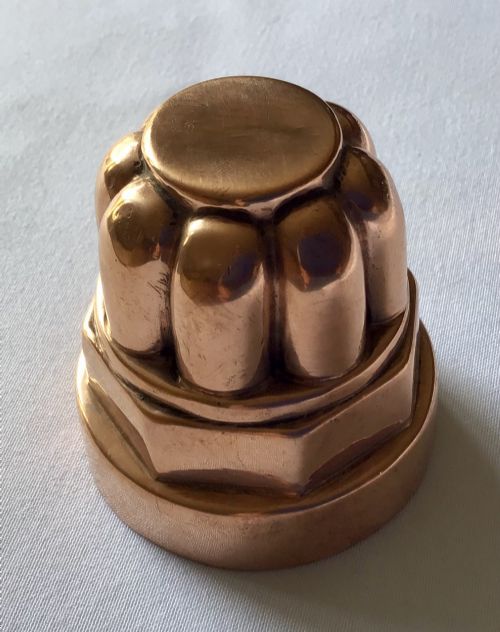
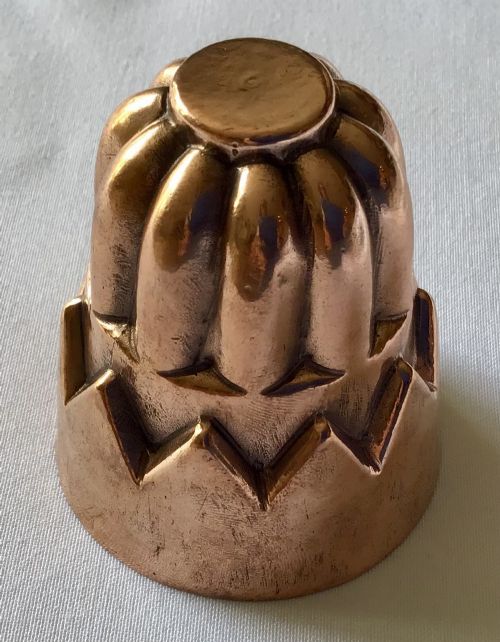
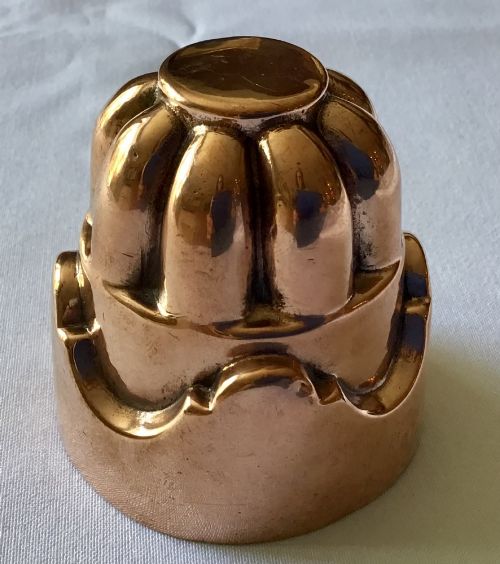
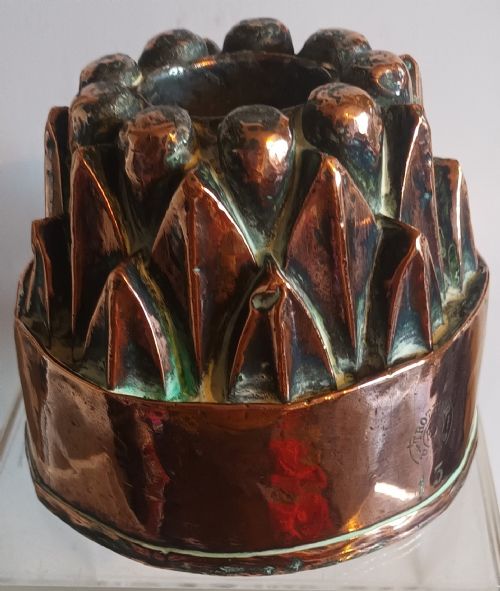
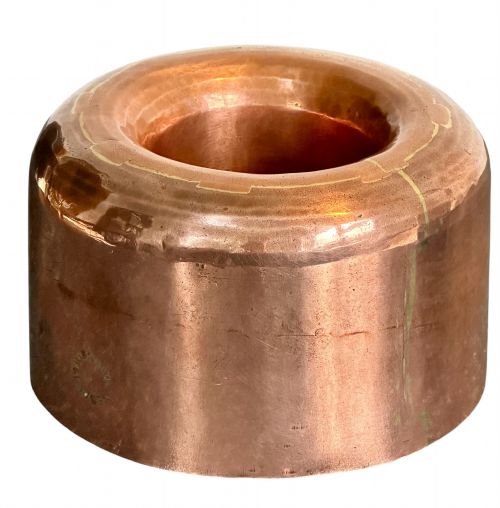
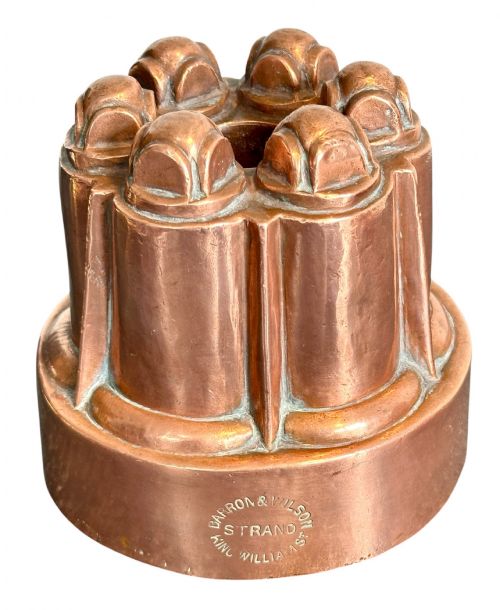
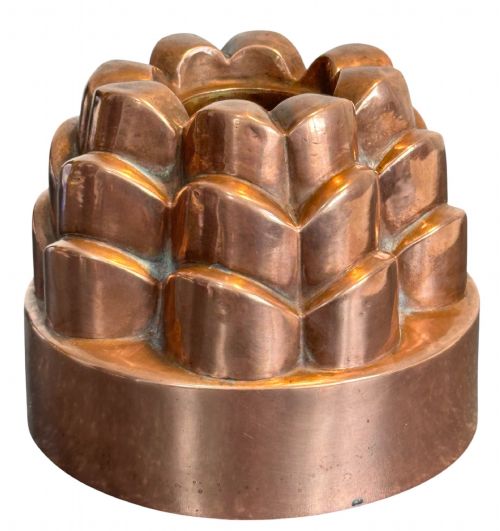
Shaped copper vessels, lined with tin, used in Victorian kitchens to set and turn out jellies, creams, aspics and ices for the table.
Antique Moulds
Copper dominates the heading to the point of definition. Of 71 titles on Sellingantiques, 60 say copper and 56 say jelly, with 47 carrying the phrase "copper jelly" in those two words together. The rest are a scattering of tin chocolate moulds, bronze moulds and other kitchen forms.
The usual purchase is a single mould rather than a set. Plural "moulds" appears in only 21 titles, so pairs, sets of three and four, a set of eight aspic moulds and one collection of fifteen are the exception rather than the rule. Miniature and small moulds form a recurring group of their own.
Shaped metal moulds became standard equipment in well-equipped kitchens from the later 18th century. Copper conducts well and was lined with tin so the metal did not taint the food, and the architectural and figural forms belong to a dining table where a moulded dish was presented whole.
Dating is loose. Twenty-five listings say simply "Victorian" and 20 say "19th Century", so 45 of the 71 carry no year at all. Where a clean year is given it runs 1800 to 1920 and clusters in the 1880s. Treat those two words as dealer's shorthand rather than a dated attribution.
What Sets Them Apart
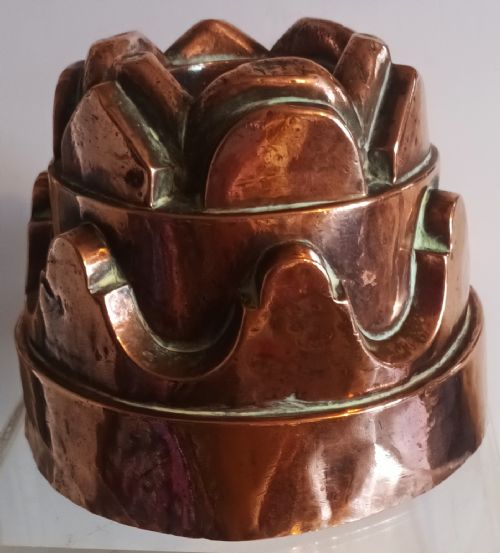
Shape does most of the work. A plain round jelly mould, or one listed with no shape named at all, sits at the bottom of the range. Named forms are what dealers put in the title: a cat, a lion and a unicorn, a lobster, a chain-link motif, a six-turret castle inscribed 1853. Each of those turned up once.
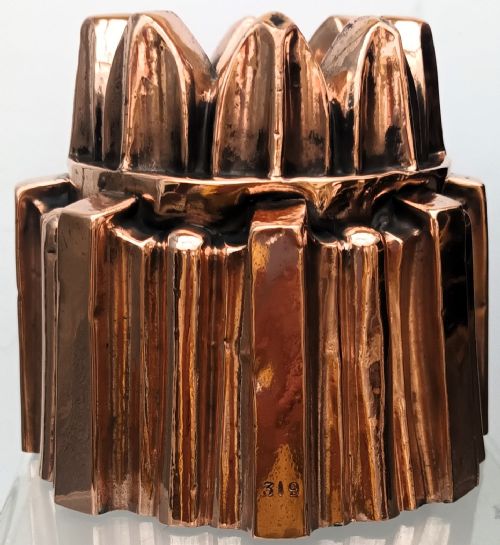
A mark lifts a mould too. Benham appears in 13 titles and Froud in 10, and stamped pattern numbers get repeated in the title where they exist, 473, 489, 495 and 614 among them, along with one mould marked only "CM". Marked moulds are the minority, though, not the norm.
Size runs the other way from what you might expect of a kitchen tool: large moulds sit well above the miniature and "little" ones, which cluster at the low end. And multiples beat singles outright. The top of the sampled range is held by a pair of raised pie moulds, a pair of lidded ice cream pots and a collection of fifteen, with ordinary single jelly moulds in the middle.
Antique Moulds Retail Price Guide 2026
Typical UK retail prices for moulds, calculated from the Sellingantiques database of over a million retail prices indexed since 2003. This retail price guide relies exclusively on Sellingantiques data; no external sources or auction records are used, so the figures do not describe the wider market.
Two moulds have strayed out of the kitchen altogether: a bronze spoon mould, and a bronze mould for printing tarot cards.
The Antique Moulds Glossary
- Jelly mould
- The dominant form in this category, a shaped copper vessel for setting and turning out a jelly or cream. It appears in 56 of 71 titles.
- Tin lined
- Copper moulds were lined with tin so the copper did not meet the food. One title states it outright.
- Pattern number
- A stamped catalogue number identifying the design. Numbers 473, 489, 495 and 614 have all appeared in titles on Sellingantiques.
- Aspic mould
- A small mould for savoury jellied dishes. Two listings use the term, one of them a set of eight.
- Castellated or turret
- A mould shaped as battlements or towers. "Belgrave six turret castle", "castellated" and "castle top" each appear once.
- Mold
- The American spelling, which surfaces once in a title, and worth searching alongside the British one.
Antique Moulds: Frequently Asked Questions
Are antique moulds always copper?
Copper accounts for 60 of the 71 titles, so it defines the category in practice. Tin and bronze make up a small remainder.
The non-copper entries include six tin chocolate moulds, a bronze spoon mould and a bronze mould for printing tarot cards. Both bronze pieces stray out of the kitchen entirely.
What were copper jelly moulds used for?
Jellies, creams, aspics and ices. The mould set the dish, which was then turned out whole and presented at table.
That is why the shapes get elaborate. Architectural and figural forms were meant to be seen once the mould came off.
How often do these come up for sale?
Around six a year come to market on Sellingantiques.
Thirty different dealers have listed one at some point, so no single dealer holds the category.
Do moulds usually carry a maker's name?
No. Only 13 of the 71 titles name a maker at all, so a marked mould is the exception.
Where a name or a stamped pattern number is present, dealers put it in the title. Benham and Froud are the two names that recur, and one mould is marked only "CM".
Is it better to buy a single mould or a set?
Singles are what mostly comes up. Plural "moulds" appears in only 21 titles, against the many describing one mould.
Sets and pairs sit higher in the sampled range as a total. A pair of raised pie moulds, a pair of lidded ice cream pots and a collection of fifteen occupy the top.
What does a listing mean by Victorian?
Often not much more than a rough century. Twenty-five listings say simply "Victorian" and 20 say "19th Century".
Only 18 give a clean year, spread between 1800 and 1920 and clustering in the 1880s. Several titles date more tightly than the dealer's date field does, with "c1880", "c1860" and "1853" all appearing.