
Antique Pewter
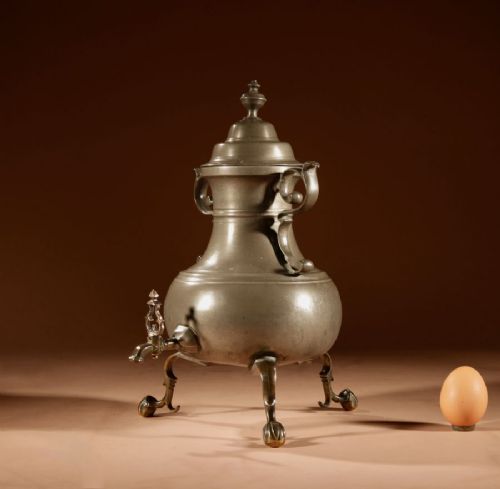
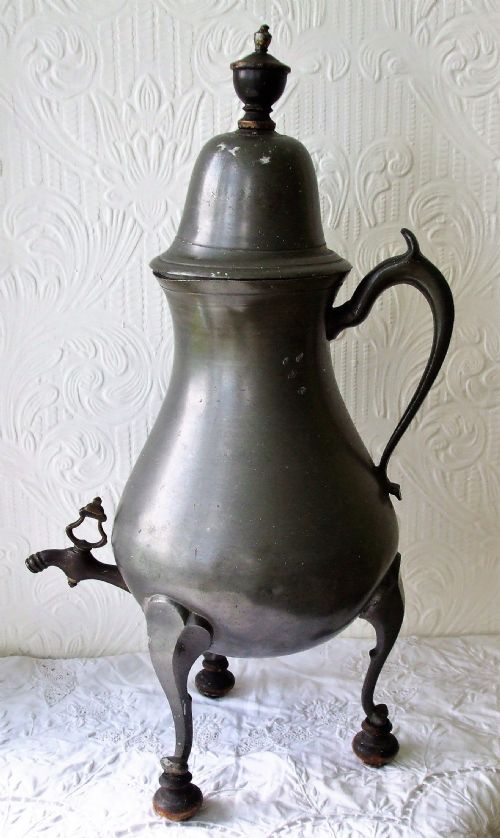
Pewter is the tin-based metal that served British and European households, taverns and churches with plates, measures and drinking vessels for centuries, and returned around 1900 as a material for designed art metalwork.
What You're Looking At
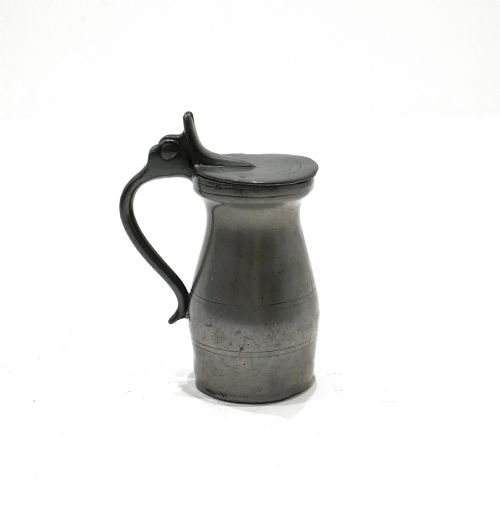
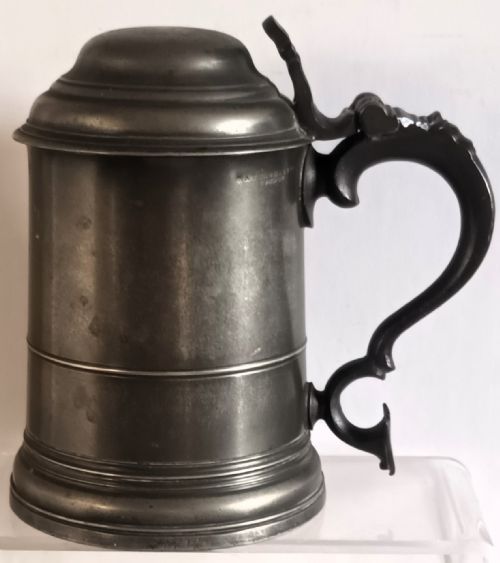
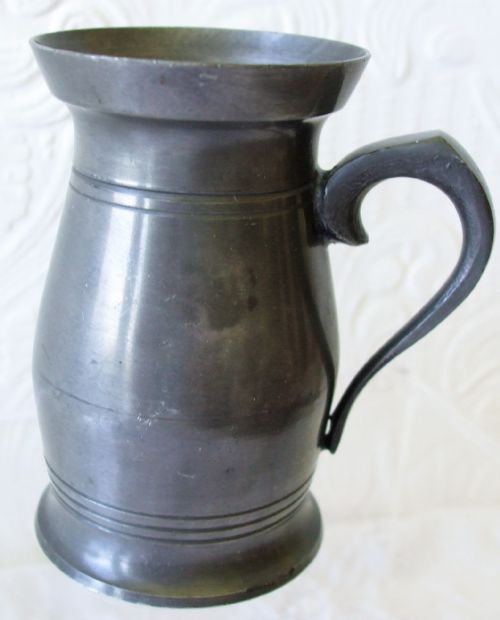
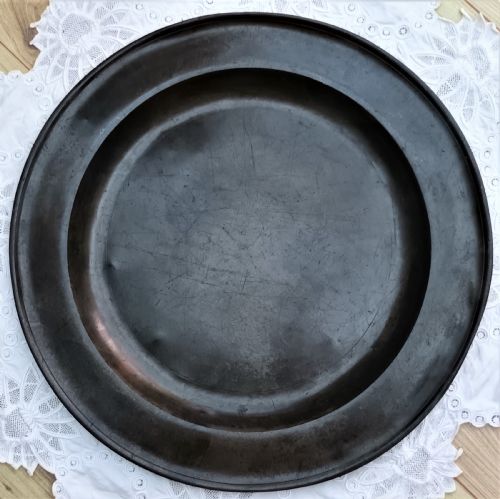
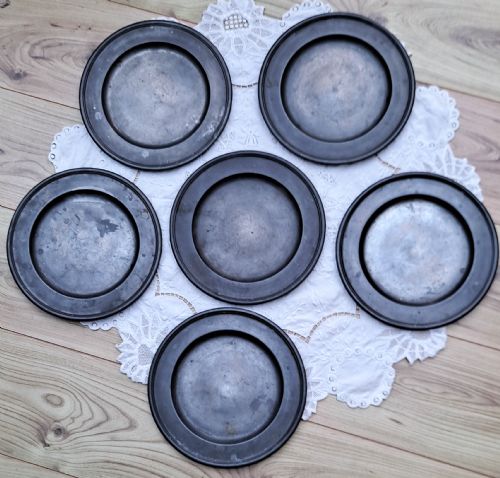
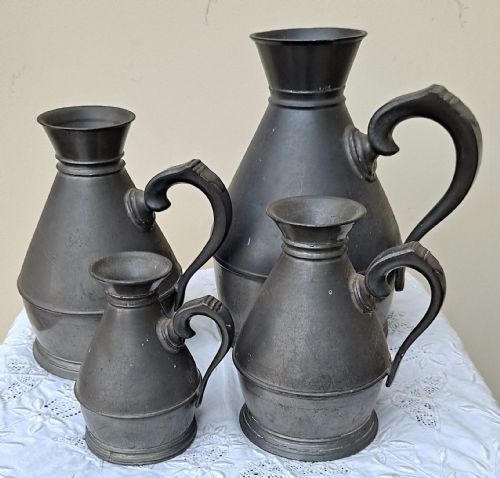
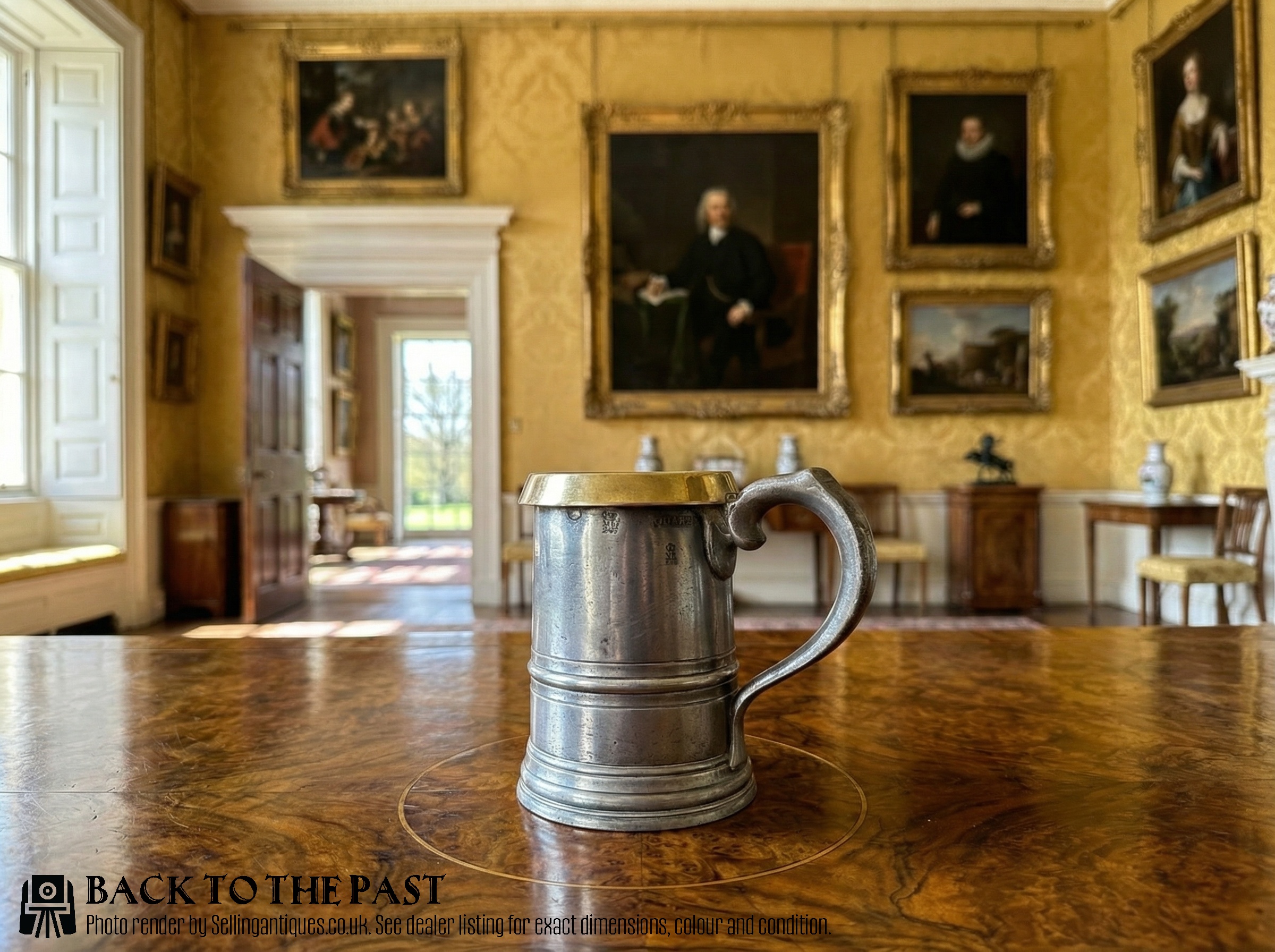
Two strands dominate. One is English flatware: plates, dishes and chargers, described by rim before anything else, so titles talk about broad rims, plain rims, single, multiple and triple reeding. The other is drinking and measuring: pint and quart mugs, tankards, baluster and haystack measures, jugs and flagons. Between them they account for something close to two thirds of the category.
The word english prefixes just over a third of all titles on Sellingantiques, and capacity words carry much of the rest. Pint turns up in 37 titles, quart in 26, measure in 29, charger in 31. Flatware sizes are quoted freely, from 8in and 9in plates up to chargers of 20in, 22in and 23 3/4in.
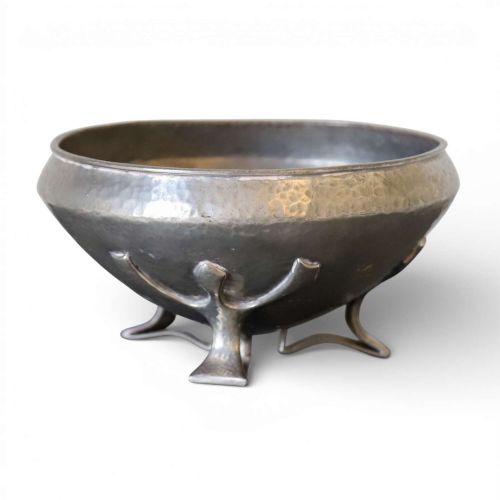
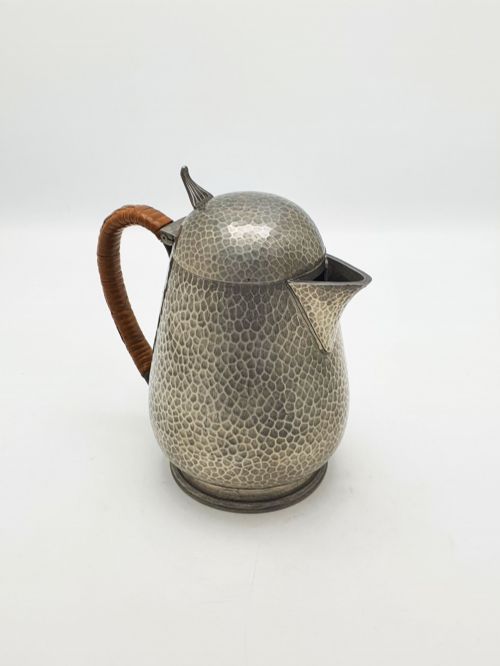
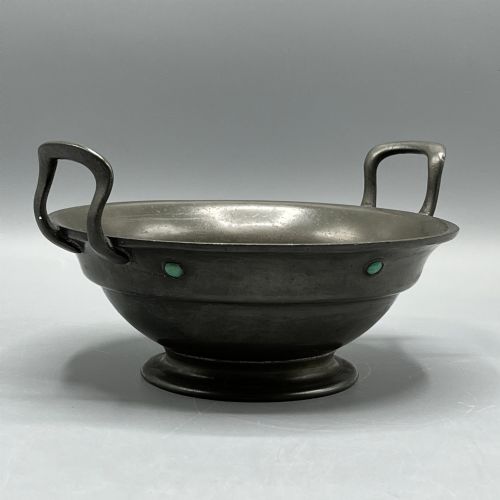
A third strand is early twentieth-century designed pewter: Tudric, Liberty-retailed pieces, Jugendstil and WMF-type wares, some hammered, some set with enamel or hardstone. Alongside these sit Scottish and Irish pieces, Continental German, Dutch, French, Swiss and Swedish work, and Channel Islands measures and flagons, which appear only a handful of times across 346 listings.
Dating is often broad. The date field runs 1700 to 1930, and only 136 of 346 listings carry a clean year, the rest recorded as a century or a decade. The eighteenth and nineteenth centuries are dead level at 69 listings each, with 21 placed before 1700. Titles can be sharper than the field, quoting a pewterer's working dates or, occasionally, an engraved one: a broad rim plate of 1609, an alms dish of 1634.
The Range
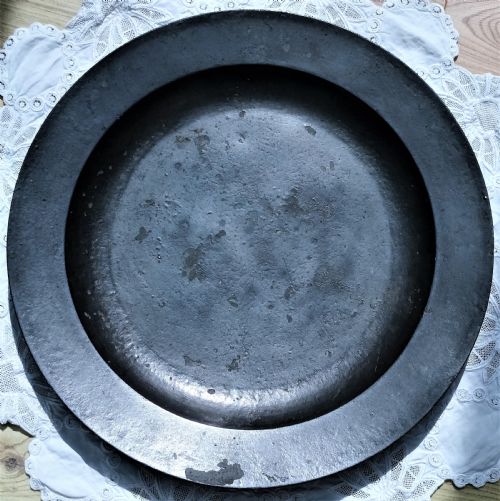
Age and rim type set the top end. Seventeenth-century broad rim chargers and Charles II triple reeded plates sit at the head of the sampled range; nineteenth-century plates and small mugs sit at the foot. Church and civic pieces keep similar company, with spire and church flagons, chalices, alms dishes and armorial or commemorative tureens in the upper band, ordinary tavern mugs and grain measures in the lower.
Size pushes in the same direction. Large appears in 24 titles, and on flatware diameter does most of the work: a 9in plate and a 22in charger are the same object at different ends of the category. Weight is quoted only now and then, a 1.2 kg vase, a 2.3 kg bleeding bowl.
Attribution is the other lever. A touchmark tied to a named pewterer, often with working dates or a Cotterell O.P. number, lifts a piece above one described by form alone. In the Arts and Crafts strand the same logic applies through a named designer and a model number, with enamel or hardstone adding further. Pairs and sets are a habit of this category: pair appears in 29 titles, and the samples run to sets of eight.
Retail Price Guide 2026
Typical UK retail prices for pewter, calculated from the Sellingantiques database of over a million retail prices indexed since 2003. This retail price guide relies exclusively on Sellingantiques data; no external sources or auction records are used, so the figures do not describe the wider market.
One-offs with no second example in the archive include a Welsh hat commode pot, a birthing bowl, a wine funnel and a dog pepperette.
Orivit
The Antique Pewter Glossary
- Charger
- A large flat dish for serving or display, usually 15in and above in these titles.
- Touchmark
- The pewterer's stamped mark, used to attribute and date a piece.
- Triple reeded
- A rim with three moulded bands, named in nine titles; single and multiple reeded turn up too.
- Broad rim
- A wide flat border on a plate or charger, named in nine titles and attached to the earliest pieces in the archive.
- Baluster measure
- A pear-shaped capacity measure, lidded or lidless, and a recurring tavern form.
- Tappit hen
- A Scottish lidded measure of chopin or Scots pint capacity.
Frequently Asked Questions
What is a Cotterell O.P. number?
It's a reference number from the standard list of old pewterers. Dealers quote it to pin a touchmark to a named man.
Ten titles on Sellingantiques use one. Dozens more skip the number and give the pewterer's working dates instead, such as 1673-1684 or 1763-1807.
How old is most antique pewter for sale?
The dealer-entered dates run from 1700 to 1930. The eighteenth and nineteenth centuries are level at 69 listings each.
Before that, 21 entries are placed before 1700, and 42 fall in the 1900s, largely the Arts and Crafts and Art Nouveau strand.
Only 136 of 346 listings carry a clean year, so a century or a decade is often all the date field gives.
Does Tudric mean Liberty?
Tudric is the trade name on pewter retailed by Liberty & Co. It appears in 18 titles.
Liberty itself shows up in 27, and Archibald Knox in nine. Several of these listings quote a model number, such as 0277 or 01145, and some combine the pewter with enamel or hardstone.
What does OEWS stand for on a tankard?
Old English Wine Standard, a pre-imperial capacity. It's noted on several tankards and flagons in this category.
Capacity is the main descriptive hook across the drinking vessels generally, with pint in 37 titles and quart in 26.
Are Scottish and Irish pieces common?
They turn up throughout. Irish appears in 11 titles, Scottish in ten, with haystack measures and tappit hens among the named forms.
Continental work sits alongside, German and Dutch in nine titles each, plus French, Swiss and Swedish pieces in the samples.
Channel Islands pewter is the scarcest British origin in the archive: Jersey noggin measures and Guernsey lidded flagons appear only a handful of times.
Which small pewter items show up besides plates and mugs?
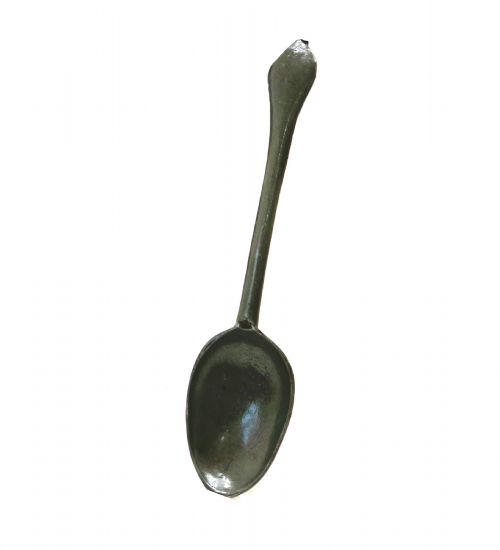
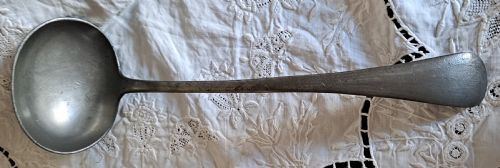
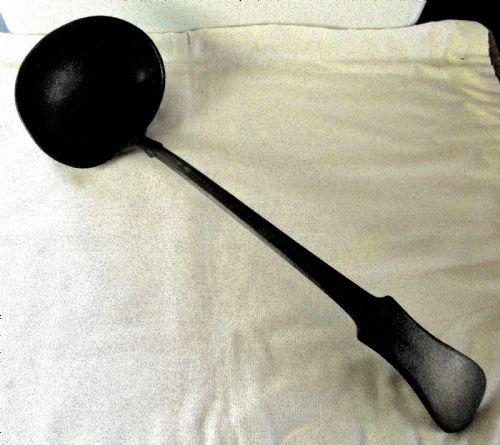
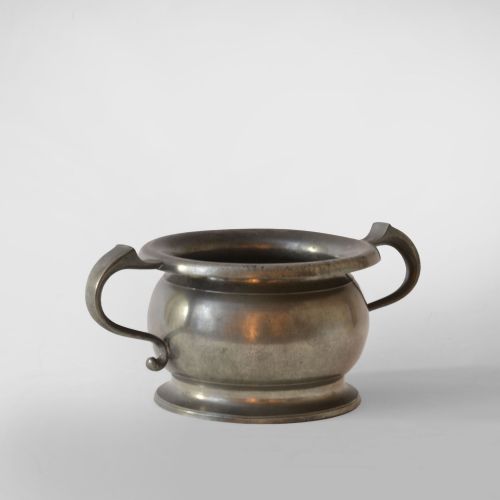
Snuff and tobacco boxes, tobacco jars with pressers, inkwells and inkstands, spoons including slip top and dog nose, ladles, napkin rings, food covers, chamber and bleeding bowls.
One-offs appear now and then with no second example anywhere in the archive: a Welsh hat commode pot, a birthing bowl, a wine funnel, a dog pepperette, a food warmer.