
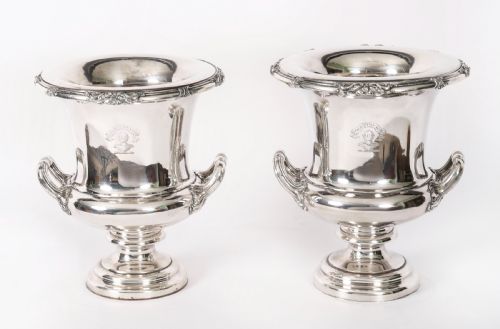
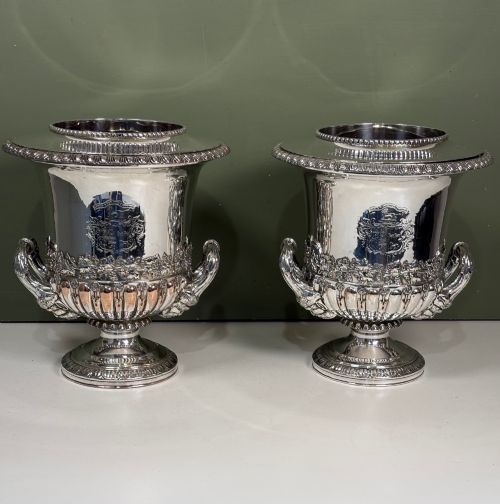


Pair Silver Coolers
Pair silver coolers bring symmetrical elegance to a table, offering substantial vessels designed to chill wine or champagne with distinction.
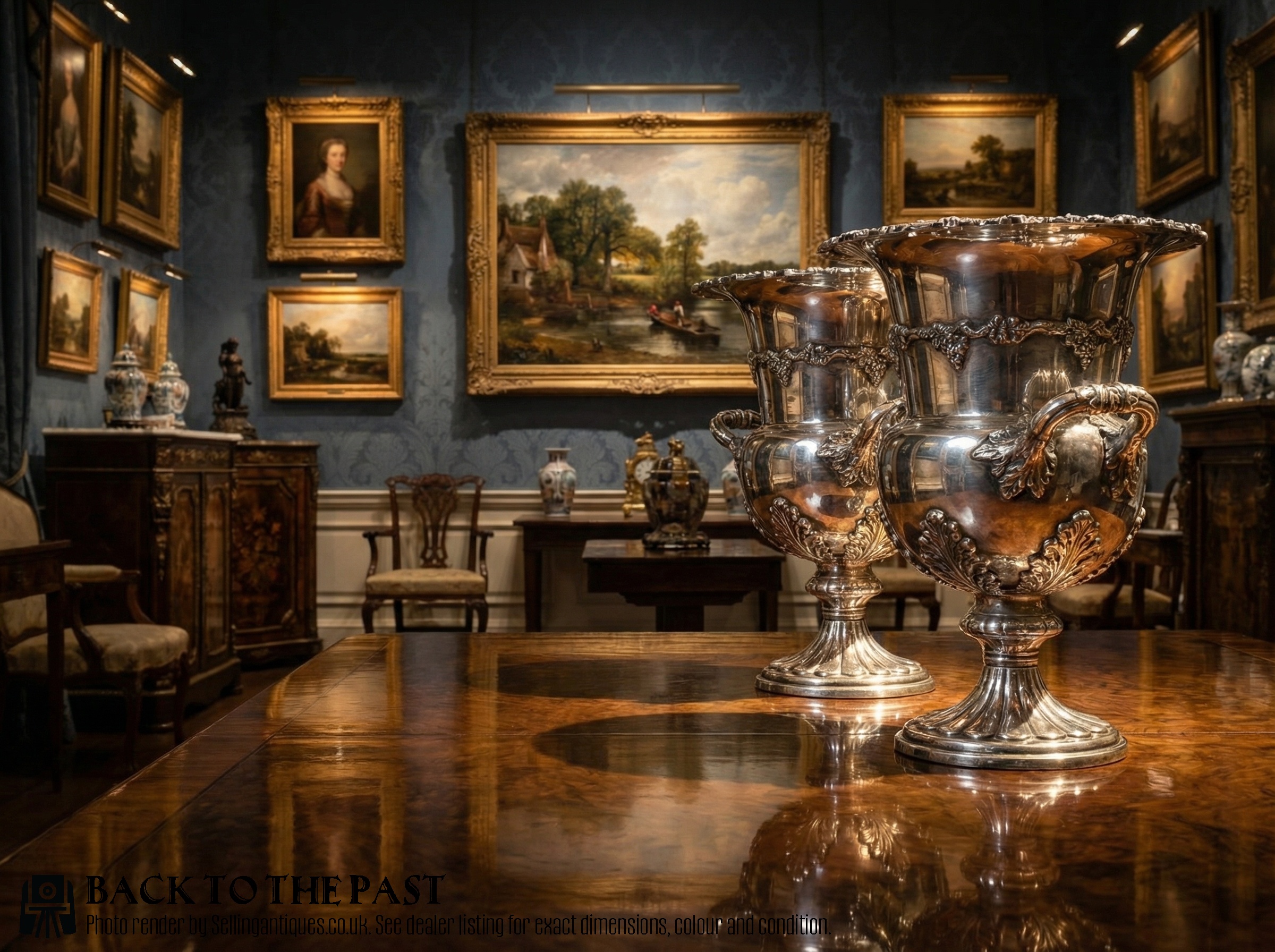
Pair Silver Coolers
When you search for pair silver coolers, you encounter matched sets of heavy drinking vessels intended to hold ice and bottles. The most common version you meet on this page is the silver plated wine cooler, frequently styled in the campana urn shape or as a floor standing champagne bucket.
These items span periods from the eighteenth century through the nineteenth and twentieth centuries, taking influence from Georgian, Regency, Victorian, and Art Deco aesthetics. While wine coolers dominate the selections, butter dishes and twin handled vases occasionally appear alongside the main drinkware forms.
Materials and construction
Many early examples utilise Old Sheffield Plate, a technique fusing a thin sheet of silver to a thicker copper base. Later pieces rely on silver plating over base metal or solid sterling silver for their primary structure.
Makers shaped these metals through rigorous forming and soldering methods, often applying cast handles, applied borders, and engraved crests to finish the heavy body.
Military regiments clearly enjoyed their vintage beverages, judging by the surviving ice vessels engraved for nineteenth century rifle units.
Distinguishing quality
The standard of a pair silver coolers set rests on the crispness of its chased or cast ornamentation and the integrity of the underlying metal. Pieces displaying sharp relief work and heavy gauge silver plating command greater attention than those with worn surfaces and softened details.
Proportion and weight also dictate worth, as sturdier bodies with balanced handles and intact liners demonstrate superior original craftsmanship.
Hawksworth, Eyre and Co·Elkington·Mappin and Webb·Lee and Wigfull
The Pair Silver Coolers Glossary
- Old Sheffield Plate
- An early fusing method where a sheet of silver is melted onto a copper ingot before rolling. This technique creates a distinctive edge where the underlying copper shows through wear.
- Campana
- A bell shaped vessel form with a flaring rim and a footed base, popular during the Regency period. This classical silhouette appears frequently among antique wine coolers.
- Silver Plate
- A thin layer of silver applied to a base metal such as copper or nickel brass. It offers the visual appeal of solid silver at a different scale of production.
- Sterling Silver
- An alloy consisting of pure silver and other metals, usually copper, standardised for durability. Items in this material carry distinct hallmarks indicating their metal purity and origin.
Pair Silver Coolers: Frequently Asked Questions
How were pair silver coolers used?
These vessels were filled with ice and water to chill wine bottles at the dining table during formal meals. Servants would place them nearby or directly on the sideboard to maintain the ideal temperature for guests.
Over time, larger versions adapted to hold champagne or multiple bottles, shifting from private dining rooms to grand entertaining spaces and hospitality settings.
How do I clean silver coolers?
Maintain the surface by washing gently with warm water and mild soap, followed by drying with a soft cloth. Avoid harsh chemical dips that strip away desirable patination and plating.
Use a dedicated silver polish sparingly and only when necessary to remove heavy tarnish from crevices and applied ornamentation.
What periods do these coolers represent?
The available pieces stretch from eighteenth century George III designs through nineteenth century Victorian and Regency eras into twentieth century Art Deco productions. Each period introduces subtle shifts in silhouette, ornament, and manufacturing technique.
Early nineteenth century examples often favour classical urn shapes, whereas twentieth century iterations embrace sleek lines and floor standing formats.
Are these items solid silver?
The majority of items listed are constructed from silver plate or Old Sheffield Plate over a base metal or copper core. Sterling silver examples occur less frequently but are clearly identifiable by their metal content.
Checking for hallmarks or areas where the underlying copper shows through helps determine the exact material composition of each piece.