

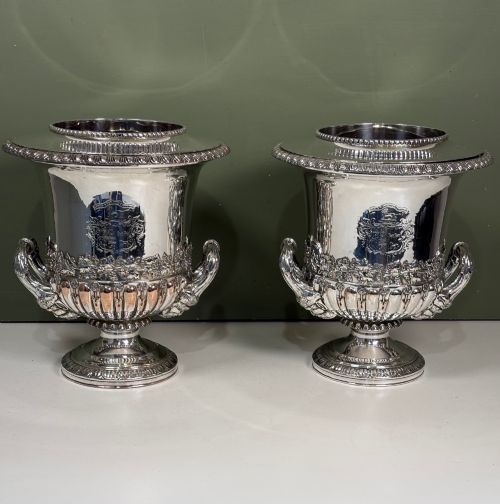


Pair Wine Buckets
These pair antique wine buckets bring period grandeur to a dining room, spanning timber, porcelain and polished metal.
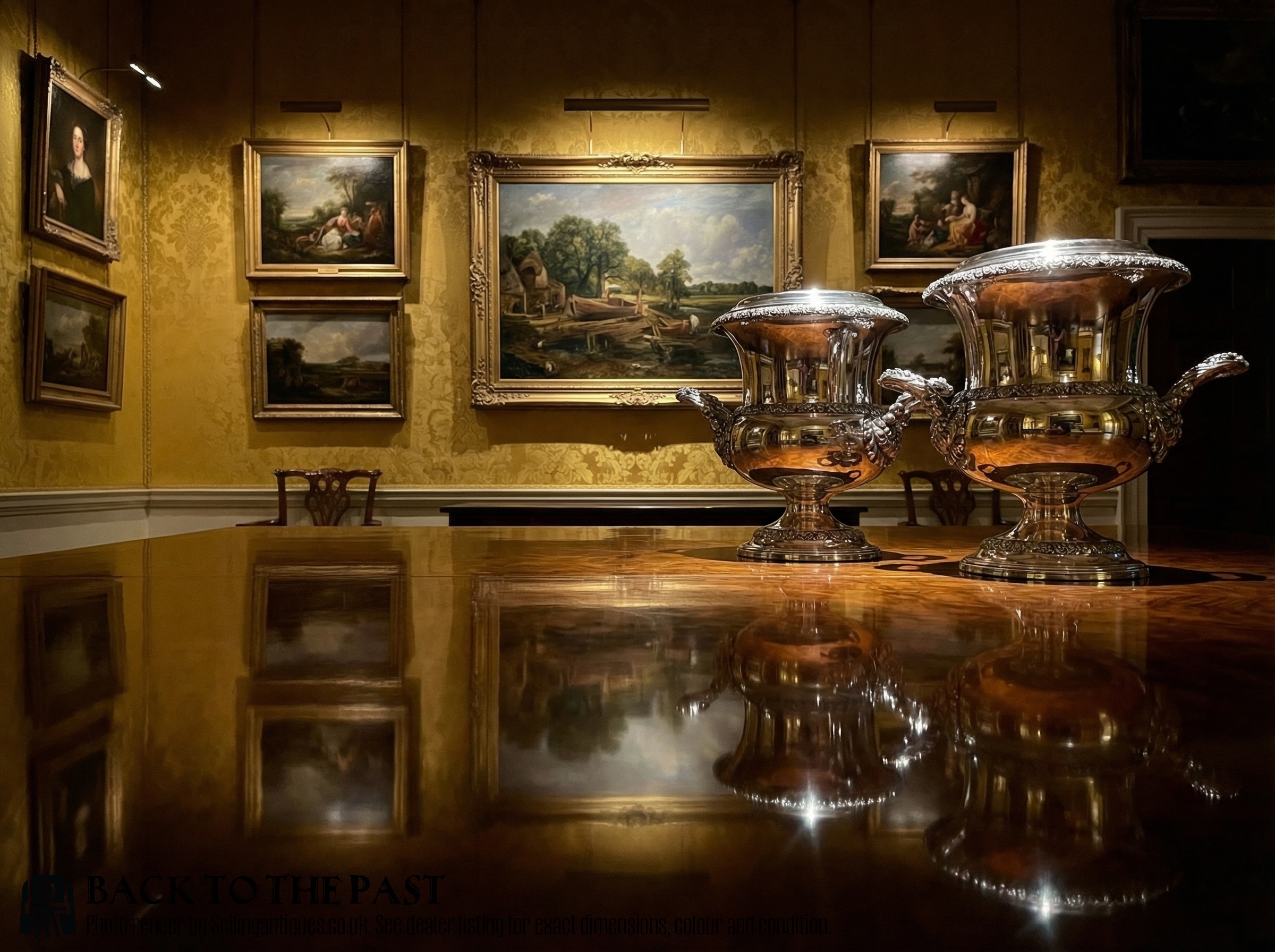
Pair Wine Buckets
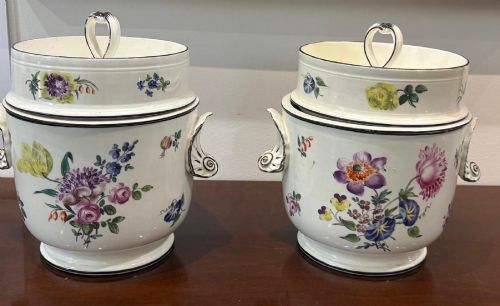
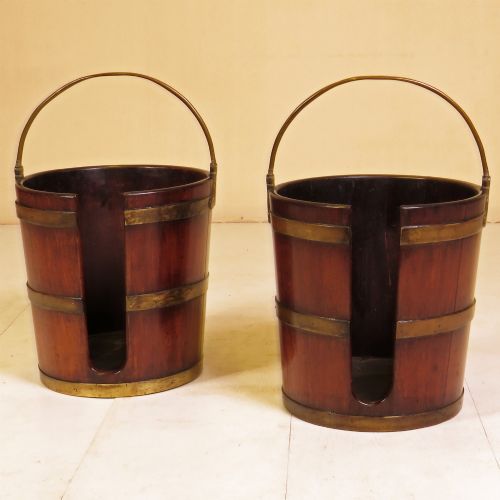
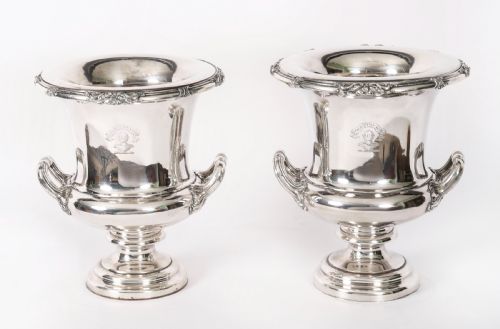
When you search for pair antique wine buckets, you encounter a varied selection of vessels designed to chill bottles or hold ice at the dining table. The pieces found here range from eighteenth-century mahogany plate buckets and George III Old Sheffield plate coolers to porcelain ice pails and twentieth-century silver-plated champagne holders.
The dominant forms include campana-shaped wine coolers, handled ice pails, and brass-bound timber buckets originating from the Georgian, Regency, and later nineteenth and twentieth centuries. These dual vessels served functional roles in elite dining spaces, maintaining the temperature of wine or containing ice for service.
Makers and manufacturers represented span renowned English porcelain factories like Chamberlain Worcester and Flight, Barr & Barr, alongside silver-plating firms such as Hawksworth, Eyre & Co and Christofle. Buyers find both formal metal cooling vessels and rustic timber or porcelain examples suited to period interiors.
How they were made
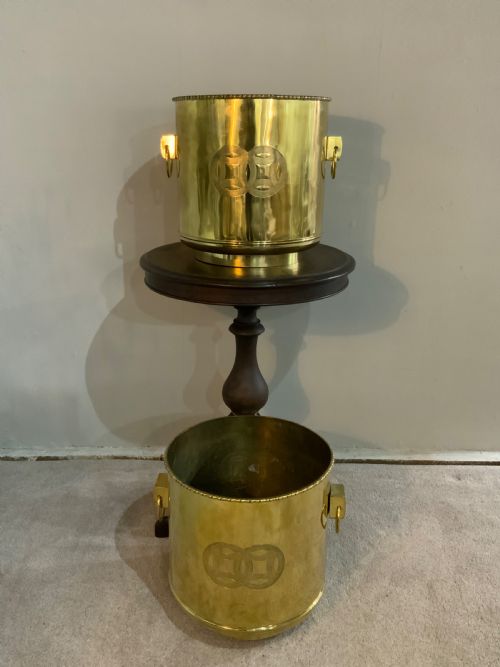
Metal cooling vessels utilise techniques such as fusing thin sheets of silver over a copper base in Old Sheffield plate, or electroplating silver onto base metal alloys in later nineteenth-century pieces. Brass and copper versions involve sheet manipulation and casting, often complemented by applied brass bands and handles.
Timber examples, particularly mahogany variants, employ traditional coopering techniques with tight stave construction bound by metal hoops, reflecting the craft of skilled joiners. Porcelain ice pails undergo high-temperature kiln firing, hand-painting, and gilding, showcasing the sophisticated ceramic arts of English factories.
Some nineteenth-century champagne coolers stood on the floor so guests could reach their bubbly without troubling the butler.
What varies in quality
Quality in these vessels rests upon the crispness of cast detail on metal handles and rims, the proportion of the form, and the retention of original surfaces without excessive re-plating or aggressive polishing. In Old Sheffield plate, the subtle telegraphing of the underlying copper core through worn silver layers indicates genuine period manufacture.
For timber and ceramic pieces, the integrity of the original construction, the richness of the mahogany grain, and the preservation of hand-painted porcelain enamels and gilding dictate the standing of the piece. Matching symmetry within the pair remains paramount for aesthetic balance.
Chamberlain Worcester·Flight, Barr & Barr·Hawksworth, Eyre & Co·Christofle
The Pair Wine Buckets Glossary
- Old Sheffield Plate
- An early fused plating technique where a thin sheet of silver is melted onto a thicker copper base before shaping. This method produces a warm, distinct lustre visible where the silver thinned over centuries.
- Campana
- A bell-shaped vessel design with a flared rim and footed base, popular during the Regency period for wine coolers. This classic classical silhouette derives from ancient Roman bronze urns.
- Creamware
- A fine-grained, light-coloured earthenware developed in eighteenth-century England, often finished with a transparent lead glaze. It provided a smooth canvas for delicate painted decoration on early dining vessels.
- Coopering
- The specialised woodworking craft of assembling curved wooden staves into watertight containers bound by metal hoops. This technique created durable buckets for ice and wine before metal vessels dominated.
Pair Wine Buckets: Frequently Asked Questions
How were pair antique wine buckets used originally?
These vessels stood beside the dining table or on sideboards, filled with ice or cold water to chill bottles of wine during lengthy meals. Servants accessed them readily to replenish glasses without disturbing guests.
Larger variations also accommodated plates or served specific cooling functions depending on the material and period design.
How do I clean silver-plated wine coolers?
Maintenance requires gentle cleaning with a soft cloth and a specialised silver cream designed to protect thin metal surfaces. Avoid harsh abrasives that strip underlying layers, particularly on Old Sheffield plate.
Regular, light dusting helps preserve the original shine without wearing away the historic plating.
Are these buckets still suitable for chilling wine?
Many metal and ceramic examples retain their structural integrity and hold ice and bottles effectively for modern dining. Metal coolers conduct temperature well when filled with ice cubes.
Care should be taken with timber or porous ceramic interiors to prevent moisture damage to historic surfaces.
How can I tell Regency coolers from Georgian ones?
Georgian pieces often display restrained neoclassical lines, straight timber staves, or bright-cut silver engraving typical of the late eighteenth century. Regency examples lean towards bolder classical revival forms like campana urns with prominent cast handles.
Stylistic cues and manufacturing techniques help anchor each piece within its specific decades of production.