




Antique Walnut Document Chest
An antique walnut document chest brings orderly grace to a desk, offering secure storage for papers with the rich, figured grain of walnut.
Antique Walnut Document Chest
An antique walnut document chest encompasses utilitarian boxes, small drawer stacks and writing slopes designed for keeping letters and papers. These pieces range from seventeenth-century coffers to late nineteenth-century stationery boxes.
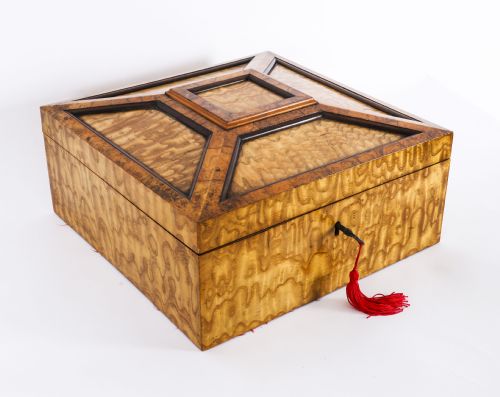
The version most commonly encountered on this page is the Victorian walnut box or chest, often featuring burr veneers, marquetry inlay or fitted interiors with compartments for correspondence.
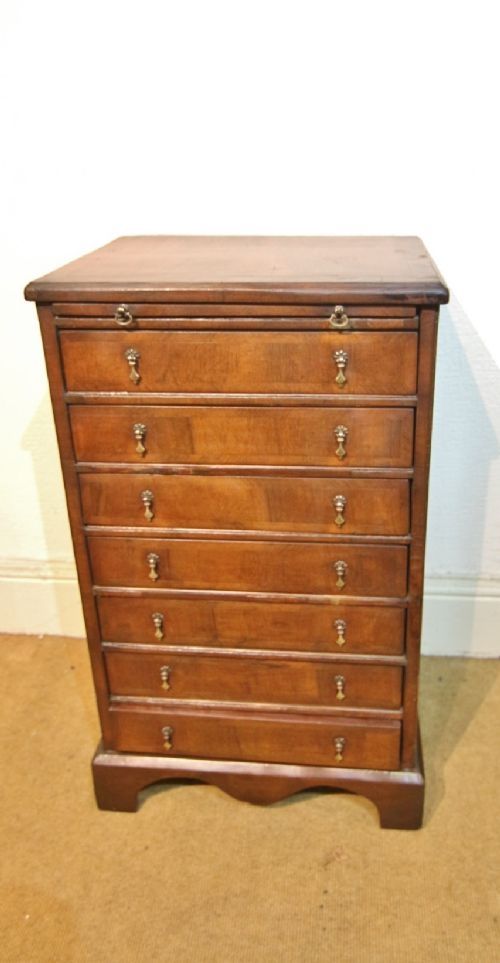
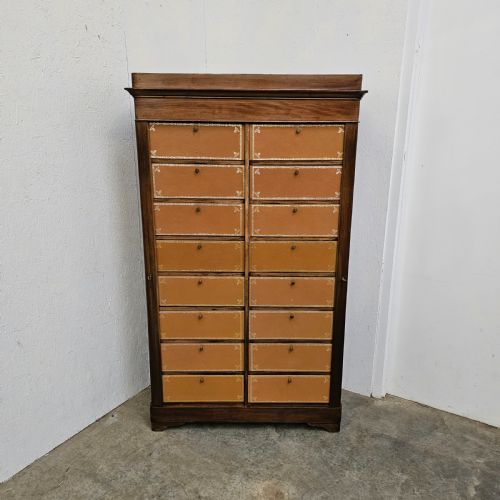
The selection includes specialised forms such as cartonnières with leather tiers, collectors' drawer units and domed tabletop caskets alongside traditional desk boxes.
How they were made
Cabinet makers utilised solid walnut or applied decorative burr walnut veneers over secondary timbers, often embellishing surfaces with marquetry inlay using fruitwood, bone or exotic woods.
Functional metalwork defined the construction, incorporating brass carrying handles, escutcheons and working locks with keys, alongside iron reinforcing mounts on earlier continental examples.
One exceptional box sports an American Indian and lion motif, proving cabinet makers had eclectic imaginations.
What varies in quality
The distinction between tiers of quality rests on the selection of timber veneers and the precision of the marquetry or inlay work. Richly figured burr walnut displays a depth of grain that elevates simpler box constructions.
Interior fitted compartments, original brass hardware and the retention of working locks with matching keys contribute significantly to the standing of a piece.
William Austin
The Antique Walnut Document Chest Glossary
- Burr walnut
- A veneer sliced from the abnormal growth knots of a walnut tree. It yields highly figured, swirling patterns prized by cabinet makers.
- Cartonnière
- A piece of furniture or desk box fitted with tiers of open compartments or drawers for holding papers and documents. French examples often incorporate leather-covered pull-out ledges.
- Marquetry
- Decorative veneer work forming pictures or patterns by assembling thin pieces of wood, bone or other materials. Floral motifs and geometric designs feature heavily in these listings.
- Writing slope
- A desk box hinged to open at an angle, presenting a slanted surface for writing and lifting to reveal storage wells for stationery and ink.
Antique Walnut Document Chest: Frequently Asked Questions
What was an antique walnut document chest used for?
These chests served to store important letters, legal deeds, and personal correspondence securely in homes and offices. Their fitted interiors and lockable lids kept sensitive papers organised and private.
Over time, owners also utilised them for keeping receipts, small collections, and writing materials close at hand on desks or tables.
How do I date a walnut document chest?
Dating relies on observing construction methods, hardware styles, and decorative techniques like marquetry or Tunbridge ware. Seventeenth-century coffers look heavy and architectural, while Victorian pieces often feature burr veneers and elaborate box hinges.
Secondary woods visible inside the box and the style of the brass lock provide further clues to the manufacturing period.
Where should I place a document chest at home?
These chests sit well on top of desks, sideboards, or bookcases where their decorative burr walnut lids and inlay can be admired. Chests of drawers or flight of drawers formats function practically on tabletops for organising modern stationery.
Keeping them away from direct sunlight and strong heat sources protects the walnut timber and delicate veneers from drying out.
Are these chests durable for daily use?
Constructed from hardwoods like walnut, these pieces were built to withstand frequent handling of heavy paper archives. Working locks and sturdy brass handles indicate they were meant to be portable and secure.
Gentle daily use suits them well, provided the interior linings and hinges receive normal care over the years.