


Antique Brass Feet Box
These antique brass feet box pieces are containers and hearth vessels elevated on metal mounts, sought for period utility and cabinet work.
Antique Brass Feet Box
When you search for an antique brass feet box, you encounter a variety of lidded containers, tea caddies, jewellery boxes, and hearth accessories raised upon distinct metal supports.
The selections span several periods, including the Georgian, Regency, and Victorian eras, alongside Dutch and Frisian folk art examples.
How they were made
Construction relies primarily on timbers such as mahogany, oak, rosewood, and boxwood, joined to form rigid carcases for caddies, boxes, and miniature chests.
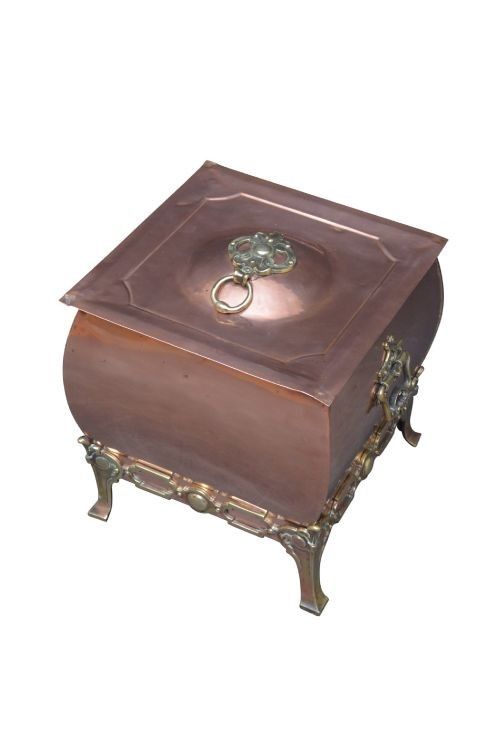
Metal components utilise brass for repoussé decoration, mounts, and structural feet, alongside copper and other applied hardware.
The listings combine mahogany, oak, and rosewood with brass and copper across Georgian, Regency, and Victorian periods.
What varies in quality
Distinction in quality depends upon the crispness of cabinet work, such as fine inlay, chip carving, or penwork detail upon the timber surfaces.
The refinement of the metalwork, including hand-embossed brass repoussé and cast feet mounts, separates standard utility items from finer examples.
Edwards and Roberts
The Antique Brass Feet Box Glossary
- Cellarette
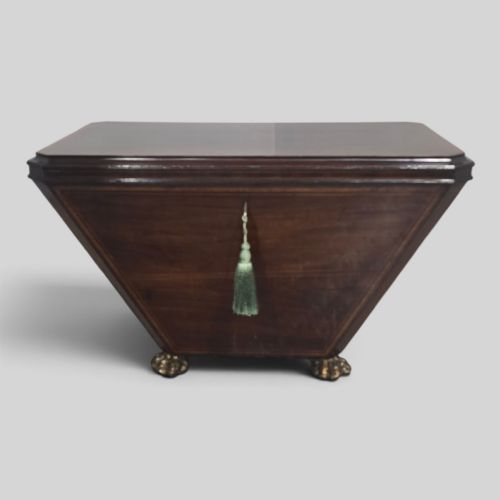
- A lockable container used for holding bottles of wine, often sarcophagus shaped and mounted on feet. They appear in mahogany during the Georgian and Regency periods.
- Tea caddy
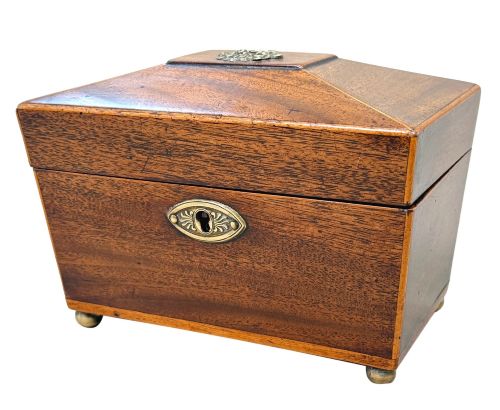
- A small box designed to store loose tea leaves, frequently featuring interior compartments. These vessels often date from the 18th and 19th centuries.
- Foot stove
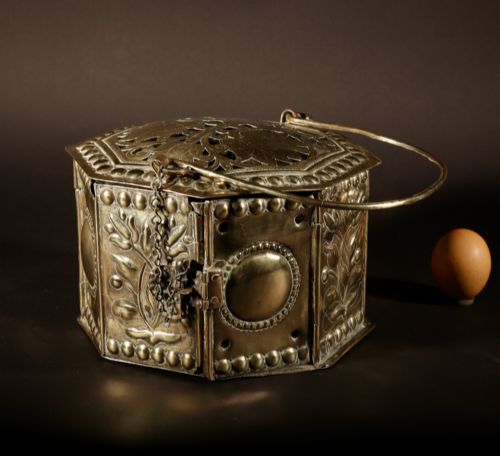
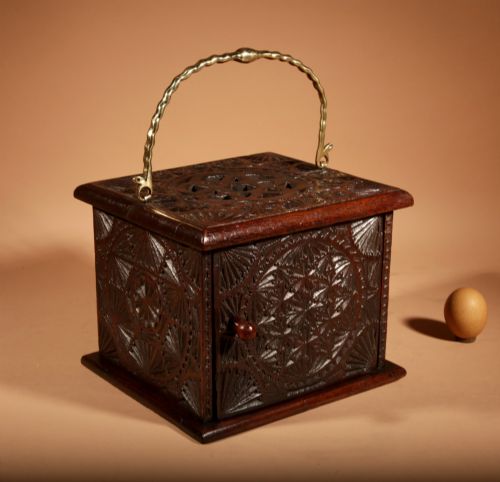
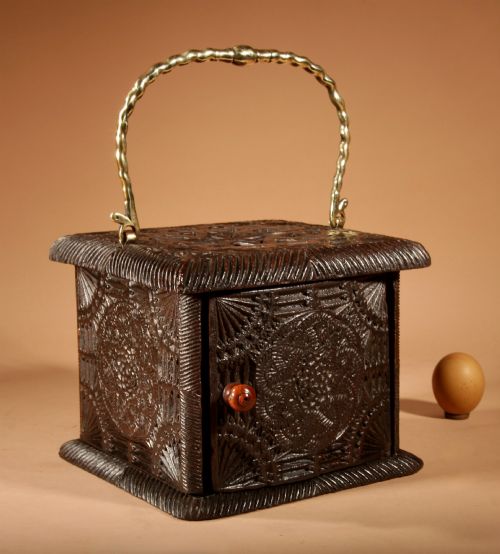
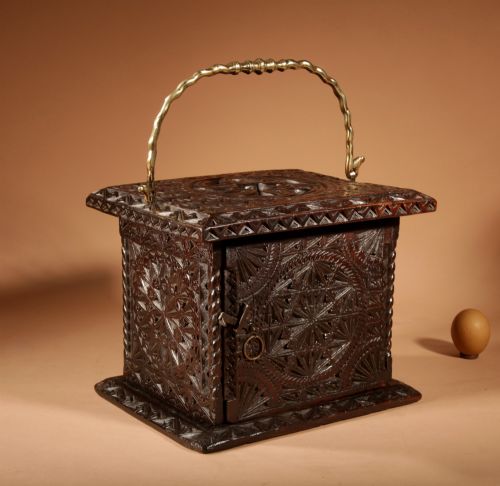
- A portable hearth accessory constructed to hold hot coals inside a perforated wooden or metal frame for warming the feet. Dutch and Frisian examples frequently exhibit hand-embossed brass panels.
- Repoussé
- A metalworking technique where the metal is hammered from the reverse side to form a raised design in relief. This method decorates brass planters and stoves.
- Sarcophagus form
- A container style featuring a sloping lid and a pinched, coffin-like profile popular during the Regency and Georgian eras.
Antique Brass Feet Box: Frequently Asked Questions
What are antique brass feet boxes?
These pieces comprise a diverse group of wooden and metal containers, including tea caddies, jewellery caskets, and foot warmers, which stand upon raised metal mounts or feet.
They encompass items produced across the 18th and 19th centuries in English, French, Dutch, and Frisian workshops.
How were foot stoves used?
Foot stoves served to warm individuals during cold weather by enclosing hot embers within a perforated wooden box.
Users placed their feet upon or near the pierced top plate, which was often protected by hand-embossed brass.
How do I identify a Regency box?
Regency boxes typically display clean classical lines, often executed in rosewood, mahogany, or satinwood with contrasting string inlay.
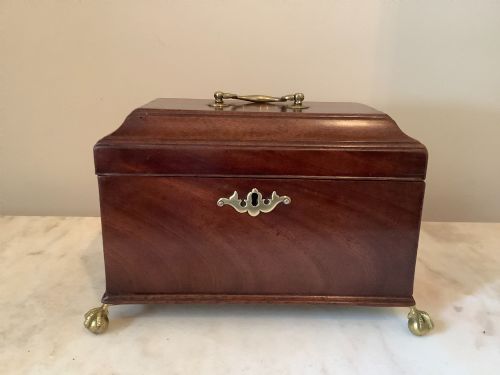
They frequently incorporate leather bindings, brass claw and ball feet, or sarcophagus profiles dating from around 1800 to 1820.
Where were these boxes made?
Origin locations vary across the listings, spanning English cabinet makers, French workshops, and Frisian folk art traditions.
Materials and decorative motifs often point to the specific regional craft practices of their origin era.