




Carved Wooden Caddy
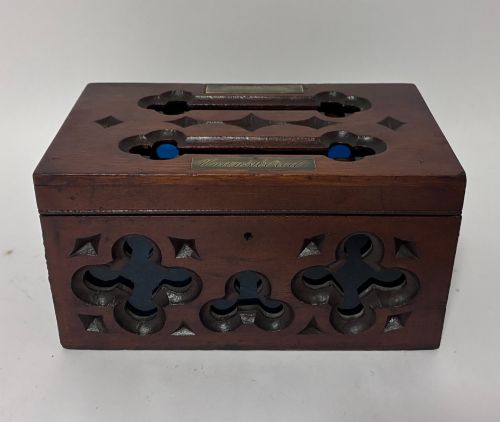
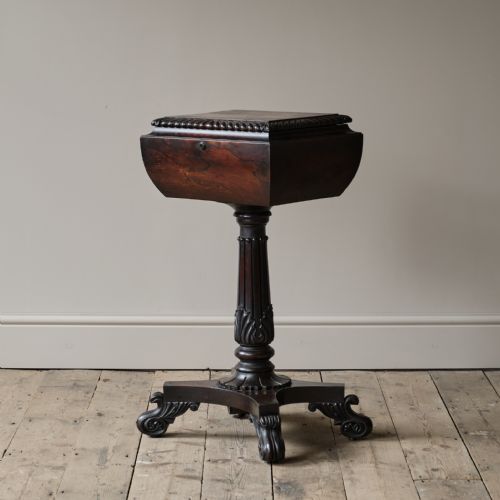
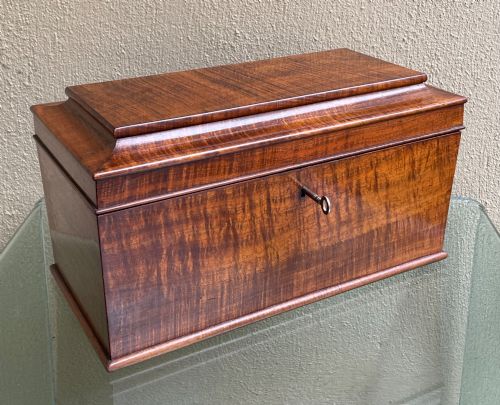
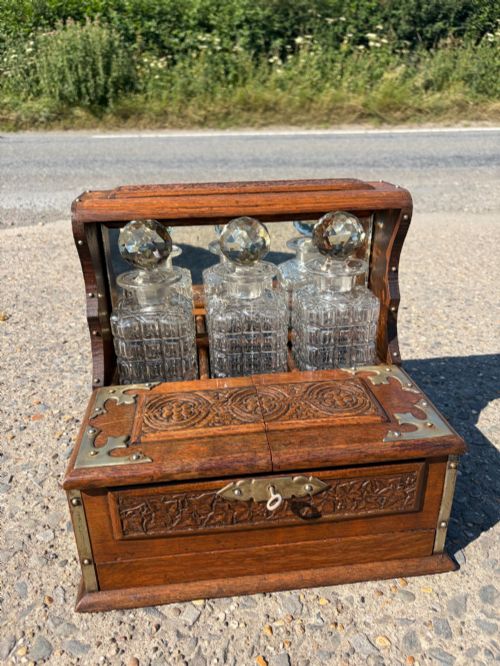
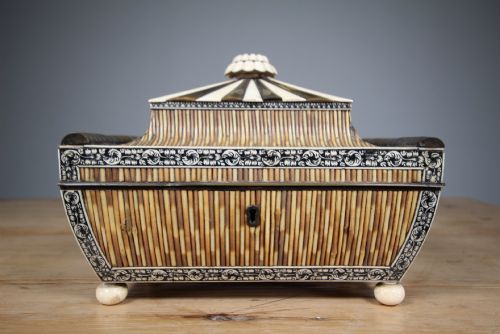
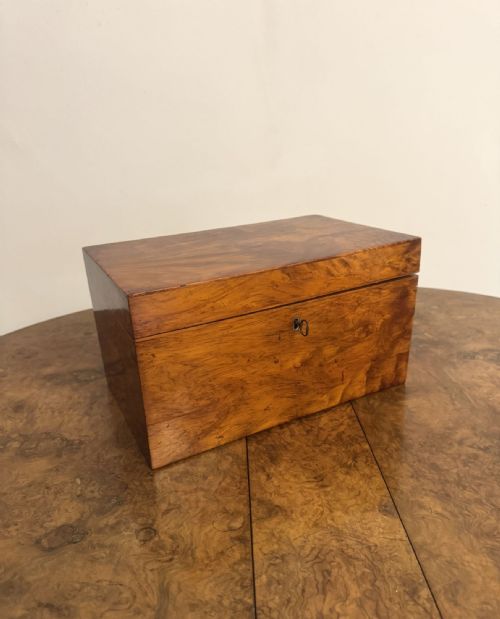
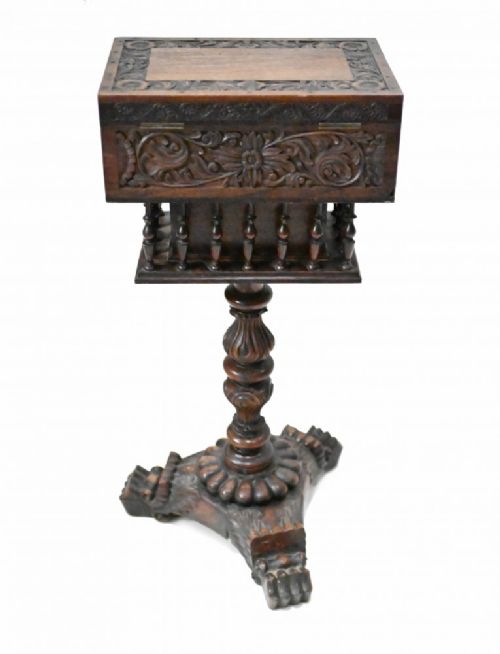
Carved wooden caddy selections bring together traditional storage forms like tea caddies, teapoys, and cellarettes fashioned from dense timbers.
Carved Wooden Caddy
A carved wooden caddy encompasses functional lidded receptacles designed for dry goods, writing materials, or beverages, often appearing as tea caddies, teapoys, and cellarettes. Buyers seeking a carved wooden caddy encounter forms dating from the eighteenth century through to the early twentieth century, spanning Georgian, Regency, William IV, and Victorian periods.
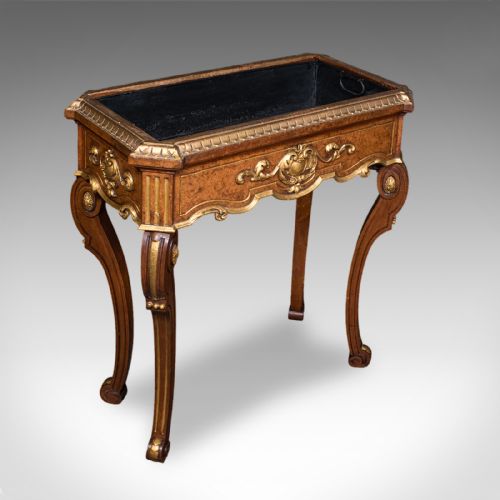
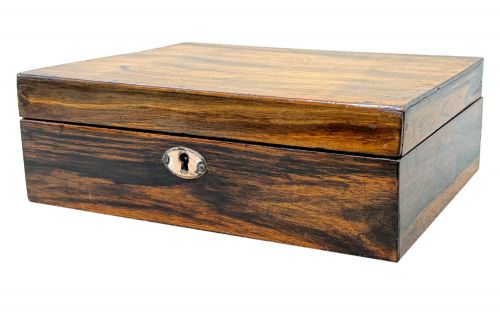
The objects take many shapes, from sarcophagus boxes and miniature sideboards to standing tables and desk boxes. Mahogany, rosewood, walnut, and oak dominate the material record, frequently accented with brass, bone, or silver plate.
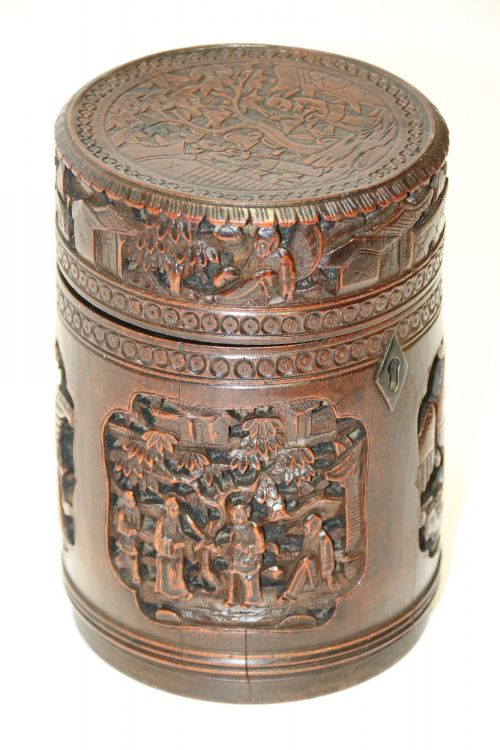
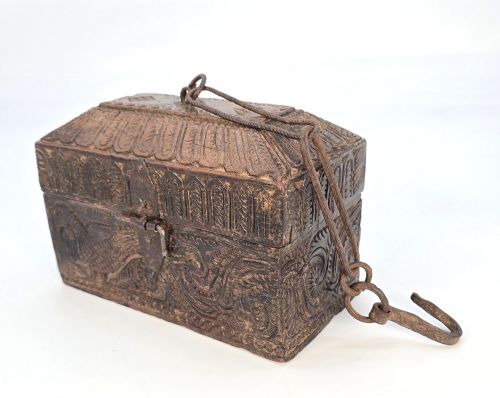
Regional variations include Anglo-Indian padouk pieces, Chinese bamboo vessels, and French oak containers. The majority of surviving items reflect nineteenth-century production methods and revivalist decorative schemes.
Materials and construction methods
Cabinet makers utilised dense hardwoods such as mahogany, walnut, rosewood, and oak to construct these boxes, providing a stable base for intricate carving and joinery. Timbers were selected for their grain pattern and colour, then seasoned and shaped into sarcophagus, rectangular, or octagonal forms.
Surface ornamentation relied on hand carving, brass inlay, and parquetry, uniting structural woodwork with decorative metal mounts. Interior compartments were fitted with secondary timbers and sometimes lined with foil or bone to preserve contents.
Some nineteenth-century makers concealed extra compartments beneath sliding panels, giving tea drinkers a secret place to hide their sugar spoons.
Distinctions in craftsmanship
Quality rests upon the precision of the timber joints, the crispness of the hand carving, and the integrity of the fitted interior compartments. Superior examples display carefully matched wood grains and securely seated lids that close true without warping.
The refinement of ancillary elements, such as cast brass handles, paw feet, and internal lids, distinguishes standard production from exceptional cabinet work.
Gillows·Tahan of Paris·Freemans of Norwich
The Carved Wooden Caddy Glossary
- Caddy
- A small box or chest once used for storing tea leaves. Early examples feature internal compartments and lockable lids.
- Teapoy
- A pedestal table fitted with a lidded box on top, designed to hold tea canisters and sugar.
- Cellarette
- A lockable container used for storing bottles of wine or spirits. Many rest on paw feet or floor stands.
- Sarcophagus
- A box shape featuring a domed lid and splayed sides, mimicking ancient stone tombs. This silhouette appears frequently in Regency and Victorian designs.
- Padouk
- A heavy tropical hardwood with a reddish hue, utilised in colonial and Anglo-Indian furniture production.
Carved Wooden Caddy: Frequently Asked Questions
What was a carved wooden caddy used for?
These lidded boxes stored valuable dry goods such as tea leaves, spices, and sugar in domestic settings. Their lockable compartments kept costly provisions secure from household servants.
Over time, similar lidded forms evolved to house stationery, sewing equipment, jewellery, or wine bottles.
How do I date a carved wooden caddy?
Dating relies on observing the timber species, construction joints, decorative style, and hardware. Georgian and Regency pieces often feature flame mahogany and brass inlay, whilst Victorian examples frequently showcase heavier carving and walnut or oak.
Interior fittings and secondary woods also provide clues to the period of manufacture.
Where were these pieces made?
Production occurred across Britain, continental Europe, and British colonial outposts such as India. English cabinet makers produced the majority of mahogany and oak examples.
Colonial workshops utilised regional timbers like padouk and teak for export to European markets.
How should I care for a wooden caddy?
Keep wooden boxes away from direct sunlight and sudden temperature changes to prevent the timber and veneers from splitting. Dust the carved surfaces gently with a dry, soft cloth.
Avoid applying modern liquid polishes, which can build up and harm historic finishes.