


Decorative Storage Box
These decorative storage boxes span centuries of craft, offering practical utility and historic charm in wood, brass, lacquer, and leather.
Decorative Storage Box
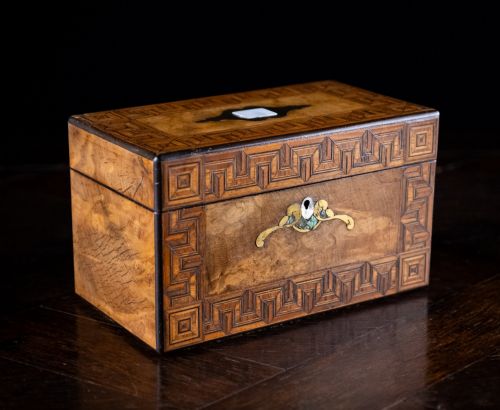
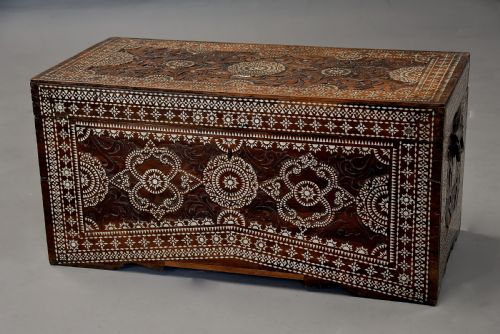
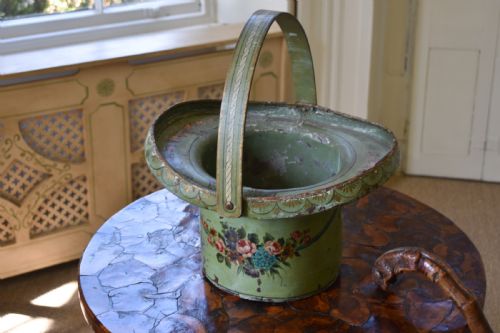
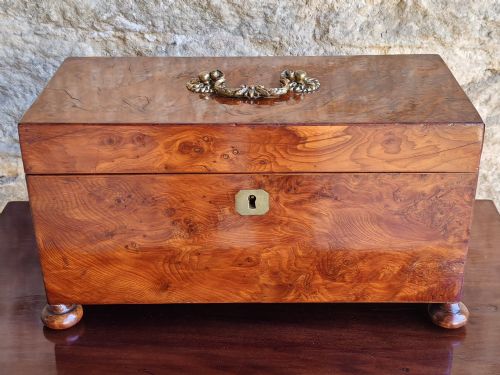
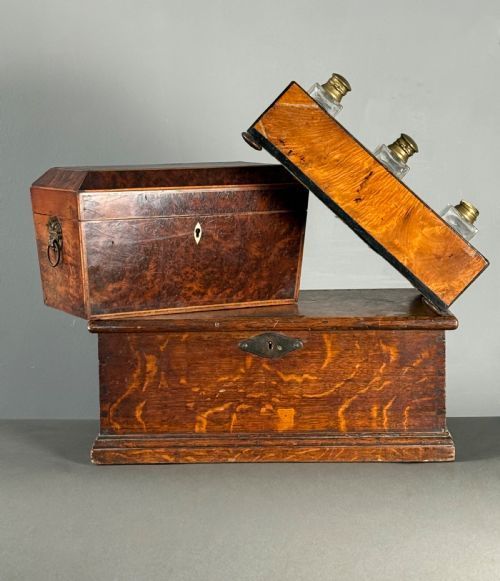
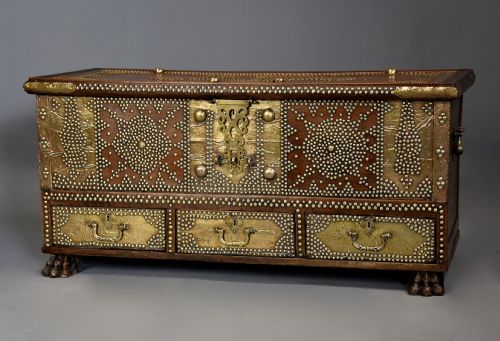
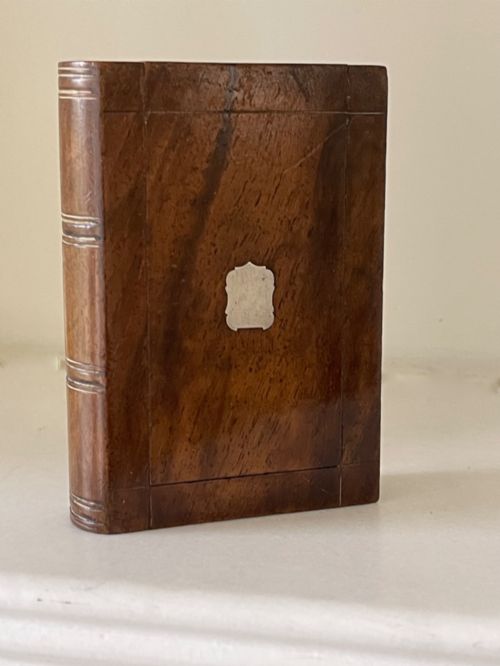
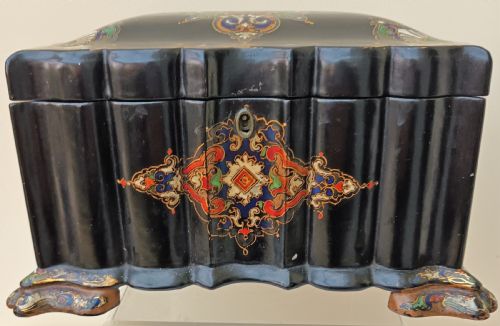
A decorative storage box serves both functional and aesthetic purposes, evolving through centuries from humble utilitarian vessels to ornate parlour showpieces. When exploring this selection, buyers encounter everything from modest pine crates and painted leather hat boxes to elaborate tea caddies and inlaid trunks.
The assortment on this page draws heavily from Victorian, Georgian, and nineteenth-century traditions, alongside earlier seventeenth-century examples and twentieth-century pieces. Tea caddies, workboxes, and jewellery caskets dominate the forms, reflecting how previous generations safeguarded valuable commodities and personal treasures.
Materials and Methods
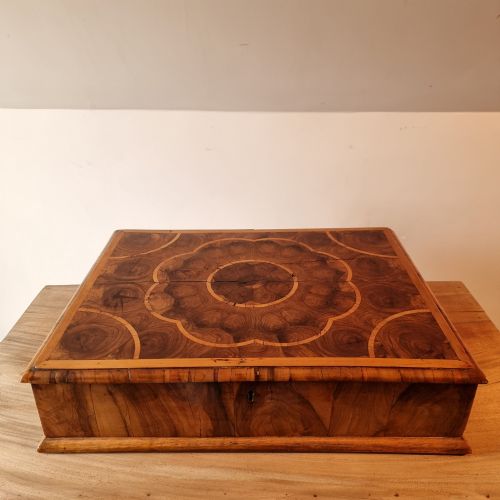
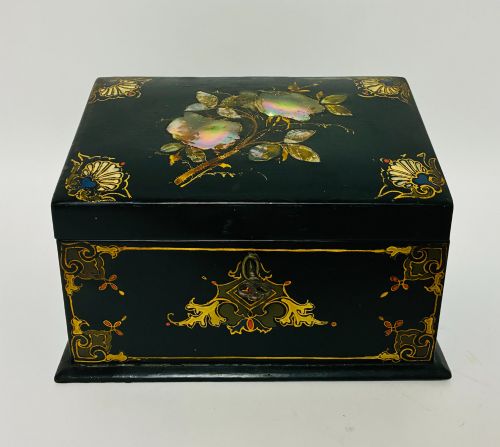
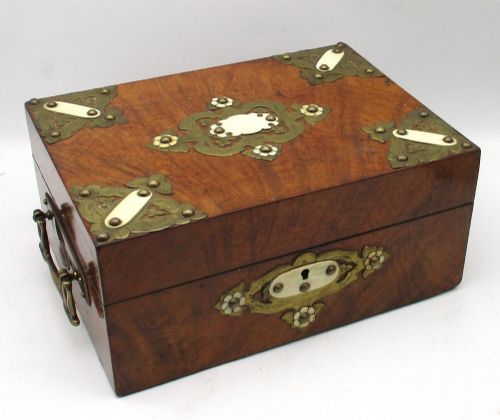
Cabinet makers utilised a rich palette of timbers including walnut, mahogany, rosewood, yew, and satinwood, frequently employing parquetry and marquetry to create geometric patterns on the surface. Exotic embellishments such as mother-of-pearl, bone, tortoiseshell, and brass inlay transformed simple wooden vessels into tactile masterpieces.
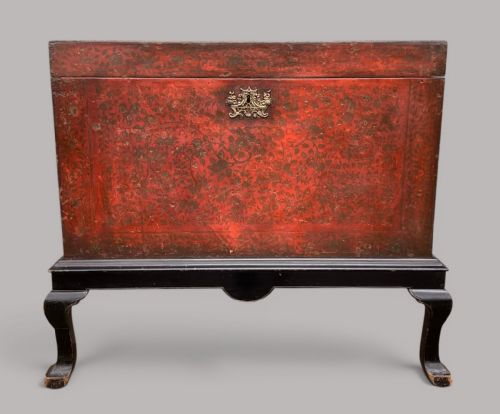
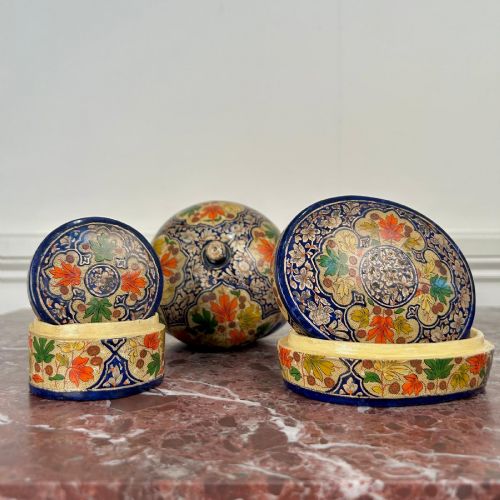
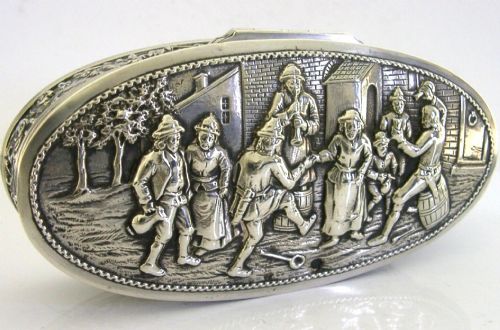
Surface decoration also relied on traditional lacquer, hand-painting, and tooled leather, particularly seen in folk art pieces and travel trunks. Metalwork components like brass studs, heavy hinges, and solid silver mounts provided structural integrity whilst enhancing the visual appeal.
Listings feature eighteenth-century and nineteenth-century pieces constructed from walnut, tortoiseshell, and hand-painted leather.
Distinctions in Quality
Quality rests upon the precision of the joinery and the integrity of the decorative elements, such as tightly fitted parquetry and securely pinned brass inlay. Superior examples retain their original interior fittings, including glass bowls, mixing sticks, or compartmentalised trays.
The depth of carving, the choice of highly figured veneers like amboyna or burr yew, and the retention of original hand-painted finishes distinguish workshop masterpieces from utilitarian items.
Tahan of Paris
The Decorative Storage Box Glossary
- Tea caddy
- A small box or chest designed originally to store loose tea leaves securely under lock and key. These containers often featured internal canisters and mixing bowls.
- Marquetry
- The art and craft of applying pieces of veneer to a structure to form decorative patterns and pictures. Makers utilised contrasting timbers to achieve pictorial depth.
- Papier-mâché
- A composite material consisting of paper pieces or pulp bound with an adhesive, moulded and lacquer-painted. It gained immense popularity during the Victorian era for stationery and trinket boxes.
- Tunbridge ware
- A distinct type of decorative woodwork produced in Kent, characterised by intricate mosaic patterns made from tiny wood blocks. It frequently adorned small boxes and workboxes.
Decorative Storage Box: Frequently Asked Questions
What were tea caddies used for?
Tea caddies served to store expensive tea leaves securely in the household, often featuring locks to prevent theft by servants.
They frequently contained internal lidded canisters and glass mixing bowls for blending different varieties of tea.
How do I date a wooden box?
Dating relies on examining the timber species, construction techniques, and decorative styles characteristic of periods like the Georgian or Victorian eras.
Hand-cut dovetails, original hardware, and secondary woods inside the carcass offer reliable clues to the exact age.
Are these boxes suitable for daily use?
Many antique boxes remain robust enough for everyday storage of jewellery, stationery, or keepsakes on a desk or dressing table.
Delicate surfaces like tortoiseshell or fine lacquer require gentle handling and protection from direct sunlight.
What is the difference between a workbox and a trinket box?
Workboxes were specifically engineered for sewing and needlework, containing fitted internal trays, pins, and thread compartments.
Trunk and trinket boxes generally offered open space for storing miscellaneous personal valuables and letters rather than sewing tools.