


Dark Brown Tea Box
A dark brown tea box is a timber chest made to hold loose leaf tea securely, prized for rich grain and period craftsmanship.
Dark Brown Tea Box
A dark brown tea box typically takes the form of a tea caddy, cabinet, or decorative box originating from Georgian, Regency, Victorian, and later periods. These vessels were designed to protect expensive dry leaves under lock and key in the formal rooms of past houses.
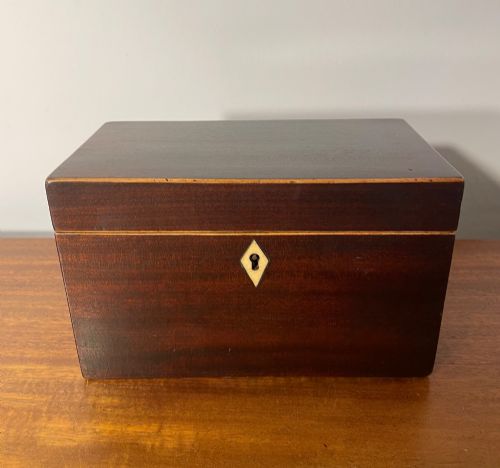
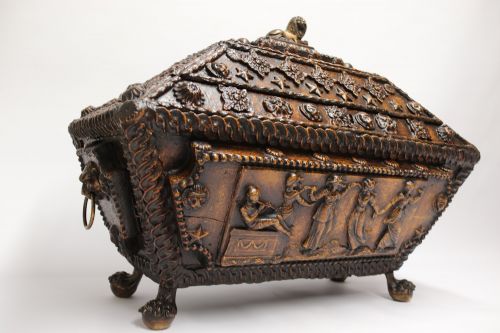
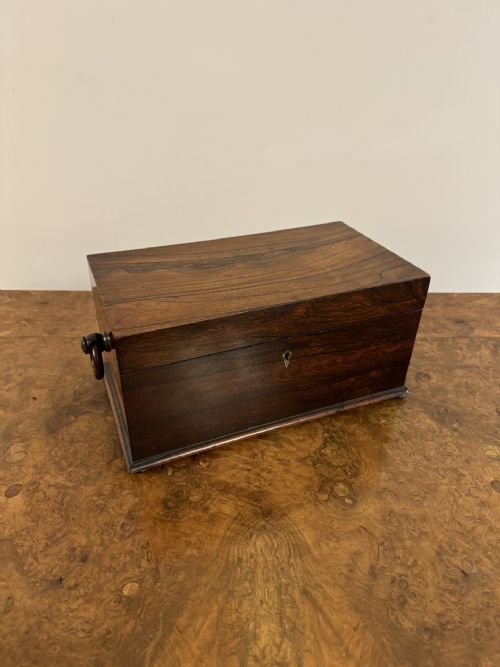
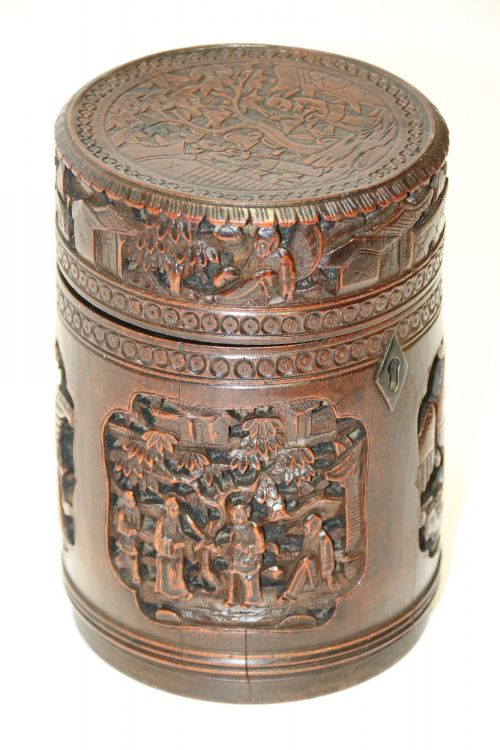
The pieces appearing on this page span several decades and styles, ranging from plain mahogany containers to sarcophagus forms and intricately carved bamboo specimens. Buyers encounter items utilising rich tropical timbers alongside gesso-decorated caskets and miniature sideboard designs.
Most examples date across the nineteenth century, including Georgian and William IV pieces alongside later 1920 items. Their primary function was domestic, though some later pieces served commercial tea room displays.
Materials and construction
Makers built these boxes using dense hardwoods such as rosewood and mahogany, often selecting timber for dark, figured grain patterns. These wooden structures were frequently reinforced or decorated with brass fittings, bone escutcheons, and glass elements.
Surface ornamentation involved varied techniques, including shell inlay, gesso decoration, and surface painting with gilt highlights. Carved bamboo appears on specific imported examples, demonstrating distinct regional woodworking traditions.
Some nineteenth-century tea boxes doubled as miniature sideboards, allowing miniature furniture enthusiasts to indulge in tea storage simultaneously.
Judging quality in period boxes
Quality rests in the selection of the timber and the precision of the joinery, where finely figured rosewood or mahogany indicates a higher grade of manufacture. The integrity of internal compartments and original lids reveals the care taken by the cabinetmaker.
Decorative embellishments set superior examples apart from standard containers, with well-executed shell inlay, clean brass mounts, and crisp gesso work elevating a piece. The presence of original fitted interiors adds considerable character to any specimen.
The Dark Brown Tea Box Glossary
- Tea caddy
- A box or chest designed specifically for storing dry tea leaves. Early versions included internal compartments and locking lids to safeguard the valuable contents.
- Sarcophagus form
- A container shape featuring a sloping, stepped lid reminiscent of a stone coffin, popular during the Regency and William IV periods. This design gave grand proportions to relatively small wooden boxes.
- Gesso
- A plaster-based mixture applied to a surface as a base for painting or gilding. It allows for raised decorative motifs moulded directly onto the timber carcass.
- Escutcheon
- A flat plate of brass or bone surrounding the keyhole. It protects the surrounding wood from wear caused by the key.
- Loose leaf case
- An internal container or compartment within a tea box meant for holding loose tea leaves separate from the main cavity.
Dark Brown Tea Box: Frequently Asked Questions
How were tea caddies used?
Tea was an expensive commodity in past centuries, so households kept their dry leaves locked away inside these dedicated chests.
Servants or the master of the house would portion out the leaves using internal compartments when preparing infusions for guests.
How do I date a tea box?
Dating relies on observing the timber species, overall form, and decorative techniques like brass mounts or shell inlay.
Georgian and Regency examples tend to feature classical proportions and dense hardwoods, whereas Victorian pieces often display heavier proportions or alternative display uses.
Can I use an antique tea box for modern storage?
Many collectors utilise these timber boxes on sideboards or desks to hold small trinkets, jewellery, or modern tea bags.
Their sturdy wooden construction and divided interiors make them practical containers for household organisation.