


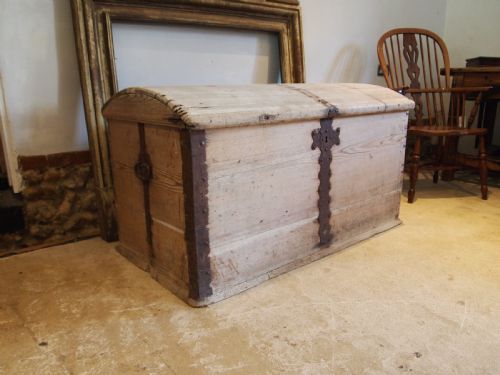


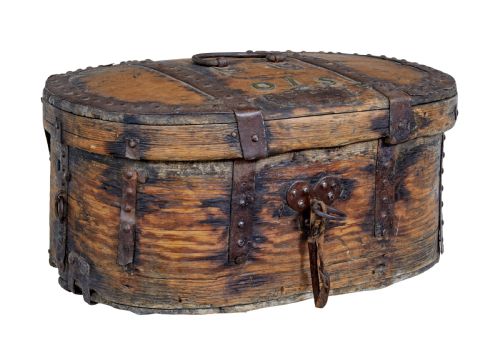


Domed Lid Wooden Box
A domed lid wooden box offers both generous storage and striking period character, forged from oak, pine, or walnut with traditional hardware.
Domed Lid Wooden Box
When you search for a domed lid wooden box, you encounter various forms ranging from small tea caddies to large blanket chests and shipping trunks. These pieces serve practical storage needs while displaying distinct period craftsmanship across different European traditions.
The versions most commonly met on this page span the eighteenth and nineteenth centuries, taking the shape of painted Scandinavian folk pieces, mahogany and burr walnut tea caddies, or iron-bound oak and pine chests. Each type reflects the specific domestic or travel requirements of its era.
Makers utilised native and exotic timbers including mahogany, rosewood, oak, pine, and teak, frequently incorporating brass hinges, iron strapwork, or marquetry inlay. These constructions range from country workshop items to refined domestic accessories.
How they were made
Carpenters constructed these boxes using solid timbers such as oak, pine, mahogany, and walnut, often shaping lids with curved boards secured by internal bracing. Iron and brass hardware, including strap hinges, lock plates, and carrying handles, were hand-forged or cast to reinforce the joints.
Surface treatments varied widely by region and function, encompassing original paintwork on Scandinavian folk pieces, polished finishes on English hardwoods, and canvas coverings on travel trunks. Marquetry inlay and decorative banding added further ornamentation to higher-status tea caddies and decorative boxes.
Some chests retain their original travel labels, documenting journeys across European carriage routes long before modern transit.
What varies in quality
The distinction between standard utility items and finer pieces lies in timber selection, such as the choice of burr walnut or figured mahogany over plain pine, and the intricacy of marquetry inlay or painted folk decoration. Original surfaces and untouched hardware contribute significantly to the integrity of a piece.
Structural robustness also defines the range, seen in the precision of dovetail joints, the weight of the iron or brass mountings, and the survival of original locks and keys. Simpler country chests rely on sturdy construction and honest wear, whereas formal caddies exhibit refined cabinetmaking.
The Domed Lid Wooden Box Glossary
- Cellaret
- A lockable cabinet or box designed to hold bottles of wine or spirits, often lined and fitted for transport or dining room use.
- Marquetry
- The art of applying pieces of veneer to a structure to form decorative patterns, frequently seen in geometric or floral motifs on Victorian boxes.
- Tea caddy
- A small container specifically built to store loose tea leaves, often featuring internal compartments and a locking lid to protect a valuable commodity.
- Strapwork
- Ornamental metal bands of iron or brass affixed across the exterior of a box or chest to strengthen joints and provide security.
- Folk art
- Artistic work created within a traditional culture by untrained or self-taught makers, often characterised by painted surfaces and regional motifs.
Domed Lid Wooden Box: Frequently Asked Questions
What were domed lids used for?
Domed lids provided extra internal clearance for bulky textiles, garments, or tall vessels while helping shed dust and moisture from the top surface.
In travel trunks and shipping chests, the curved shape offered additional structural rigidity against stacking loads during carriage.
How do I date a wooden box?
Dating relies on examining the timber species, construction methods like dovetailing, and the style of iron or brass hardware fitted to the piece.
Regional characteristics, such as Scandinavian painted folk motifs or Georgian mahogany cabinetwork, also point clearly to specific centuries.
Are tea caddies waterproof?
Tea caddies are constructed from dry hardwoods and intended to keep dry tea leaves fresh rather than hold liquids.
Interior foil linings or wooden compartments protected the contents from humidity and ambient odours in the room.
How do I care for an old painted box?
Painted surfaces require gentle dusting with a soft, dry cloth and protection from direct sunlight and fluctuating humidity.
Harsh cleaning agents or modern polishes must be avoided to preserve the original pigment and finish.