
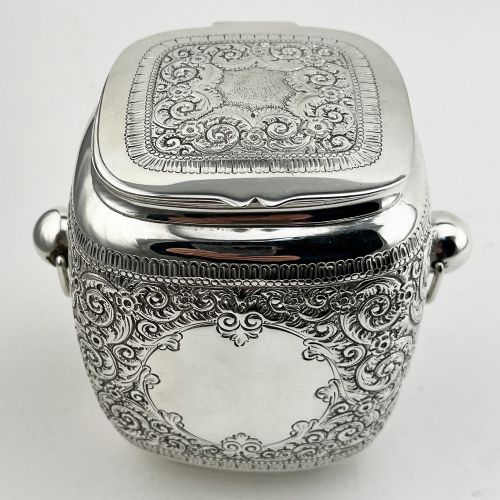
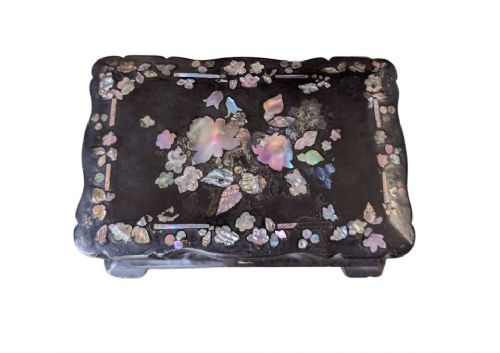
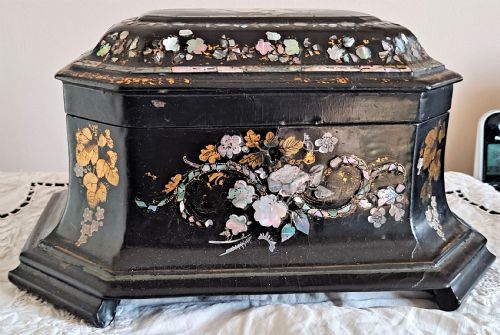


Floral Tea Chest
These floral tea chest pieces are decorative caddies designed to store precious leaves, offering rich inlaid surfaces and period craftsmanship for the home.
Floral Tea Chest
A floral tea chest is a specialised box designed for storing loose tea leaves, encountered here in forms spanning the Georgian, Regency, and Victorian eras. These items function as decorative storage containers that reflect the high status of tea in historical households.
How they were made
Maker's workshops utilised fine timbers such as harewood, mahogany, and rosewood as the foundation for these caddies. Artisans shaped these woods into distinct geometric and curved forms, preparing surfaces to receive complex decorative schemes.
Decoration relied on wood inlay, marquetry, mother-of-pearl, and hand-painted or penwork details to create floral patterns. Craftsmen meticulously fitted these diverse materials into the wooden carcase, securing them to produce durable decorative containers.
The documented styles across these items include Georgian, Regency, Victorian, and Arts and Crafts.
What varies in quality
The sophistication of the surface decoration largely determines the standing of a piece within its type. Elaborate marquetry and detailed mother-of-pearl inlay indicate a higher level of artisan skill than plain wooden surfaces.
Material selection also separates the standard examples from superior ones. The use of exotic woods like harewood and burr yew, combined with refined penwork or hand-painted botanical details, distinguishes the better-made containers.
Martin Hall & Co
The Floral Tea Chest Glossary
- Tea Caddy
- A small box or chest designed for the safe storage of tea leaves. Historically, these vessels were kept under lock and key by the head of the household.
- Marquetry
- A decorative technique where small pieces of wood veneer are fitted together to create pictorial designs on a surface. This method frequently depicts floral motifs on period boxes.
- Penwork
- A fine decorative technique using ink and nib to draw intricate patterns directly onto a prepared wooden surface. This method creates delicate outlines often seen on Regency pieces.
- Harewood
- Sycamore wood that has been stained to a greenish-grey hue, commonly utilised in high-end cabinet making during the Georgian and Regency periods.
Floral Tea Chest: Frequently Asked Questions
What is a floral tea chest used for?
These pieces were originally manufactured to store and preserve expensive loose tea leaves safely away from moisture and light.
Today, buyers utilise them as decorative tabletop containers or small trinket boxes in living spaces and studies.
How do I date a tea caddy?
Dating relies on observing the primary materials, construction methods, and stylistic cues present in the piece.
For example, Regency items often feature penwork and mahogany, while Victorian examples frequently employ papier-mâché and mother-of-pearl.
How should I care for a wooden tea caddy?
Keep the wooden or papier-mâché surface away from direct sunlight and excessive humidity to prevent warping or cracking.
Dust the exterior gently with a dry, soft cloth and avoid applying harsh chemical polishes.
What materials were used to decorate these caddies?
Artisans employed a variety of materials including mother-of-pearl, bone, brass, and diverse wood veneers.
These elements were combined through inlay and marquetry techniques to form botanical and floral designs.