
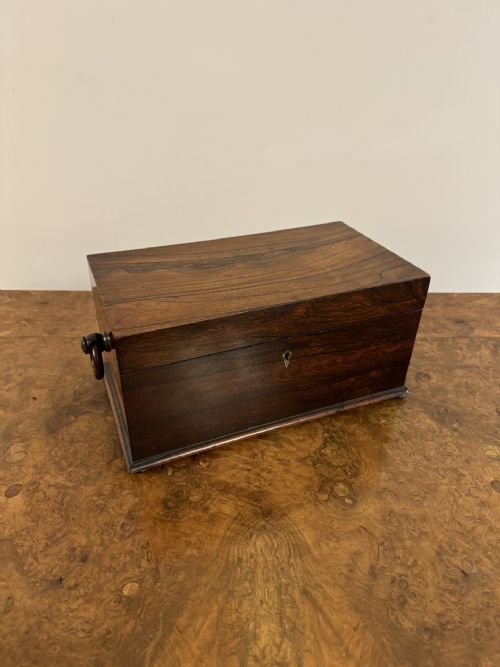

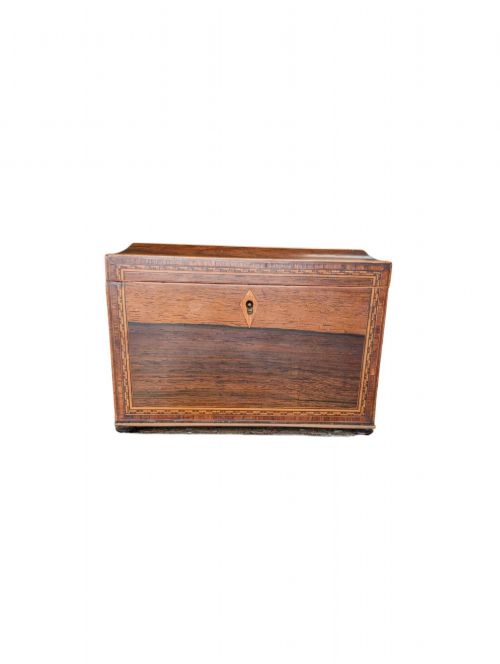
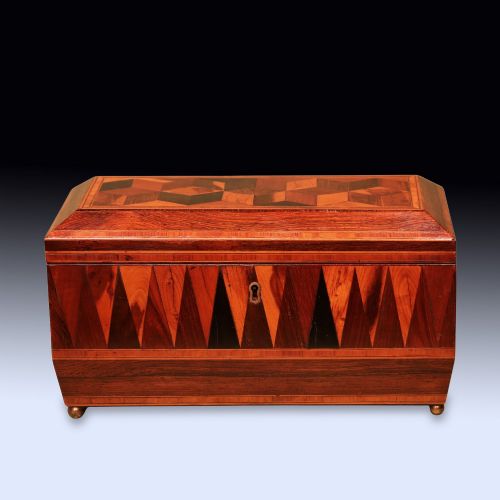
Rosewood Wooden Box
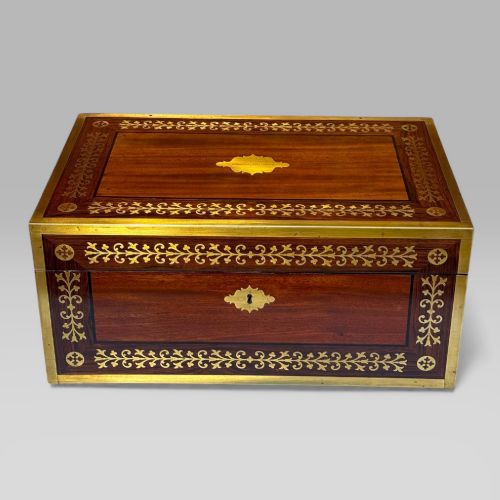
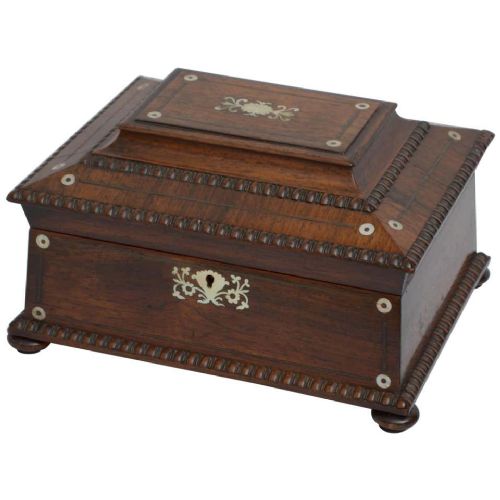
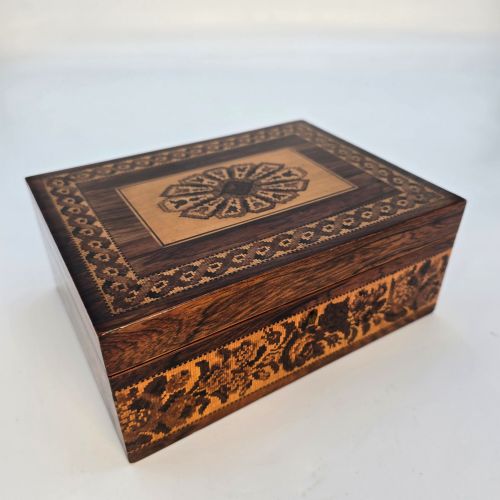
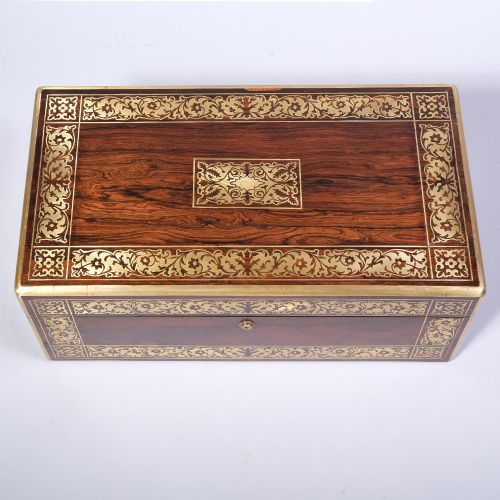
A rosewood wooden box brings dense grain, warm colour and precise brass inlay or Tunbridge Ware to a desk, dressing table or sideboard.
Rosewood Wooden Box
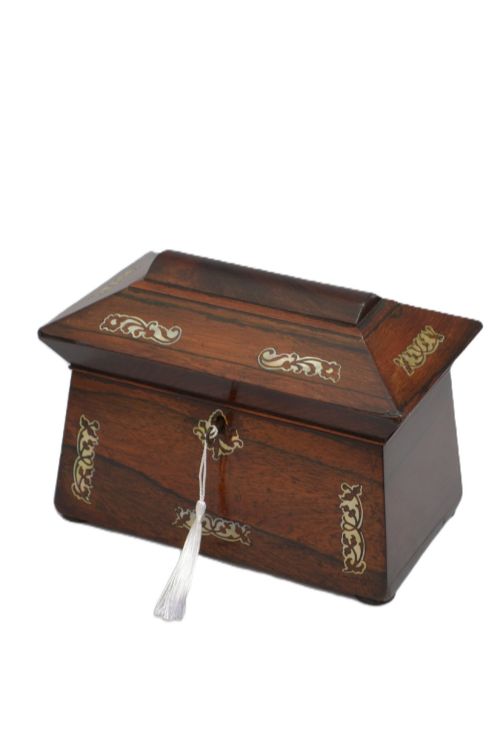
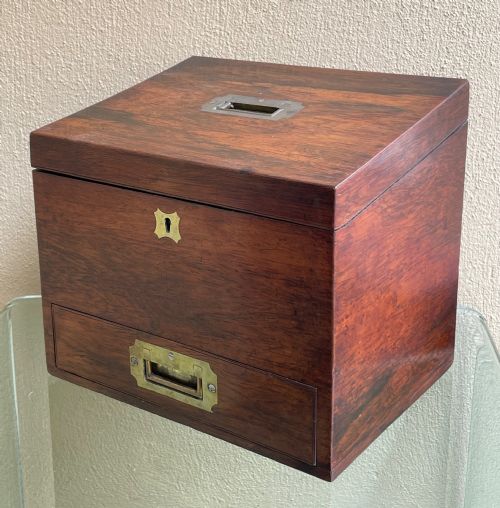
A rosewood wooden box covers a wide range of functional containers from the Georgian, Regency and Victorian periods, including tea caddies, writing slopes, and jewellery chests. These pieces served practical domestic purposes for storing valuables, correspondence, or tea leaves in affluent households.
Origins span English workshops, Tunbridge Wells, and international collaborations such as Anglo-Indian Colonial pieces and Chinese huanghuali work. Makers utilised dense exotic timbers to project status and durability through meticulous cabinet making.
Materials and technique
Makers constructed these pieces using solid rosewood or applied fine rosewood veneers over secondary timbers like mahogany or pine. Brass inlay, mother-of-pearl, boxwood, and satinwood provided sharp contrasts through stringing, marquetry, and parquetry.
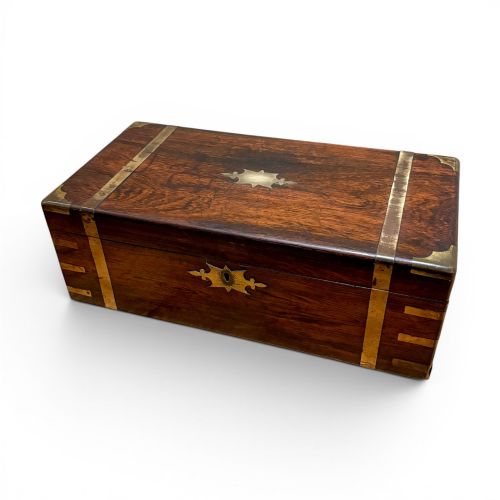
Tunbridge Ware examples utilised thousands of tiny tinted wood blocks arranged into complex mosaic pictures or geometric borders. Brass bound campaign boxes incorporated flush handles and corner braces for durable travel.
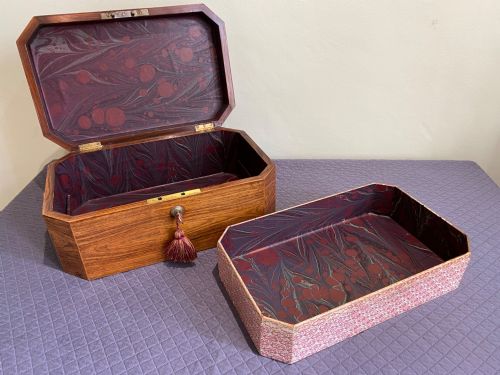
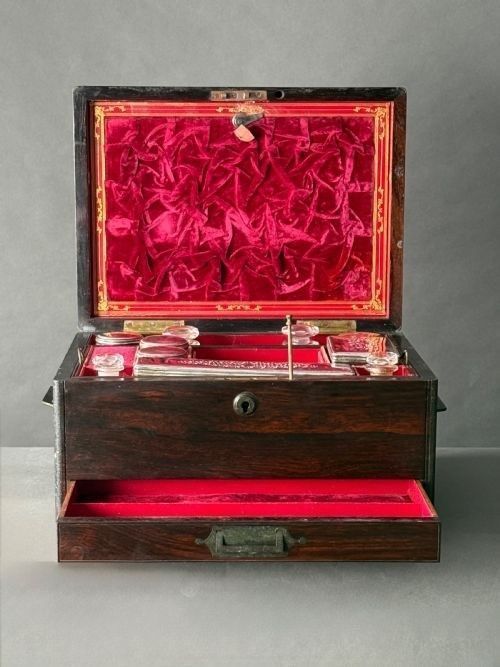
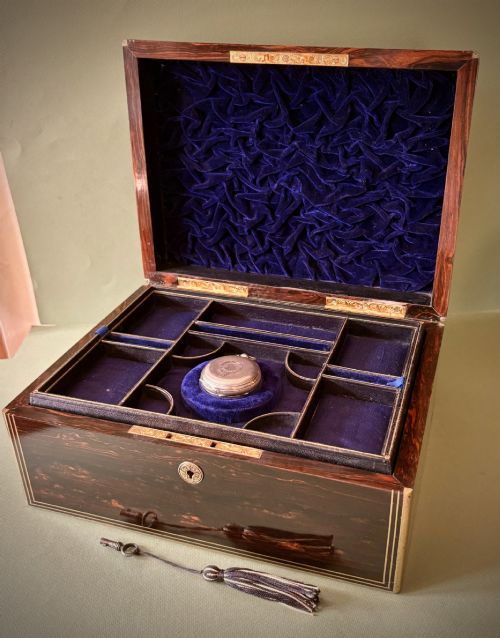
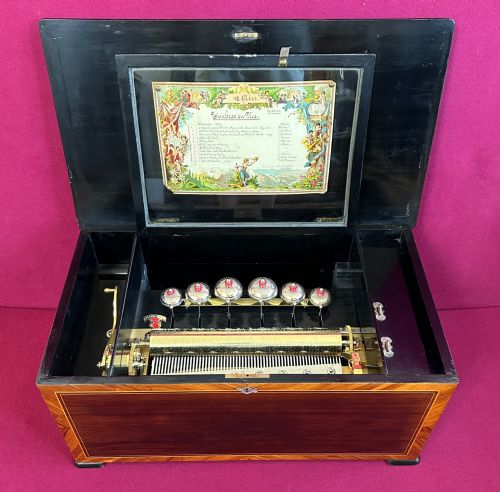
Interiors often featured velvet, silk, or paper linings alongside fitted compartments, removable trays, and working locks with keys. Glass inserts and mirrors occasionally appeared inside vanity and dressing cases.
Some Victorian writing boxes conceal secret spring-loaded drawers behind false panels for hiding love letters.
Evaluating construction and detail
Quality rests in the precision of the parquetry, the crispness of the brass stringing, and the integrity of the timber grain. Superior examples display seamless mitre joints and stable wood panels that withstand seasonal humidity shifts.
Internal fittings distinguish standard containers from high-end pieces, particularly where compartment lids retain matching veneers and original silk or velvet linings survive intact. Working locks, original keys, and maker signatures elevate the standing of a box.
Edmund Nye·Henry Hollamby·Erhard and Sohne
The Rosewood Wooden Box Glossary
- Tea Caddy
- A container designed to store loose tea leaves, often featuring internal lidded compartments and mixing bowls. They frequently adopt sarcophagus or box forms with secure locks.
- Writing Slope
- A portable desk that folds open on a hinge to reveal a slanted writing surface, inkwell compartments, and storage for stationery. Campaign versions often include flush brass handles for travel.
- Tunbridge Ware
- A type of decorative woodwork produced in Tunbridge Wells involving mosaic patterns created from multiple coloured wood species. These tiny tesserae form geometric or pictorial surface designs.
- Marquetry
- The art of applying decorative veneers in wood to form pictures or ornamental patterns on a box lid. Craftsmen cut contrasting timbers like boxwood and satinwood to fit flush into the rosewood ground.
- Sarcophagus Form
- A box shape featuring a sloping lid and flared base reminiscent of ancient stone coffins. This silhouette proved popular during the Regency and Georgian periods for tea caddies and storage chests.
Rosewood Wooden Box: Frequently Asked Questions
How do I date a rosewood wooden box?
Dating relies on architectural styles, construction methods, and hardware types visible across the piece. Regency items often display brass inlay and sarcophagus curves, while Victorian examples lean towards elaborate Tunbridge Ware or mother-of-pearl decoration.
Secondary woods inside the box and the style of the lock plate provide further clues to the decade of manufacture. Examining historical design motifs helps narrow down the period from Georgian origins through to late Victorian production.
What were tea caddies used for?
Tea caddies stored expensive loose tea leaves under lock and key in the dining room or drawing room. Servants typically prepared the brew, keeping the valuable leaves safely secured from household staff.
Inside, divided compartments separated green and black teas, sometimes alongside a central glass mixing bowl. The lockable lid ensured this luxury commodity remained strictly controlled.
How should I care for rosewood furniture?
Rosewood requires stable indoor humidity and protection from direct sunlight to prevent the natural oils from drying out. Keep the timber away from direct heat sources like radiators to avoid splitting the veneer.
Dust gently with a dry, soft cloth and avoid commercial polishes containing silicone. Feeding the wood occasionally with appropriate wax maintains the deep lustre of the grain.
Are original keys common with these boxes?
Original working keys are relatively uncommon because many were lost over the course of two centuries of domestic use. Finding a box that retains its operational lock and matching key adds considerable interest for collectors.
Many surviving pieces rely on specialist locksmiths to source period-appropriate replacements if the mechanism requires operation. The presence of a functional lock mechanism remains a notable bonus.