
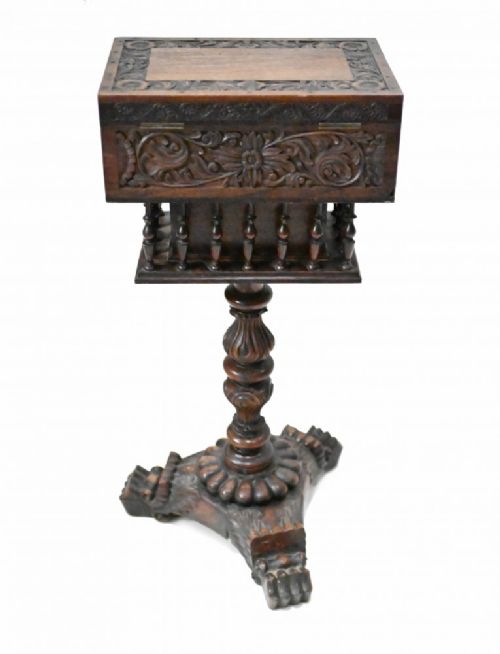


Anglo Indian Carved Chest
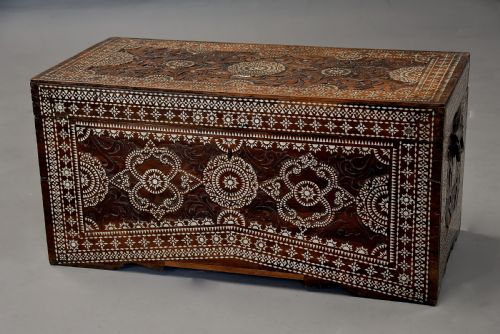
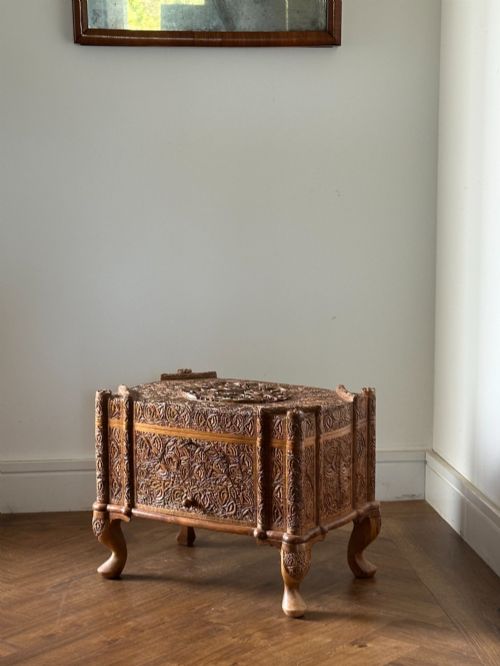
An anglo indian carved chest brings dense tropical timber and intricate craftsmanship into a room, offering robust storage with distinct colonial character.
Anglo Indian Carved Chest
When you search for an anglo indian carved chest, you encounter a range of storage furniture spanning blanket boxes, heavy trunks, and compartmented caskets. These pieces emerge primarily from the nineteenth century and extend into the early decades of the twentieth century, reflecting colonial trade and travel.
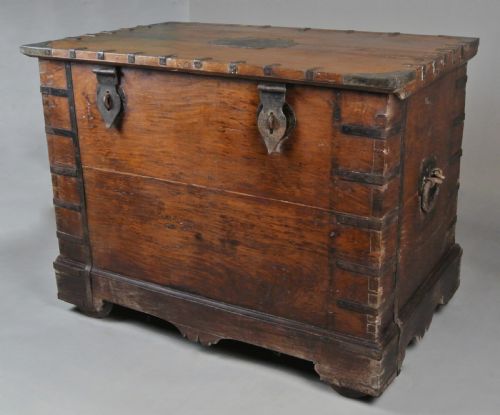
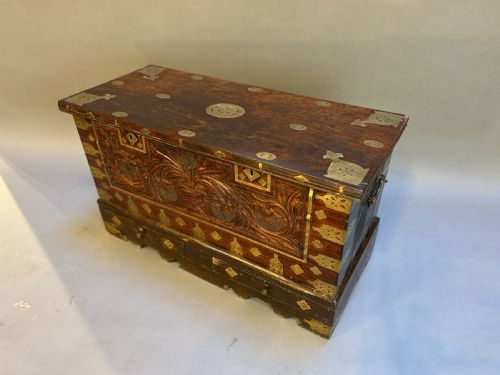
The most common forms on this page are large teak storage chests and heavy trunks, often reinforced with brass or iron. Alongside these robust blanket boxes, smaller jewellery caskets and writing boxes appear, fashioned from dense exotic timbers.
How they were made
Maker workshops utilised dense tropical hardwoods such as teak, padouk, ebony, and sandalwood, selected for durability and rich natural grain. These heavy timbers were joined with traditional woodworking techniques, often housing intricate hand-carved surface ornament.
Many structural trunks incorporate heavy brass or iron mounts, straps, and corner brackets to withstand long-distance transport. Interiors occasionally feature inlaid mother of pearl or fine compartmentalisation for specialised storage.
The selection includes pieces spanning the nineteenth century through the 1930s, utilising teak, sandalwood, ebony, and padouk.
What varies in quality
The distinction between ordinary utility storage and finer pieces lies in the crispness of the carving and the selection of the timber. Solid ebony or finely figured sandalwood represent a higher order of execution than basic utilitarian woods.
Hardware integration also defines standard. Heavy, hand-beaten brass studs and secure iron binding that form an integral part of the structure indicate superior craftsmanship compared to purely decorative surface additions.
The Anglo Indian Carved Chest Glossary
- Zanzibar chest
- A heavy storage trunk featuring elaborate brass studding and strapwork, often associated with trade routes along the East African coast.
- Padouk
- A heavy, durable reddish-brown tropical hardwood favoured in colonial furniture production for its stability and fine finish.
- Cellarette
- A dedicated cabinet or box designed originally for holding bottles of wine or spirits safely during transport or dining.
- Sarcophagus-shaped
- A tapered box form with a domed or pitched lid reminiscent of ancient stone coffins, popular for nineteenth-century jewellery caskets.
- Teapoy
- A small occasional table, often fitted with internal compartments or canisters, originating in colonial trade contexts.
Anglo Indian Carved Chest: Frequently Asked Questions
Where were these chests made?
These pieces were produced across British colonial territories including the Indian subcontinent, Ceylon, and trading hubs influenced by cross-continental exchange.
Local artisans combined native timber traditions with European furniture forms demanded by colonial officers and merchants.
How do I care for tropical hardwood?
Maintain stable room humidity and avoid placing solid wood furniture directly beside heat sources or in intense direct sunlight.
Feed the timber sparingly with a traditional wax to preserve the natural lustre of dense woods like teak and ebony.
What is a campaign chest?
Campaign furniture was constructed in modular sections with recessed brass handles to facilitate frequent transport by military officers.
These pieces break down into separate tiers for ease of travel without sacrificing structural rigidity.
How do I distinguish regional styles?
Regional variation is often visible in the choice of carving motifs, timber density, and metalwork detailing applied to the exterior.
Zanzibar pieces typically show dense brass studding, while Ceylonese work often highlights intricate satinwood and ebony contrasts.