
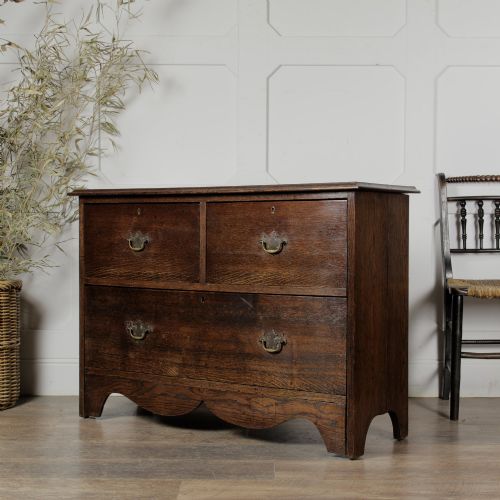


Carved Storage Chest
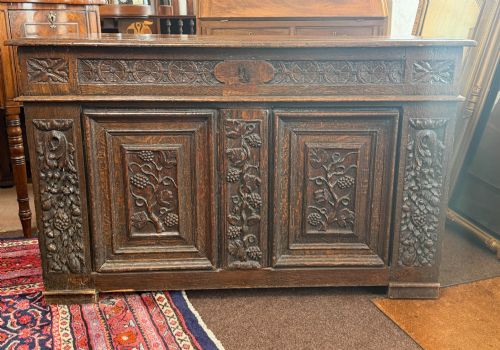
A carved storage chest brings centuries of practical timber craftsmanship into a room, offering deep interior space beneath heavily worked lids and panels.

Carved Storage Chest
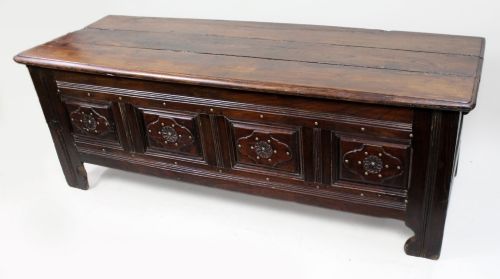
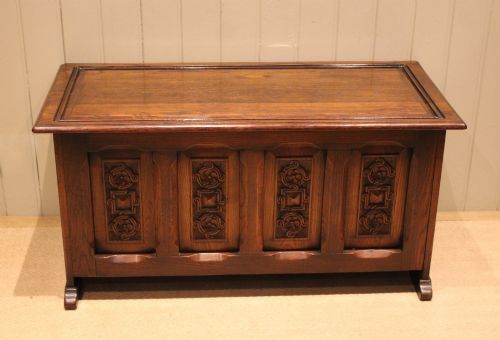
A carved storage chest encompasses heavy timber coffers, blanket boxes, and mule chests designed to hold household goods securely.
Buyers on this page encounter robust examples predominantly rendered in solid oak from the seventeenth and eighteenth centuries.
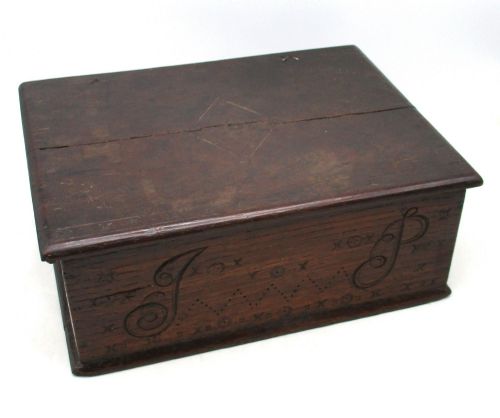
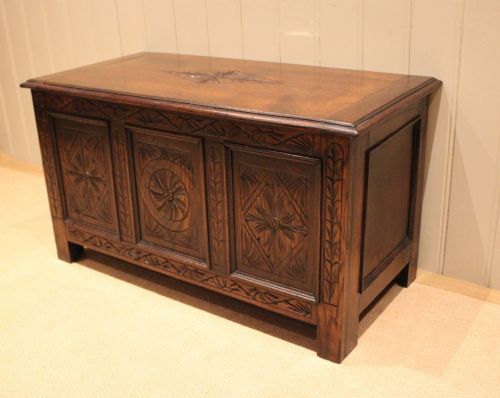
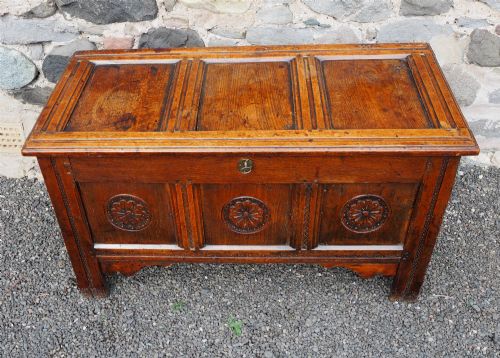
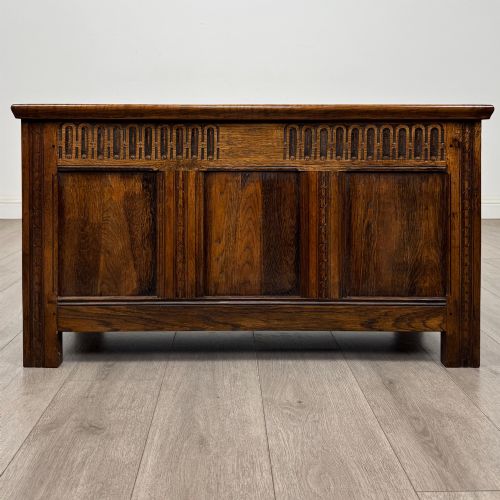
These forms range from small document boxes and panelled coffers to large boarded trunks bearing deeply gouged or geometric patterns.
Materials and Construction
Local hardwoods, particularly oak and walnut, provide the heavy structural foundation for these pieces, supplemented by iron hinges and brass fittings.
Joiners utilised frame-and-panel construction to accommodate the natural movement of timber across seasons, securing panels within grooved stiles and rails.
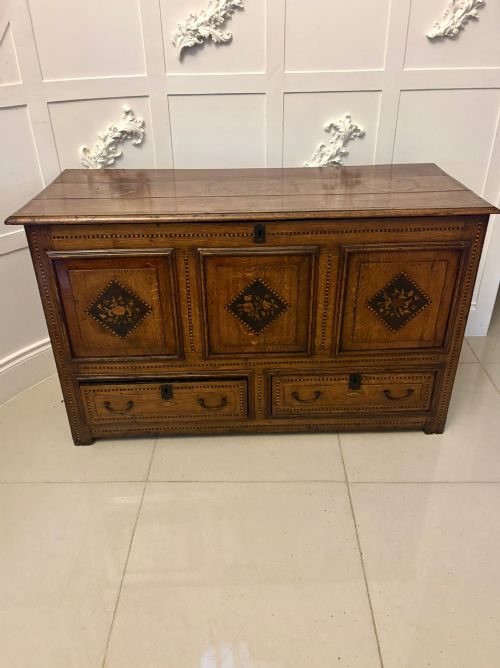
Surface decoration relies on chisel carving, gouging, and occasionally marquetry inlay to articulate the structural stiles and front rails.
Carved Storage Chest Retail Price Guide 2026
Typical asking prices for carved storage chest among the pieces listed under this phrase on Sellingantiques today, from the lower quarter to the upper quarter. They describe what is for sale here now, not the wider market.
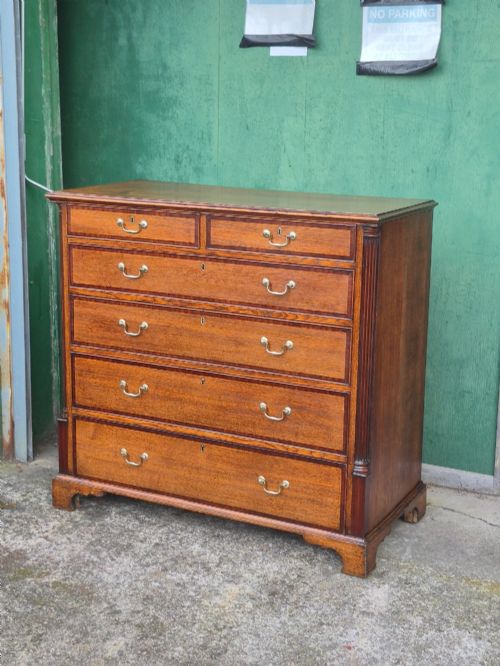
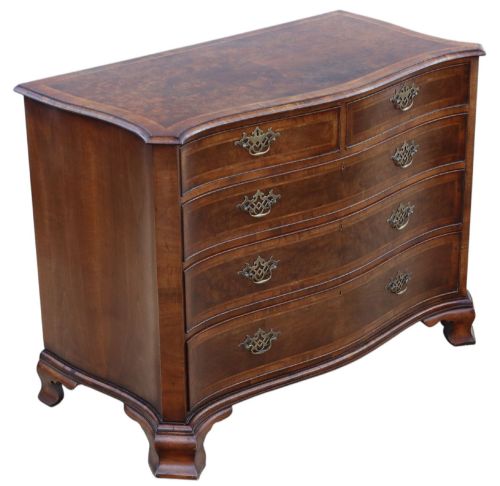
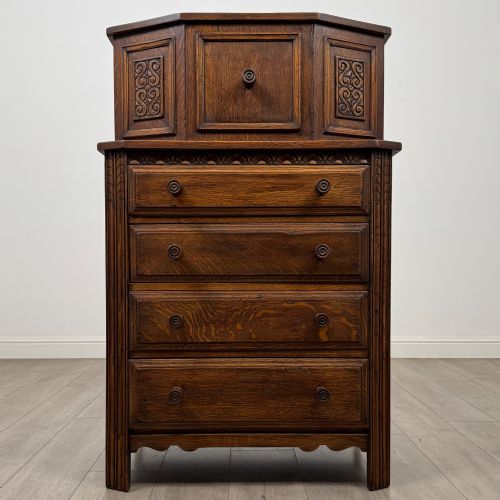
The listings span multiple centuries, uniting heavy 17th-century oak coffers with later 19th-century mahogany and walnut serpentine chests.
Factors of Quality
The crispness and depth of the chisel work distinguish superior carving from shallow, mechanical surface pattern execution.
Original timber surfaces, retaining deep patination and minimal replacement of structural boards, elevate a piece above heavily restored examples.
Proportion and scale dictate desirability, with smaller proportions and intact original hardware commanding greater interest.
The Carved Storage Chest Glossary
- Coffer
- A heavy wooden chest traditionally used for storing valuables or household goods. Most examples feature a hinged lid and panelled construction.
- Mule chest
- A storage chest fitted with one or more drawers beneath the main internal compartment. This form bridges the traditional coffer and the chest of drawers.
- Stile
- The vertical upright member in panelled timber construction. Stiles frame the recessed panels on the front and sides of a chest.
- Marquetry
- The art of applying decorative veneer pieces to a structure to form geometric or pictorial designs. It appears on select refined case pieces.
- Panelling
- Framework composed of stiles, rails, and fitted thin boards that decorates and strengthens the sides of a box. This technique prevents major wood splitting.
Carved Storage Chest: Frequently Asked Questions
What were carved storage chests used for?
These chests served primarily to secure valuable textiles, documents, and household provisions against dampness and theft in early homes. Their flat lids also allowed them to function as benches or tables within domestic spaces.
Over centuries, their role shifted from utilitarian strongboxes to decorative statement furniture placed in hallways and living rooms to store household linens.
How do I date an oak coffer?
Dating relies on examining the construction joints, tool marks, and overall framing style rather than relying solely on surface decoration. Hand-riven boards, pegged mortise and tenon joints, and wrought iron strap hinges typically point towards the seventeenth century.
Later revival pieces often display machine-sawn timber edges, uniform colour, and looser joints that lack the rigid heft of genuine early work.
How do I care for antique oak?
Maintain a stable indoor humidity and keep timber furniture away from direct heat sources and strong sunlight to prevent wood shrinkage and splitting. Dust regularly with a dry cloth and apply occasional natural wax to nourish the grain.
Avoid modern silicone polishes, which build up on the surface and dull the natural historic patination developed over centuries of handling.
What is the difference between a coffer and a mule chest?
A coffer consists of a single deep box compartment accessed strictly via the top lid. Retrieving items from the bottom requires removing everything stacked above.
A mule chest adds one or more pull-out drawers beneath the main well, allowing easier access to stored garments without disturbing items on top.