
Victorian Carved Chest
A victorian carved chest brings robust timber, deep relief ornament and nineteenth-century utility directly into a modern interior.
Victorian Carved Chest
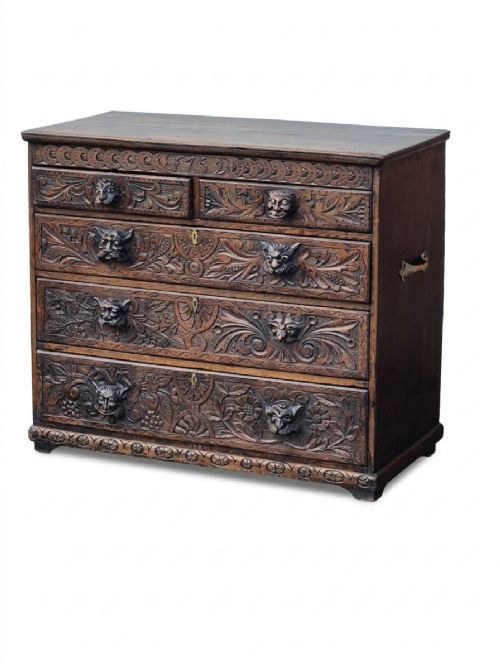
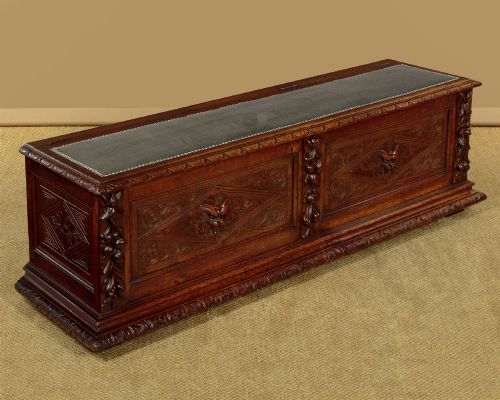
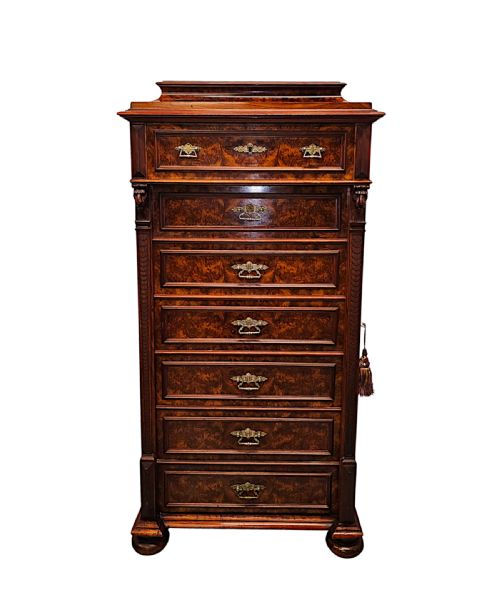
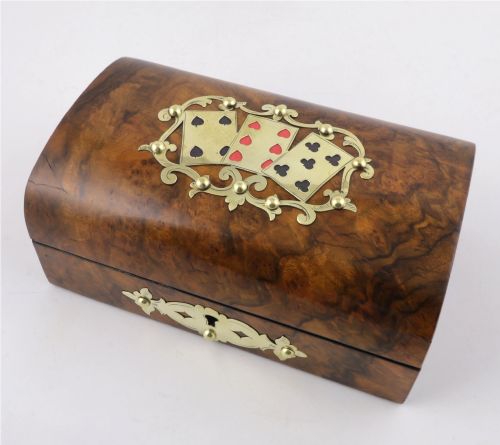
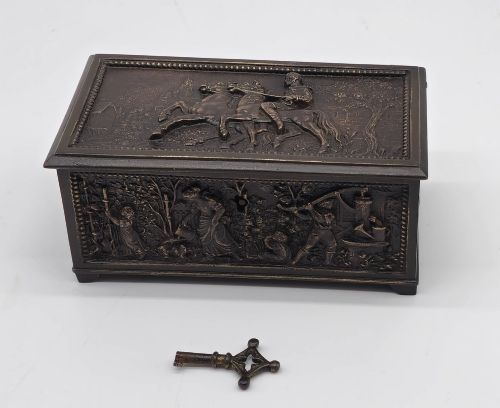
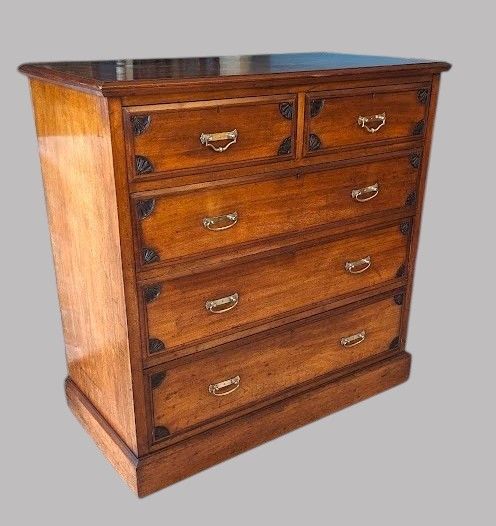
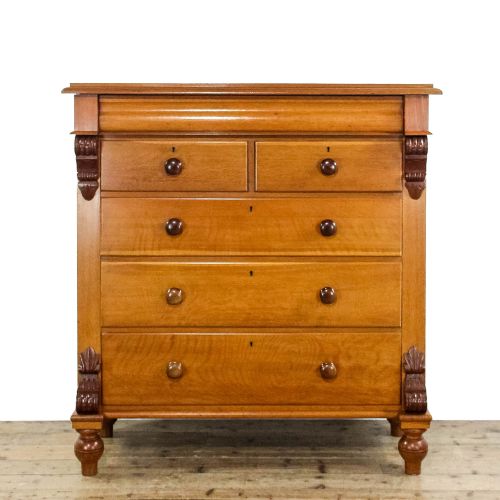
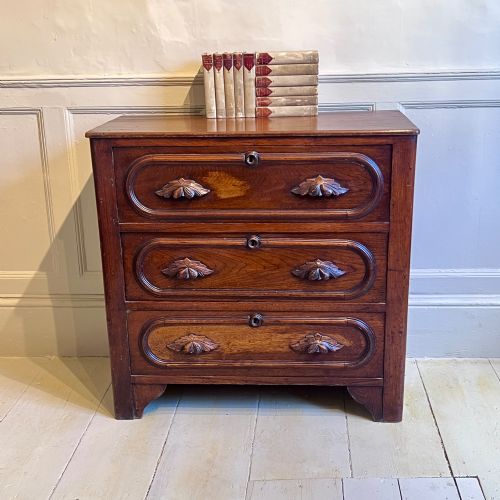
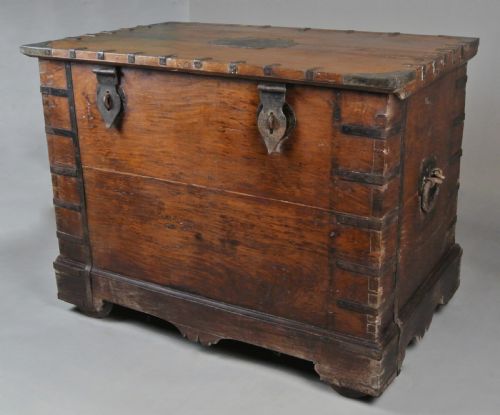
A victorian carved chest encompasses a diverse group of domestic storage furniture originating principally in the nineteenth century, including blanket chests, blanket boxes, blanket coffers and tall Wellington chests. The versions most frequently encountered on this page are substantial oak pieces bearing foliate motifs, linenfold panels or grotesque masks.
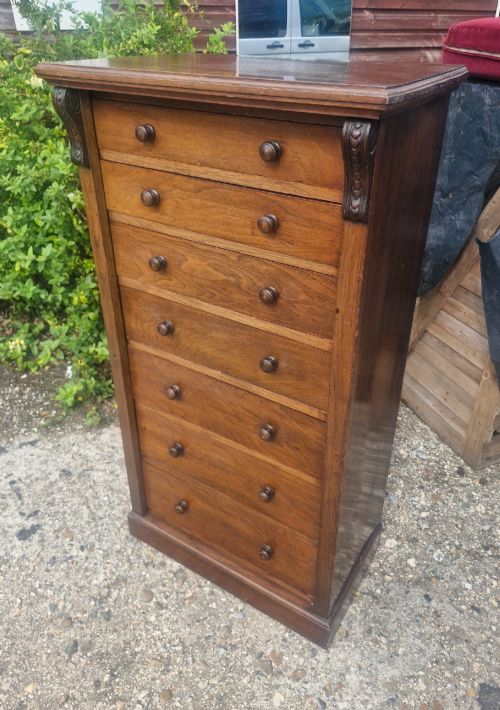
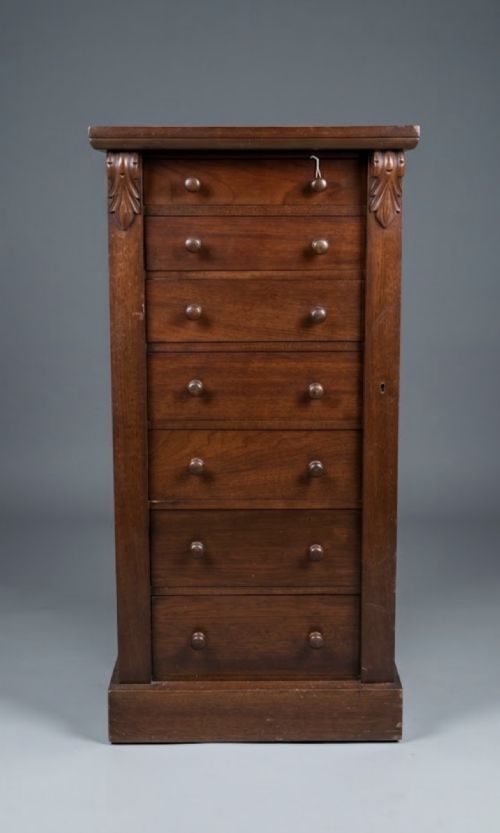
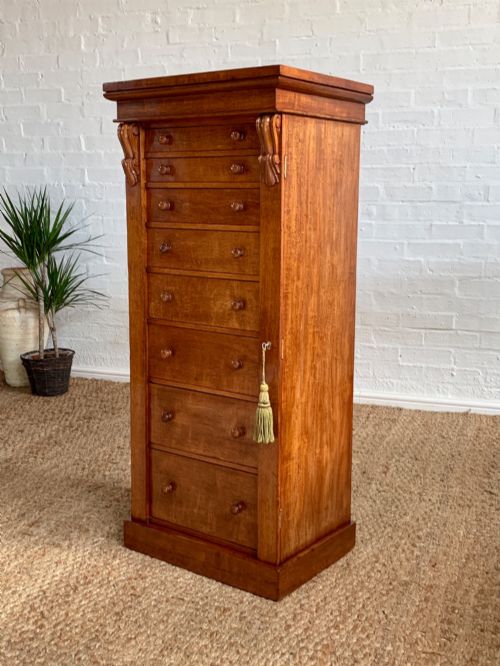
Beyond standard blanket boxes, the selection extends to compact bedside chests, monumental mule chests and specialised cabinet forms like the Wellington chest, which uses a locking stile to secure multiple graduated drawers. These items reflect the heavy domestic storage requirements of the Victorian era.
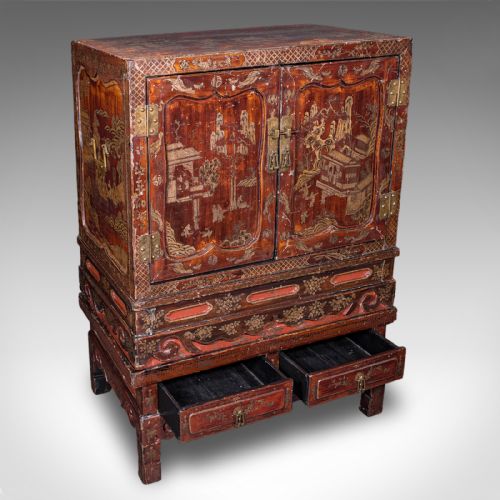
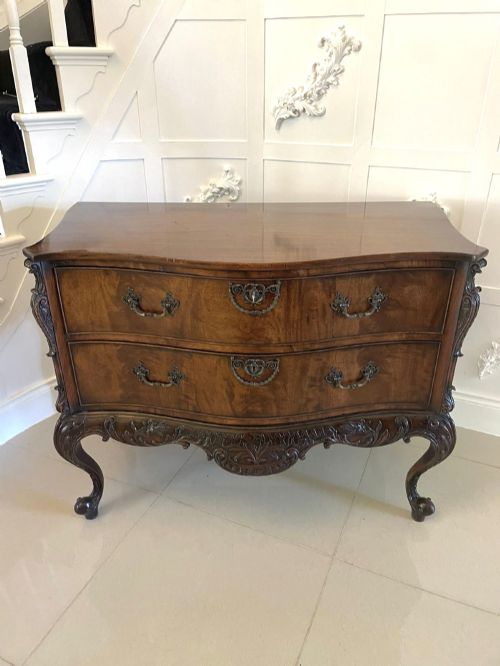
Stylistic influences stretch from standard Victorian and Gothic Revival to Chinoiserie and Egyptian Revival, demonstrating the eclectic taste of nineteenth-century makers. Pieces range from straightforward pine storage boxes to deeply carved oak hall tables and commodes.
Materials and construction
Oak dominates the surviving carved inventory, frequently utilised for heavy blanket chests, mule chests and Wellington chests where deep relief carving such as Green Man masks can be executed cleanly. Mahogany, walnut, burr walnut, pine and teak also appear across straight front, serpentine and table-top formats.
Joinery methods rely on solid timber construction, dovetail joints for drawers and pegged framing for large coffers, supplemented by brass hardware, iron bindings and turned wooden knobs. Surface treatments range from waxed finishes on figured flame mahogany to carved lacquer and tramp art detailing.
Object forms span standard chests of drawers, bedside cabinets, Wellington chests, mule chests, linen presses and miniature folk art models.
Judging execution and scale
Quality rests upon the crispness of the carving and the selection of timber, distinguishing mass-produced commercial items from heavily figured mahogany, burr walnut or deeply sculpted oak pieces. Master carvers produced sharp, high-relief foliate and mask detailing that retains clean edges rather than rounded, shallow impressions.
Proportion and integrity dictate value, with superior examples maintaining original hardware, locking mechanisms, plinth bases and functional side stiles. Large proportions, such as monumental teak dowry chests or expansive serpentine commodes, command attention through balanced scaling and substantial structural weight.
The Victorian Carved Chest Glossary
- Green Man mask
- A sculptural architectural ornament depicting a human face emerging from or entwined with foliage and vines. It appears frequently on nineteenth-century oak furniture.
- Mule chest
- A storage chest fitted with one or two drawers in the base beneath a deep upper compartment. This form bridges the traditional blanket coffer and the modern chest of drawers.
- Serpentine
- A front profile characterised by a sweeping, convex central section flanked by concave curves. It requires advanced cabinetmaking skill to execute in solid hardwoods.
- Tramp art
- A folk art style created by carving discarded packing crates and scrap wood using pocket knives, featuring layered, chip-carved geometric patterns.
Victorian Carved Chest: Frequently Asked Questions
What is a Wellington chest?
A Wellington chest is a tall, narrow set of drawers distinguished by a hinged vertical wooden locking bar on one side. This bar secures all the drawers simultaneously when locked with a key.
Originating in the nineteenth century, these pieces were designed for gentlemen to store shirts, documents or valuables securely within a compact floor footprint.
How are blanket chests used today?
Blanket chests provide deep, concealed storage space suitable for extra bedding, winter duvets, pillows or bulky items that clutter living areas. Their sturdy flat tops also allow them to function as bench seating at the end of a bed or as hallway console surfaces.
Placing one in a bedroom or living room introduces historic timber texture while keeping everyday objects out of sight.
How do I identify Gothic Revival pieces?
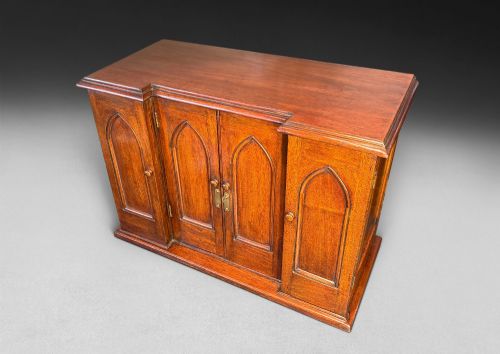
Gothic Revival items feature architectural motifs borrowed from medieval churches and cathedrals, such as pointed arches, quatrefoils, linenfold panelling and heavy buttresses. These elements are typically rendered in dark oak with deep relief carvings.
Makers adopted this style during the nineteenth century to evoke a sense of heritage, romance and craftsmanship.
What is a Green Man carving?
A Green Man carving represents a human face surrounded by or sprouting from leaves, vines and branches. It symbolises rebirth and the cycle of nature, appearing widely on nineteenth-century oak furniture.
On a chest, these masks usually form the drawer pulls or decorate the corners and central panels of the frame.
Where were these chests made?
These pieces were produced in British workshops, regional cabinet factories and colonial outposts during the Victorian period and the wider nineteenth century. Regional variations reflect local access to materials, such as Welsh oak or imported teak and padouk.
Makers ranged from rural country house joiners to large urban cabinet firms exhibiting at international trade displays.