
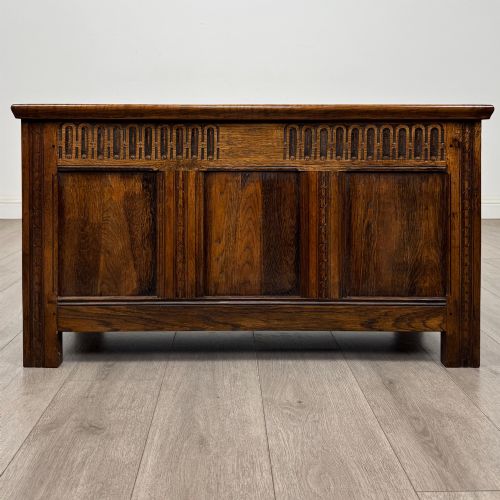


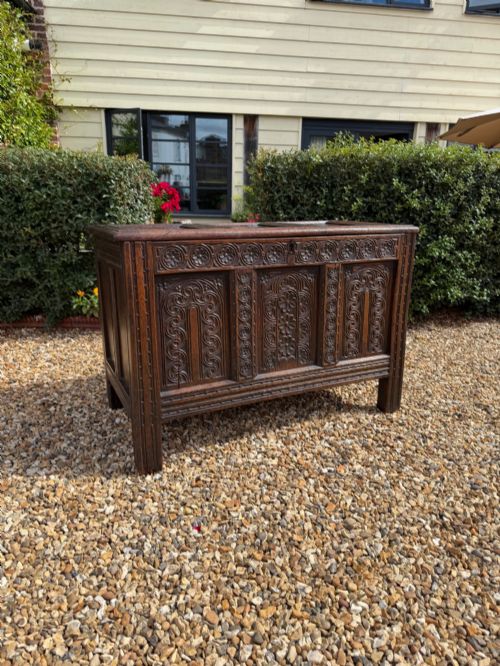
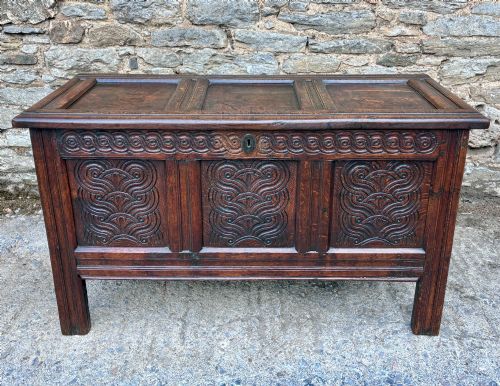
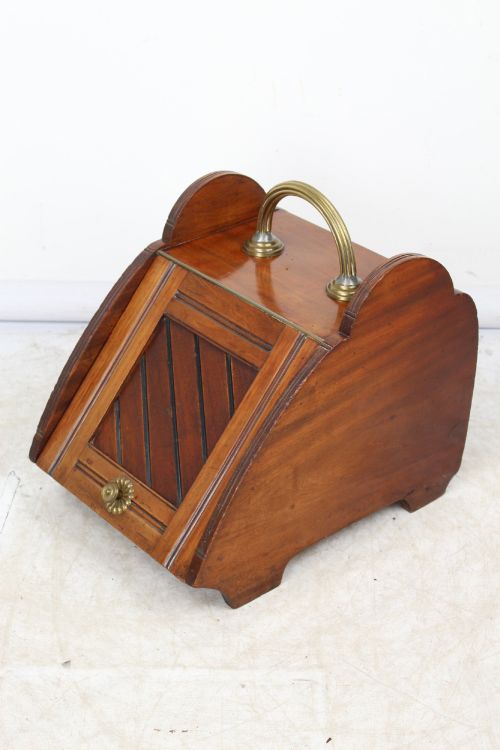
Carved Wooden Storage Box
A carved wooden storage box brings centuries of craft and utility into a room, offering robust construction and distinct regional character.
Carved Wooden Storage Box
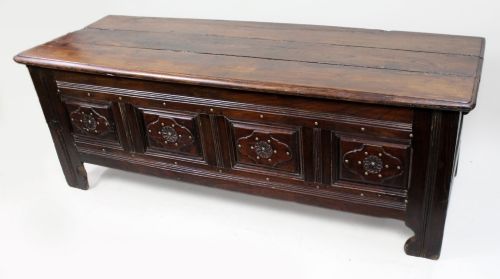
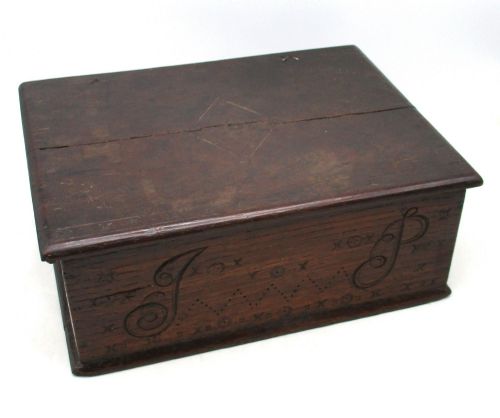
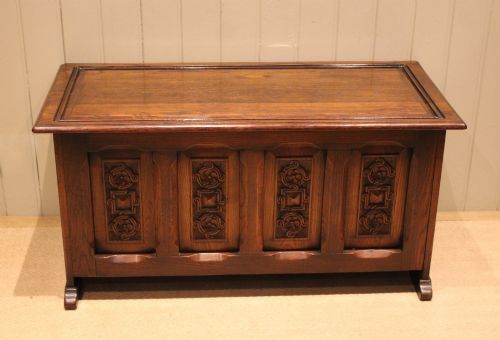
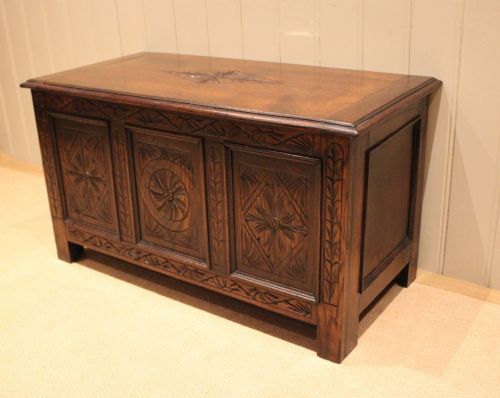
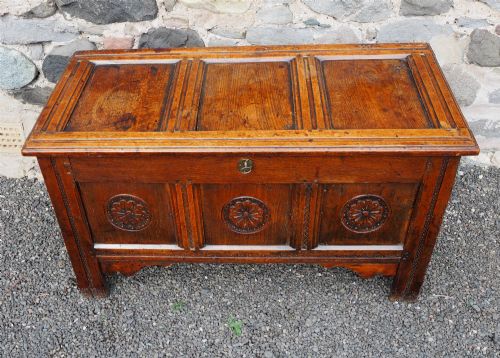
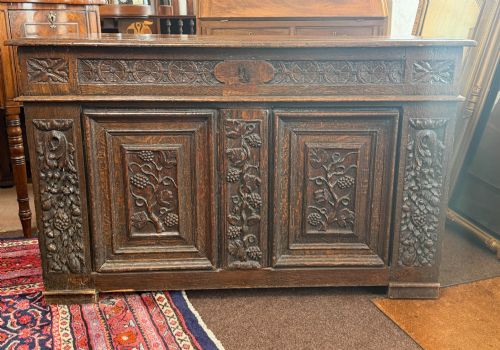
A carved wooden storage box encompasses utilitarian receptacles designed for safekeeping linens, documents, and personal possessions across centuries of domestic life. When you browse this selection of a carved wooden storage box, you encounter heavy coffers, panelled chests, mule chests, and smaller document or game boxes.
The dominant material visible across the inventory is oak, stretching from sixteenth and seventeenth-century examples through eighteenth-century Georgian editions to later revivals. These vessels range from small provincial boxes intended for tabletops to large hall coffers and joined chests built to withstand daily household demands.
How they were made
Joiners constructed these pieces primarily using solid oak boards joined by pegged mortise and tenon frames, housing raised or flat panels that allowed the timber to expand and contract naturally. Surfaces received hand-carved decoration, employing gouges and chisels to create geometric strapwork, scrolling foliage, and arcaded panels directly into the structural wood.
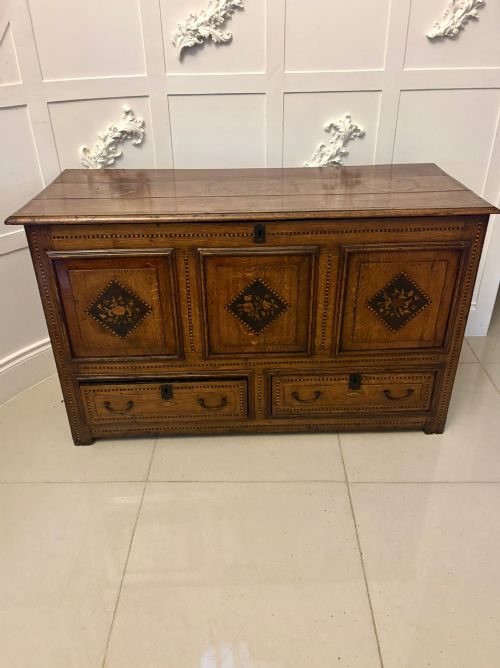
Hardware played an integral functional and decorative role, with heavy iron hinges, brass lock plates, and strapwork securing lids and corners. Certain examples incorporate contrasting elements such as marquetry inlay, mother of pearl, or secondary woods like mahogany, burr walnut, and teak.
The inventory spans multiple centuries, featuring solid oak, mahogany, burr walnut, teak, iron, and brass across forms ranging from seventeenth-century coffers to twentieth-century hall settles.
What varies in quality
The standard of craftsmanship shows in the crispness of the hand-carved motifs and the integrity of the joinery, where early examples display deep, confident chisel work rather than shallow mechanical pressing. Superior pieces retain their original timber lids, floorboards, and structural pegging without excessive replacement or modern re-working.
Proportion and surface patination dictate visual success, distinguishing heavy provincial utility from finer urban cabinet-making. Examples that maintain deep, warm wax finishes and intact period ironwork carry greater historic coherence than heavily stripped or over-restored equivalents.
The Carved Wooden Storage Box Glossary
- Cofer
- A large strongbox or chest used for storing valuables, plate, or garments. These heavy receptacles frequently feature panelled construction and flat lids.
- Mule chest
- A storage chest fitted with one or more drawers in the base beneath the primary compartment. This form bridges the gap between the traditional coffer and the chest of drawers.
- Marquetry inlay
- Decorative patterns formed by fitting contrasting veneers or solid wood sections into prepared recesses on the surface. This technique creates intricate pictorial or geometric designs.
- Strapwork
- Carved ornamentation resembling narrow flat bands or leather straps folded and interlaced. It appears frequently on seventeenth-century panels and friezes.
- Panelling
- Framework composed of stiles and rails holding a central recessed or raised board. This method prevents large wooden surfaces from warping.
- Cellarette
- A lockable container designed for holding bottles of wine or spirits. They often appear in mahogany during the Georgian and Victorian periods.
Carved Wooden Storage Box: Frequently Asked Questions
How were early coffers used?
Households utilised these heavy receptacles to secure valuable documents, textiles, plate, and currency against theft and damp conditions. Because furniture remained sparse in early domestic settings, a large chest frequently doubled as seating or a table.
Over subsequent centuries, specialised forms evolved for specific rooms, shifting the function from general strongboxes to blanket repositories, hall seats, and tabletop game containers.
How do I date an oak coffer?
Dating relies upon examining the construction methods, tool marks left by hand axes and adzes, and the evolution of carved decorative motifs. Seventeenth-century examples typically display pegged frame-and-panel construction with distinctive geometric or floral carving styles.
Later Victorian and twentieth-century interpretations often exhibit machine-sawn timber, lighter hardware, or deliberate revival styling that mimics earlier historical periods without authentic wear patterns.
Are these boxes suitable for daily use?
Solid timber construction makes these pieces exceptionally durable for modern domestic storage duties such as holding blankets, board games, or sitting in an entryway. The sturdy flat lids allow them to function comfortably as low tables or window seats.
Care should be taken to place them away from direct heat sources and drastic humidity shifts to protect the historic wood and prevent shrinkage cracks.
What is the difference between a coffer and a chest?
The terms are often used interchangeably, though a coffer traditionally denotes a heavily constructed box with a flat lid, frequently reinforced with iron bands and associated with valuables. A chest can encompass a broader range of lidded storage furniture, including panelled domestic repositories and drawer-fitted mule chests.
Regional terminology also plays a role, with specific geographic areas favouring local names for identical functional furniture types.