

Traditional Oak Bedding Chest
A traditional oak bedding chest is a robust storage piece offering generous timber construction and historical character for modern interiors.
Traditional Oak Bedding Chest
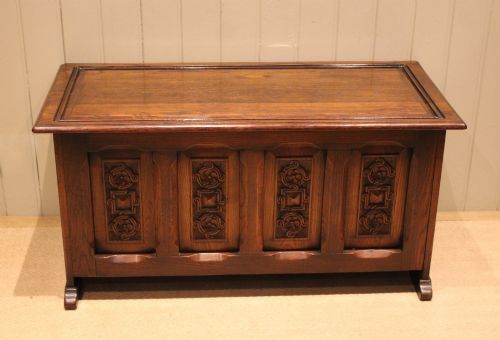
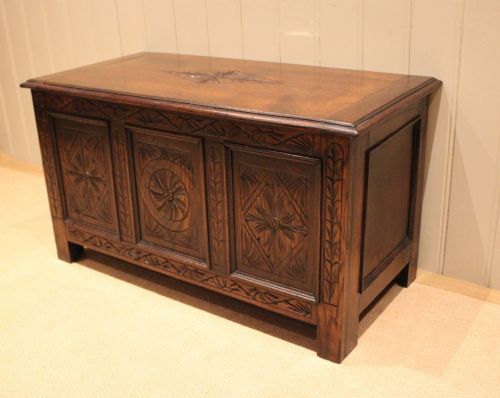
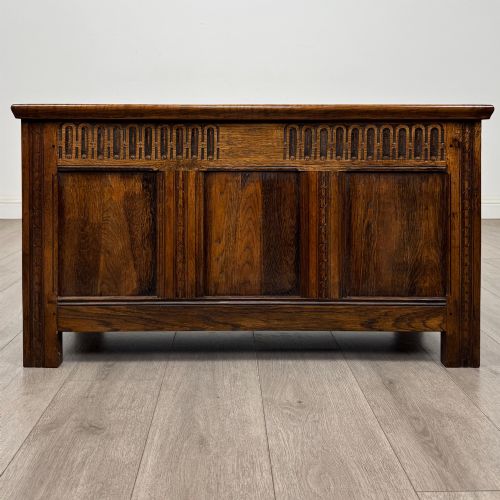
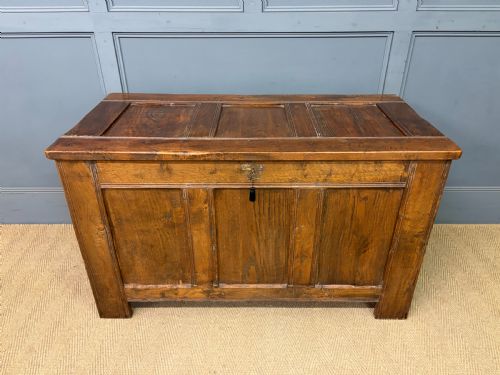
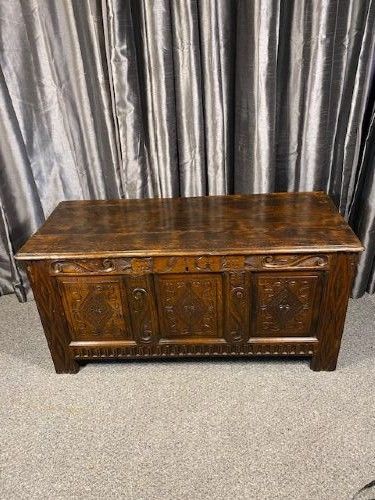
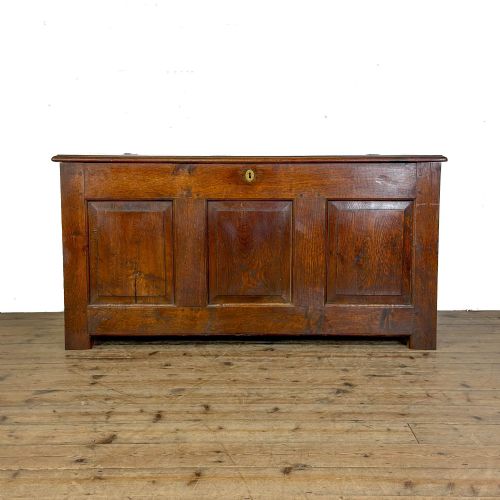
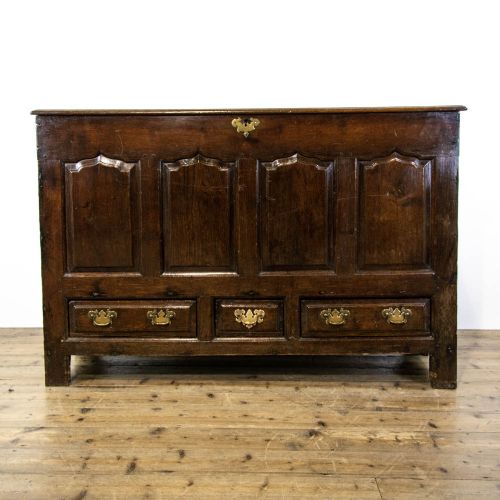
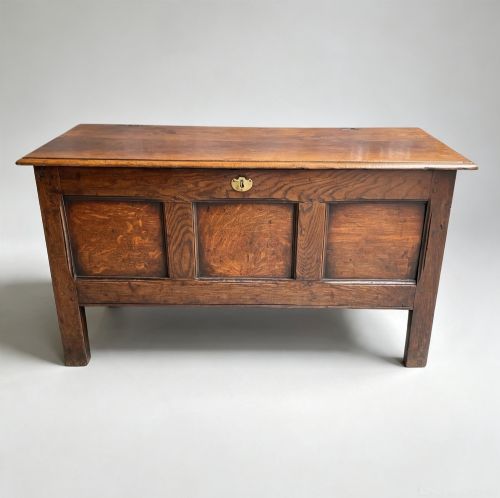
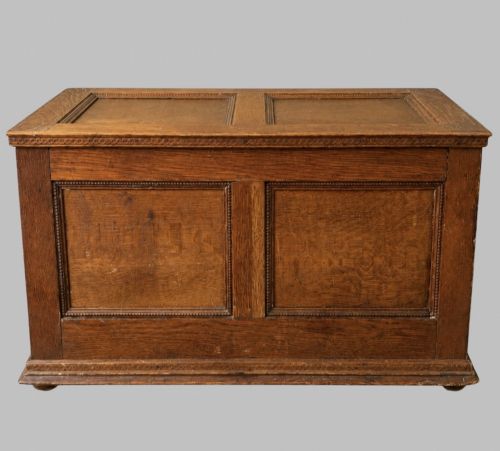
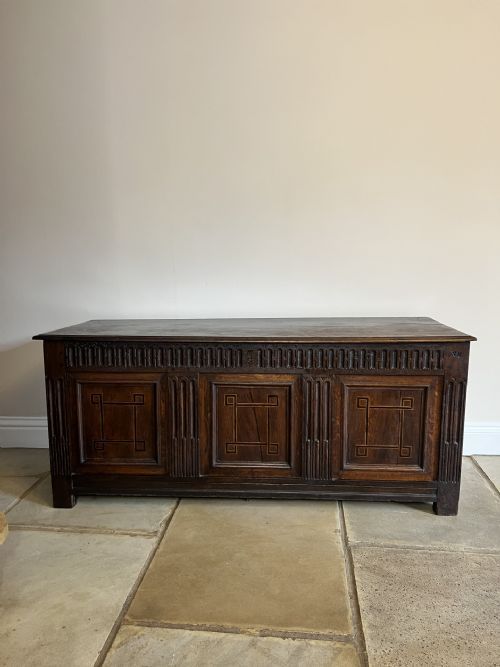
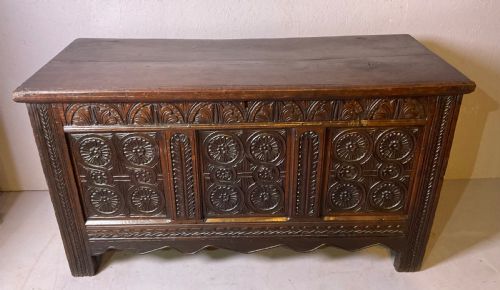
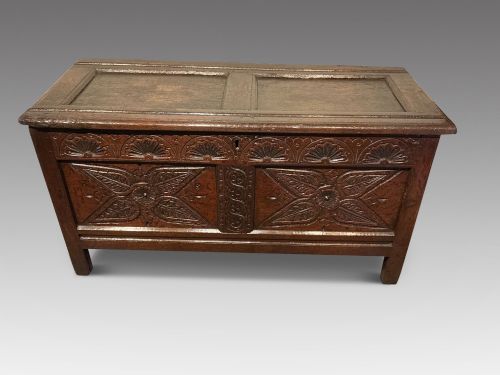
A traditional oak bedding chest represents a sturdy form of domestic furniture designed primarily for linens, blankets and garments. These items manifest mainly as coffers, blanket chests and mule chests originating across several centuries.
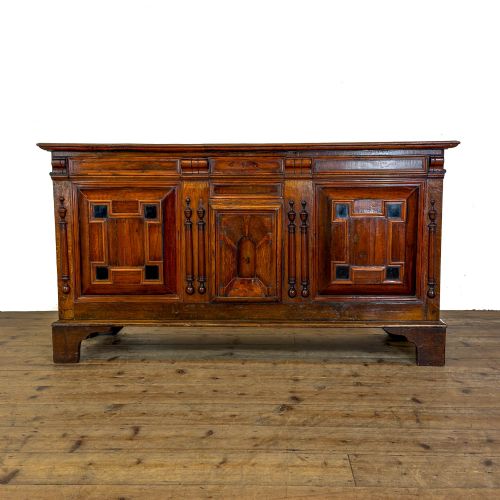
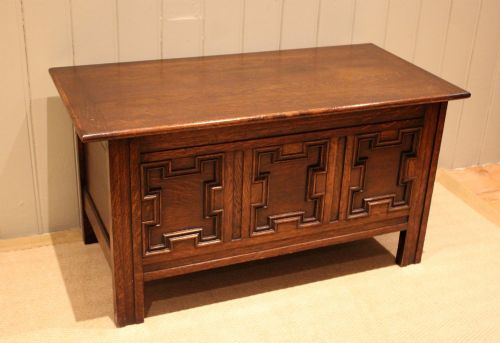
The specimens encountered here span the seventeenth, eighteenth and nineteenth centuries, alongside revival pieces from the early twentieth century. Structural formats range from simple panelled boxes to more complex mule chests featuring lower drawers.
How they were made
Construction relies heavily on solid timber, predominantly oak, supplemented occasionally by chestnut and ebonised wood. Metal elements in iron and brass appear on hinges, locks and handles, providing both structural reinforcement and functional utility.
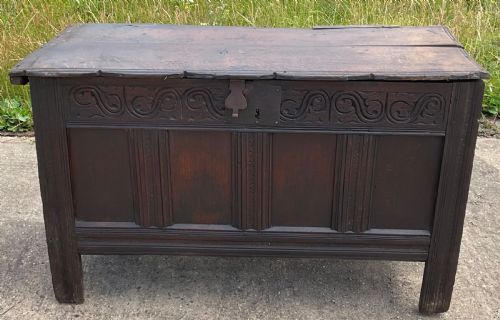
Surface decoration frequently involves hand carving applied directly to the timber panels. Joinery techniques from earlier periods utilise pegged mortise and tenon joints to secure the heavy wooden frames.
Traditional Oak Bedding Chest Retail Price Guide 2026
Typical asking prices for traditional oak bedding chest among the pieces listed under this phrase on Sellingantiques today, from the lower quarter to the upper quarter. They describe what is for sale here now, not the wider market.
What varies in quality
Quality differences emerge through the crispness and depth of the carved detailing on the timber panels. Pieces with sophisticated geometric or figural carving command greater attention than plain boarded versions.
The integrity of the original construction, including the survival of period hinges and undisturbed timber patination, dictates the overall calibre of the item. Later revival examples display different standards of joinery compared to seventeenth and eighteenth century originals.
The Traditional Oak Bedding Chest Glossary
- Coffer
- A large wooden chest traditionally used for storing valuables, linens or documents. These pieces usually feature a hinged lid and solid timber construction.
- Mule chest
- A storage chest equipped with one or more drawers built into the base beneath the main compartment. This form bridges the design gap between simple coffers and full chests of drawers.
- Panelling
- A method of constructing furniture doors and walls using fitted wooden frames and recessed panels. This technique accommodates the natural expansion and contraction of timber.
- Patina
- The surface sheen and deep colour developed by timber over decades and centuries of handling and ageing. Natural polish from use enhances the visual appeal of antique oak.
- Revival
- A stylistic movement where furniture makers recreate historical aesthetics, such as seventeenth century styles produced during the early twentieth century.
Traditional Oak Bedding Chest: Frequently Asked Questions
What is a traditional oak bedding chest used for?
These chests function primarily as deep storage repositories for household textiles, winter blankets and spare bedding.
Their sturdy flat lids also allow the pieces to serve double duty as benches or surface display tables within a bedroom or hallway.
How do I date a traditional oak bedding chest?
Dating relies upon examining the construction joints, timber preparation marks and stylistic carving motifs present on the panels.
Earlier seventeenth century examples display robust pegged frames, whilst eighteenth and nineteenth century pieces incorporate refined mouldings and internal drawer configurations.
What is the difference between a coffer and a mule chest?
A standard coffer consists of a single compartment accessed exclusively via the top-hinged lid.
A mule chest incorporates one or more functional drawers beneath the main box area, combining chest storage with drawer accessibility.
Where should I place an oak chest in my home?
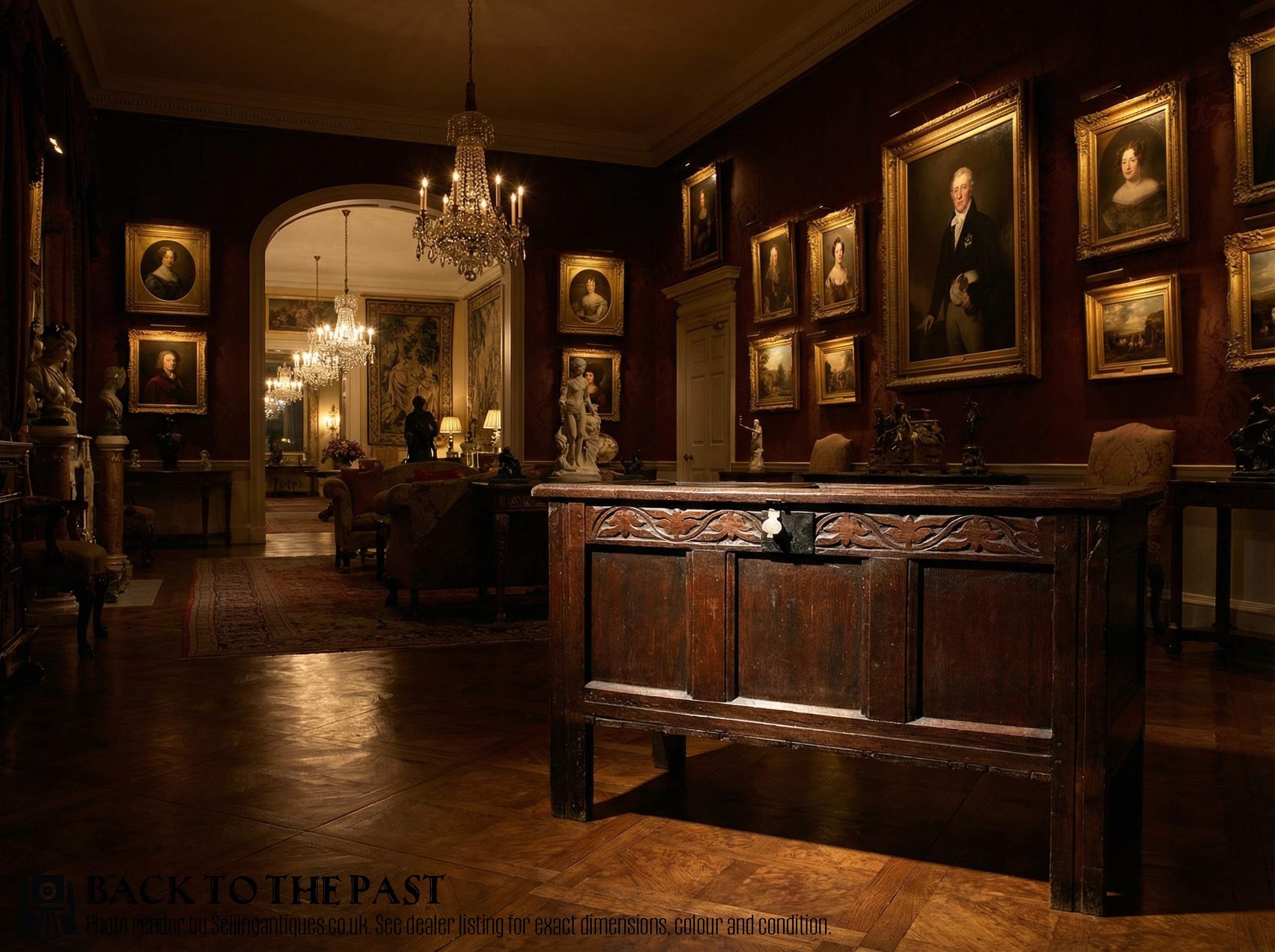
These chests suit placement at the foot of a bed, along an entrance hallway, or as a focal point in a living room.
Positioning them away from direct heat sources and strong sunlight protects the antique timber from drying out or splitting.