

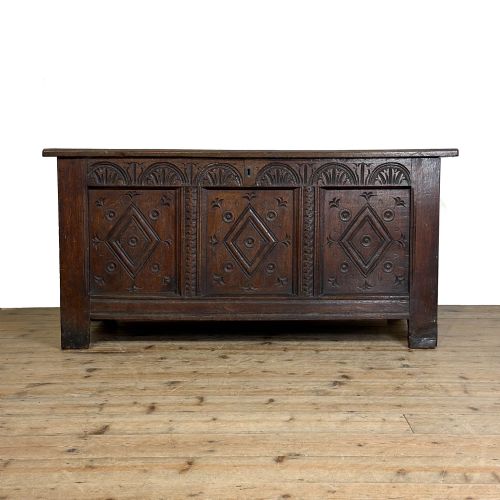
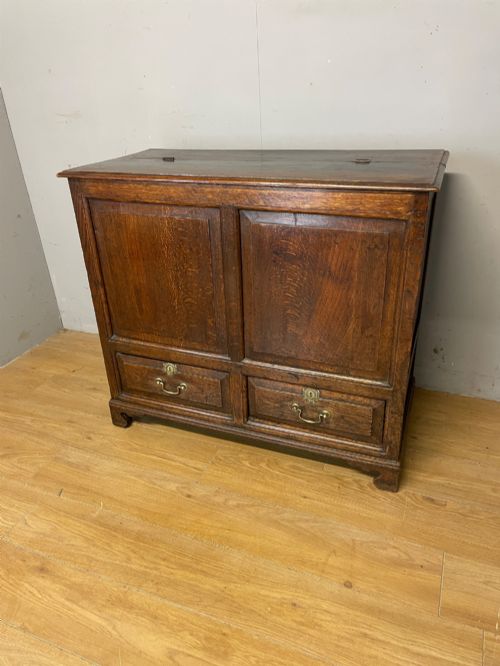
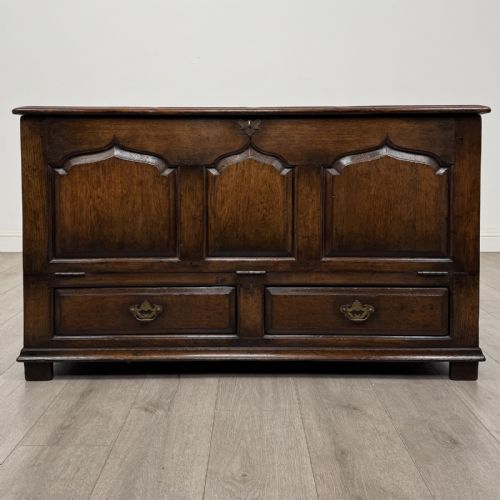
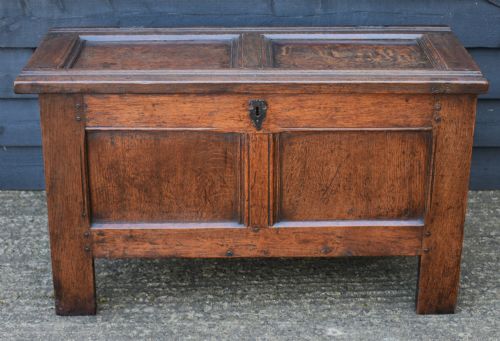
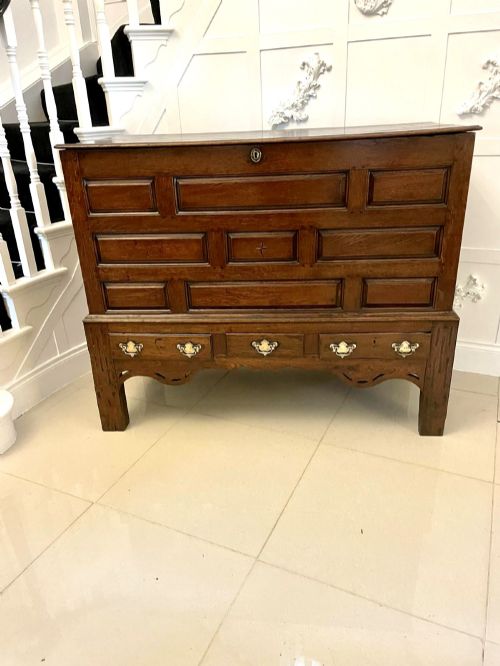
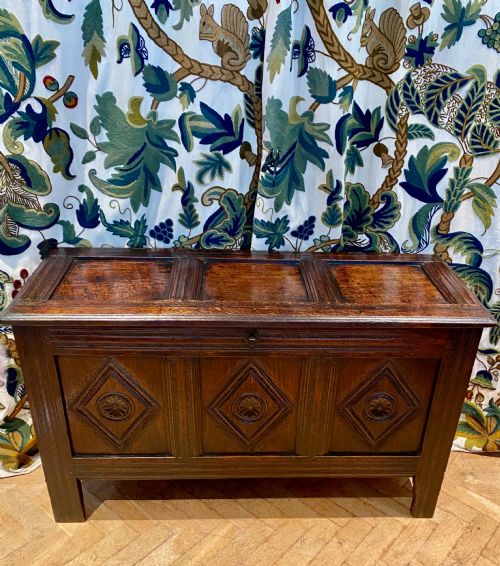
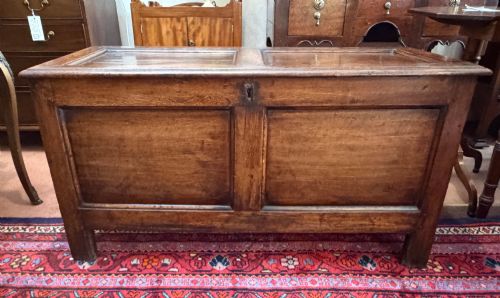
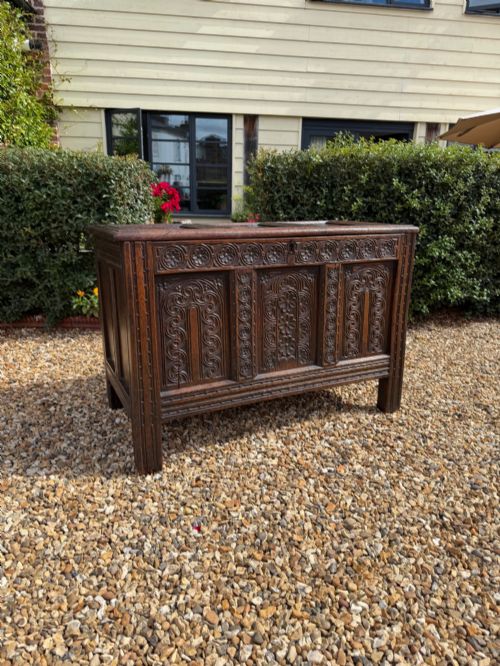
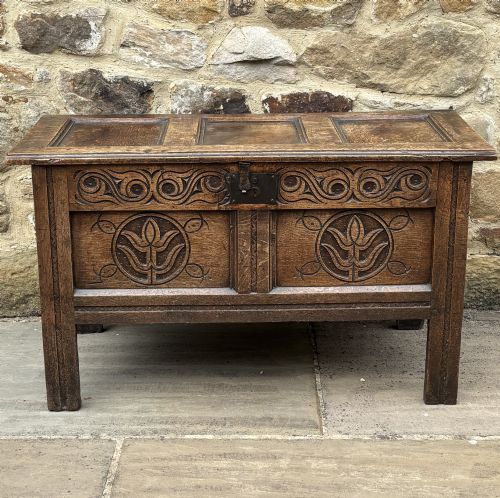
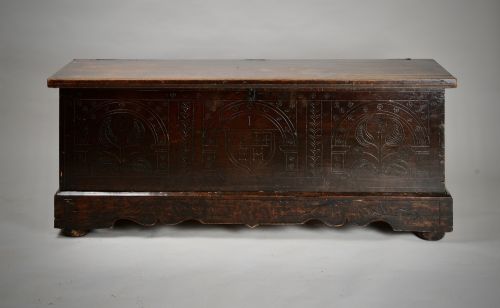
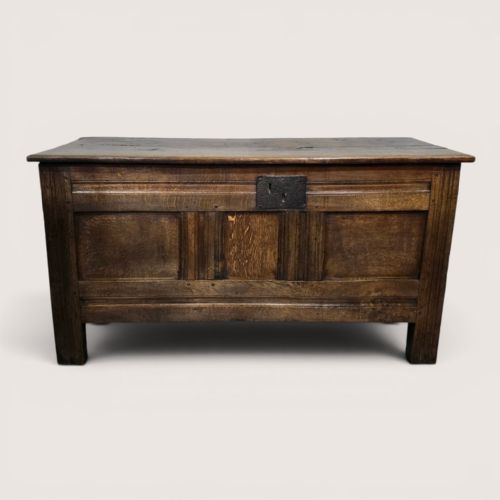
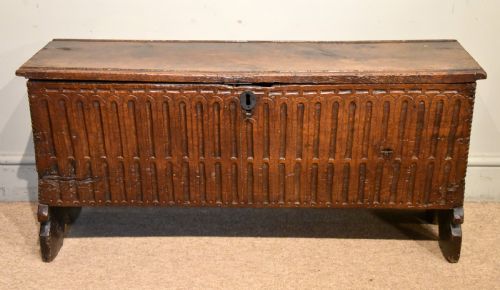
Brown Oak Mule Chest
A brown oak mule chest brings warmth and deep timber character to a room, offering robust storage built to last centuries.
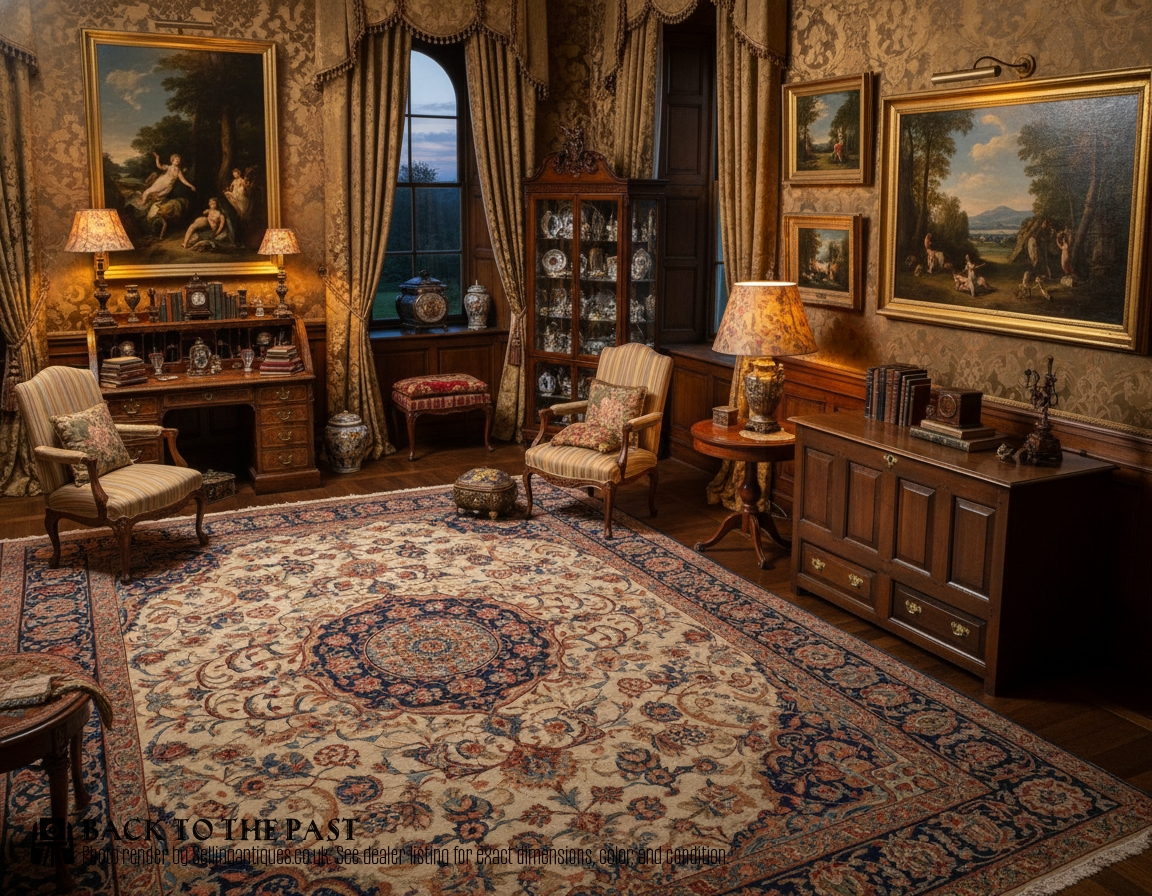
Brown Oak Mule Chest
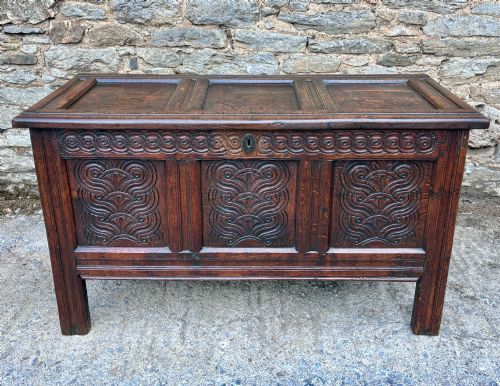
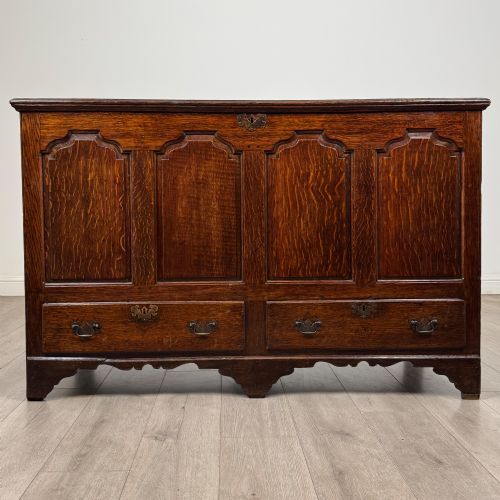
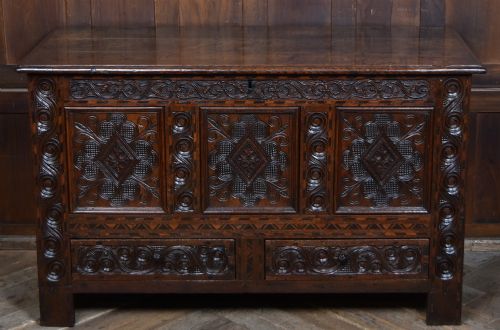
A brown oak mule chest combines a deep storage box with one or more lower drawers beneath the main compartment. These pieces serve as practical household furniture designed to hold linen, clothing, or blankets while providing a flat top surface.
The selections recorded here span the 17th century, the 18th century, and the Georgian period. Surviving examples often display vernacular craftsmanship alongside more formal stylistic touches.
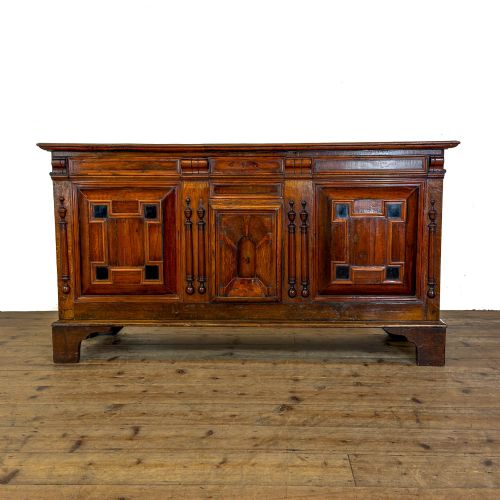
Buyers frequently encounter simpler panelled configurations alongside refined items featuring mahogany crossbanding. Forms range from straightforward Jacobean interpretations to later Lancashire iterations.
Materials and construction methods
Makers relied primarily on native oak for the main body, often enhanced with secondary woods such as mahogany for decorative crossbanding or fruitwood for detailing. Iron and brass hardware, including hinges and drawer pulls, provided essential functional support.
Traditional construction involved heavy timber framing with pegged tenons and panelled walls to accommodate natural wood movement over time. Carving adorned certain surfaces, reflecting the decorative vocabulary of the Jacobean and Georgian eras.
Brown Oak Mule Chest Retail Price Guide 2026
Typical asking prices for brown oak mule chest among the pieces listed under this phrase on Sellingantiques today, from the lower quarter to the upper quarter. They describe what is for sale here now, not the wider market.
The listings here span the Georgian period, the 17th century, and the 18th century, utilising oak, mahogany, brass, iron, and fruitwood.
Assessing quality and distinction
Quality rests in the depth of the timber figure, the crispness of any carved enrichment, and the integration of the lower drawers. Pieces displaying sophisticated details like mahogany crossbanding stand apart from plain utilitarian boxes.
The integrity of the structural joinery and the survival of original brass or iron fittings dictate the standing of an individual chest within its period. Refined proportions and balanced panel arrangements elevate the visual presence of the furniture.
The Brown Oak Mule Chest Glossary
- Mule chest
- A storage chest featuring one or more drawers built into the base beneath the main lift-lid compartment. This form bridges the traditional coffer and the modern chest of drawers.
- Crossbanding
- A decorative border technique where thin strips of veneer, frequently mahogany, are laid so the grain runs perpendicular to the surrounding surface. It creates a contrasting frame around drawer fronts or panels.
- Panelled
- A method of construction where vertical stiles and horizontal rails hold floating panels in place, allowing timber to expand and contract safely with humidity changes. This technique defines the walls of early chests.
- Jacobean
- The stylistic period spanning the early to mid-17th century, characterised by solid construction, geometric moulding, and often intricate carved ornamentation. Furniture from this era exhibits heavy proportions and dark patination.
Brown Oak Mule Chest: Frequently Asked Questions
How were mule chests used?
Historically, households utilised these chests to store heavy textiles, blankets, and clothing while keeping possessions secure and dust-free.
The flat top surface also served as a table or counter space within domestic interiors.
How do I date a mule chest?
Dating relies on examining construction techniques, timber choice, and stylistic details such as panel configurations or hardware.
Items from the Jacobean period display different characteristics compared to later Georgian examples featuring mahogany crossbanding.
Where should I place a mule chest?
These chests suit bedrooms, hallways, or living spaces where their substantial timber presence and storage capacity prove practical.
Keep them away from direct heat sources to protect the historic oak and secondary woods like mahogany and fruitwood.