


Inlaid Oak Blanket Chest
An inlaid oak blanket chest brings centuries of honest carpentry and domestic storage straight into a modern hallway or bedroom.
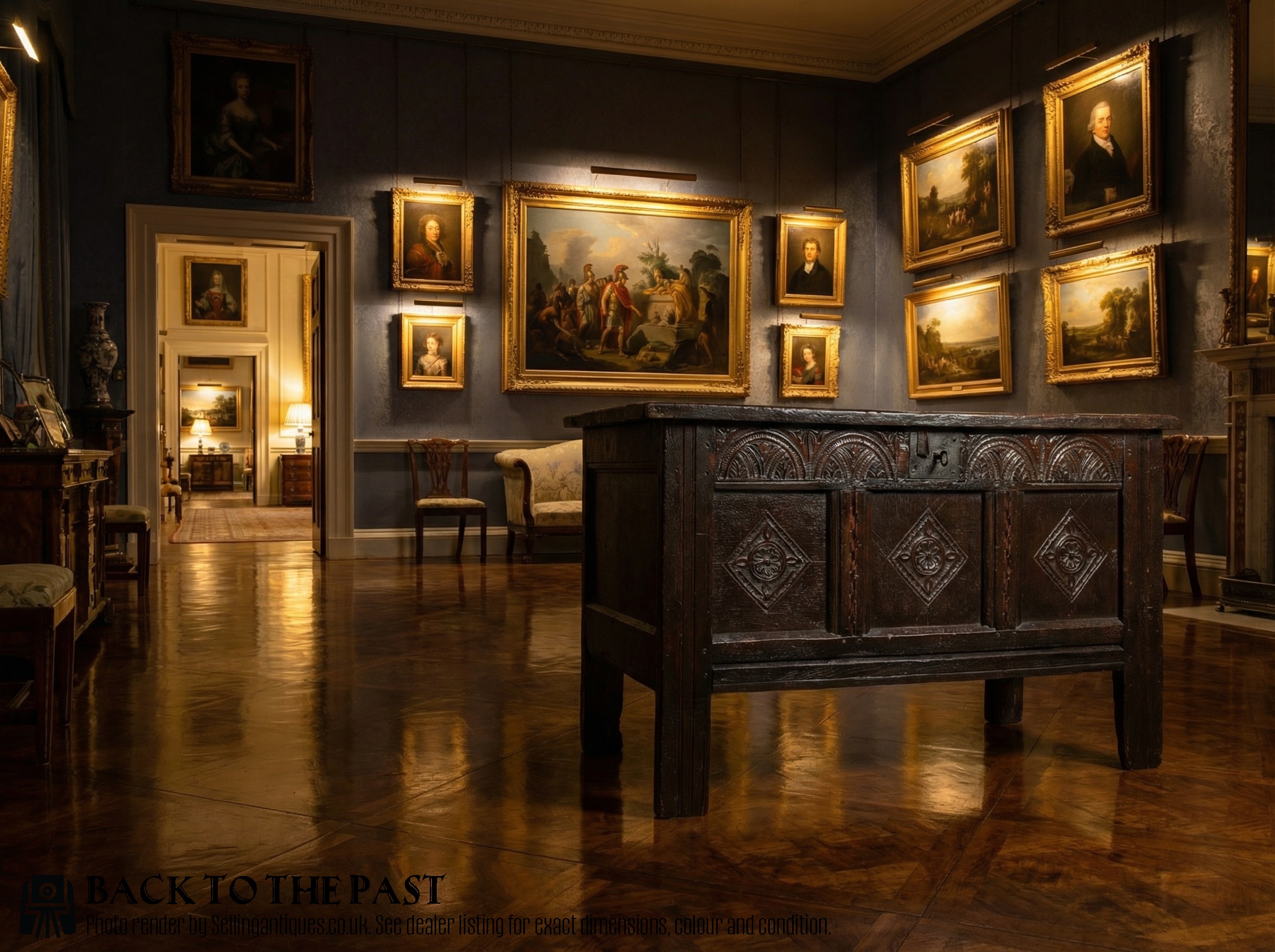
Inlaid Oak Blanket Chest
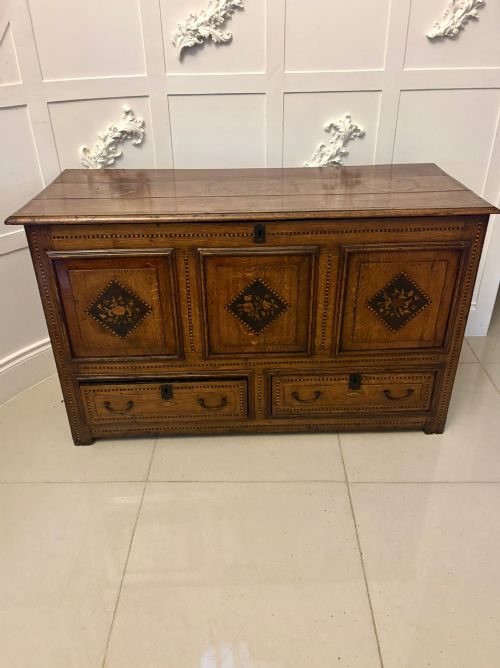
An inlaid oak blanket chest is a sturdy domestic container designed for holding textiles, linen, and personal belongings. These pieces frequently appear as seventeenth-century coffers, mule chests with lower drawers, and eighteenth-century Welsh vernacular forms including the smaller coffor bach.
The materials and construction reflect heavy domestic utility combined with decorative ambition. Oak provides the structural carcass, while contrasting fruitwood and marquetry inlay introduce geometric or floral patterns across the front panels.
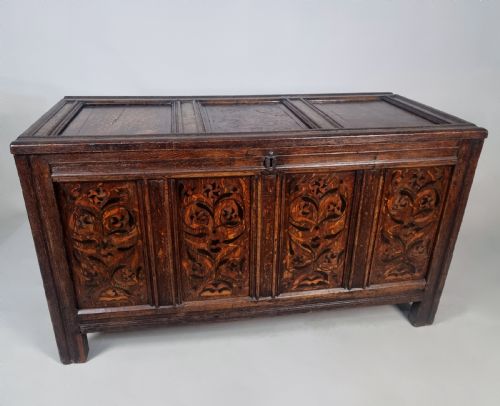
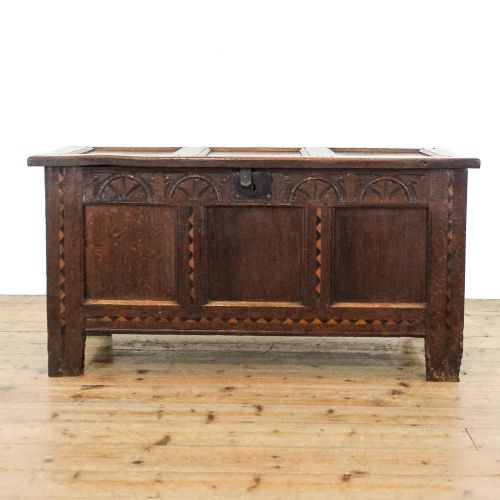
Buyers meet examples spanning from the sixteenth century through the Georgian period, alongside later revival pieces. Seventeenth-century coffers and Jacobean mule chests dominate the selection, often bearing carved details alongside their inlay.
Assessing quality in antique chests
Quality rests in the crispness of the carving, the precision of the fruitwood inlay, and the survival of original structural timbers. Pieces retaining their early hinges, floorboards, and untouched surface patination command greater regard from collectors.
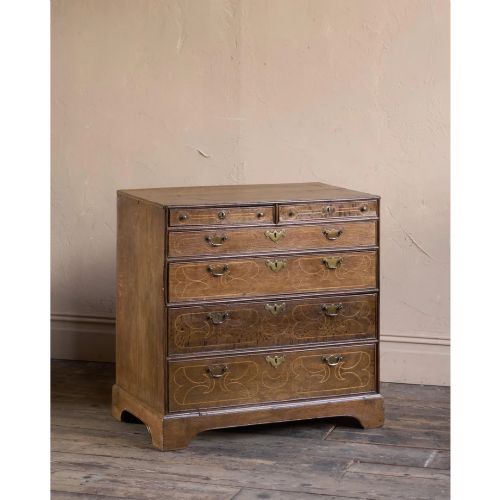
Proportion and regional character separate standard utility boxes from exceptional regional pieces like Welsh vernacular coffers and dated seventeenth-century examples. The integration of lower drawers in mule chests introduces additional complexity in cabinet work.
Listings feature pieces spanning from the 16th century through the Victorian era, executed primarily in oak with fruitwood and marquetry inlay.
The Inlaid Oak Blanket Chest Glossary
- Coffer
- A heavy wooden chest traditionally used for storing valuables, documents, or clothing. These sturdy boxes formed a central part of early household furniture before fitted wardrobes became common.
- Mule chest
- A storage chest featuring one or more drawers built into the base beneath the main compartment. This transitional form bridged the gap between traditional coffers and modern chests of drawers.
- Marquetry
- The art of applying decorative veneer pieces of different woods to a structural surface to create pictorial or geometric designs. Craftsmen utilised contrasting fruitwoods to achieve striking visual depth.
- Jacobean
- The stylistic period spanning the reign of James I, characterised by sturdy proportions, geometric carving, and sombre oak furniture. Pieces from this era display robust joinery and restrained ornamentation.
Inlaid Oak Blanket Chest: Frequently Asked Questions
What is the difference between a coffer and a mule chest?
A coffer is a simple lidded chest with a single internal compartment for general storage. A mule chest includes one or more drawers fitted beneath the main box section.
This lower drawer addition makes the mule chest an early step toward the modern chest of drawers while keeping the top compartment for bulky blankets.
How do I date an antique oak chest?
Dating relies on examining the construction methods, tool marks left on the timber, and the style of carving or inlay. Seventeenth-century pieces typically show hand-split oak panels and pegged frame construction.
Later Georgian examples often feature machine-sawn elements, refined dovetailing in the drawers, and different styles of brass hardware.
Were these chests used only for blankets?
Households utilised these large wooden containers for storing valuable textiles, winter woollens, family linen, and important documents. Because timber chests offered protection against damp and pests, they served as secure storage for household wealth.
Smaller versions like the coffor bach held personal valuables, lace, or christening robes.
Where were most of these oak chests made?
Makers constructed these pieces in local workshops across England and Wales using regional timber. Welsh vernacular pieces often display distinct local design traits in their proportions and inlay patterns.
English examples from the seventeenth century frequently emerge from regional centres like Lancashire and Leeds.
How should I care for an oak chest at home?
Keep the timber away from direct heat sources and sudden temperature swings to prevent the oak panels from splitting. Feeding the wood occasionally with a traditional wax polish helps maintain the surface finish.
Avoid placing the chest in damp areas such as unheated basements.