
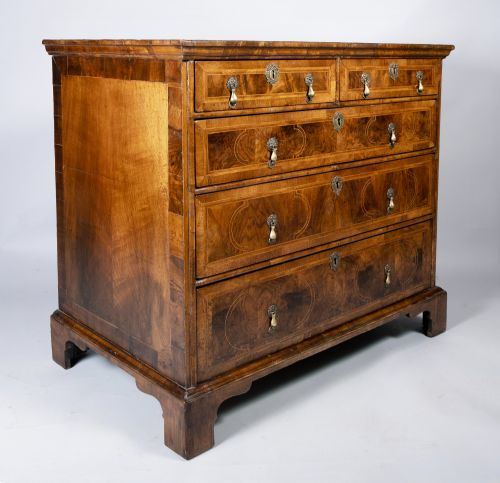
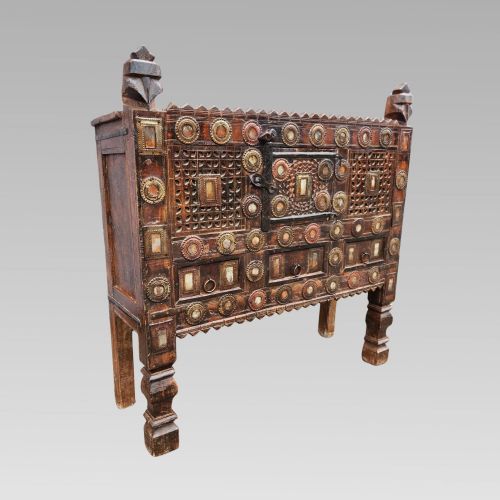

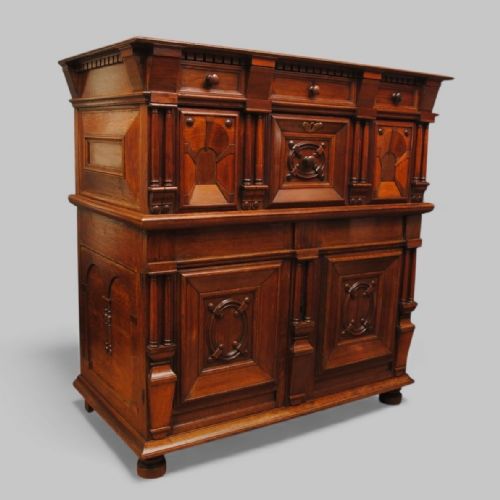


Antique Inlaid Coffer Chest
These heavy wooden storage pieces bring centuries of craft to your room, holding linens and papers just as they did generations ago.
Antique Inlaid Coffer Chest
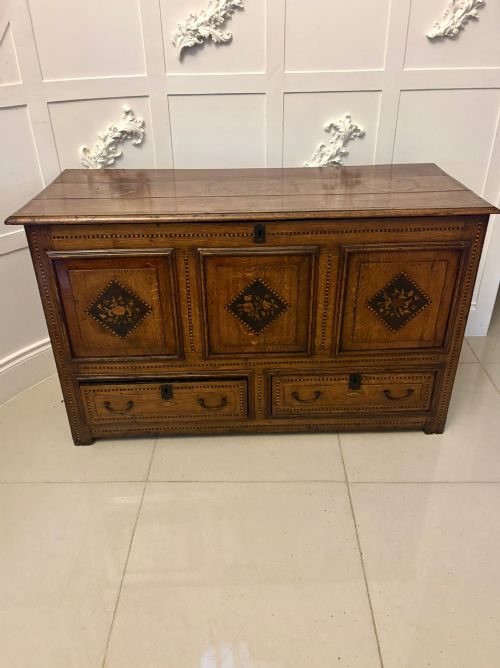
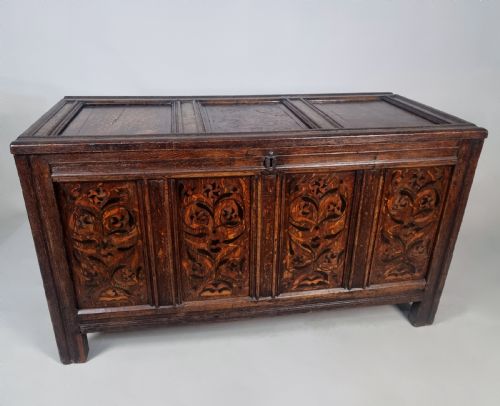
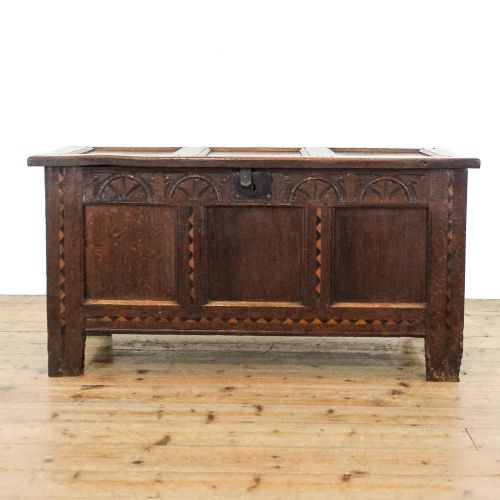
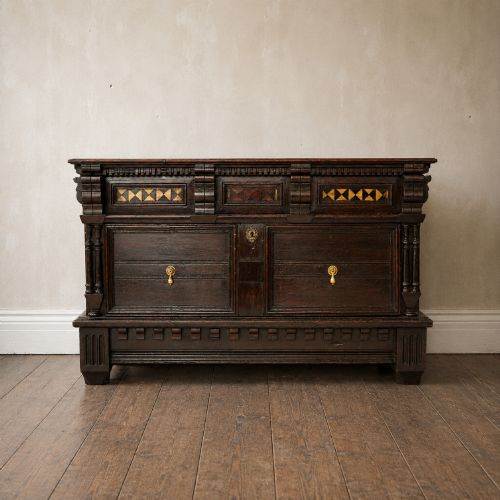
An antique inlaid coffer chest is a heavy storage box made for domestic use, frequently found in oak from the seventeenth century or mahogany and walnut from later periods.
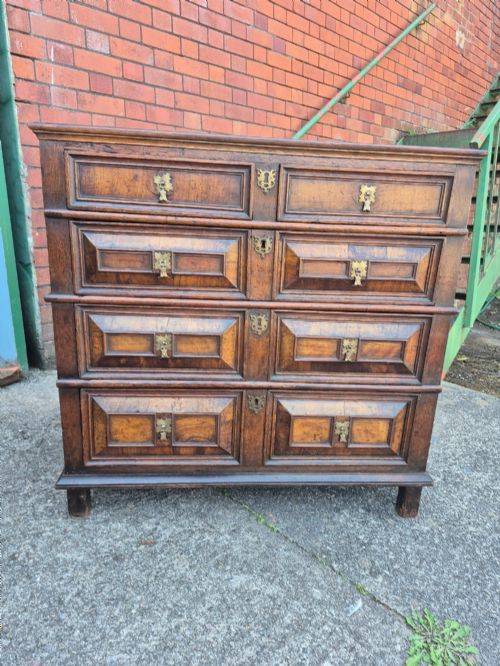
The selection ranges from early joined oak coffers with marquetry panels to later eighteenth and nineteenth century mule chests, blanket boxes, and chests of drawers.
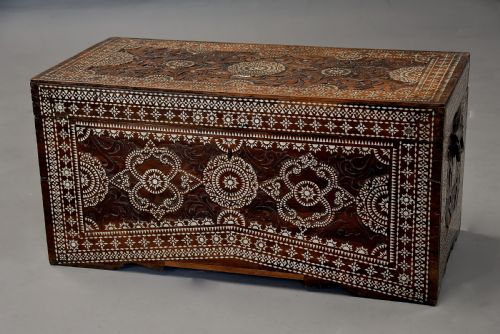
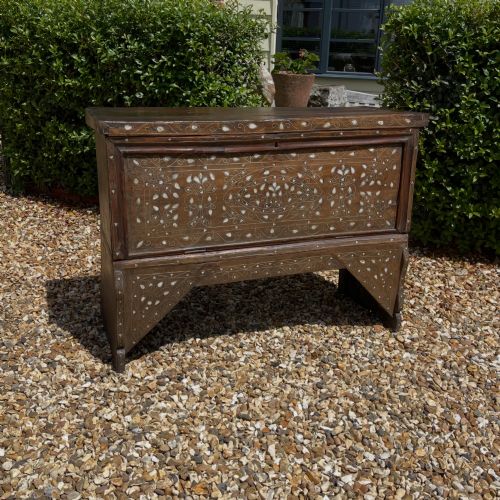
Regional variations appear across Britain, continental Europe, and the Middle East, incorporating diverse timbers and intricate surface decoration.
How they were made
Joiners built these pieces using solid timbers like oak, walnut, and mahogany, often employing frame and panel construction to accommodate seasonal wood movement.
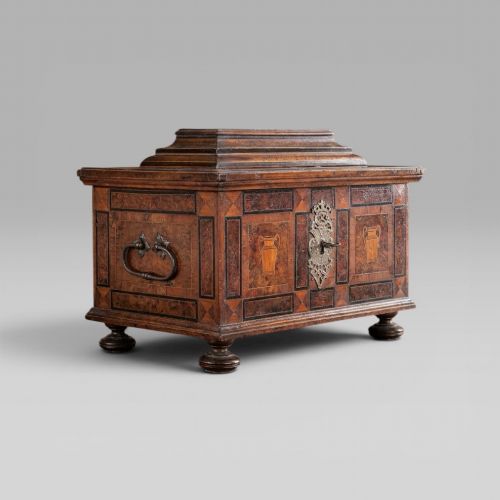
Craftsmen enriched the surfaces through carving, applied moulding, and wood inlay, sometimes integrating materials such as fruitwood, ebony, bone, brass, and mother-of-pearl.
Some seventeenth-century panels were riveted with iron simply because the joiner ran out of wooden pegs.
What varies in quality
The standard depends upon the crispness of the carving, the precision of the marquetry and inlay work, and the survival of the original timber surfaces.
Pieces retaining their early hinges, locks, and interior tills command greater attention than those altered or restored with modern replacement elements.
The Antique Inlaid Coffer Chest Glossary
- Coffer
- A heavy wooden chest traditionally used for storing valuables, documents, or household goods. Most examples feature a hinged lid and solid timber construction.
- Mule chest
- A storage chest fitted with one or more drawers at the base beneath the main compartment. This form emerged when makers realised drawers improved access to stored linens.
- Marquetry
- The art of forming decorative patterns using thin veneers of different coloured woods. Craftsmen cut precise shapes and fitted them together before gluing the design to the carcass.
- Casket
- A smaller box or chest designed for precious items, frequently featuring elaborate inlay, bone decoration, or metal mounts. These portable containers often sat on tables or desks.
- Coffer bach
- A small Welsh oak coffer featuring a single drawer below, traditionally made as a marriage gift or dowry chest. The miniature proportions distinguish them from standard full-sized storage pieces.
Antique Inlaid Coffer Chest: Frequently Asked Questions
What is the difference between a coffer and a chest?
A coffer strictly refers to a sturdy box with a hinged lid opening from the top, often utilised for travel or secure storage in early households. A chest can describe the same form, though the term also extends to pieces fitted with horizontal drawers.
Over time, makers added drawers beneath the main box section, creating transitional forms like mule chests. The internal layout and opening mechanism generally determine whether a piece receives the designation of coffer or chest.
How do I date an oak coffer?
Dating relies upon construction methods, timber preparation, and stylistic clues left by the joiner. Seventeenth-century examples typically display hand-split oak panels, pegged frame joints, and characteristic Jacobean or geometric carvings.
Later pieces adopt machine-sawn boards, standard brass hardware, and different locking mechanisms. Examining the underside and interior boards reveals tool marks that help confirm the period of manufacture.
Where were these chests used in the home?
These storage pieces occupied principal rooms in early houses, serving multiple domestic functions before fitted wardrobes became common. Families stored precious textiles, winter blankets, church vestments, and important legal documents inside them.
The flat lids also allowed the pieces to double as benches, side tables, or surfaces for displaying other household objects within the chamber or hall.
How do I care for an antique wood chest?
Maintaining these wooden pieces requires a stable environment away from direct sunlight and sudden temperature shifts. Excessive heat or dry air causes historic timber and inlay to shrink, warp, or detach from the carcass.
Applying a light coat of traditional beeswax helps nourish the aged surface without building up sticky residues. Avoid modern aerosol polishes, which can degrade the patination developed over centuries.