
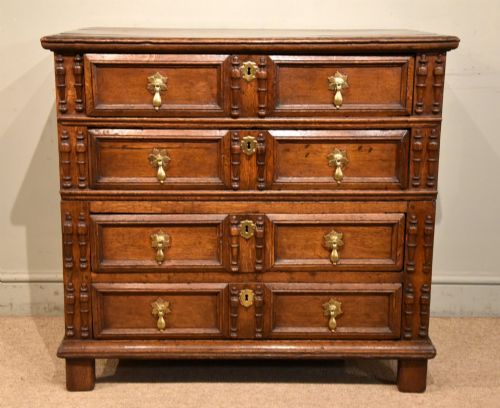
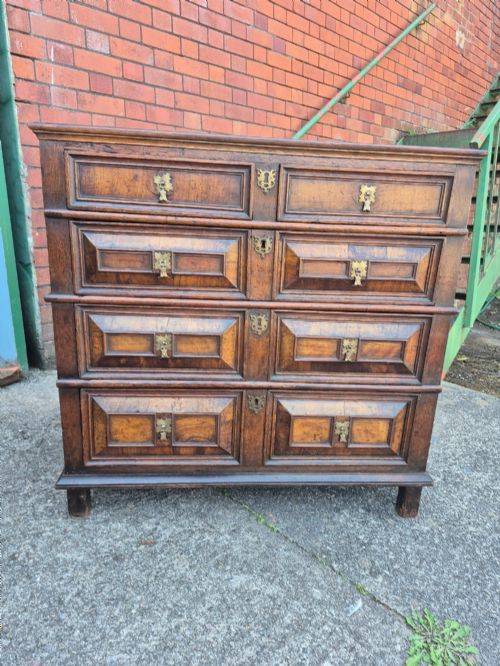
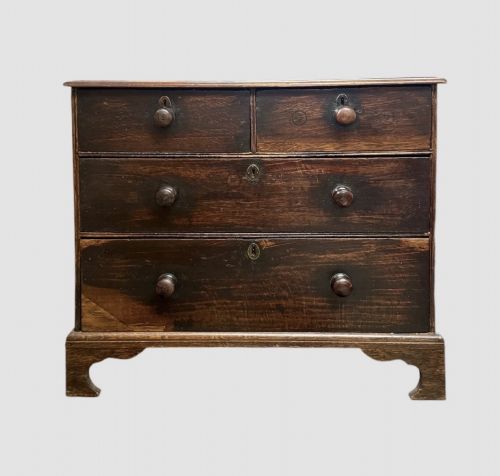
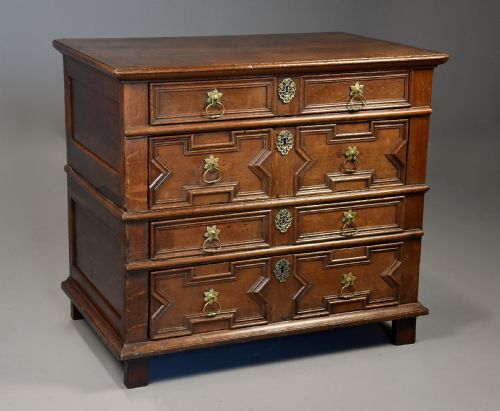


Period Oak Coffer Drawers
Period oak coffer drawers combine heavy storage chests with lower drawers, offering sturdy timber construction spanning the seventeenth and eighteenth centuries.
Period Oak Coffer Drawers
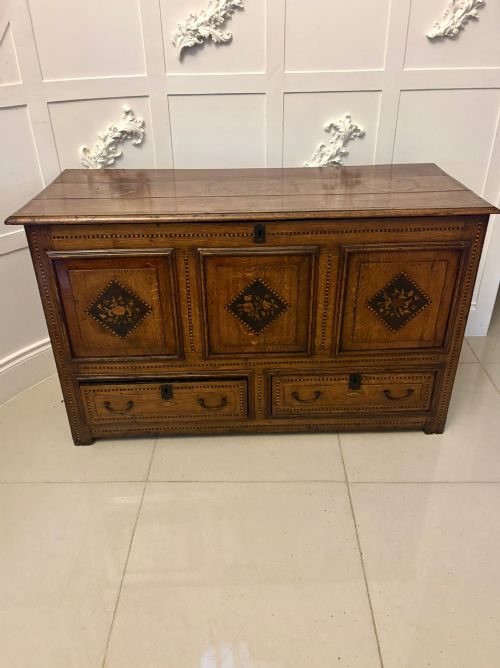
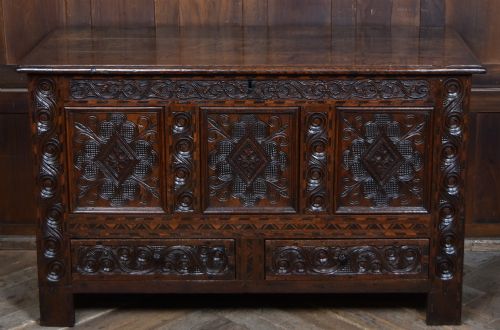
Period oak coffer drawers unite deep blanket storage compartments with integrated lower drawer tiers. These dual-purpose pieces emerge primarily from the seventeenth and eighteenth centuries, bridging traditional mule chests and conventional chests of drawers.
The versions met on this page span styles from Jacobean and Charles II through to William and Mary, Queen Anne, and Georgian periods. Makers utilised robust native timber alongside walnut, fruitwood, and mahogany elements to create these storage items.
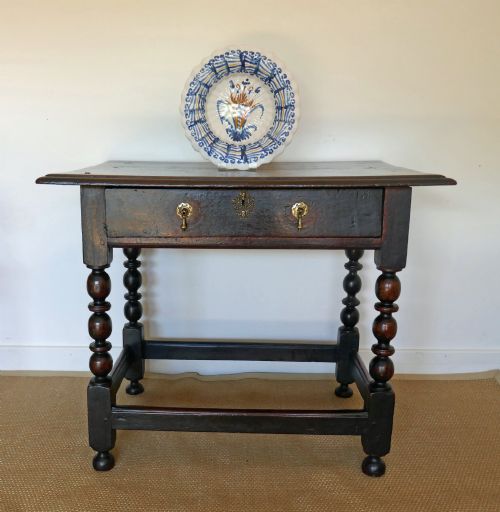
Forms range from plain panelled blanket boxes to moulded front chests and coffer stands. Surviving examples frequently show the evolution from simple joined coffers to sophisticated multi-drawer storage.
Materials and Construction
Construction relies heavily on solid oak boards joined with traditional methods, often augmented by walnut or fruitwood veneers in geometric patterns. Iron hinges, locks, and brass drop handles secure the lids and drawers.
Surface decoration incorporates intricate marquetry inlay, wood inlay, and carved mouldings that define the stylistic period. Timber surfaces acquire a faded patina through centuries of handling and polishing.
Early chests retain secret internal compartments originally intended for hiding silver spoons and parchment deeds.
Evaluating Quality
Quality rests upon the crispness of the moulded fronts, the complexity of the geometric or marquetry inlay, and the retention of original brass hardware. Pieces with bold proportions and well-defined panels demonstrate superior craftsmanship.
The integrity of the timber surface and the depth of the faded patina indicate how well a piece has survived. Intact original brasses and unaltered drawer linings elevate an item above heavily restored examples.
The Period Oak Coffer Drawers Glossary
- Mule chest
- A storage chest with one or more drawers built into the base beneath the main compartment. This form bridges the traditional blanket coffer and the standard chest of drawers.
- Marquetry inlay
- Decorative patterns formed by fitting contrasting pieces of wood veneer into a prepared surface. This technique creates geometric or floral designs on seventeenth and eighteenth century furniture.
- Geometric block front
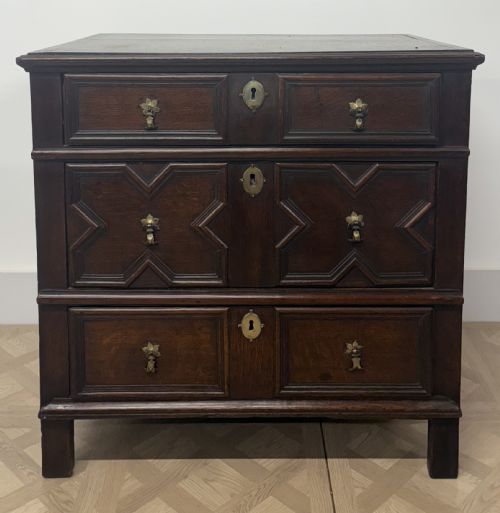
- A drawer front carved or applied with projecting rectangular panels that create a strong architectural relief. This style appears frequently on Charles II and William and Mary furniture.
- Patina
- The surface sheen and colour developed by timber over centuries through use, oxidation, and waxing. A fine patina shows soft depth rather than high gloss.
- Moulded front
- Cabinetwork where the drawer edges or drawer surrounds feature shaped profiles cut into the solid wood. This detail adds shadow and depth to seventeenth century facades.
Period Oak Coffer Drawers: Frequently Asked Questions
What is a mule chest?
A mule chest is a storage box that incorporates one or more drawers at the bottom. It sits between a simple blanket coffer and a full chest of drawers.
Cabinetmakers developed this form to provide easier access to stored textiles without lifting the heavy top lid every time.
How do I date an oak coffer?
Dating relies on examining the construction methods, handle hardware, and surface decoration such as geometric mouldings or marquetry. Seventeenth-century examples often feature joined framing and robust panel construction.
Later eighteenth-century pieces display smoother drawer linings and shifts toward Georgian styling. Comparing the timber grain and patina helps confirm the period.
Were these used for clothes?
These pieces served primarily for storing household linens, blankets, and garments in domestic settings. The deep upper compartment held bulky textiles while lower drawers accommodated smaller items.
They functioned as primary wardrobe storage before dedicated tall chests of drawers became common.
What woods were used besides oak?
Makers incorporated walnut, fruitwood, and mahogany into drawer fronts and decorative veneers. Brass and iron provided structural hardware and locks.
Secondary timbers often included native woods chosen for internal drawer linings and framing.