
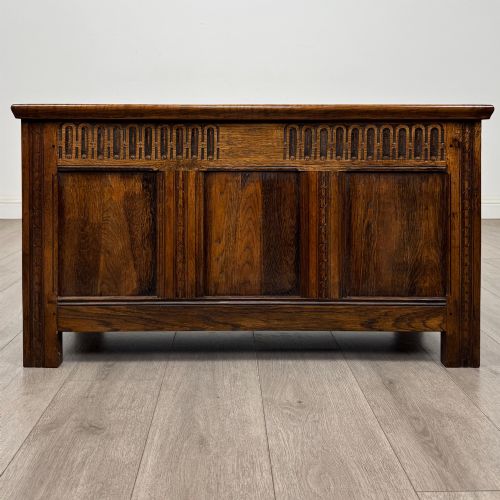

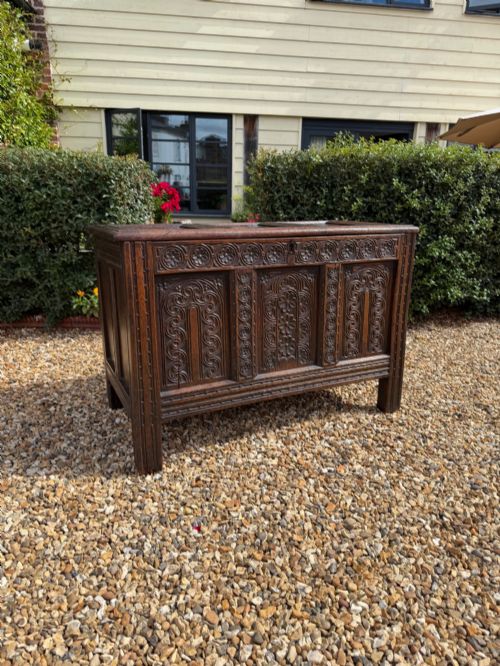
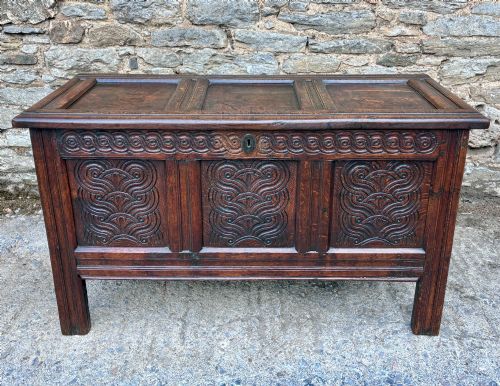
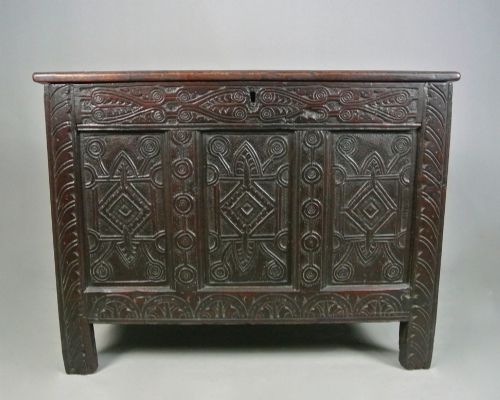
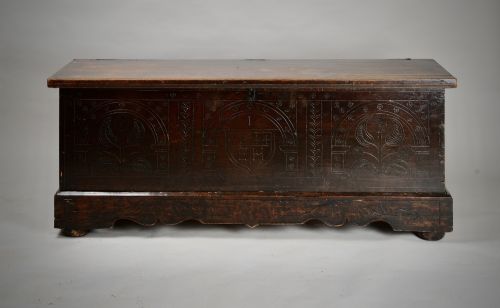
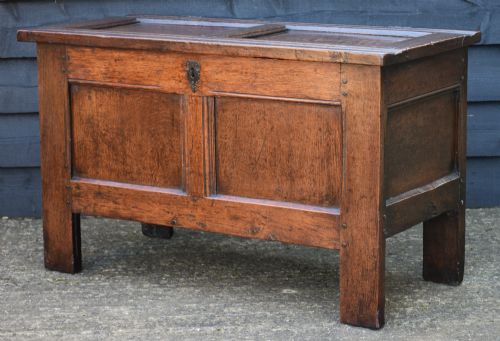
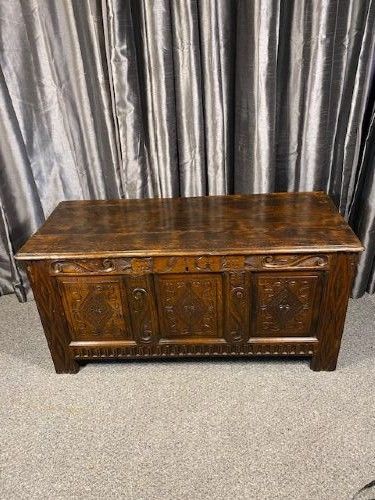
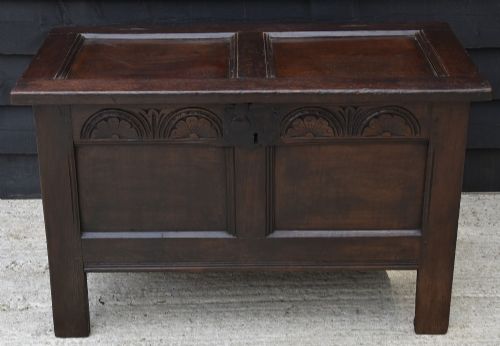
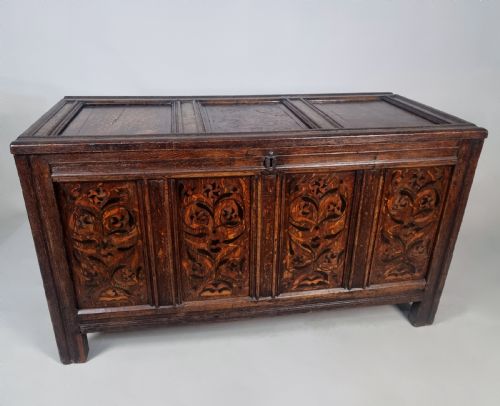
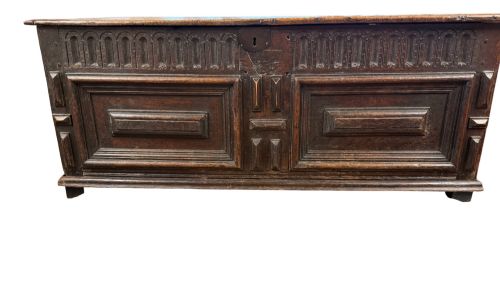
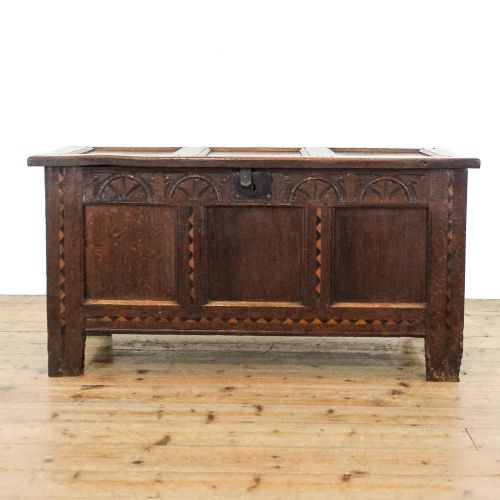
Jacobean Carved Blanket Trunk
A jacobean carved blanket trunk brings solid oak and centuries of storage history straight into a hallway.
Jacobean Carved Blanket Trunk
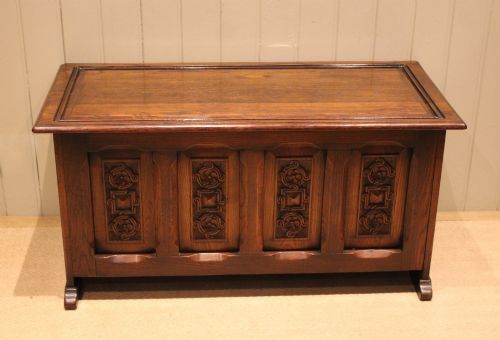
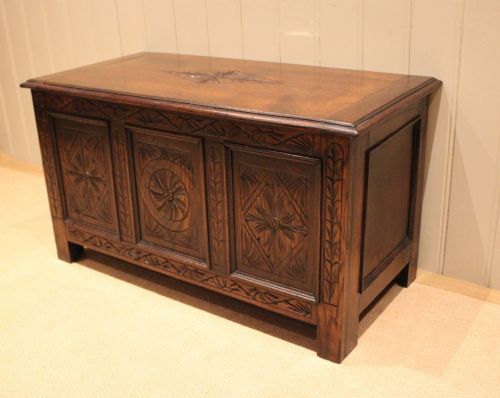
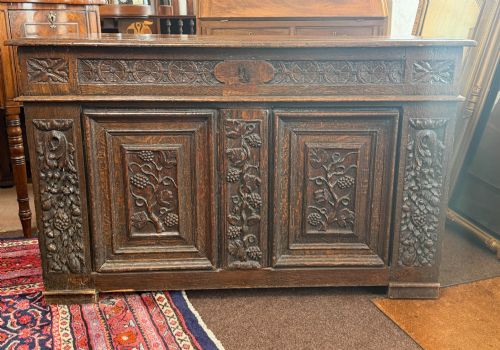
A jacobean carved blanket trunk is fundamentally a sturdy timber box used historically for linens and valuables, appearing on this page most often as an authentic seventeenth century oak coffer or as a later revival piece.
Buyers seeking this phrase encounter heavy lidded chests defined by panelled construction and carved wooden surfaces, spanning from genuine seventeenth century origins through to twentieth century interpretations.
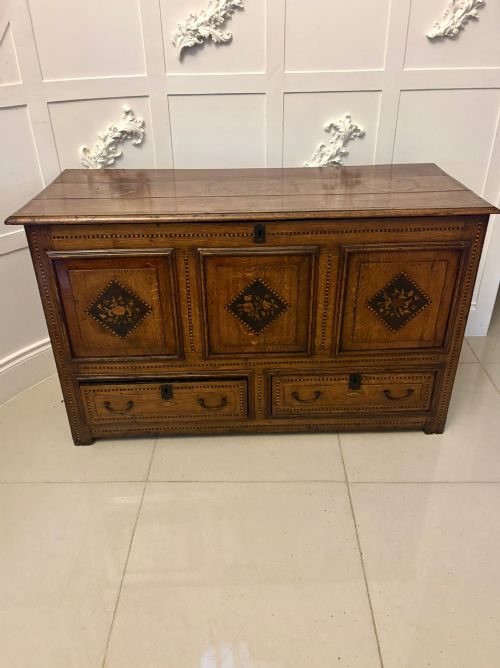
The selections range from simple solid oak storage boxes to highly decorative mule chests fitted with marquetry inlay and brass fittings.
How they were made
These trunks rely primarily on solid oak, shaped through joined framing and panel construction to accommodate the natural movement of timber over centuries.
Surface ornamentation involves hand carving directly into the wood, occasionally supplemented by wood inlay, marquetry inlay, and ebonised details.
Iron and brass hardware, including hinges and lock plates, secure the heavy lids and reinforce the structural corners.
Listings span multiple eras, encompassing seventeenth century antiques alongside Edwardian and 1930s revival interpretations.
What varies in quality
Quality separates along the depth and crispness of the hand carving, where deeply chiselled motifs outshine shallow or worn decoration.
The integrity of the original oak frame and panels dictates the grade of the piece, particularly when assessing whether secondary woods or later repairs have been introduced.
The presence of sophisticated additions such as marquetry inlay, dated inscriptions, or original ironwork elevates an ordinary storage box into a remarkable example.
The Jacobean Carved Blanket Trunk Glossary
- Cofer
- An alternative spelling of coffer, denoting a large chest used for storing valuables and textiles. These robust boxes served both as furniture and travelling luggage in earlier centuries.
- Mule chest
- A traditional storage chest that includes one or more drawers beneath the main lidded compartment. This form bridges the gap between the simple trunk and the modern chest of drawers.
- Marquetry inlay
- Decorative patterns formed by fitting contrasting pieces of wood veneer into a prepared surface. This technique creates elaborate geometric or floral pictures.
- Linen fold
- A type of carved panel moulding resembling folded cloth. It appears frequently on sixteenth and seventeenth century wooden furniture.
- Cassone
- An Italian term for a large decorated chest, occasionally applied to similar large storage trunks found in British collections. They often held bridal trousseaus.
Jacobean Carved Blanket Trunk: Frequently Asked Questions
What is the difference between a coffer and a blanket trunk?
A coffer is a traditional heavy wooden chest, typically joined with panels, that served multiple domestic storage purposes in early households.
Over time, the term blanket trunk evolved to describe similar lidded chests specifically dedicated to bedding and linens.
How can I tell a seventeenth century trunk from a later revival piece?
Seventeenth century trunks display authentic tool marks, hand-split oak boards, and traditional peg joints that reflect period woodworking methods.
Revival pieces from the twentieth century often show machine cutting marks and standardised timber dimensions underneath the applied carving.
Where should I place a heavy oak trunk in my home?
These solid timber chests sit well in hallways, living rooms, or at the foot of a bed where they provide substantial surface area and internal storage.
Keep them away from direct heat sources and radiators to prevent the dry oak from splitting.
What do drawers at the bottom indicate on these chests?
Adding drawers to the base transforms a standard trunk into a mule chest, which allowed easier access to smaller garments without opening the main lid.
This evolution appeared as homes demanded more organised storage during the seventeenth and eighteenth centuries.